---
title: Blog | Ryan Daly
description: The Science of Personality
---
[CONTACT US](https://info.hoganassessments.com/get-in-touch/?q=contact-us)
+1.918.749.0632
- [](http://www.linkedin.com/groups?gid=2199407&trk=myg_ugrp_ovr)
- [](https://www.facebook.com/hoganassessments)
- [](https://twitter.com/HoganAssessment)
- [](http://www.youtube.com/user/hoganassessments/featured)
- [](https://info.hoganassessments.com/CMS/UI/Modules/BizBlogger/rss.aspx?tabid=541267&moduleid=1088272&maxcount=25)
[](http://www.hoganassessments.com/)
[](http://www.hoganassessments.com/?q=content/international-training)
## Ryan Daly
### Recent Posts
## [The Worst Interview Question Ever](https://info.hoganassessments.com/blog/bid/348271/The-Worst-Interview-Question-Ever)
Posted by [Ryan Daly](https://info.hoganassessments.com/blog/author/ryan-daly) on Thu, Jun 12, 2014
- [Tweet](https://twitter.com/share)

“What is your greatest weakness?” is the worst interview question, ever.
Here’s why you should be asking candidates about their greatest strength.
*What is your greatest weakness?* If there was such a thing as a universally despised interview question, this would top the list. *Sell me this pencil* is a close second.
Job candidates hate this question because it puts them in an impossible situation. On the one hand, they could actually admit their greatest weakness. But, would you hire someone who told you that they were unorganized or tended to butt heads with his or her coworkers? On the other hand, he or she could lie and spin a strength. *Sometimes I’m too hardworking. *Of course you are. The last time I was interviewing for jobs, I mastered the art of cheeky avoidance. *I possess super-human strength, but only when I’m angry.*
The interviewers, for their part, hate this question because it’s cliché, and because [they know it will be met with a B.S. answer](http://toddraphael.wordpress.com/2011/04/20/an-alternative-to-the-bs-about-your-biggest-weakness/), no matter how cleverly they ask. My favorite example is, *tell me why,* *in five years, I have to fire you*. My favorite answer? *Economic downturn*.
And, even if we managed to get a completely honest answer, would it even matter? The answer is no, for three reasons:
1. First, they probably don’t know the answer. A [2006 analysis](http://www.researchgate.net/publication/229493967_A_METAANALYSIS_OF_SELFSUPERVISOR_SELFPEER_AND_PEERSUPERVISOR_RATINGS) of 360-degree ratings showed strong a correlation between peer and supervisor ratings, but there was only a modest correlation between self-supervisor and self-peer ratings. In other words, most people have no idea how the rest of the world sees them. As one of my colleagues often puts it, everyone thinks they are smart, funny, and great in bed, but that doesn’t mean it’s true.
2. Next, anyone with the level of self-awareness it takes to actually pinpoint their greatest weakness (and the *cajones* to tell you) likely also possesses the presence of mind to put mechanisms in place to prevent that weakness from impacting his or her performance. For example, someone who knows that he or she tends to procrastinate (like me) will set hard deadlines for him or herself and use scheduling and productivity apps to keep them on track.
3. Finally, most of your hires won’t fail because of their greatest weakness. Most of them will fail because they overplay their greatest strength. Here’s the science: a [2009 study](http://www.3minutemile.co.uk/literature/library/personality_leader_behavior_and_overdoing_it_study.pdf) of personality information from 126 managers and performance ratings from 1,500 of their coworkers showed that, as levels of certain strengths increased past a certain point, their effectiveness decreased. Anyone who has been in the workforce long has seen how this plays out. An ambitious new employee on your sales team turns cutthroat under the pressure to meet his or her numbers, and starts competing with members of his or her own team. Or, a detail-oriented accounting manager turns into a micro-manager.
I’m certainly not saying that weaknesses don’t impact our performance — they do. But weaknesses are easy to spot, and easy to compensate or correct. Because overused strengths are born in our blind spots, they can be hard to spot until they’ve already had a devastating effect.
1 Comment [Click here to read/write comments](https://info.hoganassessments.com/blog/bid/348271/The-Worst-Interview-Question-Ever#comments-listing)
Topics: [interviewing](https://info.hoganassessments.com/blog/topic/interviewing)
## [Late Night Succession Planning](https://info.hoganassessments.com/blog/bid/342529/Late-Night-Succession-Planning)
Posted by [Ryan Daly](https://info.hoganassessments.com/blog/author/ryan-daly) on Thu, Apr 17, 2014
- [Tweet](https://twitter.com/share)
Nope, I’m not talking about brewing a pot of coffee and plotting out the future of your organization in the wee hours of the morning. When “Late Show” host David Letterman announced he was retiring after more than 32 years on the air, network executives moved quickly to announce his replacement, reportedly spurred by concerns over meetings with advertisers next month.
In the post-Conan era of late-night host selection, I imagine CBS executives put more than a few days of thought into who would fill Letterman’s shoes. However, the network’s choice, Comedy Central’s Stephen Colbert, brings up a familiar problem in succession planning: whether it is better to promote from within or introduce a fresh face.
The arguments *for* Colbert are pretty clear: His show, “The Colbert Report”, which airs at 11:30 p.m., could bring with him [tremendous viewership in key 18-49 demographics](http://www.businessweek.com/articles/2014-04-10/cbs-taps-the-real-stephen-colbert-as-david-lettermans-replacement-on-late-show), which CBS badly needs to compete with NBC’s new late-night juggernaut, Jimmy Fallon. And, the argument has been made that in order to ultimately beat “The Tonight Show”, CBS will have to completely overhaul its late-night format. Finally, [Craig Ferguson](http://www.nydailynews.com/entertainment/tv-movies/craig-ferguson-stay-cbs-2015-article-1.1754069), Letterman’s one-time protégé, has consistently low ratings in the 12:30 a.m. testing ground (CBS is reportedly replacing Ferguson with E! talk show host Chelsea Handler).
On the other hand, as one writer put it, the Colbert with which people are familiar is the ‘Colbert’ in quotation marks – a faux-conservative talk show host. Trying to transition his send-up of Bill O’Reilly to an hour-long network show would be disastrous, but abandoning it all together could mean alienating a significant portion of his current audience.
Although we can’t claim expertise in late-night host selection, in the corporate world, outside hires face tremendous challenges, and studies show that more than half fail, many within the first 18 months on the job.
For more on succession planning, check out our free ebook, [*From Potential to Performance*](https://info.hoganassessments.com/from-potential-to-performance/Default.aspx?Preview=true).
1 Comment [Click here to read/write comments](https://info.hoganassessments.com/blog/bid/342529/Late-Night-Succession-Planning#comments-listing)
## [Can Spite Be Productive?](https://info.hoganassessments.com/blog/bid/341761/Can-Spite-Be-Productive)
Posted by [Ryan Daly](https://info.hoganassessments.com/blog/author/ryan-daly) on Thu, Apr 10, 2014
- [Tweet](https://twitter.com/share)
Society generally views spitefulness as a purely negative characteristic – there are hundreds of parables to this effect dating to the beginning of recorded history. However, an [article](http://mobile.nytimes.com/2014/04/01/science/spite-is-good-spite-works.html?_r=0&referrer=) in the New York Times recently described findings from several studies showing the bright side of spitefulness. Here are some highlights:
- Spitefulness tends to come with elevated levels of aggression, psychopathy, narcissism, and Machiavellianism.
- Men tend to be more spiteful than women and young people more than old.
- Stressful circumstances – partisan politics and divorce among them – can provoke spiteful outbursts from otherwise temperate people.
- According to anthropologist Frank Marlowe, what looks like spite is often a matter of image-making. “If you get a reputation as someone not to mess with and nobody messes with you going forward, then it was well worth the cost.”
Spitefulness isn’t something Hogan measures directly – although our research department told me spitefulness would possibly correlate with the Hogan Development Survey Skeptical, Bold, Leisurely and Mischievous scales – but the article was an excellent illustration of one of our core concepts; that there is no such thing as a purely negative (or positive) personality characteristic.
Intrigued? Check out how your greatest strength can become your biggest weakness [here](https://info.hoganassessments.com/blog/bid/219343/How-Your-Greatest-Strength-Can-Become-Your-Greatest-Weakness).
1 Comment [Click here to read/write comments](https://info.hoganassessments.com/blog/bid/341761/Can-Spite-Be-Productive#comments-listing)
Topics: [Hogan Development Survey](https://info.hoganassessments.com/blog/topic/hogan-development-survey), [HDS](https://info.hoganassessments.com/blog/topic/hds)
## [Spanning the Skills Gap](https://info.hoganassessments.com/blog/bid/332613/Spanning-the-Skills-Gap)
Posted by [Ryan Daly](https://info.hoganassessments.com/blog/author/ryan-daly) on Wed, Jan 29, 2014
- [Tweet](https://twitter.com/share)
In our ebook [*5 Things Keeping HR Up At Night*](https://info.hoganassessments.com/5-things-keeping-hr-up-at-night/), we identified succession planning as one of HR practitioners’ major concerns moving into 2014.
Baby Boomers, many of whom were forced to work later in life due to the recent financial crisis, are finally starting to age out of the workforce, taking with them a wealth of essential knowledge and skills.
In his [post](http://blogs.hbr.org/2014/01/is-the-aging-workforce-really-creating-your-skill-shortages/) on the Harvard Business Review, however, author David DeLong points out that companies need to identify which people in their organizations are nearing retirement and what skills they will take with them.
He also makes an interesting point:
“Not all skills gaps are due to looming retirements. For example, shortages of mobile app developers, networking engineers, and sustainability managers are due to the rapid growth of new industries. These jobs didn’t exist a decade ago, and there is no older generation to draw on. This poses different challenges, such as identifying patterns of your most successful hires, like the schools they come from, where they live, and other characteristics that predict high performance and retention.”
This challenge isn’t limited to tech companies – how do you effectively build a workforce when you don’t have any incumbent data on which to base your decisions? Check out this [30-second video](https://www.youtube.com/watch?v=DY1zjsITUCY) for the answer.
0 Comments [Click here to read/write comments](https://info.hoganassessments.com/blog/bid/332613/Spanning-the-Skills-Gap#comments-listing)
## [Military, politics, or the private sector - it’s lonely at the top](https://info.hoganassessments.com/blog/bid/333871/Military-politics-or-the-private-sector-it-s-lonely-at-the-top)
Posted by [Ryan Daly](https://info.hoganassessments.com/blog/author/ryan-daly) on Wed, Jan 29, 2014
- [Tweet](https://twitter.com/share)
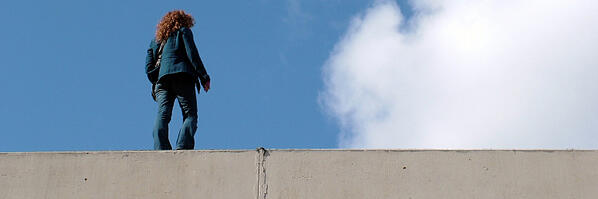It seems more trouble is brewing in the military’s upper ranks. In the same month the Army released a report detailing its problem with toxic leaders and their role in the rash of soldier suicides over the past year, the [Washington Post](http://www.washingtonpost.com/world/national-security/military-brass-behaving-badly-files-detail-a-spate-of-misconduct-dogging-armed-forces/2014/01/26/4d06c770-843d-11e3-bbe5-6a2a3141e3a9_story.html) is reporting misconduct among the nation’s top brass. From allegations drinking on duty in the Air Force to sexual misconduct and even assault in the Army and Navy, no branch was exempt.
What is the source of this widespread corruption? From the article:
***Martin L. Cook, a professor of military ethics at the Naval War College in Newport, R.I., said the recent eruption of misconduct is “frankly a puzzle to everybody.” One factor, he added, may be that as officers climb higher in the ranks they become insulated and fewer people are willing to challenge or question them.*
Although this pattern of derailment is new, or more likely just newly reported, in the military, it is all too familiar to politics and the corporate world.
Judgment is a multi-part process in which an individual (a) processes the available information, (b) makes a decision, (c) receives feedback, and (d) adjusts their decision-making based on that feedback.
Business and political leaders are faced daily with heavy decisions. As they rise up the ranks, their circle of peers and advisors grows smaller and feedback scarce and more biased, putting them at greater risk of bad judgment.
In the political arena, Mitt Romney was [so insulated from realistic feedback](http://www.slate.com/articles/news_and_politics/politics/2012/11/why_romney_was_surprised_to_lose_his_campaign_had_the_wrong_numbers_bad.html) in 2012 that he was reportedly shocked as Obama won a [decisive* *victory](http://www.usnews.com/opinion/blogs/robert-schlesinger/2013/01/04/the-final-2012-presidential-election-results-arent-close). In the private sector, leaders who made and then doubled down on bad decisions launched the country into a financial crisis from which we’re still recovering.
Whether in the private sector, politics, or the military, the net effect of those poor decisions is the same:
*Cook said, military leaders recognize “they’ve got a major trust problem with the American people . . .”*
0 Comments [Click here to read/write comments](https://info.hoganassessments.com/blog/bid/333871/Military-politics-or-the-private-sector-it-s-lonely-at-the-top#comments-listing)
Topics: [leadership](https://info.hoganassessments.com/blog/topic/leadership), [judgment](https://info.hoganassessments.com/blog/topic/judgment)
## [Men should brag less, and women need to brag more](https://info.hoganassessments.com/blog/bid/332701/Men-should-brag-less-and-women-need-to-brag-more)
Posted by [Ryan Daly](https://info.hoganassessments.com/blog/author/ryan-daly) on Tue, Jan 28, 2014
- [Tweet](https://twitter.com/share)
An [article](http://pwq.sagepub.com/content/early/2013/12/20/0361684313515840.abstract) published in Psychology of Women Quarterly provides another clue to why women are so grossly outnumbered by men in the upper ranks of corporate America: they don’t brag enough.
Montana State University psychologists Jessi Smith and Meghan Huntoon recruited 78 women from a university to write a scholarship application essay promoting either their own or another person’s accomplishments. The researchers found that when participants were asked to violate the “modesty norm” by boasting about their own accomplishments, they displayed decreased motivation and performance.
As Tomas Chamorro-Premuzic, Hogan’s director of research and innovation, pointed out in his Harvard Business Review article, [“Why Do So Many Incompetent Men Become Leaders?”](http://blogs.hbr.org/2013/08/why-do-so-many-incompetent-men/), “because we commonly misinterpret displays of confidence as a sign of competence, we are fooled into believing that men are better leaders than women."
Check it out: [Smith and Huntoon’s article](http://pwq.sagepub.com/content/early/2013/12/20/0361684313515840.abstract), or [Chamorro-Premuzic’s post](http://blogs.hbr.org/2013/08/why-do-so-many-incompetent-men/).
1 Comment [Click here to read/write comments](https://info.hoganassessments.com/blog/bid/332701/Men-should-brag-less-and-women-need-to-brag-more#comments-listing)
## [What's Your Greatest Weakness?](https://info.hoganassessments.com/blog/bid/333357/What-s-Your-Greatest-Weakness)
Posted by [Ryan Daly](https://info.hoganassessments.com/blog/author/ryan-daly) on Fri, Jan 24, 2014
- [Tweet](https://twitter.com/share)

There’s a [cool post](http://blogs.hbr.org/2014/01/the-right-way-to-answer-whats-your-greatest-weakness/) from David Reese, who leads people and culture at Medallia, a Silicon Valley software startup that measures and provides data on customer experience, in which he explains the need for an honest answer to the common interview question “what is your greatest weakness?”
Reese points out that a search of career center websites reveals the advice students are getting – to focus on lesser skills or spin their weaknesses into strengths.
*This is terrible advice. It indicates to me that they’re not willing to stand up and say what’s not working — the opposite of what a startup needs.** **One of the biggest dangers for a young company is that a roomful of smart people who aren’t being honest could easily be steering their rocket ship into the ground.*
**When I interviewed at Hogan, I had a snappy answer ready to deflect this infamous question ("I have a problem properly channeling my incredible physical strength."). I was so pleased with myself that I was disappointed when the question never came.
“You never asked me about my greatest weakness,” I said on the way out the door.
“We already know,” my future boss replied.
Although this news was initially disconcerting, as I reflected on it post interview, it was rather comforting. I had already taken the assessments, they had my results, they knew my stress points, and they still wanted to have lunch and talk about my future. That seems a better, more honest place to start an interview.
1 Comment [Click here to read/write comments](https://info.hoganassessments.com/blog/bid/333357/What-s-Your-Greatest-Weakness#comments-listing)
Topics: [derailment](https://info.hoganassessments.com/blog/topic/derailment), [weakness](https://info.hoganassessments.com/blog/topic/weakness)
## [Australian researcher identifies least narcissistic CEOs in U.S.](https://info.hoganassessments.com/blog/bid/331985/Australian-researcher-identifies-least-narcissistic-CEOs-in-U-S)
Posted by [Ryan Daly](https://info.hoganassessments.com/blog/author/ryan-daly) on Wed, Jan 22, 2014
- [Tweet](https://twitter.com/share)

It is alarmingly easy to come up with a list of narcissistic CEOs – Donald Trump, the late Steve Jobs, and Mark Zuckerberg are the first three that pop into my head, as do an endless number of banking and finance industry executives (full disclosure: I just saw the excellent [*The Wolf of Wall Street*](http://www.imdb.com/title/tt0993846/?ref_=nv_sr_1), so my feeling here may be a little skewed).
What about coming up with a list of the *least* narcissistic CEOs? That, it turns out, is a little more difficult. Fortunately, someone did it for me.
Alex Frino, the Dean of [Macquarie Graduate School of Management](http://www.mgsm.edu.au/) in Sydney, content analyzed quarterly earnings call transcripts for the 100 largest companies in America and calculated the ratio of how frequently CEOs used the pronouns 'I', 'me', or 'mine' versus 'we', 'our', or 'ours'. According to this metric, the three most humble CEOs in America are [Pat Gelsinger](http://www.vmware.com/company/leadership/pat-gelsinger.html) (CEO of VMware), [Gregg Steinhafel](http://pressroom.target.com/leadership/gregg-w-steinhafel) (CEO of Target), and [Omar Ishrak](http://newsroom.medtronic.com/phoenix.zhtml?c=251324&p=irol-govBio&ID=227561) (CEO of Medtronic).
You can check out a more complete list [here](http://chiefexecutive.net/narcissism-as-a-predictor-of-company-performance).
As the article points out, the link between CEO humility and performance is possible, although uncertain – VMware and others are high performers in their categories, while Target and Medtronic are struggling. And, the story points out, there is a conspicuous absence of leaders from the tech or financial industries – hotbeds of high-performing companies lead by word-class narcissists.
“Many leaders dominating the workforce today possess narcissistic leadership traits, and in this era of constant change and innovation, it seems natural that charismatic, risk takers would take charge,” Frino said. “Is narcissism, generally viewed as a personality defect, actually a good thing? Does the world in fact need more narcissistic CEOs? Or is this a trait we should be actively teaching future leaders to avoid?”
0 Comments [Click here to read/write comments](https://info.hoganassessments.com/blog/bid/331985/Australian-researcher-identifies-least-narcissistic-CEOs-in-U-S#comments-listing)
Topics: [narcissism](https://info.hoganassessments.com/blog/topic/narcissism)
## [Want your creative employees’ best work? Don’t be Phil Spector.](https://info.hoganassessments.com/blog/bid/331900/Want-your-creative-employees-best-work-Don-t-be-Phil-Spector)
Posted by [Ryan Daly](https://info.hoganassessments.com/blog/author/ryan-daly) on Mon, Jan 13, 2014
- [Tweet](https://twitter.com/share)
Here’s a little punk-rock music history for you:
Prior to his 2009 conviction for the murder of actress Lana Clarkson, Phil Spector was one of music’s most accomplished producers – crafting the legendary “wall of sound” that defined 1960s pop music. When Spector paired with the Ramones to produce their 1979 album End of the Century, it was widely considered a meeting of some of the greatest minds in music.
However, the partnership was anything but harmonious. Spector was a maniacal producer, constantly remixing songs and reportedly holding the band at gunpoint while he forced guitarist Johnny Ramone to play the opening chord of “Rock ‘n’ Roll High School” hundreds of times. The result? An album that cost more than $700,000 (about $2.4 million today) and is considered by critics, fans, and the band itself to be the Ramones worst work.
What does any of this have to do with anything? It illustrates three ways that companies typically mismanage their creative employees.
1. Holding them hostage – OK, so your managers probably aren’t brandishing firearms at their employees (we hope), but they may not be giving them the space they need to be creative.
Giving people freedom and flexibility enhances creativity
at work. Don’t constrain your creative employees; don’t force them to follow processes or structures. Let them work remotely and outside normal hours; don’t ask where they are, what they are doing, or how they do it.
2. Surrounding them with too many other creative people – Creative people don’t play well together; 360° data demonstrates that innovative individuals are driven by the desire for success and control and display above-average drive and competitiveness. When two of these personalities collide, they tend to compete for ideas or keep them to themselves.
Spector had his vision for the album, and the Ramones had theirs. Forcefully combining the two resulted in a lack-luster end product.
3. Putting them under bad managers – Research shows that about 75% of managers have no business being in charge of others, and nothing kills creativity like a crappy boss. This could account for an Adobe survey in which only one in four respondents said they were living up to their creative potential.
Whether or not Spector actually held the band at gunpoint, the Ramones all expressed disappointment in the songwriting on End of the Century.
Want to know more about managing your creative employees? Check out our complimentary eBook, [5 ways to Manage Creativity and Drive Innovation](https://info.hoganassessments.com/manage-creativity).
2 Comments [Click here to read/write comments](https://info.hoganassessments.com/blog/bid/331900/Want-your-creative-employees-best-work-Don-t-be-Phil-Spector#comments-listing)
Topics: [creativity](https://info.hoganassessments.com/blog/topic/creativity)
## [Toxic Leaders](https://info.hoganassessments.com/blog/bid/331562/Toxic-Leaders)
Posted by [Ryan Daly](https://info.hoganassessments.com/blog/author/ryan-daly) on Fri, Jan 10, 2014
- [Tweet](https://twitter.com/share)
For me, nothing is better than a good Bill Murray movie – especially the underappreciated 1981 classic *Stripes*. In case you aren’t familiar, here is the plot synopsis on [Rotten Tomatoes](http://www.rottentomatoes.com/m/stripes/).
One of my favorite characters in the film is Sgt. Hulka, the hard-assed drill sergeant that makes Murray’s boot camp experience a living hell until he is unwittingly injured on the artillery range.
Hulka’s particular brand of abuse is funny and relatively mild – limited to pushups and latrine duty – but according to a Jan. 6 [story on NPR](http://www.npr.org/2014/01/06/259422776/army-takes-on-its-own-toxic-leaders?sc=tw&cc=share), the non-fictional U.S. Army has a real and decidedly unfunny problem with its leadership.
The story details the results of the military branch’s investigation into last year’s rash of suicides and suicide attempts among soldiers stationed in Iraq. According to the report, many of the 30 who attempted or completed suicide last year had one thing in common: toxic leaders.
The corporate world is no stranger to toxic leaders; most people have worked for one at some point in their careers. Under the strain of a combat deployment, however, toxic leaders actions can push already fragile soldiers over the edge.
*"Oftentimes platoon leaders will take turns seeing who can smoke this guy the worst. Seeing who can dream up the worst torture, seeing who can dream up the worst duties, seeing who can make this guy's life the most miserable," says [researcher Dave] Matusda. "When you're ridden mercilessly, there's just no letup, a lot of folks begin to fold."*
Thankfully, the Army is taking aggressive steps to fix their leadership problem, instituting anonymous 360 reviews for more than 1,000 commanders by next year as well as kicking out several officers. Check out the full story over at [NPR](http://www.npr.org/2014/01/06/259422776/army-takes-on-its-own-toxic-leaders?sc=tw&cc=share).
4 Comments [Click here to read/write comments](https://info.hoganassessments.com/blog/bid/331562/Toxic-Leaders#comments-listing)
Topics: [leadership](https://info.hoganassessments.com/blog/topic/leadership)
[All posts](https://info.hoganassessments.com/blog/all) [Next](https://info.hoganassessments.com/blog/author/ryan-daly/page/2)
### Subscribe to our Blog
[](http://cta-redirect.hubspot.com/cta/redirect/153377/711cc0c8-c2ea-4b1c-b2eb-bc52e9361086)
### Meet Our Bloggers
[Blaine Gaddis](https://info.hoganassessments.com/blog/blaine-gaddis/)
[Chris Duffy](https://info.hoganassessments.com/blog/chris-duffy/)
[Dan Paulk](https://info.hoganassessments.com/blog/dan-paulk/)
[Darin Nei](https://info.hoganassessments.com/blog/darin-nei/)
[Dustin Hunter](https://info.hoganassessments.com/blog/dustin-hunter/)
[Jackie Sahm](https://info.hoganassessments.com/blog/jackie-vanbroekhoven/)[Jennifer Lowe
](https://info.hoganassessments.com/blog/jennifer-lowe/)[Jesse Whitsett](https://info.hoganassessments.com/blog/jesse-whitsett/)[Jocelyn Hays](https://info.hoganassessments.com/blog/jocelyn-hays)
[Krista Pederson](https://info.hoganassessments.com/krista-pederson)[
Kristin Switzer
](https://info.hoganassessments.com/blog/kristin-switzer/)[Michael Sanger](https://info.hoganassessments.com/blog/michael-sanger)
[Miranda Hanes](https://info.hoganassessments.com/blog/miranda-hanes/)[Morgan Meister-Murry](https://info.hoganassessments.com/blog/morgan-meister/)
[Rebecca Callahan](https://info.hoganassessments.com/rebecca-callahan)[Robert Hogan](https://info.hoganassessments.com/blog/robert-hogan/)
[Scott Gregory](https://info.hoganassessments.com/scott-gregory?&t=19495)[Steve Nichols](https://info.hoganassessments.com/blog/steve-nichols/)
[Tomas Chamorro-Premuzic](https://info.hoganassessments.com/blog/tomas-chamorro-premuzic/)
### Most Popular Posts
### Connect
### [How To Buy Why Hogan?](http://www.hoganassessments.com/content/how-buy)
© 2014 Hogan Assessment
Systems
[Privacy Policy](http://www.hoganassessments.com/content/privacy-policy) | [Legal Policy](http://www.hoganassessments.com/content/legal-policy)