
The Generational Workforce of the Future

Posted by Jackie VanBroekhoven on Mon, Jun 18, 2012

workforceWhile participating at the Human Resource People & Strategy conference in New York last month, I attended a session on generational differences in the workplace of the future. The presenter, Jeanne Meister, presented on the unique conditions that the workplace of the near future will create: Specifically, by 2020 there will be five generations working together in the U.S. economy. Due to the anticipated delayed retirement of our aging workforce, by 2020 the US will see Traditionalists, Baby Boomers, Generation X, Generation Y, and Generation Z attempting to peacefully coexist in the same workforce.

As a warm-up exercise, presenter Jeanne Meister asked a real-time poll question to see the generational spread of her audience. The poll question used audience response technology that prompted respondents to answer the question by texting their answers. A bar chart appeared up on the projector with a column for each of the five generations that updated audience responses in real time. We watched as the Generation Y bar spiked rapidly, towering over the rest. Within 15 seconds, Generation X had dwarfed Y on the chart and the Baby Boomers took the rightful lead soon after. Several minutes later, Jeanne was carrying on with her presentation as the Traditionalists bar was still slowly growing on the chart behind her as they figured out how to enter their responses via text.

This was a well-timed example of some of the differences that exist between the generations. The Bureau of Labor Statistics projects that Millennials will overtake the majority representation in the workforce by 2015. This statistic seemed to grip the room with intense fear of the hyper-connected, over-entitled twenty-somethings getting ready to take their offices and boardrooms by storm. The well-publicized stereotypes for Millennials include attention-seeking, impatience, and needing constant, immediate feedback.

However Jeanne communicated a message of optimism rather than fear: she emphasized the need to understand each generation more fully to better attract, recruit, and retain multi-generational talent. Not just in terms of actively creating an organizational culture that will be attractive for younger generations, but also in terms of understanding what it will take to keep all five generations engaged and on board in tomorrow’s organizations. Although Millennials are currently in the spotlight, I agree with Jeanne that it will be crucial to fully understand differences between all of the generations in terms of how they think, what they want/value, and what skills gaps exist between them.

Although there is much debate and disagreement on what criteria delineates each generation, the loose definitions below will serve our purposes:

Generation Nickname Born During Stereotypically Known For: Est. % in 2020 Workforce
Traditionalists The Silent Generation
The Greatest Generation
1925 to 1945 Loyalty, respect for authority, discipline, adherence to rules 1%
Baby Boomers The Post-War Generation 1946 to 1964 Optimism, innovation, achievement, individualism 22%
Generation X Gen X 1965 to 1980 Autonomy, productivity, recognition, adaptability 20%
Generation Y Millennials 1981 to 2000 Self-expression, comfort w/ change, resilience, global awareness, connected 50%
Generation Z Net Generation
Digital Natives
2000 & after Technologically savvy, fast-paced, socially connected, creative, collaboration 7%

As we consider the impact of the future generational landscape, we often talk in terms of personality descriptors and other character-based labels, such as confident, entitled, and social. Research indicates that while personal values may differ based on age, culture, and other demographics, personality is partially genetic and is an individual-level phenomenon. Attempts to personify an entire generation based on behaviors from a small sampling are problematic for more than one reason. Characterizing generations based on defining events (i.e., the great depression), expectations (i.e., immediacy vs. delayed gratification), and environmental factors (i.e., technology/innovation) makes much more sense. It should not be surprising that the generation that suffered through the depression might have a different outlook than the generation that put the first man on the moon. Nor should it shock us that the generation that is currently being brought up on the Internet and technology consumes information differently than the generation brought up on books and newspapers.

It seems there would be more to learn about how these people can work effectively together, rather than focusing solely on the differences or making sweeping statements about how they are similar or distinct.

Topics: employee selection, talent management

The Generational Workforce of the Future

Posted by JVanBroekhoven on Sun, Jun 17, 2012

workforceWhile participating at the Human Resource People & Strategy conference in New York last month, I attended a session on generational differences in the workplace of the future. The presenter, Jeanne Meister, presented on the unique conditions that the workplace of the near future will create: Specifically, by 2020 there will be five generations working together in the U.S. economy. Due to the anticipated delayed retirement of our aging workforce, by 2020 the US will see Traditionalists, Baby Boomers, Generation X, Generation Y, and Generation Z attempting to peacefully coexist in the same workforce.



As a warm-up exercise, presenter Jeanne Meister asked a real-time poll question to see the generational spread of her audience. The poll question used audience response technology that prompted respondents to answer the question by texting their answers. A bar chart appeared up on the projector with a column for each of the five generations that updated audience responses in real time. We watched as the Generation Y bar spiked rapidly, towering over the rest. Within 15 seconds, Generation X had dwarfed Y on the chart and the Baby Boomers took the rightful lead soon after. Several minutes later, Jeanne was carrying on with her presentation as the Traditionalists bar was still slowly growing on the chart behind her as they figured out how to enter their responses via text.

This was a well-timed example of some of the differences that exist between the generations. The Bureau of Labor Statistics projects that Millennials will overtake the majority representation in the workforce by 2015. This statistic seemed to grip the room with intense fear of the hyper-connected, over-entitled twenty-somethings getting ready to take their offices and boardrooms by storm. The well-publicized stereotypes for Millennials include attention-seeking, impatience, and needing constant, immediate feedback.

However Jeanne communicated a message of optimism rather than fear: she emphasized the need to understand each generation more fully to better attract, recruit, and retain multi-generational talent. Not just in terms of actively creating an organizational culture that will be attractive for younger generations, but also in terms of understanding what it will take to keep all five generations engaged and on board in tomorrow’s organizations. Although Millennials are currently in the spotlight, I agree with Jeanne that it will be crucial to fully understand differences between all of the generations in terms of how they think, what they want/value, and what skills gaps exist between them.

Although there is much debate and disagreement on what criteria delineates each generation, the loose definitions below will serve our purposes:

Generation Nickname Born During Stereotypically Known For: Est. % in 2020 Workforce
Traditionalists The Silent Generation
The Greatest Generation
1925 to 1945 Loyalty, respect for authority, discipline, adherence to rules 1%
Baby Boomers The Post-War Generation 1946 to 1964 Optimism, innovation, achievement, individualism 22%
Generation X Gen X 1965 to 1980 Autonomy, productivity, recognition, adaptability 20%
Generation Y Millennials 1981 to 2000 Self-expression, comfort w/ change, resilience, global awareness, connected 50%
Generation Z Net Generation
Digital Natives
2000 & after Technologically savvy, fast-paced, socially connected, creative, collaboration 7%

As we consider the impact of the future generational landscape, we often talk in terms of personality descriptors and other character-based labels, such as confident, entitled, and social. Research indicates that while personal values may differ based on age, culture, and other demographics, personality is partially genetic and is an individual-level phenomenon. Attempts to personify an entire generation based on behaviors from a small sampling are problematic for more than one reason. Characterizing generations based on defining events (i.e., the great depression), expectations (i.e., immediacy vs. delayed gratification), and environmental factors (i.e., technology/innovation) makes much more sense. It should not be surprising that the generation that suffered through the depression might have a different outlook than the generation that put the first man on the moon. Nor should it shock us that the generation that is currently being brought up on the Internet and technology consumes information differently than the generation brought up on books and newspapers.

It seems there would be more to learn about how these people can work effectively together, rather than focusing solely on the differences or making sweeping statements about how they are similar or distinct.

Topics: employee selection

Important Differences Between Groups and Teams

Posted by rtrost@hoganassessments.com on Sun, Jun 17, 2012

Nine people rowing a long kayak as a team. Differences Between Groups and Teams

The terms team and group are often used interchangeably, but there are some differences between groups and teams.

We define teams as consisting of three to 25 people who:

– Work toward a common set of goals
– Work jointly
– Share common leadership
– Hold joint accountability for performance
– See themselves as being part of a team with common goals and shared fates

Groups and Teams

This definition of teams is somewhat different from the usual definition in three ways. First, according to this definition dyads are not teams. The dynamics between any two people are much simpler than those between three or more people. Second, this definition assumes people share a “mental model” about the teams to which they belong. In other words, they identify themselves as being members of a particular team and tend to have common interpretations of events. And third, teams tend to be fairly small—usually less than 25 people. Larger groups may call themselves teams (such as a professional football team) but in reality, they are usually groups made up of various sub-teams (the offensive unit, defensive unit, etc.). Common examples of teams might include commercial aircrews, crews of firefighters, United States Army platoons, product development teams, manufacturing shift workers, fast food restaurant crews, research and development teams, and soccer teams. The individuals in each of these examples share common goals, depend on the help of the other team members, share leadership and common fates, and most importantly, identify with their teams.

Groups are clusters of people that do not share these five characteristics to the same extent as teams. A regional sales team responsible for selling insurance and other financial services to local citizens would be a prototypical group. In this so-called team, each sales rep has individual revenue and profitability goals for an assigned geographic territory. An individual’s ability to achieve these goals does not depend on what the other sales reps do; instead, it is completely dependent upon that person’s own performance. Although individual efforts contribute towards the region’s revenues and profitability goals, the region’s performance is merely the sum of each rep’s individual efforts. If a regional sales manager wants to increase revenues, then he or she could add reps, expand territories, increase prices, or change the product mix; requiring the reps to work more closely together would have little if any impact on the region’s financial performance.

Leading Groups and Teams

This is not to say that leaders play passive roles when managing groups. In fact, far from it! Leaders in charge of groups need to ensure that the members operate under the same assumptions regarding customers and competitors, possess the right skills, stay motivated, share information, have adequate resources, achieve their individual goals, and get differences quickly resolved. Contrast these leadership demands with those of a head surgeon of a cardiovascular surgical team. The head surgeon would have many of these same leadership responsibilities but would also need to ensure that their fellow surgeons, anesthesiologists, nurse practitioners, and physician assistants shared common goals, cooperated, used common work processes, had seamless task handoffs, shared a common fate, and identified with the team as they put stents and pacemakers into patients. Thus, the leadership demands on people in charge of teams are more extensive (and consequently more difficult to master) than the demands on people in charge of groups.

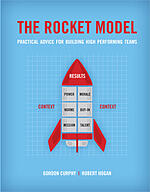
This blog post was authored by Gordon Curphy, managing partner of Curphy Leadership Solutions and author of The Rocket Model.

Topics: teams

Are You a Workaholic?

Posted by Hogan Assessments on Thu, Jun 14, 2012

There is no denying that technology has changed how we do business. We can stay connected to our colleagues 24 hours a day from virtually anywhere in the world, and access to limitless amounts of information is at the touch of our fingers.

On the one hand, this increased connectivity allows us to move faster, be more productive, and work harder than ever before. On the other hand, it makes for a long workday.

But how much is too much? In a survey of more than 600 people in multiple jobs and industries across more than 50 countries, Hogan found that:

The 40-hour workweek is dead:

describe the image

Our respondents were unusually engaged:
“Engagement refers to how employees perceive their jobs and employers,” said Hogan President Dr. Robert Hogan. “It is the opposite of alienation. When employees are engaged, they like their jobs, they work hard at their jobs, they take initiative, and they show loyalty.”

Engaged Numbers

Highly engaged respondents were more likely to:
• Talk to friends and family about work more than once per day
• Believe that they enjoy their job more than their friends and family
• Work more than 50 hours a week
• Work outside of business hours because they want to

“How people react to constant availability depends on how engaged they are,” Hogan said. “The more engaged an employee, the more he or she will be willing to bring work into their family/home life.”

Topics: employee engagement, workaholic

Are You a Workaholic?

Posted by Hogan Assessments on Wed, Jun 13, 2012

There is no denying that technology has changed how we do business. We can stay connected to our colleagues 24 hours a day from virtually anywhere in the world, and access to limitless amounts of information is at the touch of our fingers.

On the one hand, this increased connectivity allows us to move faster, be more productive, and work harder than ever before. On the other hand, it makes for a long workday.

But how much is too much? In a survey of more than 600 people in multiple jobs and industries across more than 50 countries, Hogan found that:

The 40-hour workweek is dead:

describe the image

Our respondents were unusually engaged:
“Engagement refers to how employees perceive their jobs and employers,” said Hogan President Dr. Robert Hogan. “It is the opposite of alienation. When employees are engaged, they like their jobs, they work hard at their jobs, they take initiative, and they show loyalty.”

Engaged Numbers

Highly engaged respondents were more likely to:
• Talk to friends and family about work more than once per day
• Believe that they enjoy their job more than their friends and family
• Work more than 50 hours a week
• Work outside of business hours because they want to

“How people react to constant availability depends on how engaged they are,” Hogan said. “The more engaged an employee, the more he or she will be willing to bring work into their family/home life.”

Topics: employee engagement

Four Common Myths About Teams

Posted by Hogan Assessments on Mon, Jun 11, 2012

describe the imageHumans are social animals and spend much of their time working in groups and teams, yet most people don’t understand the dynamics of effective teamwork. That is not to say people do not recognize good teamwork when they see it, but many do not know what to do in order to get people to work together effectively. Some of this confusion is due to the following misunderstandings about teams and teamwork:

Myth #1: Teams always perform better than individuals. Although we like to think that groups outperform individuals, there are some tasks that are better performed by individuals. Repairing cars, setting up home theaters, and conducting sales calls illustrate this clearly. Yes, teams of mechanics can work on cars and companies can endorse eight-legged sales calls, but in many cases this would degrade the performance of the individuals doing the work. Our default action is to assign work to groups rather than individuals and this often leads to redundancies and inefficiencies. Leaders need to look at the nature of the work to be performed and determine the best way to get it done.

Myth #2: Athletic teams are good analogies for business teams. Leaders often use athletic teams as examples for creating high-performing work teams. Given the prevalence and visibility of professional sports teams, these analogies are understandable but misguided. Work teams are nothing like athletic teams. Think about 2012 Super Bowl Champions the New York Giants. Many private and public sector leaders would love their teams to perform like the Giants, but professional athletic teams differ from work teams in five important ways. First, professional athletic teams obsess over talent. Potential players must participate in combines, mini-camps, training camps, and preseason games before final hiring decisions are made. Many work team members are selected on the basis of availability and internal politics rather than skill. Second, athletic teams practice-to-play ratio is something like 100-to-1, whereas work teams spend little if any time practicing. Third, professional athletic teams have clear team goals (i.e., win a championship) and objective measures of success (win-loss records), whereas work teams often suffer from ill-defined goals and metrics. Fourth, the challenges and threats facing professional athletic teams (i.e., next week’s opponent) are clearly understood, whereas the challenges facing work teams are much harder to anticipate. Finally, athletic coaches teach their teams how to win. They are constantly teaching team members new strategies and tactics for beating competitors, whereas work leaders rarely, if ever, educate their teams. These differences do not mean work teams should not borrow some of the best practices of professional athletic teams, but mindlessly applying sports analogies to work teams is not particularly useful.

Myth #3: Corporations are team-oriented. If you look at the corporate values of any company, collaboration and teamwork usually appear near the top of the list. Although companies constantly preach the importance of teamwork many of their processes and systems encourage individualism. Most company’s performance management systems are based on individually oriented goals and accomplishments; team goals, contributions, and results typically take a back seat. Likewise, hiring and compensation systems, budgets, and support programs (i.e., IT help desks) are often slanted more towards individuals than groups. Though they often hope for teamwork, companies reward individual effort.

Myth #4: Effective teamwork is common in most organizations. Many people believe that if you put together a group of high performing individuals, they will eventually coalesce into a high performing team. Unfortunately we all know examples of work and athletic teams that had the right talent but failed to perform to expectations. Effective teamwork is actually a relatively rare occurrence. Although we have all belonged to hundreds of teams, only a few qualify as high performing teams. Because most groups and teams have ill-defined goals, use ineffective work processes, squander resources, or suffer from interpersonal conflict, they usually fall short of their goals. 

By Gordon Curphy
Curphy Consulting Corporation
Guest blogger and author of The Rocket Model

Topics: leadership, teams, employee engagement, The Rocket Model, team performance, Groups, Team Facilitation

Four Common Myths About Teams

Posted by Hogan Assessments on Sun, Jun 10, 2012

describe the imageHumans are social animals and spend much of their time working in groups and teams, yet most people don’t understand the dynamics of effective teamwork. That is not to say people do not recognize good teamwork when they see it, but many do not know what to do in order to get people to work together effectively. Some of this confusion is due to the following misunderstandings about teams and teamwork:

Myth #1: Teams always perform better than individuals. Although we like to think that groups outperform individuals, there are some tasks that are better performed by individuals. Repairing cars, setting up home theaters, and conducting sales calls illustrate this clearly. Yes, teams of mechanics can work on cars and companies can endorse eight-legged sales calls, but in many cases this would degrade the performance of the individuals doing the work. Our default action is to assign work to groups rather than individuals and this often leads to redundancies and inefficiencies. Leaders need to look at the nature of the work to be performed and determine the best way to get it done.

Myth #2: Athletic teams are good analogies for business teams. Leaders often use athletic teams as examples for creating high-performing work teams. Given the prevalence and visibility of professional sports teams, these analogies are understandable but misguided. Work teams are nothing like athletic teams. Think about 2012 Super Bowl Champions the New York Giants. Many private and public sector leaders would love their teams to perform like the Giants, but professional athletic teams differ from work teams in five important ways. First, professional athletic teams obsess over talent. Potential players must participate in combines, mini-camps, training camps, and preseason games before final hiring decisions are made. Many work team members are selected on the basis of availability and internal politics rather than skill. Second, athletic teams practice-to-play ratio is something like 100-to-1, whereas work teams spend little if any time practicing. Third, professional athletic teams have clear team goals (i.e., win a championship) and objective measures of success (win-loss records), whereas work teams often suffer from ill-defined goals and metrics. Fourth, the challenges and threats facing professional athletic teams (i.e., next week’s opponent) are clearly understood, whereas the challenges facing work teams are much harder to anticipate. Finally, athletic coaches teach their teams how to win. They are constantly teaching team members new strategies and tactics for beating competitors, whereas work leaders rarely, if ever, educate their teams. These differences do not mean work teams should not borrow some of the best practices of professional athletic teams, but mindlessly applying sports analogies to work teams is not particularly useful.

Myth #3: Corporations are team-oriented. If you look at the corporate values of any company, collaboration and teamwork usually appear near the top of the list. Although companies constantly preach the importance of teamwork many of their processes and systems encourage individualism. Most company’s performance management systems are based on individually oriented goals and accomplishments; team goals, contributions, and results typically take a back seat. Likewise, hiring and compensation systems, budgets, and support programs (i.e., IT help desks) are often slanted more towards individuals than groups. Though they often hope for teamwork, companies reward individual effort.

Myth #4: Effective teamwork is common in most organizations. Many people believe that if you put together a group of high performing individuals, they will eventually coalesce into a high performing team. Unfortunately we all know examples of work and athletic teams that had the right talent but failed to perform to expectations. Effective teamwork is actually a relatively rare occurrence. Although we have all belonged to hundreds of teams, only a few qualify as high performing teams. Because most groups and teams have ill-defined goals, use ineffective work processes, squander resources, or suffer from interpersonal conflict, they usually fall short of their goals. 

By Gordon Curphy
Curphy Consulting Corporation
Guest blogger and author of The Rocket Model

Meet the Show-Off

Posted by Hogan Assessments on Wed, Jun 06, 2012

You’ve seen him around the office – the life of the party, the guy with the novelty necktie, and funny but slightly offensive slogan on his coffee mug. All the world is a stage, and he’s got the leading role. After all, you don’t get ahead in this world without standing out.

On the climb up the corporate ladder, the line between strength and weakness isn’t always clear. Although his penchant for attention can be amusing to co-workers, he is also a distraction in the office, often too busy showing off to make a real contribution.

Watch this video to see the show-off at work, or visit www.howdoyouderail.com to view the entire HDS video series. Follow on Twitter @ImHiColorful #howdoyouderail

1084 colorful vid

Topics: Hogan Development Survey, HDS, HDS scales, HDS videos

Meet the Show-Off

Posted by Hogan Assessments on Tue, Jun 05, 2012

You’ve seen him around the office – the life of the party, the guy with the novelty necktie, and funny but slightly offensive slogan on his coffee mug. All the world is a stage, and he’s got the leading role. After all, you don’t get ahead in this world without standing out.

On the climb up the corporate ladder, the line between strength and weakness isn’t always clear. Although his penchant for attention can be amusing to co-workers, he is also a distraction in the office, often too busy showing off to make a real contribution.

Watch this video to see the show-off at work, or visit www.howdoyouderail.com to view the entire HDS video series. Follow on Twitter @ImHiColorful #howdoyouderail

1084 colorful vid

Topics: HDS videos

3 Steps to Better Hiring

Posted by Jocelyn Hays on Mon, Jun 04, 2012

istock 000000989612xsmallIn his recent Wall Street Journal article, “Software Raises Bar for Hiring,” David Wessel raises some interesting talent acquisition questions: As candidate pools have grown exponentially in the struggling economy and screening processes have become more efficient and cost-effective through the use of various software solutions, have organizations become overly stringent in their job requirements? Are employers cutting training programs, and therefore costs, based on the idea that they will be able to find someone in the vast pool of available workers who have the skills they require?

It seems that many organizations make the mistake of setting forth myriad requirements in their job requisitions, which are then programmed into software solutions used to screen out candidates early in the selection process. As a result the organization fails to find anyone for the job. At the same time, unemployed workers apply to positions for which they believe they are well qualified only to find themselves dropped from the selection process based solely on an initial application or resume submission. In the end frustration abounds – organizations are frustrated by the lack of “qualified” talent, and job seekers are frustrated by organizations that eliminate them from the selection process based solely on an initial screen.

Individual organizations can take steps to increase the likelihood of finding the right person for the job, regardless of what that job might be.

1. Carefully define job requirements

If your organization is struggling to find qualified candidates, make sure you are evaluating the must-haves that an individual needs to be successful in the job. You might find that you have been focusing on nice-to-haves (additional years of experience, advanced degrees for jobs that don’t require them) that do not truly differentiate high and low performance on the job. 

2. Focus on competencies, not experience

It is also important to consider what the employee needs day one on the job. Instead of looking for someone who has performed the exact same type of work before, focus on finding a candidate with the core competencies (knowledge, skills, abilities, and traits) required to be successful and supplement that talent with organization or job-specific training and education.

3. Take a whole employee life cycle approach

Organizations would also be wise to take a whole employee life cycle approach that includes recruitment, selection, development and retention. In some fields, such as engineering and IT, numerous opportunities are available to experienced workers, and organizations may find it hard to hold onto strong talent. When recruiting and hiring employees, ensure that the candidates you select are a good fit not just for a particular job, but also for your overall culture and work environment. Once employees are on the job, take steps to contribute to their professional development and keep them engaged. Depending on your structure this may include identifying high potentials to include in succession planning efforts, but don’t overlook middle-of-the-road performers who are your organization’s backbone – make sure they have opportunities to grow and develop their skills.  

Talent acquisition and management are complex processes, but careful planning at each step will help your organization hire and retain the right talent. Using selection techniques that identify candidates with the potential for success and focusing on onboarding, development, and engagement post-hire will go a long way towards ending employers’ and job seekers’ frustration.

Topics: employee selection, hiring, talent management, unemployment, talent acquisition

Subscribe to our Blog

Most Popular Posts

Connect