

Chasing Your Shadow: Leadership Brand and Derailment

Posted by JVanBroekhoven on Tue, Oct 18, 2011

Leadership brand and derailmentI recently listened to a talk given by Greg Barnett, one of Hogan’s veteran consultants and our Director of Product Development, about the importance of defining a strong leadership brand. The concept of an individual leadership brand departs from our conventional understanding of branding from an organizational standpoint. For example, consider the brand that Apple computers has created; the exemplars of innovation, elegant simplicity, and sleek, modern, technology. Now consider the individual leadership brand that Steve Jobs created – in many ways, his personality embodies many of the same qualities of Apple’s brand – Jobs is hailed as an innovative, creative genius who changed the world with his brilliance and innovation. Even his physical image aligned with Apple’s brand – sleek, simple, and timeless with a modern slant.

So, what does a strong leadership brand get you? To cite Barnett, developing a strong leadership brand can earn friends, fans, and followers – and not just the kind you get on Facebook or Twitter. It defines your identity and distinctiveness, communicates what value you bring to the table, and provides focus and direction to guide leadership efforts. It also insulates you from your shortcomings and mistakes.

A strong, consistent brand creates a kind of umbrella, so-to-speak, that defines you as a leader and makes your day-to-day actions (and blunders) less relevant. For example, consider the legacy left behind by Bill Clinton; despite his well-publicized lapses in judgment and abuse of political power, he remains a beloved American president who is remembered for leading our nation through one of the most prosperous decades in U.S. History. Although President Clinton withstood some harsh criticism and mockery, his overall image, strong leadership brand, and arguably his charm, helped cushion these blows and preserve his overall reputation and contributions in the hearts, minds, and history books of the American people. By contrast, Howard Dean’s brand image was not strong enough to save him from his “I have a scream…” speech, which sealed his fate forever as a volatile lunatic unfit for presidential office.

However, no matter how magnetic, impactful, or authentic the leadership brand, all human beings have a dark side – a kind of shadow that follows you around, lurking in the peripheral, with the potential to emerge in times of stress, pressure, novelty, or boredom. This is what Hogan refers to as leadership derailment, wherein our personality characteristics betray us, degrade our success, and generally send us on a fast train to nowhere. Our shadow is particularly dangerous because it tends to lie beyond the reach of our awareness, but is highly apparent to those around us.

In the wake of Jobs’ premature passing, his strong leadership brand permits his fans and followers to remember him fondly for his brilliant contributions to the world, his insistence on quality, and the legacy he leaves behind him at Apple. Nobody is highlighting his failures, setbacks, or well-known dark side. Well, almost nobody…

In a scathing post-mortem commentary titled What Everyone is Too Polite to Say About Steve Jobs, Gawker’s Ryan Tate points out some elements of Steve Jobs’ shadow. Some have described him as a ruthless tyrant who inspired fear among his ranks with his hostility, unpredictable temperament, humiliation tactics, and harsh censorship practices. Yet, in the aftermath of Jobs’ death, he is still heralded as a prodigy, a strategic genius, and a gifted innovator who changed the technological landscape forever. Only history will be able to tell us which version of Jobs lives in the collective public memory – the genius, or his shadow? Was his brand strong enough to fend off the smudge that his shadow left on an otherwise pristine career?

In listening to Greg’s talk, he posed some powerful questions that are still rattling around persistently in my own head many days later: What defines your leadership brand? What do you stand for? What do people say about you when you’re not around?

People have a difficult time answering these questions honestly because human beings are masters of self-deception. Our clever minds and defensive egos do a phenomenal job of protecting us from the truth, as do the people around us who shield us from the painful reality that we are not perfect. We receive feedback from our peers and loved ones in the form of sugar-coated rubber bullets that contain a shred of truth, but do little to help us become truly self-aware.

It is worth reflecting on the unintended consequences that your shadow can have on your brand reputation and ultimate success. If you get to know your shadow, you arm yourself with the self-awareness needed to manage your dark side, prevent derailment, and create a true leadership brand that is authentic, high-quality, and differentiates you from others.
 

Topics: derailment

Five Essentials of Execution

Posted by Robert Hogan on Mon, Oct 17, 2011

Five1. The agenda to be executed should make sense to those who must execute it — people should be persuaded that the agenda is worth following.

2. Someone needs to be held accountable for getting itdone — explicit, as opposed to diffuse responsibility.

3. The person who is accountable for getting it done needs to be a person who can get things done. The best estimate is that well over half of the managers in any organization “can’t get anything done.”

4. There needs to be some possibility that by the time it gets done, someone senior in the organization will still care — as opposed to the attention of the senior people having shifted on to the next problem du jour.

5. There should be a payoff for the person responsible for getting it done, as opposed to finishing the project and having it ignored.

Five Essentials of Execution

Posted by RHogan on Sun, Oct 16, 2011

Five1. The agenda to be executed should make sense to those who must execute it — people should be persuaded that the agenda is worth following.

2. Someone needs to be held accountable for getting itdone — explicit, as opposed to diffuse responsibility.

3. The person who is accountable for getting it done needs to be a person who can get things done. The best estimate is that well over half of the managers in any organization “can’t get anything done.”

4. There needs to be some possibility that by the time it gets done, someone senior in the organization will still care — as opposed to the attention of the senior people having shifted on to the next problem du jour.

5. There should be a payoff for the person responsible for getting it done, as opposed to finishing the project and having it ignored.

Self-Deception and Evolutionary Theory

Posted by Robert Hogan on Thu, Oct 13, 2011

I have been interested in the problem of self-deception (doing things for reasons that we don’t properly understand or acknowledge) my entire adult life. Writers as diverse as Karl Marx, Sigmund Freud, and JP Sartre thought self-deception was the primary source of human misery. They also argued that people should try to overcome their self-deception for moral reasons – self-deception is the cause of most bad behavior. In everyday life, self-deception most often appears as hypocrisy.



I have also been interested in evolutionary theory my entire adult life, but my views on evolutionary theory tend to depart from the conventional wisdom as set forth by John Tooby and Leda Cosmides. A central assumption of their view is that the mind is modular, that different components of the cognitive system evolved to solve different problems and that the degree to which these different mental modules communicate is an open question, and in many cases they may not.


Robert Kurzban recently published a book, Why Everyone (Else) is a Hypocrite, applying this mainstream evolutionary thinking to the problem of self-deception. Elliott Spitzer, the disgraced former Governor of New York, provides a good example of the problem. Spitzer notoriously campaigned publicly against prostitution while allegedly privately employing call girls with enthusiasm. The mainstream view of evolutionary psychology (Kurzban) explains Spitzer’s hypocrisy by arguing that his moralistic module didn’t communicate with his lust module. I think there are two problems with this argument.


First, the modular theory of the mind bears an eerie resemblance to 19th century phrenology. But more importantly, it seems wrong-headed. Karl Lashley (1890-1958) proposed what he called the law of mass action, based on a great deal of careful research on the actual workings of rats’ brains. The law of mass action maintains that the brain operates as an organized whole; specific thoughts are distributed across the brain and somehow become organized to generate appropriate solutions or behavioral responses. Lashley is generally credited with showing that the brain is much more complex than earlier researchers realized. But more importantly, it seems intuitively obvious that inputs from the various sensory systems feed into some kind of central processing unit which organizes the data, and generates appropriate responses. Otherwise, how could an organism coordinate thought and action and survive?


Second, the propensity to reflect on one’s actions and to compare them with internalized norms is an individual differences variable. People with low scores on HPI Adjustment and high scores on HPI Prudence are prone to intensive self-examination and self-criticism. People with high scores on HPI Adjustment and low scores on HPI Prudence are not prone to self-examination. Spitzer fits the second pattern to perfection.


But evolutionary theory provides a straightforward alternative account. In every social living species, cheaters or free-riders inevitably emerge. Free-riders participate in the benefits of social living – cooperation, group support, shared food – but act selfishly and contribute nothing to the welfare of the larger social group. Parenthetically, I think politicians are the free riders of democratic society. Social interaction is about impression management. Hypocrisy is the free-rider’s solution to the problem of how to endorse altruistic values while behaving selfishly. And it is worth noting that Elliott Spitzer was a career politician.
 

Topics: psychology, evolutionary theory

Self-Deception and Evolutionary Theory

Posted by RHogan on Wed, Oct 12, 2011

A white face mask with eye, nostril, and mouth holes rests on a powder blue background. The mask photo accompanies a blog post about self-deception and evolutionary theory.


I have been interested in the problem of self-deception (doing things for reasons that we don’t properly understand or acknowledge) my entire adult life. Writers as diverse as Karl Marx, Sigmund Freud, and JP Sartre thought self-deception was the primary source of human misery. They also argued that people should try to overcome their self-deception for moral reasons – self-deception is the cause of most bad behavior. In everyday life, self-deception most often appears as hypocrisy.

I have also been interested in evolutionary theory my entire adult life, but my views on evolutionary theory tend to depart from the conventional wisdom as set forth by John Tooby and Leda Cosmides. A central assumption of their view is that the mind is modular, that different components of the cognitive system evolved to solve different problems and that the degree to which these different mental modules communicate is an open question, and in many cases they may not.


Robert Kurzban recently published a book, Why Everyone (Else) is a Hypocrite, applying this mainstream evolutionary thinking to the problem of self-deception. Elliott Spitzer, the disgraced former Governor of New York, provides a good example of the problem. Spitzer notoriously campaigned publicly against prostitution while allegedly privately employing call girls with enthusiasm. The mainstream view of evolutionary psychology (Kurzban) explains Spitzer’s hypocrisy by arguing that his moralistic module didn’t communicate with his lust module. I think there are two problems with this argument.


First, the modular theory of the mind bears an eerie resemblance to 19th century phrenology. But more importantly, it seems wrong-headed. Karl Lashley (1890-1958) proposed what he called the law of mass action, based on a great deal of careful research on the actual workings of rats’ brains. The law of mass action maintains that the brain operates as an organized whole; specific thoughts are distributed across the brain and somehow become organized to generate appropriate solutions or behavioral responses. Lashley is generally credited with showing that the brain is much more complex than earlier researchers realized. But more importantly, it seems intuitively obvious that inputs from the various sensory systems feed into some kind of central processing unit which organizes the data, and generates appropriate responses. Otherwise, how could an organism coordinate thought and action and survive?


Second, the propensity to reflect on one’s actions and to compare them with internalized norms is an individual differences variable. People with low scores on HPI Adjustment and high scores on HPI Prudence are prone to intensive self-examination and self-criticism. People with high scores on HPI Adjustment and low scores on HPI Prudence are not prone to self-examination. Spitzer fits the second pattern to perfection.


But evolutionary theory provides a straightforward alternative account. In every social living species, cheaters or free-riders inevitably emerge. Free-riders participate in the benefits of social living – cooperation, group support, shared food – but act selfishly and contribute nothing to the welfare of the larger social group. Parenthetically, I think politicians are the free riders of democratic society. Social interaction is about impression management. Hypocrisy is the free-rider’s solution to the problem of how to endorse altruistic values while behaving selfishly. And it is worth noting that Elliott Spitzer was a career politician. 

Topics: evolutionary theory

How Attractive Is Your Personality? (Part II)

Posted by Kevin Meyer on Tue, Oct 11, 2011

In August I wrote about some interesting findings about how our personality makes us more or less physically attractive to others (read Part I). We learned that being friendly, attention-seeking, and demonstrating a genuine concern in networking with and helping others enhances perceptions of physical attractiveness, while being distant, indifferent, passive-aggressive, and eccentric can be real turn-offs. These results represented trends across people in general, regardless of their gender. To satisfy my insatiable curiosity, I decided to delve further by investigating whether there are personality characteristics that differentially relate to the physical attractiveness of men versus women.


Before getting into specific results for the sexes, I think there are some general results worth mentioning. Overall, I found that personality is far more important for predicting the physical attractiveness of women than for men. Chew on that for a second. Across 28 scales I found five predictors for men and eight for women. More telling is that HPI and HDS account for four and two times more variance (respectively) in predicting physically attractiveness for women than for men. Overall results for MVPI were similar between the sexes. What this means is the bright and dark side of our personalities may have a greater impact on the physical attractiveness of women than they do for men. What I believe this also says is that we men don’t have to worry as much about our behavior in attracting a mate; other factors may be more important (wallet size?).


Now that I have your attention, let us begin with the similarities between the sexes…all one of them! I found only one dimension of personality that provided a similarly strong relationship in predicting physical attractiveness in both sexes; MVPI Affiliation. For both men and women, we find attractive those who demonstrate an intrinsic interest in socializing with, networking with, and getting to know others.


As previously mentioned, I only found five predictors of mention for the physical attractiveness of males. I found positive correlations for HDS Dutiful and MVPI Affiliation. I found negative correlations for HDS Excitable, HDS Skeptical, and MVPI Science. In plain language, men are considered more attractive when they are the types who are more conforming team players who don’t rock the boat. For some reason, the ingratiating, deferential type is found to be more alluring. We also see that the emotionally volatile, cynical, distrusting scientists are considered less attractive. So apparently the type of guy who doesn’t believe it until he sees it and wants to see the proof in the form of facts is found to be unattractive. Yikes, that one hits close to home. Who knew that logic was a turnoff?


I find a few more things interesting about these results. First, I was a bit surprised that the attractiveness of the strong, alpha male archetype was not well supported by these data. Second, there were no significant effects for HPI, indicating that normal day-to-day behavior does not seem to have a noteworthy effect on the perceived physical attractiveness of males. Lastly, I think it is intriguing to see where the differences between the genders fall on these scales. For four of these five scales (all but MVPI Affiliation), there was a negligible effect for women’s perceived attractiveness. In other words, emotional volatility, cynicism, ingratiating behavior, and a desire for fact-based decision making have almost no effect on whether we find women attractive. I find that first one a bit surprising!


Now let us turn our attention to the fairer sex. I found eight personality predictors of physical attractiveness for females. There were positive correlations with HPI Interpersonal Sensitivity, HDS Mischievous, HDS Colorful, and MVPI Affiliation, while I found negative correlations with HPI Learning Approach, HDS Reserved, HDS Leisurely, and HDS Imaginative. In non-Hoganese, these results mean that we find women attractive when they are warm and friendly, charming (even if a bit manipulative), attention-seeking, and interested in teamwork and social networking. Altogether, this paints the picture of a charismatic type of woman as most attractive. At the same time, we appear to be turned off by the studious, aloof, passive-aggressive, and eccentric types. The first part is intriguing. According to these results, the diligent female students who tend to know more about many different subjects are less attractive to us. I hesitate to say, but this result seems to partially support the attractive bimbo archetype.


There are two more points of interest within these results for females. First, these data do not support other research indicating that masculine, assertive females are less attractive. Second, as before, it is interesting to look at the disparate relationships in some of these predictors for the other gender. HPI Interpersonal Sensitivity, although an important predictor for female attractiveness, had no relationship for males, indicating that friendliness or agreeableness has no bearing on perceptions of physical attractiveness in males. The other contrast of note is with HDS Mischievous. It is positively correlated with attractiveness for females but negatively correlated with attractiveness for males. Hence, we find the charming, manipulative, risk-taking females appealing while their male counterparts are more repelling. That is a result I have yet to understand.


In summary, personality seems to matter more for females than males in predicting physical attractiveness. According to this single study, males need only concern themselves with being a better team player and less of a Doubting Thomas to increase their hotness factor. For women, a little charm will go a long way to being seen as more attractive. Just make sure to keep the random factoids and wild ideas to yourself.


In the third and final installment of this series, I will split the data once more and investigate how the gender of both the target and the rater affect perceptions of physical attractiveness. Sneak preview: male personality does matter more; it just depends on who you are asking.


Topics: HPI, MVPI, Hogan Personality Inventory, Hogan Development Survey, HDS, personality

How Attractive Is Your Personality? (Part II)

Posted by Hogan Assessments on Mon, Oct 10, 2011

In August I wrote about some interesting findings about how our personality makes us more or less physically attractive to others (read Part I). We learned that being friendly, attention-seeking, and demonstrating a genuine concern in networking with and helping others enhances perceptions of physical attractiveness, while being distant, indifferent, passive-aggressive, and eccentric can be real turn-offs. These results represented trends across people in general, regardless of their gender. To satisfy my insatiable curiosity, I decided to delve further by investigating whether there are personality characteristics that differentially relate to the physical attractiveness of men versus women.

Before getting into specific results for the sexes, I think there are some general results worth mentioning. Overall, I found that personality is far more important for predicting the physical attractiveness of women than for men. Chew on that for a second. Across 28 scales I found five predictors for men and eight for women. More telling is that HPI and HDS account for four and two times more variance (respectively) in predicting physically attractiveness for women than for men. Overall results for MVPI were similar between the sexes. What this means is the bright and dark side of our personalities may have a greater impact on the physical attractiveness of women than they do for men. What I believe this also says is that we men don’t have to worry as much about our behavior in attracting a mate; other factors may be more important (wallet size?).

Now that I have your attention, let us begin with the similarities between the sexes…all one of them! I found only one dimension of personality that provided a similarly strong relationship in predicting physical attractiveness in both sexes; MVPI Affiliation. For both men and women, we find attractive those who demonstrate an intrinsic interest in socializing with, networking with, and getting to know others.

As previously mentioned, I only found five predictors of mention for the physical attractiveness of males. I found positive correlations for HDS Dutiful and MVPI Affiliation. I found negative correlations for HDS Excitable, HDS Skeptical, and MVPI Science. In plain language, men are considered more attractive when they are the types who are more conforming team players who don’t rock the boat. For some reason, the ingratiating, deferential type is found to be more alluring. We also see that the emotionally volatile, cynical, distrusting scientists are considered less attractive. So apparently the type of guy who doesn’t believe it until he sees it and wants to see the proof in the form of facts is found to be unattractive. Yikes, that one hits close to home. Who knew that logic was a turnoff?

I find a few more things interesting about these results. First, I was a bit surprised that the attractiveness of the strong, alpha male archetype was not well supported by these data. Second, there were no significant effects for HPI, indicating that normal day-to-day behavior does not seem to have a noteworthy effect on the perceived physical attractiveness of males. Lastly, I think it is intriguing to see where the differences between the genders fall on these scales. For four of these five scales (all but MVPI Affiliation), there was a negligible effect for women’s perceived attractiveness. In other words, emotional volatility, cynicism, ingratiating behavior, and a desire for fact-based decision making have almost no effect on whether we find women attractive. I find that first one a bit surprising!

Now let us turn our attention to the fairer sex. I found eight personality predictors of physical attractiveness for females. There were positive correlations with HPI Interpersonal Sensitivity, HDS Mischievous, HDS Colorful, and MVPI Affiliation, while I found negative correlations with HPI Learning Approach, HDS Reserved, HDS Leisurely, and HDS Imaginative. In non-Hoganese, these results mean that we find women attractive when they are warm and friendly, charming (even if a bit manipulative), attention-seeking, and interested in teamwork and social networking. Altogether, this paints the picture of a charismatic type of woman as most attractive. At the same time, we appear to be turned off by the studious, aloof, passive-aggressive, and eccentric types. The first part is intriguing. According to these results, the diligent female students who tend to know more about many different subjects are less attractive to us. I hesitate to say, but this result seems to partially support the attractive bimbo archetype.

There are two more points of interest within these results for females. First, these data do not support other research indicating that masculine, assertive females are less attractive. Second, as before, it is interesting to look at the disparate relationships in some of these predictors for the other gender. HPI Interpersonal Sensitivity, although an important predictor for female attractiveness, had no relationship for males, indicating that friendliness or agreeableness has no bearing on perceptions of physical attractiveness in males. The other contrast of note is with HDS Mischievous. It is positively correlated with attractiveness for females but negatively correlated with attractiveness for males. Hence, we find the charming, manipulative, risk-taking females appealing while their male counterparts are more repelling. That is a result I have yet to understand.

In summary, personality seems to matter more for females than males in predicting physical attractiveness. According to this single study, males need only concern themselves with being a better team player and less of a Doubting Thomas to increase their hotness factor. For women, a little charm will go a long way to being seen as more attractive. Just make sure to keep the random factoids and wild ideas to yourself.

In the third and final installment of this series, I will split the data once more and investigate how the gender of both the target and the rater affect perceptions of physical attractiveness. Sneak preview: male personality does matter more; it just depends on who you are asking.


The power of culture and engagement: an apple and its amazing story

Posted by Info Hogan on Fri, Oct 07, 2011

Take a look at a company logo. What do you see? An image? A story? A brand? A way of living?
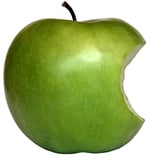

A logo is a powerful thing. Today, after hearing about the sad news of Steve Jobs’ passing I took my iPhone, turned it around and just stared at the Apple logo. For the first time, I saw much more than a simple design, an image, or just a brand: I saw an incredible story.


I saw the creation of a visionary leader, decades of hard work, passion, drive, struggles, and victories. In essence, I saw entrepreneurialism for what I always intended it to be: bold, courageous, inspiring, innovative, driven by the desire of making the world a better place, without ever losing sight of the end user – our clients. And I also saw a wonderful reminder of the kind of impact that a single human being is capable of achieving within his or her lifetime.


Engagement
Jobs demonstrated that power and conformity were not necessary to becoming the number-one company in the world. The almost flat, non-traditional organizational culture that he shaped as a leader was so strong and consistent that it became perceptible in every aspect of the business. I found myself often surprised as to how he would introduce the most incredible and awaited products in front of a world audience wearing a humble pair of jeans and a turtleneck. But it did not end at a board level: go to any Apple store today and you will find an amazing diversity in the workforce, whether this concerns style, age, or backgrounds. You will also see the artefacts that embody Steve’s vision, style, and impeccable standards.


Impossible was a word that did not exist in Jobs’ dictionary – he would simply use his influence, drive and determination to make the impossible, well, possible. Accounts of working with Jobs, narrated by colleagues old and new, describe a tough, nit-picking and often temperamental leader – but also a leader who consistently (and unconditionally) lived and worked by his business values.


In this unconditional culture, some may argue, you were either in or out. But he possessed the ability to build and maintain a high performing team, to drag people into his vision without compromising on the quality of his work.


But how did he achieve that?


He did not act without integrity. Yes, Jobs pursued near-impossible standards – and never attempted to cut corners. But the more he demanded of others, the more he demanded of himself. When projects or products were axed, he shared his reasoning with his colleagues. When saying: “This is the most amazing product we ever made”, he genuinely believed that. Authenticity in leadership is exhilarating, contagious, and can be felt across the organization. Though tough and intimidating at times, he surely led by example.


The Apple story reminded me why I love the Motives, Values, Preferences Inventory. This assessment allows us to identify the key motivational drivers and values of an organization, a leader, or a team, giving us an accurate, timely, and comprehensive picture that helps us (and our clients) work together towards achieving alignment, cohesion, and true engagement.


When employees experience the level of engagement described by those who have worked with Jobs, they happily walk the extra mile and put the extra hour in not because they have to – but because they want to. They will go back to the drawing board when their ideas get axed instead of leaving the organization. When employees work towards a greater, collective purpose individual differences are more easily understood rather than rejected.
To quote a previous Apple employee: “The quest to make the world a better place doesn't happen by coddling egos or releasing mediocre products. The culture of excellence and attention to detail was rooted at the top.”


So, thank you, Steve, for reminding us that the road to excellence is not an easy one, but one that is so rewarding once we reach our destination. And thank you for reminding us that, while imperfection is a part of leadership, authenticity is much more of a rare find.


Andrea Facchini
Business Psychologist and Guest Blogger

The power of culture and engagement: an apple and its amazing story

Posted by Hogan Assessments on Thu, Oct 06, 2011


Take a look at a company logo. What do you see? An image? A story? A brand? A way of living?

A logo is a powerful thing. Today, after hearing about the sad news of Steve Jobs’ passing I took my iPhone, turned it around and just stared at the Apple logo. For the first time, I saw much more than a simple design, an image, or just a brand: I saw an incredible story.


I saw the creation of a visionary leader, decades of hard work, passion, drive, struggles, and victories. In essence, I saw entrepreneurialism for what I always intended it to be: bold, courageous, inspiring, innovative, driven by the desire of making the world a better place, without ever losing sight of the end user – our clients. And I also saw a wonderful reminder of the kind of impact that a single human being is capable of achieving within his or her lifetime.


Engagement
Jobs demonstrated that power and conformity were not necessary to becoming the number-one company in the world. The almost flat, non-traditional organizational culture that he shaped as a leader was so strong and consistent that it became perceptible in every aspect of the business. I found myself often surprised as to how he would introduce the most incredible and awaited products in front of a world audience wearing a humble pair of jeans and a turtleneck. But it did not end at a board level: go to any Apple store today and you will find an amazing diversity in the workforce, whether this concerns style, age, or backgrounds. You will also see the artefacts that embody Steve’s vision, style, and impeccable standards.


Impossible was a word that did not exist in Jobs’ dictionary – he would simply use his influence, drive and determination to make the impossible, well, possible. Accounts of working with Jobs, narrated by colleagues old and new, describe a tough, nit-picking and often temperamental leader – but also a leader who consistently (and unconditionally) lived and worked by his business values.


In this unconditional culture, some may argue, you were either in or out. But he possessed the ability to build and maintain a high performing team, to drag people into his vision without compromising on the quality of his work.


But how did he achieve that?


He did not act without integrity. Yes, Jobs pursued near-impossible standards – and never attempted to cut corners. But the more he demanded of others, the more he demanded of himself. When projects or products were axed, he shared his reasoning with his colleagues. When saying: “This is the most amazing product we ever made”, he genuinely believed that. Authenticity in leadership is exhilarating, contagious, and can be felt across the organization. Though tough and intimidating at times, he surely led by example.


The Apple story reminded me why I love the Motives, Values, Preferences Inventory. This assessment allows us to identify the key motivational drivers and values of an organization, a leader, or a team, giving us an accurate, timely, and comprehensive picture that helps us (and our clients) work together towards achieving alignment, cohesion, and true engagement.


When employees experience the level of engagement described by those who have worked with Jobs, they happily walk the extra mile and put the extra hour in not because they have to – but because they want to. They will go back to the drawing board when their ideas get axed instead of leaving the organization. When employees work towards a greater, collective purpose individual differences are more easily understood rather than rejected.
To quote a previous Apple employee: “The quest to make the world a better place doesn’t happen by coddling egos or releasing mediocre products. The culture of excellence and attention to detail was rooted at the top.”


So, thank you, Steve, for reminding us that the road to excellence is not an easy one, but one that is so rewarding once we reach our destination. And thank you for reminding us that, while imperfection is a part of leadership, authenticity is much more of a rare find.


Andrea Facchini
Business Psychologist and Guest Blogger


Streaming Leadership Derailment

Posted by Adam Vassar on Wed, Sep 28, 2011

I’m a big movie buff. Since I have young children I rarely get a chance to go the movie theaters anymore to see a film that doesn’t star Woody, Buzz, Lightning McQueen, or a princess of some type. In my 5+ years of fatherhood, Netflix has become a savior in terms of feeding my movie addiction. For me and 20 million other subscribers, seeing that a new movie is available for streaming online or getting that red envelope in the mail is one of life’s simple joys.

The joy of being a Netflix customer was mightily shaken last July when customers received a brisk, impersonal email informing them that the video subscription service pricing would be increased by as much as 60% per month unless subscribers decided to substantially limit the services they were receiving. In essence, customers were abruptly told that they would no longer be able to enjoy both the streaming movies and DVD-by-mail features. They would be required to choose one type of service otherwise incur the price hike to retain both options.

Netflix customers were outraged by this imposed price increase and/or elimination of service options. This outrage was not only communicated via blogs and Facebook posts. Many customers have truly put their money where their mouth is by canceling their subscriptions. The company’s stock price is now 42% lower than it was in July before the price hike announcement. An organization that by all accounts changed the video rental industry and was experiencing a fantastic upward trajectory envied by the business world has taken a serious turn for the worse. How did this happen?

The recent events at Netflix appear to be yet another unfortunate example of leadership derailment. The company’s decision to increase prices and the manner in which they communicated the changes to customers has been perceived by many as a bold and arrogant move. In September, Netflix CEO Reed Hastings issued a statement apologizing to customers. However, it is possible that some may view his apology as too little, too late. Even after the initial customer backlash, Netflix at first confidently defended their decision and even announced in August that they expected to gain 400,000 subscribers by the end of September. Recently, Netflix has projected that it will have actually lost 600,000 customers by the end of September. In other bad news, Starz, a key movie content partner for Netflix, ended its partnership with the organization. The company has decided to rebrand their DVD-by-mail service as a separate company called Qwikster. The effectiveness of this strategy is being questioned by many and could further stoke the flames of the fire started earlier this summer.

Two months after the initial controversy, Reed Hastings’ blog post apology stated that the July announcement “lacked respect and humility” and indicated that he should have personally communicated in more detail the reasons for the changes. He went on to say, “In hindsight, I slid into arrogance based upon past success.” Hastings ends his statement by saying that he and his team will work hard to regain customers’ trust. Interestingly enough, his actions and choice of terminology strongly parallel the leadership derailment research findings of Hogan Assessment Systems.

High potential leaders assessed by Hogan tend to be seen as confident, assertive, ambitious, and visionary. Some of these very characteristics are likely present in the senior leadership team at Netflix and surely contributed significantly to the company’s hugely successful rise. However, during stress or heavy workloads, when leaders aren’t paying attention, or during times of change, this confident style may emerge as counterproductive behaviors viewed by others as arrogant, lacking humility, setting unrealistic expectations, and ignoring negative feedback. In his own words, Hastings acknowledged a very similar behavioral pattern. Furthermore, derailing behaviors related to arrogance often lead to the inability of leaders to be seen as trustworthy and sincere, hence Hastings’ comment that Netflix is now committed to regaining customer trust.

Leaders that allow their natural confidence to descend into arrogance rarely admit when they are wrong, learn from mistakes, or take responsibility when things go wrong. This recent statement by the CEO appears to potentially demonstrate a realization that a mistake was made and a willingness to take ownership of the misstep…however the pricing increase was not rescinded and only the poor communication of the policy change was addressed. Will the apology and Qwikster rebranding strategy be effective in retaining customers and attracting new subscribers? Can Netflix and its leaders get back on track after derailing so drastically? Stay tuned!
 

Topics: leadership, high potential leaders, leadership derailment

Subscribe to our Blog

Most Popular Posts

Connect