My Left or Your Left?

Posted by Hogan Assessments on Tue, Mar 22, 2011

With approximately 2.3 million Americans working as customer service representatives, it is one of the fastest growing and largest occupations in the U.S.

My brother is one of those customer service representatives. He has worked at a well-known television provider for the past year and a half, and in that time he acquired not only an “employee of the month” award, but several interesting stories to share over dinner.

Like the time a man called in because he was having difficulty with his television service. My brother instructed him to look behind the receiver box to make sure a cable on the left-hand side was connected tightly.

“My left or your left?” the customer asked, “I’m right handed.”

My brother was confused by the question because he was talking to the man on the phone; however, without missing a beat he replied, “Your left.” And with that the man fixed the problem and hung up, satisfied with his service.

Or another time when a woman called in because her remote control kept making a loud beeping noise. My brother explained to her that the remote was not capable of beeping so the noise must be coming from somewhere else.

“It’s definitely coming from the remote!” the woman claimed.

My brother instructed her to remove the remote batteries. Although the beeping continued after she removed the batteries, the woman still insisted the remote was the culprit. Finally, my brother convinced her to put the remote on her front porch to see if the beeping continued in the house. It’s at that time she discovered the noise was coming from her smoke detector.

I think my brother’s success in handling situations like these is due mostly to his personality – the way he relates to customers, remains calm, and acts in a dependable manner. Even when asked ridiculous questions, my brother remains friendly and polite, and leaves customers satisfied with their service. Also, he doesn’t lose his cool. Although he encounters angry customers on a daily basis, he stays calm and collected and doesn’t take it personally. Finally, he’s dependable. He shows up to work on time and works hard while there.

As the demand for customer service representatives grows, so does the need for companies to staff people like my brother who display the personality characteristics related to successful performance.

Beware the Ides of March

Posted by Dustin Hunter on Tue, Mar 15, 2011

You may not have realized, but March happens to be a very eventful month. Some noteworthy festivities this month include Mardi Gras (8th), St. Patrick’s Day (17th), Spring Break, Easter (some years), and the vernal equinox or first day of Spring (20th). Some lesser known, albeit random, contenders for March dates are: If Pets Had Thumbs Day (3rd), Multiple Personality Day (5th), Ear Muff Day (13th), Extraterrestrial Abduction Day (20th), and finally a holiday that seems to capture the theme of this blog, National Make up your own Holiday Day (26th).


Today March 15th, or the Ides of March, denotes the first day of the Roman New Year and first day of spring (also Roman). Historically, the Ides of March is also associated with the stabbing and subsequent overthrow of Julius Caesar in 44 B.C.E. If you remember back to your high school English course, or visit Wikipedia, you may recall that Caesar was stabbed to death in the Roman Senate in a coup d'tat led by Brutus.


It is not a far stretch to correlate this story to a modern corporate organization. While there may not be physical acts of violence in the boardroom, the rules and players remain the same; specifically, Chairman is to Caesar as the C-Suite is to the Senate. Corporate culture in many Fortune 500 companies mirror this ruthless style and are defined by such mentality as “kill or be killed”; therefore, it is no surprise that organizational failure is driven at the top by self-interested leaders.


As a manager, or leader at any level in the business world, it is crucial to understand how specific individuals in your organization will compete in the corporate game. To this end, Hogan assessments can describe an individual’s day-to-day behavior (HPI), stress-induced derailers (HDS), and core motivators (MVPI). This comprehensive profile of an individual’s personality characteristics relate to business potential, organizational effectiveness, and the ultimate ability to predict job performance.


So the next time you are curious when an employee stumbles in the office late on March 9th or 18th, you can look to their Hogan assessment results to determine, with a high degree of certainty, whether or not they celebrated excessively (i.e. Hedonism, Mischievous, Tradition, Sociability). Unfortunately, for characters like Julius Caesar, there is no specific scale that captures propensity to overthrow as would have proven beneficial 2,054 years ago today. However, there are numerous scales that indicate if and how a person will make it to the top and that information can be just as invaluable.

Topics: HPI, MVPI, HDS, Julius Caesar, Ides of March

Beware the Ides of March

Posted by Hogan Assessments on Mon, Mar 14, 2011

You may not have realized, but March happens to be a very eventful month. Some noteworthy festivities this month include Mardi Gras (8th), St. Patrick’s Day (17th), Spring Break, Easter (some years), and the vernal equinox or first day of Spring (20th). Some lesser known, albeit random, contenders for March dates are: If Pets Had Thumbs Day (3rd), Multiple Personality Day (5th), Ear Muff Day (13th), Extraterrestrial Abduction Day (20th), and finally a holiday that seems to capture the theme of this blog, National Make up your own Holiday Day (26th).


Today March 15th, or the Ides of March, denotes the first day of the Roman New Year and first day of spring (also Roman). Historically, the Ides of March is also associated with the stabbing and subsequent overthrow of Julius Caesar in 44 B.C.E. If you remember back to your high school English course, or visit Wikipedia, you may recall that Caesar was stabbed to death in the Roman Senate in a coup d’tat led by Brutus.

It is not a far stretch to correlate this story to a modern corporate organization. While there may not be physical acts of violence in the boardroom, the rules and players remain the same; specifically, Chairman is to Caesar as the C-Suite is to the Senate. Corporate culture in many Fortune 500 companies mirror this ruthless style and are defined by such mentality as “kill or be killed”; therefore, it is no surprise that organizational failure is driven at the top by self-interested leaders.

As a manager, or leader at any level in the business world, it is crucial to understand how specific individuals in your organization will compete in the corporate game. To this end, Hogan assessments can describe an individual’s day-to-day behavior (HPI), stress-induced derailers (HDS), and core motivators (MVPI). This comprehensive profile of an individual’s personality characteristics relate to business potential, organizational effectiveness, and the ultimate ability to predict job performance.

So the next time you are curious when an employee stumbles in the office late on March 9th or 18th, you can look to their Hogan assessment results to determine, with a high degree of certainty, whether or not they celebrated excessively (i.e. Hedonism, Mischievous, Tradition, Sociability). Unfortunately, for characters like Julius Caesar, there is no specific scale that captures propensity to overthrow as would have proven beneficial 2,054 years ago today. However, there are numerous scales that indicate if and how a person will make it to the top and that information can be just as invaluable.

How to Defend Personality Measurement

Posted by Robert Hogan on Thu, Mar 10, 2011

Critics of personality measurement make two claims. The first is that personality measures yield only modest to non-significant validity coefficients. To support this claim, critics typically cite Guion & Gottier’s view that “there is no generalizable evidence that personality measures can be recommended as good or practical tools for employee selection.” But what did Guion really think? I spent two days with him in 1984 talking about this. He said that personality is the most important factor influencing occupational performance. He also said that, despite its obvious importance, the data justifying the use of personality measures were weak and that was his point. Hogan and Holland show that validity coefficients for well constructed personality measures are only slightly smaller than those for measures of cognitive ability.


The second criticism is that personality measures are “…vulnerable to faking.” One problem with this criticism is that the definition of faking is incoherent. There is an ordinary language definition, and there is a psychometric definition. Philosophers repeatedly point out that the ordinary language definition makes no sense. For example, child-rearing concerns teaching children to balance their natural impulses against cultural norms, and to fake when appropriate. Successful adults know how to fake appropriately—because you can’t have a career by consistently telling people what you really think. Good manners and hypocrisy are the same; as Jean-Paul Sartre famously noted: “Sincerity is a very carefully constructed performance.”


Psychologists have studied faking for over 60 years using psychometric methods. That research converges on two robust conclusions. The first is that there are two distinct forms of psychometric faking. One is usually called “self-deception”—a tendency to make unlikely claims about oneself (“I have a good sense of humor”). Virtually everyone says “True” to this item, but it is not true for 66% of the population. Are they faking? The other form of psychometric faking is usually called “impression management”—a tendency to endorse items that can’t be true (“I have never told a lie”). When people endorse items like this, they must be faking. As Uziel notes, faking research should focus on “…social desirability scales that aim to measure conscious lying and other deception.” I will come back to this point shortly.


The second conclusion from 60 years of faking research is that the two dimensions of faking—self-deception and impression management—are trait like. They show the same temporal stability as any other trait measure; in twin studies, these measures have the same heritability coefficients as any other trait measure; and they predict substantive performance variance. Consider Table One, which presents meta-analytically derived estimates of the correlations between the two dimensions of “faking” and the standard dimensions of the Five-Factor Model. The correlates of self deception look like a “getting ahead” profile, and the correlates of impression management look like a “getting along” profile. Uziel provides a detailed review of the literature surrounding measures of impression management, and shows conclusively that these scales predict social effectiveness: greater life satisfaction, less aggressive behavior, stable and lasting marriages, and overall favorable interpersonal relations. Measures of impression management predict social effectiveness and not faking.


Table One. Five-Factor Model Correlates of Self-Deception and Impression Management

DimensionSDIM
Openness .13 .03
Extraversion .26 .05
Emotional Stability .46 .23
Conscientiousness .32 .28
Agreeableness .10 .32


K=11; N=2304

There is a consistent empirical literature which shows that, when asked to fake, people can alter their scores compared to a “non-fake” condition. The real question, however, is whether people fake when completing personality measures as part of a pre-employment screening process. J. Hogan, Barrett, and Hogan show that on a second trial, with incentives to fake, the scores for 95% of real job applicants stay the same. For the 5% whose scores change, 2.5% increase their scores beyond the standard error of measurement, and 2.5% decrease their scores. In addition, the former are more socially effective than the latter.


The ordinary language definition of faking is incoherent. Psychometric measures of faking predict important social outcomes. And the data show quite clearly that real job applicants don’t change their scores when retested in high stakes employment situations where they have every incentive to fake.


Note:

SD = Self-Deceived Responding

“My first impressions of people usually turn out to be right.”

“I have a great sense of humor.”


IM = Impression Management

“I never cover up my mistakes”

“I always obey laws, even if I am unlikely to get caught.”


References available

How to Defend Personality Measurement

Posted by RHogan on Wed, Mar 09, 2011

Critics of personality measurement make two claims. The first is that personality measures yield only modest to non-significant validity coefficients. To support this claim, critics typically cite Guion & Gottier’s view that “there is no generalizable evidence that personality measures can be recommended as good or practical tools for employee selection.” But what did Guion really think? I spent two days with him in 1984 talking about this. He said that personality is the most important factor influencing occupational performance. He also said that, despite its obvious importance, the data justifying the use of personality measures were weak and that was his point. Hogan and Holland show that validity coefficients for well constructed personality measures are only slightly smaller than those for measures of cognitive ability.

The second criticism is that personality measures are “…vulnerable to faking.” One problem with this criticism is that the definition of faking is incoherent. There is an ordinary language definition, and there is a psychometric definition. Philosophers repeatedly point out that the ordinary language definition makes no sense. For example, child-rearing concerns teaching children to balance their natural impulses against cultural norms, and to fake when appropriate. Successful adults know how to fake appropriately—because you can’t have a career by consistently telling people what you really think. Good manners and hypocrisy are the same; as Jean-Paul Sartre famously noted: “Sincerity is a very carefully constructed performance.”

Psychologists have studied faking for over 60 years using psychometric methods. That research converges on two robust conclusions. The first is that there are two distinct forms of psychometric faking. One is usually called “self-deception”—a tendency to make unlikely claims about oneself (“I have a good sense of humor”). Virtually everyone says “True” to this item, but it is not true for 66% of the population. Are they faking? The other form of psychometric faking is usually called “impression management”—a tendency to endorse items that can’t be true (“I have never told a lie”). When people endorse items like this, they must be faking. As Uziel notes, faking research should focus on “…social desirability scales that aim to measure conscious lying and other deception.” I will come back to this point shortly.

The second conclusion from 60 years of faking research is that the two dimensions of faking—self-deception and impression management—are trait like. They show the same temporal stability as any other trait measure; in twin studies, these measures have the same heritability coefficients as any other trait measure; and they predict substantive performance variance. Consider Table One, which presents meta-analytically derived estimates of the correlations between the two dimensions of “faking” and the standard dimensions of the Five-Factor Model. The correlates of self deception look like a “getting ahead” profile, and the correlates of impression management look like a “getting along” profile. Uziel provides a detailed review of the literature surrounding measures of impression management, and shows conclusively that these scales predict social effectiveness: greater life satisfaction, less aggressive behavior, stable and lasting marriages, and overall favorable interpersonal relations. Measures of impression management predict social effectiveness and not faking.

Table One. Five-Factor Model Correlates of Self-Deception and Impression Management

Dimension SD IM
Openness .13 .03
Extraversion .26 .05
Emotional Stability .46 .23
Conscientiousness .32 .28
Agreeableness .10 .32


K=11; N=2304

There is a consistent empirical literature which shows that, when asked to fake, people can alter their scores compared to a “non-fake” condition. The real question, however, is whether people fake when completing personality measures as part of a pre-employment screening process. J. Hogan, Barrett, and Hogan show that on a second trial, with incentives to fake, the scores for 95% of real job applicants stay the same. For the 5% whose scores change, 2.5% increase their scores beyond the standard error of measurement, and 2.5% decrease their scores. In addition, the former are more socially effective than the latter.

The ordinary language definition of faking is incoherent. Psychometric measures of faking predict important social outcomes. And the data show quite clearly that real job applicants don’t change their scores when retested in high stakes employment situations where they have every incentive to fake.

Note:

SD = Self-Deceived Responding

“My first impressions of people usually turn out to be right.”

“I have a great sense of humor.”


IM = Impression Management

“I never cover up my mistakes”

“I always obey laws, even if I am unlikely to get caught.”


References available

If your business can't touch its toes, you might as well stay on the bench

Posted by Bill Monrose on Tue, Mar 08, 2011

In today’s business arena there are so many variables that play into running a successful organization. First, you must have a product or service. It must be useful, provide value (at a cost people are willing to pay), and be scalable to meet the demands of the market. Next, you need to understand the consumers, cultural nuances, and business trends. Lastly, and most importantly, you must be able to execute a proper strategy. However, a company can achieve all of those success factors, but still ultimately fail. Why? Because it’s not only about the product or service, how well it’s positioned, its value, and the amazing business plan behind it. It’s about its ability to touch its toes – in other words exercise and demonstrate flexibility.
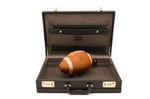

Companies are like people. They exhibit behavioral characteristics. Those characteristics are often the sum total of the senior leadership team. These are the people who execute the visions and strategy of the company through their decision-making style and interactions with employees. These leaders often communicate the business strategy like it was some sort of MBA playbook for scoring corporate touchdowns. So much time and energy went into creating these plans, they feel compelled to run the script and ignore input from their middle management teams, general employee base, and most importantly, customers.


Many of us are fans of American football or are at least familiar with it. We know NFL coaches have a playbook. They clutch it in-hand as if it was a top secret document. Coaches are like senior leaders executing a business strategy. However, many leaders could learn from NFL coaches, because they exercise flexibility. They permit the quarterback to change plays based on the conditions of the game. Business is dynamic just like football. There is no perfect strategy and it’s always changing, but the winning team knows how and when to be flexible to score the most points. They have their ears and eyes open, read the field, listen to input and change it up as needed without compromising their ultimate goal - to win.


If the overall personality profile of your leadership team is overly concerned with details and process, airs on the side of caution, and routinely exhibits a high degree of confidence in their decisions, it’s worth stopping to take a “flexibility check” to see if it can touch its toes - assess, develop, and win!

Topics: assessment, business strategy, assess

If your business can’t touch its toes, you might as well stay on the bench

Posted by Hogan Assessments on Mon, Mar 07, 2011


In today’s business arena there are so many variables that play into running a successful organization. First, you must have a product or service. It must be useful, provide value (at a cost people are willing to pay), and be scalable to meet the demands of the market. Next, you need to understand the consumers, cultural nuances, and business trends. Lastly, and most importantly, you must be able to execute a proper strategy. However, a company can achieve all of those success factors, but still ultimately fail. Why? Because it’s not only about the product or service, how well it’s positioned, its value, and the amazing business plan behind it. It’s about its ability to touch its toes – in other words exercise and demonstrate flexibility.


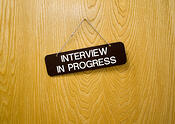
Companies are like people. They exhibit behavioral characteristics. Those characteristics are often the sum total of the senior leadership team. These are the people who execute the visions and strategy of the company through their decision-making style and interactions with employees. These leaders often communicate the business strategy like it was some sort of MBA playbook for scoring corporate touchdowns. So much time and energy went into creating these plans, they feel compelled to run the script and ignore input from their middle management teams, general employee base, and most importantly, customers.


Many of us are fans of American football or are at least familiar with it. We know NFL coaches have a playbook. They clutch it in-hand as if it was a top secret document. Coaches are like senior leaders executing a business strategy. However, many leaders could learn from NFL coaches, because they exercise flexibility. They permit the quarterback to change plays based on the conditions of the game. Business is dynamic just like football. There is no perfect strategy and it’s always changing, but the winning team knows how and when to be flexible to score the most points. They have their ears and eyes open, read the field, listen to input and change it up as needed without compromising their ultimate goal – to win.


If the overall personality profile of your leadership team is overly concerned with details and process, airs on the side of caution, and routinely exhibits a high degree of confidence in their decisions, it’s worth stopping to take a “flexibility check” to see if it can touch its toes – assess, develop, and win!


Topics: assessment, business strategy, assess

Just my two cents...

Posted by Kristin Switzer on Tue, Mar 01, 2011

describe the imageWhether they make your skin crawl or tickle your fancy, the use of cliches has spread like wildfire over the years. These phrases, defined by their overuse, have flooded our everyday lives, making it difficult to get through a full day without hearing or speaking several. Critics discourage their use, especially in writing, as their presence indicates a lack of imagination. Further, many of these expressions are so overused and unnecessary they can be categorized as pure fluff. There are few positive views on these hackneyed phrases; however, I tend to enjoy them (in moderation).

First, their origins fascinate me. As reported by Life Magazine, the expression "hair of the dog that bit you," a common idea for curing a hangover, is derived from the medieval belief that if bitten by a rabid dog, pressing the hair of that dog to the wound could cure the infection. The term "falling on the sword," meaning to offer resignation or accept the consequences of fault, can be found in the Bible in reference to King Saul falling on his sword to commit suicide while in battle with the Philistines. Second, and more importantly, I am impressed by their ability to deliver our thoughts in a concise, succinct manner that would be difficult to verbalize otherwise. In this sense, cliches create a common language which is beneficial as they carry so much information in only a handful of words.

Recently I’ve noticed the function cliches provide when describing Hogan assessment scales, especially to Hogan novices. For those unfamiliar to the assessments, when first introduced to the scale names, the terms can seem somewhat foreign. As such, it is important to describe the scales in a manner in which recipients can relate instantly. So whether describing an executive’s tendency under stress to "push the envelope" (HDS Mischievous), or an individual contributor’s conflict-avoidance as "beating around the bush" (HPI Interpersonal Sensitivity), these expressions provide an immediate connection between the assessment results and their respective behaviors. Of course, traditional descriptors of the assessment scales are crucial and cannot be replaced, but they can be enhanced by a real-life example, story, or cliche which provide a deeper understanding of such behavioral characteristics.
 
Even more interesting than the origins of common cliches, is the ability of the Hogan assessment terminology to create a common language for measuring and improving performance within an organization. As a company familiarizes itself with the assessment scales and respective interpretive information, employees become comfortable replacing descriptors such as "curious," "visionary," and "strategic-minded" or even cliched terms like "thinking outside the box" with Hogan scales (e.g., high Inquisitive). The scales create a common language for the organization and as a result, provide a powerful benefit similar to that of the clever cliche--the ability to deliver a wealth of information in a concise, instantly understandable message.  

Topics: assessments, Hogan scales

Just my two cents…

Posted by Hogan Assessments on Mon, Feb 28, 2011

describe the imageWhether they make your skin crawl or tickle your fancy, the use of cliches has spread like wildfire over the years. These phrases, defined by their overuse, have flooded our everyday lives, making it difficult to get through a full day without hearing or speaking several. Critics discourage their use, especially in writing, as their presence indicates a lack of imagination. Further, many of these expressions are so overused and unnecessary they can be categorized as pure fluff. There are few positive views on these hackneyed phrases; however, I tend to enjoy them (in moderation).

First, their origins fascinate me. As reported by Life Magazine, the expression “hair of the dog that bit you,” a common idea for curing a hangover, is derived from the medieval belief that if bitten by a rabid dog, pressing the hair of that dog to the wound could cure the infection. The term “falling on the sword,” meaning to offer resignation or accept the consequences of fault, can be found in the Bible in reference to King Saul falling on his sword to commit suicide while in battle with the Philistines. Second, and more importantly, I am impressed by their ability to deliver our thoughts in a concise, succinct manner that would be difficult to verbalize otherwise. In this sense, cliches create a common language which is beneficial as they carry so much information in only a handful of words.

Recently I’ve noticed the function cliches provide when describing Hogan assessment scales, especially to Hogan novices. For those unfamiliar to the assessments, when first introduced to the scale names, the terms can seem somewhat foreign. As such, it is important to describe the scales in a manner in which recipients can relate instantly. So whether describing an executive’s tendency under stress to “push the envelope” (HDS Mischievous), or an individual contributor’s conflict-avoidance as “beating around the bush” (HPI Interpersonal Sensitivity), these expressions provide an immediate connection between the assessment results and their respective behaviors. Of course, traditional descriptors of the assessment scales are crucial and cannot be replaced, but they can be enhanced by a real-life example, story, or cliche which provide a deeper understanding of such behavioral characteristics.


Even more interesting than the origins of common cliches, is the ability of the Hogan assessment terminology to create a common language for measuring and improving performance within an organization. As a company familiarizes itself with the assessment scales and respective interpretive information, employees become comfortable replacing descriptors such as “curious,” “visionary,” and “strategic-minded” or even cliched terms like “thinking outside the box” with Hogan scales (e.g., high Inquisitive). The scales create a common language for the organization and as a result, provide a powerful benefit similar to that of the clever cliche–the ability to deliver a wealth of information in a concise, instantly understandable message.  

Topics: assessments, Hogan scales

What Is Your Greatest Weakness?

Posted by Ryan Daly on Thu, Feb 24, 2011

As a recent alumnus of the job market, I can personally attest to the fact that while there is a shortage of available jobs, there is apparently no shortage of inane interview questions:

Where do you see yourself in five years?

If you were an animal (vegetable, mineral, superhero, whatever), what kind would you be?

What would your last employer say about you?

If you were the size of a pencil and we put you in a blender, how would you escape?

But my least favorite of all time has to be: What is your greatest weakness?

Hunting for my first job, I must have answered that question a dozen times – never honestly. My top three answers, depending on the situation, were:

  1. I am so driven to succeed, sometimes I work too hard.
  2. I have a habit of doing all the work and giving my boss all the credit.
  3. I possess the agility of a spider and the strength of six men, but I struggle to harness it for the purposes of good.


And I’m not alone. A quick Google search yields thousands of blogs, how-to articles and even entire websites devoted to avoiding an honest answer to this dreaded question.

So it was a nice surprise when before I interviewed here at Hogan (I am now two weeks on the job), I was asked to complete the full line of our assessments.

For me as a job candidate, the fact that my then potential employer would know, and have a graphical analysis of, my greatest strengths and potential shortcomings meant two things: there was no need to dodge the question, and they were still taking the time to interview me, so I must not be so far beyond help. What resulted was a fluid, comfortable interview in which, instead of wasting time and energy beating around the bush and trying to conceal my flop sweat, I could relax and express what I thought I could bring to the table.

Granted, I am new to the world of HR, but that seems much more productive than trying to explain that while I possess psychic abilities, they are only good for predicting the first two Lotto numbers.

Topics: assessments, interview questions

Subscribe to our Blog

Most Popular Posts

Connect