
Middle Managers: Your Company’s Most Important Line of Defense in Crisis

Posted by John Horton on Mon, Mar 30, 2020

Middle Managers

“Are we going to lose our jobs because of this coronavirus?” asked Kelly, an account executive with a tenure of 11 years.

“I — I don’t quite know,” replied Marla, Kelly’s practice manager. “The senior leadership team has said that there won’t be immediate layoffs, but we don’t know how long these shutdowns will last. Just keep working from home.”

There is no doubt that thousands of similar interactions have occurred in the past three weeks. These times are scary, and much is unknown. One thing you might not know is that the directors or senior leaders in your organization are not necessarily the glue that is keeping everyone together. It’s the middle managers.

The middle managers are who most employees approach for leadership and answers during times of crisis at work. It is commonly understood that C-suite executives decide on the company strategy, and the middle managers implement the strategy. While the upper-level leaders are busy figuring out what the right things to do are, the middle managers are figuring out how to do these things right. Middle managers are typically the most accessible leaders to employees, so it is imperative to place the right people in these roles.

The reality is that your company’s middle managers wear many hats, all of which are important during a crisis. These roles include that of an employee counselor, as middle managers often have intimate knowledge of the lives and emotions of their direct reports. Since change is distressing for many and too much change too soon can result in employee burnout or attrition, middle managers need skills to help employees cope. Emotional stability and calmness under pressure are crucial and help signal to employees that the company (and the employees) can make it through a crisis. However, keep in mind that too much emotional stability sometimes looks robotic to others and could make a manager seem as if he or she is ignoring the negative emotions in the group.

As mentioned previously, middle managers are usually spearheading the strategies that leadership decides on. This often requires middle managers to act as translators who must interpret the strategic language of the higher-ups and convey it in tactical language for direct reports so that they can implement plans. To be effective at this, they need to know how to manage “up” to superiors and “down” to direct reports. This requires knowing when to defer to the right leaders and how to push back on strategies that can’t be implemented quickly with limited resources. Middle managers also need to know how to inspire their teams, plan their actions strategically, and produce results.

Middle managers are usually experts who have been promoted from within. In most cases, they have been with their organizations for many years. This tenure and subject-matter expertise afford these leaders valuable knowledge that can help stabilize the business when times are rocky, providing insights into previous action plans, whether those plans yielded positive results, and why. Specific solutions are often difficult to formulate, and many people in middle management roles are hiring business and leadership coaches to help devise solutions.

Specific behavioral patterns can predict positive performance among managers. As the world’s leading expert on leadership and managerial success data, Hogan can assess employees for managerial potential, identifying where the skill gaps might exist. Hogan has a network of thousands of expert coaches and consultants who are certified to use our tools and are ready to help you and your business. Reach out to us if you need solutions for employee development or help finding and assessing qualified talent. We can help you make decisions on who to place in managerial roles so your business is prepared to weather any storm.


Topics: leadership development

How Times of Crisis and Uncertainty Can Help You Spot High Potential

Posted by Hogan Assessments on Fri, Mar 27, 2020

High Potential

In any company, few things are more important than having a strong pipeline of high-performing leaders. In this new COVID-19 era, leadership teams everywhere are now faced with making critical decisions in an environment that changes hourly. Leaders from every size of organization are required to exercise judgment in unprecedented scenarios.

At Hogan, we have long researched the personality characteristics of effective leaders in the midst of high-pressure situations. We have also closely studied the identification of high-potential talent, or talent that has the ability to build and lead teams that can consistently outperform. This is a unique moment in time to identify high potentials (HIPOs) and next-generation leaders. Such moments of crisis often provide incredible opportunities for HIPOs to be identified, as the demands for high-risk and high-visibility decisions increase.

There is a saying that “pressure will turn you into either dust or a diamond.” Thankfully, unlike the carbon under the earth’s surface that can form either crumbly coal or solid diamonds, depending on its environment, people have the ability to be strategically self-aware and make intentional choices about how to react to intense or unexpected pressure. We aren’t bound by the conditions of the environment we find ourselves in. We have choices.

So, how do organizations make the most of this opportunity to identify these HIPO “diamonds”? It is essential to start any talent identification process with a valid and reliable framework. After decades of research and working with clients around the world, we at Hogan have found that there are three different dimensions to consider when looking for the HIPO “diamond in the rough.”

The first thing to look for is competence in what we call Leadership Foundations, or the degree to which people are able to manage their careers well, are rewarding and enjoyable to deal with, and are good organizational citizens overall. Look for individuals who calmly and steadily reach out to assist others in solving difficult problems. You have likely already noticed them patiently working through the new challenges your organization is facing. You likely won’t find them doing this alone; you will see them pulling others together to work through details, ensuring that their efforts are closely aligned with the needs of the team and department.

The second dimension that we have identified as important for identifying HIPO talent is Leadership Emergence, or the likelihood that people will stand out from the crowd and lead from the front. These individuals look and feel like leaders. They instill confidence. You will likely see them as bright, quick, influential, and even charismatic in how they approach challenges. They are the people actively building connections and quickly taking action toward key challenges.

Many of today’s HIPO identification and succession planning processes significantly overindex identifying talent with emergent leadership behaviors, and it is easy to understand why. Emergent leadership behaviors ensure that individuals are noticed, not passed over. After all, is a diamond valuable if you can’t find it?

However, without the final dimension that we have identified for HIPO identification, many emerging leaders simply will not stand the test of time. HIPOs must also be skilled in critical competencies around Leadership Effectiveness. Our research at Hogan shows that true HIPOs must be able to work through others — achieving critical business outcomes, managing organizational resources and assets, planning proactively, and motivating others to work toward common goals. Effective leaders are patient and engaging, known for inspiring commitment and accountability.

The difference between emerging and effective leaders is often found in how each group spends their time. You might spot emerging leaders networking with key stakeholders and decision makers, but effective leaders more often go “heads down,” spending their time driving team performance. Interestingly, our research shows that these two groups overlap by only 10%. This small overlap between the two groups reinforces the importance of purposeful HIPO development.

As we face new challenges in the coming months, talent development for HIPOs, in particular, will be needed to help them become truly successful as they reach higher levels of organizational responsibility. Whenever you see up-and-coming talent with a ton of visible action and fast-moving energy, encourage them to keep their energy steadily focused on team results and better ways of working. To identify less visible leaders, look for trends in business results and team performance, and then work with those people to practice visible leadership “from the front.”

Organizations that take advantage of the numerous development opportunities that will arise during this time of crisis will find a strong and healthy pipeline of leaders for the future. We at Hogan are here to help you identify, develop, and retain these HIPOs in your organization. We know people.

Topics: leadership development, high potentials, Career Development

The “Now What” in a COVID-19 World

Posted by Trish Kellett on Wed, Mar 25, 2020

Screen Shot 2020-03-25 at 2.37.36 PM

At Hogan, we view the assessment results as the “what” (what are your strengths and areas for development?), the interpretation of your results by your Hogan coach as the “so what” (so what do these mean to me, and how do they impact my reputation and performance?), and the coaching discussion and action planning with your coach as the “now what” (now what can you do to be more effective?).

Further, we emphasize the importance of considering context in interpreting and acting on your assessment results. Consider factors such as your job requirements, the demands of your situation, the challenges you face, the business goals you need to achieve, the team you manage, and the culture of your organization. Behaviors that are strengths in one context could be derailers in another and vice versa, so context truly matters in interpreting and acting on your Hogan scores.

COVID-19 has created a context unlike any we’ve ever faced before, so we encourage you to review your Hogan results through a COVID-19 lens to determine what will make you more effective during this crisis. Is your “now what” (the actions you need to take based on your Hogan results) different than it was before? Here are a few points to consider.

  1. What competencies and behaviors are critical for you to exhibit during the COVID-19 pandemic? Several examples are communication, innovation, and resilience. Perhaps you’re now managing a team of remote employees, so communicating frequently and clearly will be paramount. Perhaps you need to be more innovative than ever and encourage your team to create solutions to unique challenges presented by COVID-19. Perhaps you need to demonstrate resilience and be a calming influence for your team during this crisis.
  2. Per your Hogan profile, do the competencies and behaviors you identified in no. 1 come naturally to you (key strengths), or will you need to consciously work on them (development areas)?

Using the competencies we identified above as examples (communicating clearly and frequently, innovating, and demonstrating resilience), let’s take a look at how Hogan scales can guide you. Make sure you consider not only the scales you typically associate with the identified competencies but also other scales that could contribute to your behavior. Look across the three reports: Hogan Personality Inventory (HPI), Hogan Development Survey (HDS), and Motives, Values, Preferences Inventory (MVPI).

Communication: If you’re high on Sociability and Affiliation, you’re probably adept at communicating, and it will be both a priority for you and rewarding for you. However, if you’re lower on these scales, you’ll need to remind yourself to reach out to others and share information. Ask for feedback from your audience to ensure that your frequency and clarity are meeting their needs. If your Reserved score is high, make sure you’re not disappearing when times are tough. The team needs their leader even more, and you need to be more visible, even if it is in virtual terms.

Innovation: If you’re higher on Inquisitive and Learning Approach, you probably are open to ideas, have broad interests, and are skilled at innovating. You’ll need to make sure you encourage it in your team, as well. If you’re higher on Prudence, you might tend to micromanage or curtail discussions prematurely, so be sure to watch that. Also, if you’re higher on Imaginative, you’ll need to make sure you don’t overwhelm your team with too many ideas. If you’re lower on Inquisitive and Learning Approach, innovation might not come naturally to you, but you can certainly encourage it in your team members by being more open to their ideas, not cutting off discussions, and recognizing and rewarding their efforts. Acknowledging and celebrating contributions should come easy to you if you have a higher Recognition score, and if your score is lower, you can consciously emphasize this more.

Resilience: If you’re higher on the Adjustment scale and typically calm in the face of crises, you’ll need to leverage this fully given the turbulent times associated with COVID-19. Be aware, though, that you might not pick up on or relate to the stress that your team members are feeling, especially if they’re lower on Adjustment. If you have a lower Security score, you probably don’t need much role clarity or task clarity, and that will serve you well in the new environment. Recognize that your team members with higher Security will need more direction for a sense of stability during this time. If you’re higher on the Security scale yourself, realize that the world has shifted and you won’t have the same order you had in the past. Also, check your Interpersonal Sensitivity score to see what your natural tolerance level of others is, and be more patient and understanding with their reactions to COVID-19, especially if they’re higher on the Excitable scale.

  1. Are your derailers appearing more often or are your behaviors more exaggerated?

Derailers typically come out when you’re under stress or dealing with ambiguity, but the stress and ambiguity you’re experiencing with COVID-19 is unlike anything we’ve seen before. So, recognize that your derailers might appear more often or more acutely. Self-awareness and self-monitoring are more crucial than ever now, so make sure you’re paying attention to how you’re acting and, more importantly, how others are perceiving you. If you’re upset or annoyed, it’s much easier to dash off a quick email from a remote location than it is to confront someone when you’re working together in person. Give yourself a chance to calm down and put the issue in perspective before emailing. Also, in the virtual world, others can’t see your facial expressions or hear your tone (unless you’re using a video platform), so make sure you choose your words wisely.

Reviewing your Hogan profile and determining which scales are most applicable and which behaviors you need to dial up or down will serve you well during the COVID-19 crisis. The experienced coaches of the Hogan Coaching Network are ready to assist you if you’d like professional guidance and a discussion to review your profile. They’re adept at virtual discussions and were conducting virtual feedback sessions long before the COVID-19 pandemic. If you’d like to schedule a one-hour session, please contact your Hogan consultant.

Ready to see what the Hogan Coaching Network can do for you?

Topics: leadership development

8 Personality Types: A Deeper Look at Preppers

Posted by rtrost@hoganassessments.com on Tue, Mar 24, 2020

Preppers personality profile

Welcome back to our series on the eight most common personality types found in the Hogan suite of assessments. Over the past seven weeks, we took an in-depth look at Rebels, Marketers, Proletarians, Congenials, Overachievers, Networkers, and Misfits. In our eighth and final week, we take a deep dive into the Preppers personality profile.

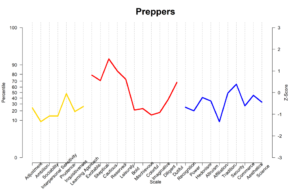
Preppers personality profiles are rare, only making up approximately 6% of the working population. Their Hogan profile is highlighted by very low scores on Affiliation, Recognition, and Power with above average scores on Tradition and Security on the MVPI; low scores across most of the HPI scales with the exception of an average score on Prudence; and high scores on Excitable, Skeptical, Cautious, Reserved, Leisurely, and Dutiful on the HDS, with an exceptionally high score on Cautious. See Figure 1 below for the full profile.

Figure 1: Preppers personality profile

Preppers personality profile

The Reputation of Preppers

We had eight Hogan consultants with a combined 82 years of experience provide independent, written interpretations of the Preppers profile shown above. Some of the words our experts most frequently used to describe Preppers were “self-critical,” “emotional,” “follow,” “careful,” “risk,” “stability,” and “predictable.” Additionally, we examined the workplace reputation of Preppers by drawing on Hogan 360° data gathered with Hogan distributor Peter Berry Consultancy.

Colleagues, supervisors, and subordinates said Preppers build trust and loyalty with other, are polite and considerate, avoid double-standards, and produce high-quality, error-free work. At the same time, Preppers’ work colleagues also said that they are not very competitive and driven, lack passion, energy, and assertiveness, and do not think long term about new opportunities. In other words, Preppers are dependable employees who have a strong desire for predictability and stability but are not seen as hard drivers pushing others for results.

Our job performance archive also provides insight regarding how Preppers are perceived by their supervisors: bosses give high marks to Preppers for focusing on quality, working hard, and being dependable. At the same time, they give Preppers low marks for managing conflict, inspiring others, attracting talent, and building teams. To summarize, Preppers are defensively pessimistic, motivated by fear, and seek out environments that are stable and predictable. They are introverted, but effective employees when they can keep their emotions under control.

Common Careers for Preppers Personality Profiles

Preppers prefer careers where they can find stability and work with limited social interaction. Like Misfits, they prefer jobs with limited oversight where they can complete their tasks unmonitored and they tend to be most successful in jobs with clear instructions for performance. Preppers also do well in roles where the goal is to detect potential threats, pitfalls, and safety issues. Our data show Preppers are overrepresented in the military as well as in admin/clerical and technician jobs.

Preppers personality profiles are underrepresented among executive job roles, likely because they fear the risks associated with high-profile roles. We also find that Preppers are over-represented among samples of remote computer workers, which is a good fit for their interpersonal style and their preference for predictability. In popular media, characters such as the Nick Fury (Marvel), Craig Middlebrooks (Parks and Recreation), and Rex (Disney’s Toy Story) are prototypical Preppers — dependable, organized, and prepared for the worst.

Advice for Preppers

If you have the Preppers personality profile, you should recognize that many people are less cautious and more comfortable taking risks than you are. You tend to proceed with a safety-first attitude and like to be prepared for every possible scenario. Your colleagues may see you as overly worried about bad outcomes and as someone who delays projects unnecessarily. As a result, you may prefer jobs where you can work at your own pace with few deadline pressures.

In leadership roles, you will want to carefully review all reports and the details of all possible decisions. Your staff may see you as prone to slow decision-making and as a logjam slowing down processes for the entire organization. You will have to work hard on your delegation skills, and it will be critical for you to hire employees who you can trust and empower to make decisions without you. On the bright side, your business unit will be well-prepared for disaster scenarios.

How to Deal with Preppers Personality Profile

If your boss has the Preppers personality profile, you should realize that he or she will have a hard time coming to decisions quickly. You will want to be sure to cover every possible scenario and detail in your reports because your Prepper boss will be ready to ask about them. The only way you will get your plans through will be by out-preparing him or her. Pressuring your boss to move decisions along will likely only make things worse, resulting in your boss locking him or herself away to “deliberate.” However, if you frame your arguments in terms of improving safety or future security, your boss will be more inclined to act quickly.

If any of your employees are Preppers, recognize that these people will have a strong preference for predictability, stability, and clear work assignments. They will prefer work where they can operate at their own pace and that emphasizes quality and getting the details exactly right. While Preppers are hard-working and dedicated, they also tend to second-guess themselves and will be slow to commit to any course of action. Your most challenging task as the supervisor of a Prepper will be keeping his or her fear of failure in check and not letting delays bog down the larger team.

Want to learn more about personality tests? Check out The Ultimate Guide to Personality Tests

Topics: personality

The Key to Economic Survival: Your Hiring Practices

Posted by Zsolt Feher on Mon, Mar 23, 2020

Hiring Practices

Just a month ago, large companies in competitive industries were seeing a high rate of job turnover. Conversely, if recruitment had stopped a few months ago, the result would have been an almost immediate labor shortage.

Because of the COVID-19 pandemic, the economy faces serious challenges. But there are also possibilities — this new situation will result in a larger talent pool available for hiring in the near future. Organizations already know the key for success is to hire the best people available. Whoever is ready for that will be the winner of the labor market and remain competitive in the coming months and years. Right now, job search engines in Europe report a dramatic drop in new job advertisements, but employers who persist can take advantage.

As epidemiologists recommend social distancing, a relevant response is to replace in-person interviews with online workforce selection methods. Aside from helping to control the spread of COVID-19, using digital methods can offer many additional benefits to improve efficiency.

In the case of large companies, a skilled labor shortage will lead to a reduction of production capacity, increased logistical challenges, and stunted growth, resulting in future revenue loss and sustainability issues. All workplaces face serious redesign tasks in the context of the COVID-19 pandemic, but organizations must make good workforce decisions in order to survive long-term. In the short term, recruiting new employees or facilitating telecommuting might seem like problems, but this is also an opportunity for employers to introduce newer, more effective methods.

The vast majority of employers worldwide use a dual CV and recruitment interview process when selecting employees. The relationship between the CV and actual job performance is very low, with only a 0.1 correlation on a scale of 0 to 1. Likewise, a well-structured personal interview shows only a 0.18 correlation with the candidate’s expected effectiveness.

In contrast, proper use of assessment tools, such as critical reasoning tests and personality tests, provide a significantly higher correlation — of up to 0.4 to 0.6 — for predicting workplace performance. These tools can be of enormous benefit to companies by making selection more efficient, even in online environments.

Personality tests and applications for measuring critical reasoning abilities have been available online for a very long time, but not every company uses them on a large scale. These are used mainly for filling managerial or office positions. Assessment centers are also available online, and video interviewing (as a final round for prescreened, qualified candidates) is an established solution for large companies.

Personality tests and critical reasoning tests will produce more effective hiring decisions than people can make on their own. A resume or CV, as a personal document crafted by the candidate, does not necessarily provide real information. Recruitment interviews are not very effective because unconscious bias can lead to a much higher rate of inefficiency in employee selection.

The technical solutions for remote work have been in place for years, and most large companies employing office workers are already familiar with them. By applying valid and reliable personality tests, employers can identify candidates who will perform well with less interaction and candidates who will face engagement issues without direct contact with colleagues. This knowledge is beneficial for supervisors who have greater responsibility when employees are working remotely.

It is in the fundamental interest of the economy that every business recognizes that the technological evolution of HR over the last 20 years has provided us with all the tools needed to make our human decisions, even while maintaining social distance. While facing the COVID-19 pandemic, we should use more of the tools that are available to us, recognizing their efficacy and their ability to add value to our hiring decisions.

Continuing workforce selection and improving decision-making are in the best interest of all businesses, especially during this global crisis.

Want to learn more about hiring the right way? Check out our guide to crafting next-level talent identification, interviewing, and selection processes

Topics: candidate selection

What It Takes to Lead Through Organizational Crisis

Posted by Hogan Assessments on Fri, Mar 20, 2020

Leading Through CrisisOn April 17, 2017, Southwest flight 1380 from New York to Dallas was in serious danger. A failed fan blade had struck the plane, creating a window-sized hole on the left side of the plane. Oxygen masks were deployed and, unsurprisingly, the passengers began to panic. Captain Tammie Jo Shults remained calm, took command of the situation, adapted to the circumstances, and safely landed the plane in Philadelphia, saving hundreds of lives. Her audio call is worth a listen.

More recently, the Diamond Princess cruise ship was quarantined with more than 700 passengers testing positive for COVID-19. Captain Gennaro Arma was credited for preventing panic with his calm and reassuring leadership style. There are many examples of extraordinary leaders rising to the occasion in crisis situations. Because many organizations are currently facing the crisis caused by COVID-19, we thought it would be a good time to review what we know about organizational crisis and what makes a leader most effective during such times.

Crisis Is Common

Every organization will face a crisis at some point. While the COVID-19 crisis is unprecedented, operating in a VUCA (volatile, uncertain, complex, ambiguous) world has long meant that crisis is inevitable. Whether an organization succeeds through a crisis is dependent upon its leader’s actions. In fact, a leader’s legacy is often determined by how he or she handles a major crisis. Effective leaders must make good decisions quickly, often based on limited information. Effective leaders must serve as a rallying force that keeps employees on track. Organizations with the best leaders are the ones that come out on top when the crisis subsides. The question then is this: What personality characteristics are most critical for leading through a crisis?

Leading Through a Crisis

Of course, you can ask anyone on the street what it takes to lead through a crisis, and they will give you an answer. So why should you listen to us? The difference between us and everyone else is that we have been systematically studying personality and leadership effectiveness for more than 30 years. What does that research tell us?

First, our research shows that an effective leader in a crisis acts like Tammie Jo Shults: She remains calm, takes charge, and confidently makes critical decisions. The two personality traits associated with acting this way are adjustment and ambition. In a crisis, people look to their leader for guidance on how to respond. If the leader is calm and sets a path forward, people will remain calm and order will be maintained. If the leader is panicked and lacks confidence about the actions to take, people will start to panic and chaos will ensue. Well-adjusted and ambitious leaders quickly adapt to unexpected changes caused by the crisis, such as the sudden shift to remote work many are experiencing, and they communicate with people about how to proceed.

Second, every crisis comes with increased stress. Even if the leader doesn’t display it externally, he or she is feeling the pressure. Our research shows that when people are under stress, they can lose their normal mode of operating and begin to derail. When faced with a crisis, people derail in three major ways: (1) moving away — by running from the problem, (2) moving against — by combating those thought to cause the problem, and (3) moving toward — by getting as close to the problem as possible and trying to micromanage it away. None of these are very effective, but our research shows that the worst thing to do when leading through a crisis is to move away and avoid the problem. Common tactics in this category include denying that there is a problem, pretending that the problem is overblown, or giving up on the problem entirely. We find that leaders who are effective during crises face stressful challenges head on. They are honest with themselves and others about the size of the problem and put mitigating actions into place as soon as possible. Leaders with a low proclivity for moving away are less likely to become volatile and are more persistent when things go wrong. They remain open to new ideas, maintain trust in their teams, stay engaged and connected, communicate openly and transparently, and are true to their word.

Third, our research also shows that the most effective crisis leaders show compassion and work to stay connected with the needs of their employees, customers, communities, and partners. While an ambitious and steady leader reduces panic and sets out a future plan, employees must also continue to feel valued by the organization and that their concerns are being addressed. Our research indicates effective crisis leaders score high on the personality trait interpersonal sensitivity and the value altruism. They genuinely care for their colleagues, their communities, and their constituencies, and they act as a unifying force through the crisis.

Summary

Crisis is inevitable, and organizations are well advised to be prepared. The single best way to be prepared for a crisis is to have a leader who is effective at handling crises when they occur. Our decades of research on personality and leadership tell us that the most effective leaders during a crisis are well adjusted, ambitious, realistic about the scope of the problem, steadfast about tackling the problem head on, and deeply compassionate about how the crisis is affecting others. Although it can be difficult to see in the midst of a crisis, organizations with these sorts of leaders have bright futures ahead.

*This post was authored by Hogan’s Chase Borden, Kimberly Nei, and Ryne Sherman.

Topics: leadership development

Don’t Become an Absentee Leader While Working Remotely

Posted by SGregory on Wed, Mar 18, 2020

Working Remotely

Even during the best of times, research shows that absentee leadership is quite common and destructive to teams and organizations. What’s an absentee leader? One who displays neither actively positive leadership nor actively negative leadership; an absentee leader seems uninvolved and uncommunicative. For leaders whose teams are all working remotely during the COVID-19 pandemic, the possibility of showing up as an absentee leader increases, even for leaders who typically are engaged with their teams in the office.

Employees whose leaders are absentee report less direction, delayed decisions, and a lack of feedback and involvement. Role ambiguity results, along with decreased job satisfaction, higher intentions to leave, and added conflicts with co-workers. Add to that the increased stress of the pandemic, and negative outcomes for organizations and employees could be exponentially increased.

Communication is key. There are many readily available tips for managers regarding the common pitfalls resulting from virtual distance between workers and leaders. There are also many useful aids for communicating more effectively with remote teams. A focus on communication undoubtedly is critical for managers at all times, especially now.

However, absentee leadership is about the impact of a manager’s engagement (or lack thereof) with his/her work and team. Hogan’s research reveals five key indicators of absentee leadership. Each of these provides clues on what managers can do to avoid falling into the trap of developing a reputation as an absentee leader, even as they are forced to work and lead remotely.

1. Motivation for leadership.

If you are a manager who is feeling relieved that you don’t have to interact face-to-face for a while, that might be a danger sign. To avoid letting contact diminish, schedule quick check-in calls with team members more frequently than you normally would. Having scheduled check-ins will help provide the discipline needed to ensure that your sense of relief doesn’t mean that you are providing less leadership. Ensure you are focused on providing guidance, coaching, and performance feedback. Have a clear agenda for your calls with individual team members.

2. Lack of engagement with the team.

This one may seem obvious, but overcommunicate your availability and communication preferences to the team. Let them know you are still here to help. Consider blocking a set time each day as “open door time,” during which your team knows you are available for a quick question, a needed decision, or to address a concern. Providing more structure in this way will help set expectations and reassure your team that they can get the timely answers they need.

3. Lack of general career engagement.

Some leaders may be experiencing an existential struggle about whether their current job or even career is the right one for them. During this unusual time, however, try to focus on the greater good. Your team is counting on you, so try to set aside personal concerns and focus on supporting your team. Focusing your energy on them right now may help you find an increased sense of purpose.

4. Lacking effort to motivate and inspire.

In normal, in-office times, you may have regular staff meetings. If so, research shows that they probably aren’t very effective or efficient. That can be especially true for virtual team meetings, so it is critical to have a crisp agenda that is shared in advance, timebound topics, and clear decisions and owners as the meeting closes. These things will help instill a sense of productivity and purpose for the team, even as the world around them seems to be changing by the moment. In addition, it may be useful to schedule a team meeting here and there just as a time for team members to decompress. Everyone is under increased stress and perhaps isolation. It may help your team for you to be deliberately vulnerable in some ways, to share your thoughts and questions and to encourage theirs. While you may not get to answers, this may deepen relationships on the team in ways that are beneficial now and in the future. You may think this is just “soft stuff,” but actually it is about a key ingredient to effective leadership – building trust.

5. Lacking persistence for driving better outcomes.

Undoubtedly, some workers will see this remote-working time as an opportunity to slack off. Most, however, are likely to be looking for ways to be highly productive and to help their companies come out of this crisis in a strong position. This is where listening becomes especially important for leaders. Think about ways to engage your team in discussions about actions that may be different from their typical work, but that might be even more productive now. Look for ways to engage your team in making process improvements, increasing efficiencies, cutting costs, or doing business in new ways. You don’t have to have the answers; it likely is more important to ask questions, listen, and to engage the team in shared ownership of driving better outcomes despite abnormal circumstances.

The current situation is a test for the effectiveness of leaders and their teams. As always, evaluate the strength of your leadership by the effectiveness of your team. The above five points will help ensure that you develop and sustain a reputation for being an engaged, effective leader, even during this unprecedented period in which we are suddenly required to work differently. Remember to communicate frequently, create additional structure, actively support more frequently than usual, and listen to and leverage the power of your team.

Topics: leadership development

8 Personality Types: A Deeper Look at Misfits

Posted by rtrost@hoganassessments.com on Mon, Mar 16, 2020

Misfits personality profile

Welcome back to our series on the eight most common personality types found in the Hogan suite of assessments. We have already taken an in-depth look at Rebels, Marketers, Proletarians, Congenials, Overachievers, and Networkers. This week, we continue our dive into these personality types with a close examination of the Misfits personality profile.

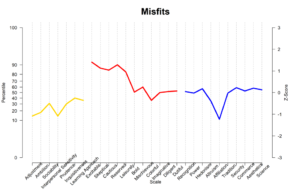
The personality profile of Misfits makes up approximately 7% of the working population. Their Hogan profile is highlighted by below average scores on Hedonism and very low scores on Affiliation on the MVPI; low scores across the board on the HPI with extremely low scores on Adjustment, Ambition, and Interpersonal Sensitivity; and very high scores on the “moving away” cluster (Excitable, Skeptical, Cautious, Reserved, and Leisurely) of HDS. See Figure 1 below for the full profile.

Figure 1: Misfits personality profile

Misfits personality profile

The Reputation of the Personality Profile of Misfits

We had eight Hogan consultants with a combined 82 years of experience provide independent, written interpretations of the Misfits personality profile shown above. Some of the words our experts most frequently used to describe Misfits were “isolation,” “stressful,” “challenges,” “pressure,” “mistrusting,” “passionate,” and “emotional.” Additionally, we examined the workplace reputation of Misfits by drawing on Hogan 360° data gathered with Hogan distributor Peter Berry Consultancy.

Colleagues, supervisors, and subordinates said Misfits have the right knowledge and experience to be effective at work. At the same time, Misfits’ work colleagues also said that they bring a negative attitude to work, lack enthusiasm for customer service, and have poor people skills. In other words, Misfits often have the technical expertise and capacity to do their work well, but struggle with the social skills needed to truly excel in modern work environments.

Our job performance archive also provides insight regarding how Misfits are perceived by their supervisors: bosses see Misfits as having difficulties with conflict management, political savvy, professionalism, and relationship building. Likely due to their lack of social skills, the Misfits personality profile received the lowest overall performance ratings in our archive. To summarize, Misfits have the competence and capabilities on par or, in some cases, even better than their colleagues. However, their pessimistic and aloof interpersonal style creates difficulties in the workplace for their colleagues and supervisors.

Common Careers for Misfits

Misfits prefer careers where they can work in isolation and without much social interaction. They prefer jobs with little oversight where they can complete their tasks unmonitored. They also tend to be most successful in jobs with clear instructions for performance. Our data show the personality profile of Misfits are overrepresented in both the military and technician jobs.

They are also slightly over-represented among first-line supervisors, likely due to their technical skills, knowledge, and expertise in the job. We also find that the personality profile of Misfits is over-represented among samples of remote computer workers, which is a good fit for their asocial interpersonal style. In popular media, characters such as the Black Widow (Marvel), April Ludgate (Parks and Recreation), and Beast (Disney’s Beauty and the Beast) are prototypical Misfits — skilled, but reclusive and emotionally volatile.

Advice for Misfits

If you are a Misfit, you should first recognize that your peers and work colleagues will see you as atypical. They will have difficulty understanding your dislike for meetings and groupwork as most of them will truly enjoy it. Although you may prefer this kind of work, you should realize that most modern workplaces require teamwork. As a result, you may find careers in less typical roles to be more personally rewarding. For example, you might prefer careers where you can work remotely or with things, rather than with people.

In leadership roles, you will tend to focus on the technical and task-specific aspects of your work. Your staff may see your preference for working alone as a signal that you do not like them or that you are simply a mean person. As a result, you will have to work extra hard to demonstrate to your staff that you care about them as individuals and their career development. You will also have to learn to keep any emotional outbursts out of the workplace and away from your staff. In general, you may be a better fit as a leader of a business unit without people-leader responsibilities.

How to Deal with Misfits

If your boss is a Misfit, you should know that he or she will have a hard time connecting with you and the rest of the staff. Your boss will be very task-oriented, expecting you to know what you are supposed to do and to do it without much supervision. The good news is that your boss will call few meetings and have no complaints about any requests for you to work remotely. The bad news is that your boss will not be enthusiastic about providing you with feedback on your work and might be unduly negative in providing such evaluations.

If any of your employees have the personality profile of Misfits, recognize that these people have a strong preference for clear goals, objectives, and structure. Additionally, they will prefer to be assigned work that can be completed independently with little oversight. While your Misfit will be technically skilled, he or she may shy away from groups, committees, or even staff social gatherings. Your most challenging task as the supervisors of a Misfit will be keeping his or her emotions in check and not letting any pessimism spoil the attitudes of the larger team. It will be up to you to get the most of your Misfit’s technical skills, knowledge, and expertise and to work to improve his or her interpersonal skills.

Want to learn more about personality tests? Check out The Ultimate Guide to Personality Tests

Topics: personality

8 Personality Types: A Deeper Look at Networkers

Posted by rtrost@hoganassessments.com on Tue, Mar 10, 2020

personality profile of Networkers

Welcome back to our saga on the eight most common personality types found via the Hogan suite of assessments. We have already taken an in-depth look at Rebels, Marketers, Proletarians, Congenials, and Overachievers. This week, we continue our dive into these personality types by closely examining the personality profile of Networkers.

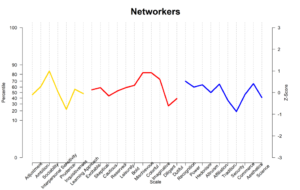
The personality profile of Networkers makes up approximately 13% of the working population. Their Hogan profile is highlighted by slightly above average scores on Recognition, Power, Affiliation, and Aesthetics on the MVPI, but below average scores on Security; very high scores on Sociability and very low scores on Prudence on the HPI; and high scores on the Bold, Mischievous, Colorful, and Imaginative on HDS with low scores on Diligent and Dutiful. See Figure 1 below for the full profile.

personality profile of Networkers

Figure 1: Hogan personality profile of Networkers

The Reputation of Networkers

We had eight Hogan consultants with a combined 82 years of experience provide independent, written interpretations of the Networkers profile shown above. Some of the words our experts most frequently used to describe Networkers were “risky,” “social,” “outgoing,” “innovative,” and “manipulative.” Additionally, we examined the workplace reputation of Networkers by drawing on Hogan 360° data gathered with Hogan distributor Peter Berry Consultancy.

Colleagues, supervisors, and subordinates said Networkers are assertive and energetic, have strong influencing and negotiation skills, are passionate, and competitive and driven. At the same time, Networkers’ work colleagues also said that they have questionable ethical standards, frequently produce work with errors, are sometimes unprofessional, and do not always treat people fairly and without favoritism. In other words, Networkers are socially skilled, influential, and charming, but also prone to taking risks and breaking the rules.

Lastly, our job performance archive also tells us that Networkers are seen as high-performers when it comes to presenting to others, managing conflict, driving strategy, communicating, and inspiring others. Networkers also tend to receive high overall performance ratings from their supervisors. To summarize, Networkers are interested in climbing the corporate ladder and use their social skills to do so rapidly.

Common Careers for the Personality Profile of Networkers

Networkers prefer careers where they can connect with other people and rely on their social skills. They like meetings, delivering presentations, and working on group projects. They enjoy roles in which they can take the lead and be the center of attention. Our data show Networkers are overrepresented in managerial and sales jobs.

They are also over-represented in executive roles (as opposed to individual contributor roles), suggesting they prefer work where they have the most power, influence, and command over the room. Because of their ability to connect with others and to sell themselves, Networkers are often drawn to entrepreneurship and start their own businesses. In popular media, characters such as the Thor (Marvel), Tom Haverford (Parks and Recreation), and Anna (Disney’s Frozen) are prototypical Networks — social, spirited, and energetic.

Advice for Networkers

If you are Networker, you should first recognize you have a real talent for connecting with people, playing corporate politics, and standing out front. Your manager will see you as an energetic and enthusiastic high-performer. However, your colleagues may see you as a bit of a showoff and as someone who takes more credit than deserved. Because of your skill at rubbing elbows with the right people, you are primed to move up rapidly in your company. Unlike Overachievers, you are more willing to play corporate politics and to take shortcuts to get to the top, which means you will likely get to leadership positions quickly.

In leadership roles, you will tend to focus on your efforts on continuing to fast-track your career. You will focus on big objectives that can make a splash and leave the details for achieving those objectives to your team. Be sure to give credit to your team when they deliver on your promises, otherwise they will start to resent you as their manager which will ultimately result in your best employees leaving. While they will respect your ability to get the attention of senior management, no one enjoys someone else taking credit for their work.

How to Deal with the Personality Profile of Networkers

If your boss has the personality profile of a Networker, you should know that he or she will constantly be looking to build new and strong ties with the upper echelons of the company. In other words, he or she will spend more time managing up than managing down. Your boss will present you with an agenda and a vision for what he or she would like to see done but have no interest in the details regarding how it gets done. And, it will be up to you to get things done. The most important thing for your Networker boss is that you make him or her look good. If you care about getting credit for your work, you will need to document exactly what you did because your boss will often get the credit otherwise.

If any of your employees have the personality profile of Networkers recognize that these people have a real talent for making contacts and charming others, including you. They will prefer to be assigned to big projects and they will enjoy opportunities to present their work in front of a large group, especially if that group includes power members of management. While your Networker will be energetic and ambitious, it will be incumbent upon you to make sure he or she is actually getting work done. Many Networkers advance on social skill alone generating little to nothing in terms of productivity. It will be up to you to find tasks and objectives that maximize your Networker’s natural skill-set.

Want to learn more about personality tests? Check out The Ultimate Guide to Personality Tests

Topics: personality

COVID-19 and the Virtual Workplace: How Can Personality Assessment Help Your Business During Turbulent Times?

Posted by Hogan Assessments on Tue, Mar 10, 2020

Personality Assessment for remote employees

With concern about the spread of COVID-19, more companies are choosing to allow workers to office remotely; Remote work isn’t a new concept. Over the past couple of years, with the increase in demand for a flexible workplace and the development of more advanced AI technology, many companies are choosing to offer employees the option to work virtually. VR conferencing; communication platforms such as WeChat, Slack, and Skype for Business; and apps for managing remote work and workers make remote work feasible and just as easy to manage as working in an office.

Having plans and a policy in place for virtual or remote employees will allow companies to adapt to external threats more quickly. Without such plans, companies can find themselves unprepared and scrambling to react when faced with a crisis. Figuring out how to best manage a workforce with limited mobility can be difficult. For example, some employees might not work as well without direct supervision; how can we know which employees need greater support and which ones can be more independent? When team members are remote, how can they learn to play off one another’s strengths and weaknesses to work more efficiently, both as a team and with other departments? And while many companies are considering ways to cut costs during this time, hiring is still inevitable for many companies. Typically, in-person interviews are part of any company’s hiring process. How can a company hire the right talent without meeting in person? How a company handles these challenges could determine its success or failure, especially during a time when the COVID-19 will have potentially serious implications for the global economy.

Personality Assessments for Remote Employees

At Hogan, we often say that there are two elements that make a business successful: people and money. We specialize in helping companies know people. We study the science of personality and know that personality predicts performance, so we also know that understanding personality is central to resolving the challenges of working remotely mentioned previously. Using a valid and reliable personality assessment can tell you everything you need to know about a person’s work style, and it can help you determine the best course for managing a person or team, or decide whether to proceed in hiring someone.

If you know that an employee is extraverted, you might plan more interactive opportunities for that employee, allow her to set her own goals, and provide resources for her to accomplish those goals remotely. If you find that an employee lacks agency, you might need to plan out specific activities and goals for him to accomplish with frequent check-in points since he might not automatically be comfortable driving his own agenda. Making sure he has enough structure working virtually will be the key to his success.

When building and managing a team, consider that a large body of research has shown that selecting team members by functional skills does not guarantee effectiveness. While you might have a team full of people with world-class skills or degrees, the team can still fail to perform as a cohesive unit.  Personality and values are essential for developing that social cohesion and enhancing performance, especially when the team works remotely.

Finally, when considering hiring talent via remote processes, assessments can be your biggest asset. As Darin Nei, director of product and international distributors at Hogan, outlined: Personality assessments add structure to the interview process, are difficult to fake, and are a cost-effective way of gathering equal and fair interview information about all candidates. Personality assessments for remote employees are a great initial step in the entire hiring process because it doesn’t discriminate, so it is an easy way to help promote diversity and inclusion in your organization as part of the hiring process. Additionally, when combined with other assessments, such as reasoning or ability assessments, it can provide a complete, objective, overall picture of a candidate. While interviews with some candidates will still be necessary, using a personality assessment is a great foundation for the entire hiring process and will help any interview, including those that are remote, be much more effective.

While we cannot control many things during the spread of the COVID-19 virus, we should look for the areas we can understand and develop to give our companies the best competitive advantage. Hogan can work with your company to help it gain a huge competitive advantage by helping you understand your talent, ensuring your company is as successful as possible during turbulent times.

*This post was authored by Krista Pederson, director of Asia Pacific business development at Hogan, and Garrett Shaffer, an account manager at Hogan.

Topics: personality

Subscribe to our Blog

Most Popular Posts

Connect