Blue Coach Delivers Results on and off the Court

Posted by Blake Loepp on Wed, Feb 07, 2018

home01Leadership is the most important single factor determining success in business. At Hogan, we believe good leaders are those who are able to build and maintain high performing teams. At Blue CoachSrdjan Vukcevic, the company’s founder and CEO, has been able to do that and so much more.

In addition to assembling a team that has positioned Blue Coach as Montenegro’s premier firm in delivering executive coaching, management consulting, and assessment-based solutions, Srdjan and his team have the opportunity to help others do that same at their organizations. As the Chinese proverb says: “Give a man a fish and you feed him for a day. Teach a man to fish and you feed him for a lifetime.” 

In the first edition of the Distributor Spotlight Series for 2018, Srdjan provides a breakdown of the services Blue Coach offers, and how combining his team’s expertise with Hogan’s assessments has made a significant impact across a variety of industries and organizations.

Blue Coach’s vision is to be the best we can be, to continue to learn and grow for the sake of our company, clients, and community, and eventually become a widely recognized brand in the HR and leadership development industry. We appreciate our clients and partners and the confidence they have placed and continue to place in us. We strive to excel in our industry by being as scientific and professional as we can be. Our focus on customer service and customer experience is something we are very proud of.

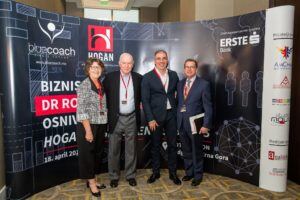
Blue Coach is known as the pioneer of the executive coaching industry in Montenegro and the Adriatic – SEE region. For the past 10 years, we have been working with executives, business owners, and their teams in order to measurably/significantly improve their leadership and organizational effectiveness. Our client list includes multi-national corporations covering a wide range of industries and over 100 privately owned companies. Since 2014, we have been an official distributor of Hogan Assessments and, even though we started our company in 2008, we feel the real growth of our business started in 2014 when we partnered with Hogan.
17917919_1707724565921321_2894275469260829794_o

We love Hogan. Period. It influences our business decisions, our life decisions, and we feel completely fulfilled with the work we are all doing together. Its powerful insights into human nature and how that translates into the real world of business, leadership, and performance is outstanding. All of our coaches and consultants rely heavily on Hogan to assess, decide about leadership areas for improvement, and for conducting our executive coaching sessions and programs. We know how to coach and with Hogan we know better what to coach and how to coach it for the sake of the company and for the leader being coached.

As in sports, coaching is never about bringing out positive aspects. Athletes are used to constant day-to-day feedback about their performance. Also, everything is immediately visible in sports and feedback is necessary for skilled performance. Only the best can survive the feedback and play.

Why is this different in organizations? There are at least two reasons: time and visibility – results are not immediate and publicly visible like they are in sports. This gives space for troubadours to move up the ladder, to hide, and play politics instead of achieving results. All the Hogan science talks clearly about this and that is why we at Blue Coach can connect to this and find it in our business practice. Better yet – with Hogan we can see how likely it is for this to happen.

Successful people know what they are good at. They need a real life sparring partner to fine-tune their leadership behavior and bring to the surface the negative, the shortcomings, the derailers, and the overused strengths. Coaching is also about acting as a behavioral conscience for the leader. That means that you know what they are doing wrong and that you are consistent in getting them back on performance track – either by addressing the delusions or by clearing up for the natural way of constant feedback to flow from the team and to the team.

Blue Coach also works with sports coaches and athletes to develop effective inter/intrapersonal strategies and to achieve better results. Similar to common leadership development initiatives, Blue Coach helps coaches and athletes become strategically self-aware of how others perceive them. With this information, they can see a clear path to develop both personally and professionally.

The Hogan research team and Blue Coach together explored personality in sports context. Namely, with the collaborative support of the Montenegrin Olympic Committee, our research on sports performance and observations of team success (or lack of it) shows clear evidence of the influential role of personality in individual performance and social team interactions. Great athletes look alike and great coaches look alike as well.

We believe that great athletes and successful coaches, as well as great leaders, never accept that they have achieved the ultimate success, and therefore are always working to get better. As Dragan Adzic, a two-time consecutive World Handball Coach of the Year says, “…respect what you have already achieved, and do your best to achieve even more.”

Let’s talk and work!

info@bluecoach.me
Topics: coaching, blue coach

The HDS Turns 2 Million

Posted by Hogan Assessments on Tue, Feb 06, 2018

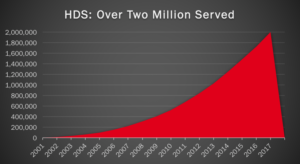
Screen Shot 2018-02-06 at 11.58.38 AMHogan was the first personality assessment provider to recognize the value of assessing derailers, or dark side personality, with working adults. First launched in 1995, the Hogan Development Survey (HDS) measures 11 derailing tendencies that can impede career success and interpersonal effectiveness. In 1998, we were the first test publisher to develop a web-based assessment platform to administer the HDS. After we fully integrated the system to score assessment responses for personnel selection and employee development in 2001, our online platform became the most popular way to complete our assessments. As a result, we hit a new milestone as 2017 ended, surpassing over 2 million HDS assessments on our core platform. Put another way, we’ve administered the HDS using this one platform to more people than the population of Paris, France.

Looking Back

As the popularity of the Internet and the success of our online business grew, so did HDS usage. In 2001 we used our platform to administer the HDS to less than 1,000 people. By 2014, annual HDS administrations surpassed 200,000 individuals. It took 13 years to cross the 1 million mark, but only 5 to cross 2 million.

Looking AheadPicture1

HDS usage since 2014 suggests we will continue to surpass marks set in previous years. At the current rate of growth, we should exceed 3 million administrations in the fall of 2020. Furthermore, as our clients, partners, and global distributors increasingly recognize the impact of derailers at work, we plan to hit that number even sooner.

The Bottom Line

The HDS remains the global standard for assessing personality derailers in normal working adults. Organizations recognize this fact as evidenced by increasing demand over the last 17 years, and data suggest that trend will continue. When organizations around the world want to hire the right people, develop talented employees, build great leaders, and impact their bottomline, they ask for the HDS.

Topics: dark side

The Neuropsychology of Teamwork

Posted by Hogan Assessments on Tue, Feb 06, 2018

alex-sajan-402957“Why can’t they just act like adults!”

“It’s like herding cats!”

Although teams are our default organizational unit, team leaders often struggle to get individuals to cooperate and coordinate. Partly, that’s down to the fact that each individual has their own agenda for getting ahead, which they balance with getting along with everyone else.

Getting along is the hard part. We became hard-wired through evolution to prefer our own kind and to distinguish friend from foe. Although we are inclined to cooperate, we are also hard-wired for competition and war, which makes coordinating with others tricky. Science is now telling us more about how to manage people and teams to activate neural pathways for either trust and collaboration or conflict and competition. Here’s how to harness our neuropsychology to build better teams.

Keep teams small

There is a right size and a wrong size for teams. Amazon boss Jeff Bezos thinks it’s small – he has the “2-pizza rule” – no meeting should take place with more people present than can be fed from 2 pizzas. The late Harvard professor Richard Hackman agrees, remarking, “My rule of thumb is no double digits. Big teams usually end up wasting everybody’s time.” Bottom line: keep teams between 5- 10 people.

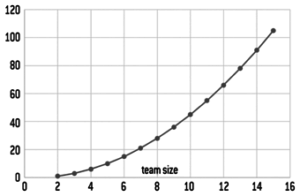
The reason smaller teams work is to do with the limits to our ability to hold and sustain good working relationships. Although research strongly suggests that the human brain got bigger and smarter as we learned to cooperate, evolutionary psychologist Robin Dunbar concluded that we have real cognitive limits. 150 people is about as large as anyone’s social circle can meaningfully be, but a group of around 5-10 people was an optimum working group. As the number of people in a team increases, the number of connections rises exponentially – by the time there are 15 people on the team there are over 100 possible interactions to deal with:

Screen Shot 2018-02-06 at 10.44.45 AMBuild cohesion, trust and, safety

Google spent years pursuing the idea that good teams came from having the brightest and most skilled people on board. But they were wrong.

Studying hundreds of Google teams revealed that one of the most critical factors differentiating good from poor teams was how safe they were for people to be open and share ideas. Underpinning psychological safety in teams is the neuroscience of trust.

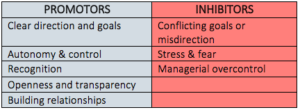
Paul Zak of Harvard identified oxytocin as a critical precursor to feelings of trust and trustworthiness. Oxytocin is sometimes administered to new mothers to stimulate bonding with babies – and Zak found that at work raising oxytocin levels reduces social distance and fear of others. His lab has spent years looking at promoters and inhibitors of oxytocin production in the workplace:

Screen Shot 2018-02-06 at 10.46.53 AMZak reports that promoting trust is good for business: staff in high-trust organizations are more productive, collaborate better with their colleagues, suffer less chronic stress and are happier with their lives.

Harness mood for good

One of the more remarkable findings in the last 25 years has been the discovery of mirror neurons in the brain. Put simply, mirror neurons react when we see another person have an experience – as if it were ourselves having that experience. Although there is a lot of scientific debate about their direct impact on our behavior, it is commonly understood to be critical to our sense of empathy and understanding, as in, we can feel what the other person is experiencing.

Mirror neurons suggest that emotions don’t just come from inside us (“I feel excited”), they can also be produced unconsciously from seeing someone else feel excited or pleased. That matters, because researchers have learned a lot about the ripple effect that passes emotions through a team, and generates a collective emotional state. Teams respond consciously or unconsciously to how other team members are feeling, and to the emotions of the team leader. Since humans tend to put more weight on negative events and feelings than good, leaders who display bad moods, or who create stress and unhappiness in others, will impact the team and lose follower regard.

Acting positively, and supporting an upbeat climate in the team, will increase engagement and boost productivity.

Choose diversity carefully

Suzanne Bell is a prominent teams researcher who helps NASA choose the mix of personalities for space missions. Her work suggests that personality – how you are deep inside – will impact team performance, especially in combination with others. Having conscientious, detail-oriented people on a team is good news, as is having people on board who are warm and agreeable. Having worrying, negative types is not so good.

Yet a mix of backgrounds, personalities, qualifications and genders can have useful effects if the task is right. R&D and design teams benefit from having a mix of backgrounds; having different personalities helps entrepreneurial teams.But humans have trouble working with those different from ourselves, and sometimes negative effects from mixing people up are seen.

Topics: teams

Scott Gregory Named New Hogan CEO

Posted by Hogan Assessments on Mon, Jan 29, 2018

Scott Gregory_highres (1)Today, Hogan announced that Scott Gregory will assume the role of CEO, effective March 1, 2018. Current CEO, Tomas Chamorro-Premuzic has resigned and will leave the company on February 28, 2018.

“Tomas’ tireless support of the business has been superb,” said Robert Hogan, Founder and President. “He will remain a close friend and valued member of the extended Hogan family. He is an important thought leader with whom we expect to partner on future research, presentations and projects,” Hogan said. “We are grateful for his many contributions to the business and wish him great success in his next venture.”

Gregory, who completed his Ph.D. under Robert and Joyce Hogan at The University of Tulsa, was one of Hogan’s first employees. He has extensive experience working with global companies, including 12 years as the Vice President of Talent Management and Organizational Development at Pentair. He also was a consultant for Personnel Decisions International and Hogan’s partner, MDA Leadership Consulting, and taught I/O Psychology at Macalester College and St. Olaf College.

Gregory rejoined Hogan in 2013, and was elevated to partner and Vice President of Consulting in 2016, leading Hogan’s domestic and international consulting teams. Throughout his career, he has consulted for half of the Fortune 100, and worked extensively with personality assessment in North and South America, Australia, Asia and Europe.

“Scott is uniquely positioned to become Hogan’s next CEO,” said Hogan. “He has a thorough understanding of every type of client organization Hogan serves, deep knowledge of our assessments and research dating back to his work with us during Hogan’s early years, and he exemplifies the level of quality and customer service for which we are known. His contributions to the business, passion for Hogan and commitment to continuous improvement make him the obvious choice for the future of Hogan.”

Topics: CEO

How Much ‘Psycho’ Is There in Modern Psychometics?

Posted by Hogan Assessments on Wed, Jan 24, 2018

PCL Psycho 2This article was originally authored by Geoff Trickey for PCL in January 2018.

The use of personality questionnaires has increased quite dramatically over recent years. Test development, publication and usage have benefitted considerably from the opportunities provided by the internet: once a process that relied very much on the professional expertise of the psychologists, personality went online in 1999 and the genie was out of the bottle. Now readily accessible on both the test development side and the test user side, a highly competitive marketplace has developed, bristling with a bewildering array of products used by people with very varied levels of psychological insight.

There are positive benefits from this process of commoditization, but there are also concerns. The relationship between personality theory, personality research, test development, test publishing, sales and test usage is now weighted heavily towards the commercial end of that pipeline. The question is: have the links with psychology, the ‘psycho’ element in ‘psychometrics’, been strained almost to breaking point?

Background

Man showing business graph on wood table

The study of personality has a very long pedigree that is easily traced back to the ancient philosophers. Its mission is close to the most fundamental questions about our existence and about human nature. These are not merely interesting esoteric issues; differing views on personality have considerable consequences. They have a moral dimension too because they influence our understanding of personal responsibility, our beliefs and principles and, by that route, they impact on fundamental ideas about what is right and what is wrong. They also influence public policy. For example, different assumptions about the influence of Nature and Nurture account for fault lines in political and public policy debate about key issues; everything from education to justice, retribution, correction and rehabilitation.

History

The evolution of personality assessment reflects many different schools of thought. Each approach was predicated against the insights of their creators, their understanding of human nature and their definition of personality. Theory preceded measurement. From Galen to Jung, Rorschach to Murray, Cattell to Hogan; personality theory and personality research came first. It provided the platform of distinctive beliefs upon which these thought leaders based their various methods of assessment. These were typically people, prominent in their field, making a major contribution to psychological theory and debate. Their approach to personality assessment was the legacy of a lifetime of enquiry and theoretical development. Their rationale was explicit, reflected in an extensive body of research, in their publications and, of course, in their assessments.

The contribution of psychology towered in its significance over the practicalities of assessment. But there was never consensus. Different theorists argued their case, set out their stall, won adherents to their cause and challenged the status quo – that is how advancement in science works. At the point of delivery, the test user knew and understood what the author was attempting to do. Familiarity with the theory provided the contextual framework for the interpretation of results and the generation of appropriate inferences and predictions.

Today

When he asserts that “personality theory and personality assessment were separated at birth”, Bob Hogan is alluding to the loss of this connection. All too often the crucial question of ‘what exactly is this personality test measuring’ seems to be taken as a given. Unexplained reference to ‘personality’ just doesn’t cut it.

The nature of personality, its structure, its content and its significance can be conceptualized in so many different ways; are we referring to traits, dispositions, instincts, values, temperament, preferences, attitudes? How influential is it? Can it be changed? Can it be managed? Is it genetic? Is it shaped by learning, by religious belief, by culture by experience? How does it relate to performance in sports or at work? How does it influence a biographical trajectory? What part does it play in personal relationships? Does it shape behaviour? Does it merely reflect the behavioural consistencies of individuals? Is it deterministic or do we have free will?

Even the current ‘gold standard’ of robust Five Factor Model credentials leaves all these questions unanswered. Without an explicit theoretical framework, simply claiming to measure ‘personality’ doesn’t give any clue about what the results actually mean; nor what implications, recommendations or decisions can reasonably be drawn from a test result. Measurement, stripped of theory is ‘dust bowl empiricism’. Its interpretation relies on whatever assumptions the user brings with them.

Somehow, our obsession with statistical analysis threatens to eclipse the primary purpose; that of understanding human nature. Cattell makes an important point:

…..lest there may seem to have been overemphasis on statistics – let it be said that ideal prediction and treatment practice requires both psychological understanding … and statistical understanding.

Current trends in personality assessment seem to paper over the question of psychological insight. Big data is the extension of this mind set.  Assigning numbers to everyday behaviours, utterances or decisions may tell us something about the people they are attributed to, as do any of our observations of others, but any inferential interpretation beyond the blatantly obvious relies on assumptions about human nature – the issue that it singularly fails to address. Psychometrics without the psychology is just playing with numbers; and numbers without any clear rationale wield a very dubious authority.

The Future of Psychometrics?

It’s perfectly acceptable to define personality in different ways and to operationalise those views through questionnaires, gaming methods or big data. What is highly questionable, though, is to purport to measure something for which there is no clear rationale and therefore no clear meaning and no clear implications for decision making. Any survey, word check list, group of statements or questions can be metricated statistically using item analysis, scale development techniques and norm tables. But, for them to have any depth of meaning, they need to have been shaped, from conception through to delivery of results, by the insights of the creator and developed with the specific intention of operationalizing those insights into real world outcomes.

Are Your HiPos Overrated?

Posted by Hogan Assessments on Wed, Jan 10, 2018

PS HiPoMost organizations across the globe make it a top priority to identify and develop high potential employees for leadership roles. Unfortunately, organizations large and small have struggled to recognize those with the most potential and, in many cases, select employees with very little potential at all.

This is largely due to biases in the identification process. Those with charismatic personalities who are likable and good at office politicking most often emerge as leaders. The problem is that the vast majority of these individuals lack the personality characteristics that translate to leader effectiveness. Thus, it should be no surprise that a Gallup poll in 2015 showed that 68% of US employees were not engaged or actively disengaged at work.

In this article, recently published in the Winter 2018 issue of People + Strategy Journal, Robert Hogan, Tomas Chamorro-Premuzic, and Derek Lusk address the crucial differences between leader emergence and leader effectiveness, and make practical recommendations for HR practitioners to create and implement successful HiPo identification programs.

Topics: high potential, high potential employees, high potential program

Another Shade of the Dark Side: Derailing Due to Underuse of Behaviors

Posted by Trish Kellett on Tue, Jan 02, 2018

Trish-Training IndustryThe dark side of personality concerns behaviors and attributes that derail people – getting them into trouble and making them less effective as leaders. Typically, these derailers appear when people are under stress (e.g., they have a tight deadline, they are dealing with ambiguity, etc.) or when they are not self-monitoring (e.g., they are around people with whom they can let down their guard and not manage their image).
Many times, these behaviors are an overuse of a key strength from the bright side of their personality. For example, a leader who is conscientious, detail-oriented and sets high standards on a day-to-day basis might become perfectionistic, nitpicky and micromanaging when under stress – driving his or her direct reports crazy and garnering the reputation for being impossible to please.

While overuse of strengths is certainly problematic, underuse of a behavior or trait can be equally derailing, but in a different way. Underuse is another shade of the dark side, and it can have significant impacts on a leader’s effectiveness, reputation and, ultimately, career. Underuse of behaviors is usually not as visible or memorable as overuse, but it can be equally damaging.

To illustrate this principle, consider leaders who overuse their enthusiasm and sense of urgency to the point that they are emotional, excitable and volatile. Their tempers and hot-headedness are usually very memorable to the people who witness their “excitable moments.” In contrast, a person who underuses enthusiasm and sense of urgency will most likely come across as boring, dispassionate and flat and will not be able to motivate anyone. In short, the person will not be viewed as a leader. While the underused behavior might not garner immediate attention the way an overused behavior does, the impression it creates will accumulate over time, adding to the person’s reputation of not being an effective leader, which can be a death knell to a career.

The throwaway line that captures the essence of this discussion is, “Overuse can get you fired, and underuse can get you passed over.” Although a simplistic view, it is not far from the truth. If coaches were asked to give behavioral examples of executives who were fired, they would quickly fill a flipchart with examples of overused strengths that resulted in over-the-top behaviors. If those same coaches were queried about executives who were fired for underused behaviors, they likely would have very little to report. However, if they were asked to recall people who were passed over for a promotion or whose careers hit a plateau, they would most likely come up with a list of underused behaviors that resulted in the person not being perceived as a leader – descriptors such as “no fire in the belly,” “too quiet,” “too slow to make decisions,” “trusting to the point of being naïve” and “lacking influencing skills.”

While it’s critical for leaders to have self-awareness and situational awareness regarding their overuse of behaviors, it’s equally important to have them regarding underuse, as underused behaviors can be “silent killers.” Leaders need to constantly be vigilant as to how they are coming across, who their audience is and what level of behavior is appropriate for the situation, and then adjust their behavior accordingly. Often, it is much more difficult for leaders to dial up underused behaviors than to dial down overused behaviors. This is because the dialed-up version of the behavior is so foreign to leaders who underuse them, and they feel that the behavior is unnatural. For example, a leader who is quiet and does not show much emotion will typically have a harder time speaking up and demonstrating emotion than the leader who is trying to rein in those behaviors.

Dialing Up Leadership Traits: Leader Emergence
Consider the case of Robert, a design engineer for a manufacturer of commercial aircraft­ electronic components. He worked primarily as an individual contributor and was a hard worker who seemed very calm and even-tempered under pressure. People viewed him as task-focused with little interest in engaging with people. He tended to work long hours and was not bothered by the fact that his attention to detail spilled over into work for others, which earned him a reputation as a grinder who got things done.

His hard work and solid performance brought him to the attention of the senior management team. He had the technical skills to be promoted to a new role as project leader of a cross-functional team. However, the senior managers were planning to pass him over, because the new role would require effective leadership, collaboration, communication and team-building skills that they felt would be too much of a stretch for his quiet, reserved nature and tendency to fade into the background in social situations.

Robert’s manager was very direct with him about those concerns and perceptions. Robert realized that if he were ever going to be promoted and achieve his potential, he needed to visibly demonstrate that he could dial up the traits that were crucial in the new role. He requested the help of a coach, and they embarked on a coaching initiative designed to develop the traits he needed: assertiveness, communication, being more approachable and sociable, and being less perfectionistic.

It was difficult at first for Robert, because he had to exert so much energy just exhibiting the behaviors. However, the new dialed-up versions became easier the more he practiced them, especially when he saw that they truly did make him more effective in his interactions. Robert’s commitment to change and his demonstration of the newer, more visible behaviors in front of the senior team members convinced them to promote him into the new role.

Leader emergence (the behaviors typically associated with overuse of strengths) is perhaps one of the most significant variables in career success. When leaders who are underusing traits are passed over due to executive presence concerns, it is a lose-lose for the leaders and the larger organization, as both the leaders’ good ideas and the good ideas of their teams often go unnoticed. Although dialing up underused behaviors can be difficult, with sufficient self-awareness, situational awareness, desire and determination on the part of the leader, it can be done.

This article was originally published on Training Industry on July 7, 2017 by Trish Kellett.

Topics: coaching

‘Learning Agility: The Key to Leader Potential’

Posted by Hogan Assessments on Wed, Dec 20, 2017

LA_Cover_MockupThe war for talent is more fierce than ever, and there is a growing belief that the people who have the highest potential are also your most agile learners. However, defining learning agility, and determining who has more of it, has remained a challenge until recently.

The new book, Learning Agility: The Key to Leader Potential, authored by David Hoff, Chief Operating Officer and Executive Vice President of Leadership Development at EASI Consult, and W. Warner Burke, Professor of Psychology at Columbia University and developer of the Burke Learning Agility Inventory™ (Burke LAI), effectively defines learning agility, and explains how to measure and apply it in organizational settings.

“Learning agility is one of the hottest topics in talent management and leadership development today,” says Allan Church, PepsiCo Senior Vice President of Global Talent Assessment & Development. “Hoff and Burke’s book on the topic provides a new framework and way of thinking about the construct that is just what the good doctor ordered. Whatever your interest in learning agility, this is a must-have resource and represents a leap forward for the field.”

Learning agility is not a new concept, but it took years of research to prove that it really does exist, and can be quantified on an individual level. That research led to the development of the Burke LAI, which offered the first reliable, theoretically grounded way to measure learning agility. And, now that learning agility can be measured, individuals and organizations need to know how to develop it.

“I’d argue that learning agility is one of the most exciting, game-changing concepts in the field of talent management today,” says Hoff. “Those of us who want to stretch ourselves at work can examine our strengths and take concrete action to develop our weaker skills. By doing so, we can reach our untapped potential.”

Dr. Tomas Chamorro-Premuzic, CEO of Hogan Assessments and Professor of Business Psychology at University College London and Columbia University, considers learning agility to be of the utmost importance for all leaders.

“Learning agility is critical for today’s leaders: if leaders can’t learn from experience and acknowledge past mistakes to avoid repeating them, they will become a liability,” says Chamorro-Premuzic. “This book, by true experts in the field, is an authoritative volume that will help both scholars and practitioners understand the importance of learning agility in the workplace and how we should assess and develop it.”

Learning Agility: The Key to Leader Potential is on sale now, and can be purchased on Amazon or at www.learningagilitybook.com.

Topics: Talent Development

Distributor Spotlight: Authentic Talent Capitalizing on Untapped Opportunities in France

Posted by Blake Loepp on Tue, Dec 19, 2017

Authentic TalentWhen Chloë Touati and Stéphanie Le Ferrand co-founded Authentic Talent in Paris, it was obvious they each had three things in common: passion, energy, and a bold vision to make Hogan’s assessments the preferred assessment tools in the French market. And, if there’s one thing we at Hogan have learned in working with both of them, there are few who can match their drive and desire to improve the French workforce.

In the final edition of the Distributor Spotlight in 2017, Chloë and Stéphanie tell the story of how and why they founded Authentic Talent, and the unique adventures and challenges they’ve experienced along the way. Cheers to a great year, and happy holidays from your friends at Hogan!

Today, we want to tell you a little bit about us, two Paris-based HR consultants at Authentic Talent. Previously, Chloë Touati, who has a master’s degree in HR, was working for a small consulting firm as the manager of Talent Development. Stéphanie Le Ferrand, an occupational psychologist, was working as a senior consultant at Cubiks. In our respective roles, we both have significant experience working within consulting firms and many well-known tests publishers, such as OPP (European distributor for MBTI) and SHL. We understand and are accustomed to dealing with a complex and immature market. Although France is a large country with a lot of test providers, personality questionnaires are not that widely used. 

We are convinced that the assessment market in France is undergoing a paradigm shift and that opportunities are plentiful. Therefore, we joined forces to launch Authentic Talent, a company dedicated to helping individuals, teams, and organizations with all human resource-related issues. We wanted to reconnect with our personal values and offer companies and people a different experience that is more aligned with authenticity and a concern for quality.

We wanted to stay true to our values but are also wondering how to offer premium service within the existing market in France. We are driven by our desire to build amicable but uncompromising relationships with our clients by offering tailored and not just off-the-shelf solutions. We wanted to promote transparency to ensure long-term partnerships with our clients by selling solutions only if we are strongly convinced of the added-value for the company and its employees.

It is difficult to offer a high quality strategy to clients who are used to listening to consultants selling tools like they are crystal balls. The assessment and development market is still driven by HR people who are decidedly not psychologists and mostly subjective in their approach. In France, gut feelings and aesthetics are often still considered to be important criteria. Competitors are selling solutions that are shiny and pretty on the surface, but are unreliable and of poor quality. Therefore, we are required to do a lot of heavy lifting from morning to night, getting up early in the morning, teaching clients until late in the evening.

A partnership with Hogan Assessments is the ideal solution! This company is known internationally for its high level of quality, the precision and nuance in their measurement of personality, and their unique approach of assessing the dark side. This partnership allows us to use and prescribe a “new” measurement of personality. We appreciate our close relationship with the head office in Tulsa and their US-based team. Thanks to that relationship, we are able to effectively support our clients with training or technical support. When we are in the question phase, there are always distributors ready to share experiences and advice to help us to promote quality in our market. This allows us to be flexible in our proposals to clients, to offer a different and constructive experience.

After the first main steps in this Authentic adventure, we have built strong relationships with clients in several sectors, positioning Hogan tools as the premium brand on the market targeted at the leadership population. We have been able to promote the assessment and development of talent with a high-quality approach driven by authenticity. This period has not been easy; we are still a very young firm. But every day we meet with challenging clients who share our convictions. In the short time since our creation, we have received excellent feedback from existing and potential clients.

We have already started the Hoganization with some fantastic groups with whom we are conducting enthusiastic projects, including Hogan for selection and development purposes. We are building a strong community with the certified users and offer them the opportunity to further develop their Hogan expertise. We are highly motivated to continue adding more business in the future!

We would be more than happy to welcome you all to Paris to meet us and spend some time together, sharing a glass of wine and a Hedonestic meal!

Topics: authentic talent, distributor spotlight

The Value of Values for Teams

Posted by Hogan Assessments on Mon, Dec 11, 2017

samuel-zeller-4138Groups are the default human working unit. For most sorts of jobs, people tend to cooperate and collaborate to get the work done. Even when the job doesn’t need collaboration we still prefer to do it in proximity with others – think brew clubs or cruise ships.

When the job requires cooperation, people are selected into teams primarily on the basis of their functional skills. A surgical team is based on the specialist skills of nurses, anaesthesiologists, and surgeons for example.

However, a large body of research has shown that selecting people purely on the basis of functional skills is no guarantor of an effective, cohesive team; deep-level characteristics like personality and values also emerge as essentials for developing social cohesion and enhancing performance (Bell, 2007). You can put world-class talent together on a team, and it may still fail to perform as a cohesive unit. The Cleveland Cavaliers are a case in point, and research on NBA teams shows that adding talent can lead to worse performance (Swaab, Schaerer, Anicich, Ronay, & Galinsky, 2014).

A moment’s thought makes this point clear: working with a skilled colleague who is also irascible, disorganized and uncaring makes it harder to connect as a group and introduces transaction costs in maintaining group harmony. The current US White House contains the most publicly visible example of this principle in action. In fact, the only way to create a team that’s worth more than the sum of its individual contributors is to select members on the basis of personality, soft skills, and values.

When a majority of team members share the same values, the team bonds more easily. In a study of university students, teams with members who shared significant personal values, like tradition, power, or altruism, reported more cohesion when compared to their less similar counterparts (Woehr, Arciniega, & Poling, 2013). A series of studies in the British National Health Service showed that teams whose values were congruent identified more strongly as a group and were more innovative (Mitchell, Parker, Giles, Joyce, & Chiang, 2012). Because values are a guide for behavioral choices, group members who share similar values are more likely to agree about group actions, and vice-versa. In this way values determine the group’s culture, and offer insight to the weight the team will place on decision choices.

The Hogan research team recently explored the link between the kinds of specialist skills people display and the values that the team holds. This relationship has big implications for predicting how teams will approach particular tasks and behave on the job, such as pursuing results, being commercially minded, or valuing innovation.

For example, manual work teams are more likely to contain members whose personalities could be described as pragmatic: tough minded and practical (Hogan Assessment Systems, 2016). Importantly, we found that these teams are also more likely to share values concerned with intuitive decision making, self-reliance and low levels of social interaction (lower Affiliation).

In contrast, teams that contain members who are creative (that is, who demonstrate high levels of openness to ideas and curiosity) are also much more likely to share values relating to analytical thinking, commerciality, and achieving results – think advertising agencies.

Teams which comprise results oriented individuals, such as leadership teams (Winsborough & Sambath, 2013), are more likely to share values related to power, commerce, and affiliation, and less likely to endorse values related to security and altruism. We can confidently predict that the culture of these teams will be assertive, confident, socially outgoing, and independent.

When assembling teams there is always a tradeoff between the skills needed to get the job done and the emergent personality of the group. Our new research shows that the kinds of people on the team determines its culture, decision making styles, and likelihood of bonding.


Bell, S. T. (2007). Deep-level composition variables as predictors of team performance: A meta-analysis. Journal of Applied Psychology, 92(3), 595–615. https://doi.org/10.1037/0021-9010.92.3.595

Hogan Assessment Systems. (2016). Hogan Team Report Technical Manual. Tulsa, OK.: Hogan Assessment Systems. http://www.hoganteamreport.com/wp-content/uploads/sites/10/2017/01/Team_Report_Tech_Manual_V2.pdf

Mitchell, R., Parker, V., Giles, M., Joyce, P., & Chiang, V. (2012). Perceived value congruence and team innovation. Journal of Occupational and Organizational Psychology, 85(4), 626–648. https://doi.org/10.1111/j.2044-8325.2012.02059.x

Swaab, R. I., Schaerer, M., Anicich, E. M., Ronay, R., & Galinsky, A. D. (2014). The Too-Much-Talent Effect: Team Interdependence Determines When More Talent Is Too Much or Not Enough. Psychological Science, 25(8), 1581–1591. https://doi.org/10.1177/0956797614537280

Winsborough, D. L., & Sambath, V. (2013). Not like us: an investigation into the personalities of New Zealand CEOs. Consulting Psychology Journal: Practice and Research, 65(2), 87–107. https://doi.org/10.1037/a0033128

Woehr, D. J., Arciniega, L. M., & Poling, T. L. (2013). Exploring the Effects of Value Diversity on Team Effectiveness. Journal of Business and Psychology, 28(1), 107–121. https://doi.org/10.1007/s10869-012-9267-4

Subscribe to our Blog

Most Popular Posts

Connect