Hogan Interview – by Skye Trubov

Posted by Hogan Assessments on Thu, Oct 05, 2017

*This article was originally published for The Association for British Psychology.  
abp-box-logo-01-01_Slideshow

Has your empathy and compassion ever led to anxiety about what others think of you? Has your competitive nature ever made enemies? Has your persuasiveness ever led to manipulation? We all possess dark side traits which may have helped us achieve success in the past but if we don’t keep these traits in check, they’ll eventually catch up and may well lead to detrimental outcomes. Given the topical nature of toxic leadership and scandalous behaviour, we found ‘The Dark Side’ to be a fitting theme for the Association for Business Psychology (ABP) conference this year in October.

As an ABP Committee member, I’ve had the distinct pleasure of interviewing the one and only Dr. Robert Hogan, who started Hogan Assessments with his wife Joyce in1987 and put dark side traits on the map. We discussed the dark side of personality, what it is and why it’s crucial for organisations to pay attention to.

Personality has a very real impact on organisational outcomes—bad managers lead to toxic environments that kill engagement and negatively impact productivity. Managerial failure is easy to identify, but the ‘why’ is much more difficult to uncover. Thanks to organisational research from psychologists, we can identify these traits very early on and either develop leaders to manage their dark side, or simply find another place for them (i.e outside of the organisation).

Dark side traits are those which exhibit when a strength is overused (e.g persuasiveness becomes manipulation), or when stress, boredom or fatigue leads to certain—sometimes extreme—behaviours that can derail a career. Popular discourse and plenty of past research has largely focused on ‘bright side’ traits like engagement and motivation but it’s important to recognise the other end of the spectrum.

In this brief exchange, I ask Dr. Hogan all about the dark side of personality. Fun fact: it was Dr. Hogan who coined the term ‘dark side’ after reading an article about psychological phenomena that seemed as “bizarre as the dark side of the moon”. This article inspired him to reference our extreme personality traits as the “dark side of personality”.

Skye Trubov: What is the dark side all about?

Dr. Hogan: The dark side is all about failed managers: why they fail, how they create alienation and destroy engagement and productivity of companies. There are significant consequences associated with the dark side. We break it down into three main factors, the first is intimidation and bullying, the second has to do with charm and seduction, the third [category] is something like false compliance and antisocial behaviour.

ST: Why is it important?

Dr. H: There are real financial consequences that show the impact of bad leadership. Academic research has focused mostly on good qualities of leadership by examining the qualities that make a strong leader, so [I said] we know about the good ones, what about the bad ones? How many bad ones are out there? Turns out there’s a whole lot more out there than anyone would have imagined. When I started looking into this concept 20 years ago, I did a bit of research to conclude that the incompetency of management in the corporate world is 60-70%, which both aligns with average rate of disengagement, which is about 75% based on surveys, and also greatly contradicts the professional estimates of 3% to 5% – so what we need to focus on is A) what is the base rate in organisations, and B) what causes that? ST: Do you see an industry or a business unit with managers that demonstrates these dark traits more than others?

Dr. H: The answer is sort of. You cannot have a military career without something called dutiful and diligent [which are two out of the eleven subscales measured in the Hogan Development Survey (HDS) used to determine dark side traits]. You can’t have a career in sales without high scores on colourful and mischievous and you can’t have a career in banking without high scores on the sceptical, cautious and reserved scales. So, different roles might draw people who specialise in different areas of the dark side.

ST: It’s not too difficult to spot dark side traits in managers… Do you think some people are just jerks or can we boil it down to personality? How much can we attribute circumstance and environment to one’s behaviour?

Dr. H: I’m an old-school Freudian and I think early on experience really matters and all these dark side characteristics had a path at some point. They’re patterns of behaviours that are learned. These features can provide positive feedback and therefore reinforce these behaviours. Even into adulthood. I call these short-term wins and long-term losses. In any single interaction or meeting, these dark side traits will give you a reaction but this accumulates over time, like radiation. [does this last sentence add much?]

ST: How do you see assessment changing in the next 5 years?

Dr. H: I think delivery vehicles will change but there are two real issues: change v. improvement. I think improvements will come as a result of regular progressive advancements but change will come in the form of delivering an assessment on a [mobile] phone or doing personality assessment by reading facebook etc. so two issues: how will it change and how will it improve? It will change in superficial and glittery ways and it will improve systematically and incrementally, one item at a time.

ST: How do you see all of this influencing HR? What’s their responsibility?

An essential point for understanding leadership [is] to manage the talent in a way that’s leading to organisational productivity. The data show clearly that every financial outcome of an organisation can be tied back to engagement, and bad leadership destroys engagement and flexibility. If I were in HR, that would be my sole focus. At an innate level, I would implore HR people to pay attention to data as opposed to tracking fads.  [The industry is] unbelievably ridden with fads.

ST: Where do you see the ABP offering value to organisations?

I see the ABP offering value as a clearing house of organisational trends and clearing out the crap of fads claiming to be psychology.

ST: Finally, what are your dark side traits?

MINE?! Oh jeez. Let’s just say that I really struggled writing the bold or narcissism items. The sceptical and paranoid items I wrote in one setting and didn’t have to revise a single item.

Dr. Hogan is speaking as a keynote at the Association for Business Psychology Conference on 12-13 October in London. Visit the ABP website for more details on tickets and award/speaker slot submissions (deadline 12 June) – submissions are free and open to anyone.


 

Topics: Dr. Robert Hogan, dark side of personality

Distributor Spotlight: Awair is boosting Hogan’s footprint in Mediterranean Europe

Posted by Hogan Assessments on Tue, Oct 03, 2017

In business, sustainable growth is no certainty, and often takes several years to accomplish. Even at Hogan, the business did not experience rapid growth until more than a decade after the company was founded. This is what makes Hogan’s European distributor Awair’s story so incredible. In just five years – three as a Hogan distributor – the company has experienced rapid, yet smart, organizational growth and success.Awair_logo

Although the company was founded in Italy, Awair has since expanded across Mediterranean Europe to establish and maintain a presence in Spain and France. This should come as no surprise to anyone familiar with Roman history. They are most definitely experts in geographic expansion.

As part of our Distributor Spotlight Series, our friends at Awair have offered to tell their story so that we can share it with the masses. In it, one can easily understand what has made their organization so successful, and why the future is even more promising due to their stellar leadership and expertise.

“All roads lead to Rome,” as our wise ancestors said. For Hogan, the road took a while to complete, but then the old motto proved trustworthy, and Hogan Assessments finally landed in Italy with Awair in 2014. Now, they are there to stay – and to make an impact.

Awair is a fast-growing consulting company which stands out as the one-stop-shop for assessments. Established in Milan in 2012, it is a young organization, yet firmly grounded on the distinctive competences of its founders, each of them with over 20 years of professional background. 

“We serve multinational corporations, as well as large and medium domestic companies, head hunters, recruiters, and professional coaches. Our partnership with Hogan gives us a competitive advantage for the depth and scope of the analysis we can carry out, a great value added that our clients do acknowledge,” says Massimo Meroni, Awair Co-founder.

Francesca Antonini points out that Hogan’s and Awair’s DNAs are effectively compatible, “At Awair, we believe that business success depends on becoming aware – at personal and organizational level – of one’s own strengths and challenges. We help organizations realize this through a highly specialized and customized use of Hogan instruments.”

Gianfranco Gennaro brings his clear vision on the organizational priorities related to people development: “Awair designs and implements development centres that integrate Hogan tools to reach the expected goals and the best fit with the organizational culture.”Awair_photo

Awair is the ideal partner to accomplish organizational transformation. Andrea Facchini, the most recently appointed Partner, has no doubt: “We are passionate to help organizations implement successful programs of talent management and simplify transformation as well as leadership development. We provide coaches, consultants and HR specialists with personalized training and Hogan certification programs.”

Awair’s enthusiasm for Hogan products only equals its natural ambition for international expansion. Today, the company is proud to distribute Hogan tools and know-how in France and Spain as well, through its newly-founded local offices in Paris and Barcelona.

Gilles Dacquet and Ernest Sant are Awair’s French and Spanish Partners, respectively. The whole international team agrees that: “Taking personality assessment at the heart of performance improvement programs is still a great challenge in Mediterranean countries – and one we are glad to embrace and sure to win – together with Hogan – because the potential is huge.

Results are already there to be seen. Overall, in less than three years since the first workshop took place in Milan, almost 300 professionals have completed their Hogan certification program with Awair

Among Awair’s success stories with clients, the collaboration with insurance leader Generali Group must be mentioned. Hogan tools are part of Generali’s wide range of development offering to its executives and talents. Hogan helps executives enhance their levels of self-awareness, thus maximising its potential impact. Anna Chiara Lucchini, Head of Group Academy and Leadership Development at Generali Group summarizes the partnership: “The Awair team was very effective in gaining trust on the field and tailoring the solutions and processes on our needs, as well as available to adapt to our compelling deadlines and requests. Thanks to their deep knowledge and expertise, our executives and managers reported a positive and enriching development experience.”

Topics: distributors, distributor

Too Much Charisma Can Make Leaders Look Less Effective

Posted by Hogan Assessments on Fri, Sep 29, 2017

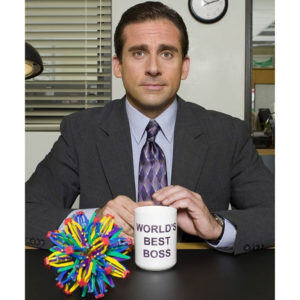
Conventional wisdom suggests that the most charismatic leaders are also the best leaders. Charismatic leaders have, for instance, the ability to inspire others toward higher levels of performance and to instill deep levels of commitment, trust, and satisfaction. As a result, they are generally perceived by their subordinates to be more effective, compared with less charismatic leaders.steve-carrell-best-boss-mug_2_1_3

But our research shows that while having at least a moderate level of charisma is important, having too much may hinder a leader’s effectiveness. We conducted three studies, involving 800 business leaders globally and around 7,500 of their superiors, peers, and subordinates. Leaders occupied different managerial levels, ranging from supervisors to general managers. Our paper is forthcoming in the Journal of Personality and Social Psychology.

First, it’s important to understand what charisma is. Traditional models of charismatic leadership state that charisma is not a personality trait, but simply exists in the eye of the beholder. In other words, charisma is attributed to someone, as opposed to being grounded in one’s personality.

However, the observation that people tend to agree in their perceptions of others’ charisma levels suggests that it is not only a matter of attribution, and that this agreement might result from a personality-based foundation underlying these perceptions. So the first goal of our research was to establish a measure of charismatic personality.

We gave leaders the Hogan Development Survey (HDS), a personality inventory specifically designed for work applications, and looked at how they scored on four personality tendencies: bold, colorful, mischievous, and imaginative. More-charismatic leaders score high on these traits, which is reflected in their high self-confidence, dramatic flair, readiness to test the limits, and expansive visionary thinking.

Next, we conducted a study to confirm this cluster of traits as a valid measure of charismatic personality. Using a sample of 204 business leaders, we showed that charismatic personality related to subordinates’ perceptions of charismatic leadership. So leaders with a highly charismatic personality, as measured with HDS charisma, were also perceived to be highly charismatic by their subordinates. Using an archival data set from 1998 on a sample of 156 people, we further showed that HDS charisma levels could be predicted by people’s charismatic behaviors (for example, being energetic, assertive, and generating enthusiasm).

Our second goal was to investigate the relationship between charismatic personality and leader effectiveness. In a second study, 306 leaders (65% of them men) provided HDS self-ratings of their charismatic personality, while their coworkers provided ratings of their overall effectiveness using a 10-point rating scale, where 5 is adequate and 10 is outstanding. Taken together, 4,345 of their coworkers participated in this study: 666 superiors; 1,659 peers; and 2,020 subordinates. An average of 14 people rated each leader in terms of overall effectiveness.

Consistent with our expectations, we found that as charisma increased, so did perceived effectiveness — but only up to a certain point. As charisma scores continued to increase beyond the 60th percentile, which is just above the average score relative to the general population of working adults, perceived effectiveness started to decline. This trend was consistent across the three observer groups (subordinates, peers, and supervisors).

We also asked the leaders to evaluate their own effectiveness. As shown below, the more charismatic the leaders were, the higher they rated their own effectiveness. This discrepancy between self-perceptions and observer ratings is in line with other research demonstrating that leaders with high self-esteem typically overrate their performance on a variety of criteria.

In a third study, we tested whether the effects of charismatic personality on effectiveness could be explained by looking at specific leader behaviors. To test this, we asked 287 business leaders (81% men) to rate their charismatic personality, and an average of 11 coworkers — including supervisors, peers, and subordinates — to rate each leader in terms of overall effectiveness. Additionally, coworkers now also rated leaders on two pairs of opposing leader-behavior dimensions: the extent to which they were forceful and enabling (tapping into the interpersonal behavior dimensionsor how they led), and the extent to which they were strategic and operational (representing the organizational dimensions, or what they led).

Although we did not find significant relationships between charisma and the interpersonal behavior dimensions, we found that highly charismatic leaders were perceived to engage in more strategic behavior and less operational behavior. But how can this explain lower effectiveness ratings for the most charismatic?

One explanation is that the costs associated with the desired trait (charisma) eventually come to outweigh its benefits. For highly charismatic leaders, we expected that the costs associated with a lack of operational behavior would come to outweigh the benefits delivered by strategic behavior when a certain level of charisma is exceeded. And that’s exactly what we found: Highly charismatic leaders may be strategically ambitious, but this comes at the expense of getting day-to-day work activities executed in a proper manner, which can hurt perceived effectiveness. They failed, for example, in managing the day-to-day operations needed to implement their big strategic vision and in taking a methodical approach to getting things done in the near term. Further analysis showed that for leaders with lower levels of charisma, the opposite was true: They were found to be less effective because they lacked strategic behavior. For example, they did not spend enough time on long-term planning, and failed in taking a big-picture perspective, questioning the status quo, and encouraging innovation.

In terms of practical implications, our findings suggest that leaders should be aware of the potential drawbacks of being highly charismatic. Although it’s difficult to draw a precise line between “just enough” and “too much” charisma, these are a few traits to look out for that can influence one’s effectiveness. Self-confidence, for instance, may turn into overconfidence and narcissism in highly charismatic leaders, while risk tolerance and persuasiveness may start to translate into manipulative behavior. Further, the enthusiastic and entertaining nature of charisma may turn into attention-seeking behaviors that distract the organization from its mission, and extreme creativity may make highly charismatic leaders think and act in fanciful, eccentric ways.

For those whose charisma may be above optimal, coaching and development programs aimed at managing potential operational weaknesses, enhancing self-awareness, and improving self-regulation can be useful. Highly charismatic leaders would also benefit from receiving feedback from their coworkers on their effectiveness. That way, any gap between their perception and the perceptions of others will become clear. In contrast, coaching programs for leaders low on charisma might focus more on boosting their strategic behavior.

In sum, we found support for the idea that a leader can be too charismatic. Our findings suggest that highly charismatic leaders are perceived to be less effective, not for interpersonal reasons like self-centeredness but for business-related reasons that specifically relate to a lack of operational leader behavior.

We do want to point out that we didn’t include situational factors in our study, which could influence the strength and shape of the relationship between leader charisma and effectiveness. Under certain conditions, such as in low-stress situations, this relationship may be strictly linear (“the more charisma the better”). However, we believe that high-stress and high-pressure situations are rather typical for a “normal” leadership context, enhancing the likelihood of finding a too-much-of-a-good-thing effect. Additional studies will be important to further investigate the specific conditions under which charisma is desirable or not.

This article was orginally published in Harvard Business Review on September 26, 2017, and was authored by Jasmine Vergauwe, Bart Wille, Joeri Hofmans, Robert B. Kaiser, and Filip De Fruyt.

Topics: charisma

I’m an Executive…Get Me out of Here!

Posted by Hogan Assessments on Wed, Sep 20, 2017

stressed-leader

Externally recruited CEOs are almost seven times more likely to be dismissed within a short tenure than those who are promoted from within the organization. No matter how much a board learns about an outside candidate, executive stakeholders simply have a better understanding of an internal contender’s strengths and weaknesses, especially as they relate to the current business landscape and strategic objectives. In 2014, 78 percent of S&P 500 CEOs were sourced internally; most companies are paying attention to building a sustainable leadership pipeline that readies executives and potential executives to advance. But when succession plans are enacted, those high potential managers entering the executive ranks typically face a set of challenges uniquely appropriate for a coach to tackle.

MANAGING FORMER PEERS

When one suddenly becomes the superior to team members with whom she or he was engaging in daily banter just yesterday, the phrase “with friends like these…” can quickly become a go-to yoga mantra.  Former peers can serve as high potential destructors if one doesn’t work fast to shore up engagement levels and reinforce team cohesion. What a coachee might not realize is that the characteristics which helped her or him get along with lateral colleagues are not the same ones these very same people will come to expect out of their newly crowned leader. To adulterate the classic adage: what got you there…might not work once you’re there. For example, although the occasional emotional display can be seen by peers as a ding to one’s reputation in terms of composure, once those peers are direct reports, those displays affect a new manager’s reputation in terms of integrity, people skills, strategic acumen and ability to engage others. On the flip side, those who are highly ambitious and sociable tend to be rated lower on themes like integrity, composure and people skills by peers. Yet, direct reports simply see these characteristics as engaging. When a coach is privy to these data, it is easier to contextualize the recommendations as a manager transitions to a new role.

WORKING WITH BIG EGOS (AS EQUALS)

Confidence got you noticed. The farther you scale the hierarchy, the higher that confidence likely becomes, as does the confidence of those around you as they too strive toward the top. Confronting a room full of egos set up as equals presents quite the debacle for a newly anointed executive looking to quickly establish credibility. Do I punch the biggest ego in the face, so to speak, and demand respect from the rest of the tribe? Do I hide in the tall grass and await the perfect time to pounce on an opportunity to showcase my killer instincts? Do I model the most respected of the village and wait for the others to implicitly label me as a leader? Understanding the nuances of the team culture will be key to determining the most effective way to address this scenario. What works in a climate defined by getting ahead can fail miserably in a place where getting along is the ultimate goal and vice versa. A more immediately implementable approach would be to evaluate the roles each executive peer prefers to play. Guiding a coachee on how to identify who tends to focus on results, processes or relationships, and who tends to be the pragmatists versus the innovators can help the coachee anticipate the positions these stakeholders are likely to adopt in the future (so as to better support or more intelligently refute each). Doing so also helps the coachee identify gaps or blind spots in the group perspective that are conducive to the coachee quickly adding value.

FARTHER INTO THE MATRIX

“It’s a trap!” Disagreements among senior leaders are nothing new. Neither is the common challenge of managing upwards. But in the upper echelons of an organization, compulsions to influence, command and control can go into hyper drive. Initial reporting into this stratum of political jockeying may lead a new executive to unknowingly agree with each of the opposing forces; a deferential approach in this context cultivates perceptions that the coachee lacks passionate points of view and is weak at defending the team that reports to her or him in the face of undeserved criticism. It’s important for the coachee to have time during the coaching engagement to organize and practice articulating their business philosophies and to come up with strategies to defend them during pressurized circumstances. Parameters for picking and choosing battles should also be discussed.

It’s easy to see how the challenges described above can force anyone to take pause and consider the downsides of their ambitions. But these obstacles are much easier to surmount if the candidate is prepared beforehand with a solid lineup of internal and external (i.e., a coach) resources that support sustainable success.

This post originally appeared on the International Coach Federation blog on August 21, 2017.

Distributor Spotlight: Stairs People Advisors Ready to Make an Impact in Portugal

Posted by Blake Loepp on Thu, Sep 14, 2017

Stairs-People-Advisors-Lda

Hogan Assessments’ International Distributor Network wasn’t built overnight. It took several years to grow to its current size and scope. However, the excitement generated by adding new distributors has always been at optimum levels whether it occurs in 2001 or 2017.

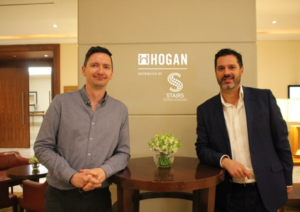
Earlier this year, Hogan proudly added Stairs People Advisors, one of Portugal’s leading HR consulting firms. Led by their Managing Partner João Ribeiro Santos and his talented team of advisors, Stairs offers its clients tailored development programs, adaptive recruitment & selection processes, high-potential identification initiatives, and resources for strategic reorganization.

Because they offer such a unique perspective, we decided to get an update from João and how the future of his organization looks now that he and his team have joined the Hogan International Distributor Network.

Stairs People Advisors, completed six months as Portugal’s Hogan Distributor and would like to share its first months of activity.

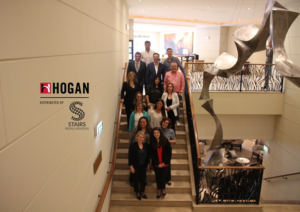
The training and development of the Stairs team in Hogan’s methodologies and instruments was the initial priority in order to provide the know-how for the team to promote Hogan products and services to potential clients.First, a Hogan Certification Workshop was organized for the team and some clients. The Managing Director of Europe – Zsolt Feher – led these two days of training in which all were enriched by the learning gained. Fourteen people were certified, all of whom will certainly be promoters and users of this tool.


ZsoltStairs

One of the first and most important project of STAIRS was winning a partnership with an international consultancy company, one of the Big 4. Our goal was to deliver the Hogan 360 powered by PBC to 230 leaders and heads of one of the largest Portuguese multinational companies. The success of this 3-phase project is being determined thanks to an established partnership with Peter Berry Consulting.

Aligned with Hogan’s core assessments, the Hogan 360° uses an easy-to-interpret leadership framework to provide a real-time look at an individual’s attitude, behavior, and performance. The report offers constructive feedback around leadership expectations and sets priorities for improvement.

StairsGroup

The Hogan 360 will contribute for the company model based on a continuous feedback culture, being that it’s universally one of the main priorities, and the focus on motivation and development of people, guidance for meritocracy, coherence, integration and objectivity.

During the month of August, we were visited by Hogan’s Dustin Hunter to continue the alignment of Hogan’s product strategies, as well as refreshing the Hogan Certification with the team.

In September and simultaneously with the journey of the PBC of Australia, we look forward to their visit to Portugal. It will undoubtedly be another milestone in strengthening relations and synergies in the consulting business and Hogan products in Portugal.


Topics: distributors, distributor

VIDEO: Explore the Six Leadership Dimensions

Posted by Hogan Assessments on Tue, Sep 05, 2017

Not everybody was meant to be a good people leader. However, that doesn’t mean a person is unable to be a successful manager or leader. Instead, it’s important for organizations to explore validated assessment methods to determine what leadership style employees will display.

Perhaps one employee has a strong analytical leadership style and relies heavily on numbers and information, while another is focused on ideas and strategic problem-solving. There’s absolutely nothing wrong with either style as long as they are identified and managed accordingly.

Last month we launched our new Leader Focus Report, which aims to simplify and provide insight into six leadership dimensions that influence leadership style and effectiveness. In this video, our CEO, Tomas Chamorro-Premuzic, discusses these dimensions and how they determine what a leader will focus on and how he or she will define success.

Leader Focus Report: View Leadership Through the Right Lens

Posted by Blake Loepp on Tue, Aug 22, 2017

Hogan is excited to launch the Leader Focus Report, a new solution designed to provide leaders with self-insight into their leadership style and strengths so they are able to plan their career and lead teams effectively.

Leader_Focus_Blue_Logo_600

Most organizations classify career advancement as transitioning into a series of people leadership roles. But, what does that mean for an organization’s high performers whose strengths are not aligned with the abilities to manage themselves and others effectively?

“Not everybody is meant to be a good people leader, but there are other leadership styles that could really determine if a person will be a successful manager or leader,” says Hogan CEO Tomas Chamorro-Premuzic. “It is important for organizations to work out what leadership style employees will display and what roles are a good fit for their personal leadership style.”

The Leader Focus Report aims to simplify and provide insight into six leadership dimensions that influence leadership style and effectiveness:

  • Results Leader — Key focus is on winning. They set high goals for themselves and others, and may sacrifice relationships to achieve outcomes.
  • People Leader — Key focus is on relationships. They are skilled at building and maintaining relationships with others, but may struggle at handling conflict and holding staff accountable.
  • Process Leader — Key focus is on implementation. They focus on creating, following and enforcing policies, but may resist change and innovation.
  • Thought Leader — Key focus is on ideas. Skilled in idea generation and strategic problem-solving, but may resist change and innovation.
  • Social Leader — Key focus is on people. Skilled at communicating, networking and developing connections, but may not listen effectively.
  • Data Leader — Key focus is on information. Strong analytical leadership style, but may rely too heavily on numbers and resist intuitive decision making.

These six dimensions outline how a leader manages self, career, and relationships, priorities on which a leader will focus, and how he or she will define success. Grounded in decades of global research on leader performance, the Leader Focus Report is designed to help an organization’s leaders understand their reputation and unique brand using data rather than intuition.

“I think it’s important that organizations become more data-driven in their talent identification efforts,” says Chamorro-Premuzic. “Particularly when they need to decide which employees can become good managers or leaders. Leader Focus will provide a more rigorous and accurate approach to talent identification.”

Contact a Hogan consultant today to learn more!


Distributor Spotlight: Infelligent Strengthens Hogan Brand in Greater China Region

Posted by Blake Loepp on Thu, Aug 17, 2017

Building a global brand is a challenge under even the most favorable circumstances. At Hogan, we never attempted to introduce our assessments and products directly to the masses. Instead, we aimed to find valuable partners in various regions across the world who would help us build our brand. This is effective for several reasons, but the familiarity these partners have with their region is the primary factor.Infelligent1

It should come as no surprise that any organization looking to expand internationally would place an emphasis on the Greater China Region. With booming economic growth, this area has become a major business hub across all industries, presenting Hogan with a great opportunity to continue its mission of improving the global workforce.

To help with that mission, Hogan added Infelligent Coaching & Consulting in Taiwan as part of the Hogan Distributor Network. In just a few years since joining the Hogan team, Infelligent has far exceeded expectations and has significantly raised awareness about Hogan through the scope and magnitude of their work. Here’s an in-depth breakdown of a project that highlights the quality of what Infelligent offers its clients: 

In 2013, Infelligent Coaching & Consulting, a high-caliber team of human resources solution providers with more than 20 years of experience became an official distributor of Hogan Assessments in Taiwan. Over the past four years, Infelligent worked with Hogan in the localization of Hogan assessments into traditional Chinese, offering targeted and scientific personality assessment, executive coaching, action learning programs and training workshops, performance assessment reports and more to Taiwan’s business community. Infelligent not only successfully assisted numerous multinational and publicly listed domestic companies to implement highly effective organizational and personal development programs, it also helped endless managers in achieving higher performance at work and personal lives for a better work-life balance. At the same time, Infelligent has established Hogan’s leading position in the market as the gold standard in assessment solutions.  

Founder Jim Hwang states that one of the advantages of being an authorized Hogan distributor, apart from the obvious one of better overall business performance, is a more solid and long-term client relationship. Clients have become more like partners who trust and support one another, rather than being just clients. Joining the Hogan Distributor Network is clearly the right direction for Infelligent. The benefits showed immediately, particularly in the case of President Chain Corp that manages 7-Eleven, one of the biggest convenience store retailers in Taiwan.   

In 2013, Infelligent undertook a Hogan assessment consulting project for President Chain Corp. In a span of three years, the talent selection system at President has transformed from traditional, human-based and performance-oriented processes into a science-based and data-supported assessment system that supports personal development for executives and nurtures a highly energetic and effective organization. More importantly, after the first thousand days, the entire senior management team at President Chain Corp. was more cohesive than ever. The new system has effectively prevented the possibility of talent loss. And the steady growth in three consecutive years further proved these changes worked.

Some of the concrete results from implementing Hogan Assessments at President Chain Store Corp. by Infelligent Coaching & Consulting included:  

  1. Assisted President Chain Store in conducting assessment development and action planning programs for more than 500 high-level executives. The company’s investment and show of commitment invigorated employees, further building up their loyalty;
  2. Facilitated more than 10 employees to become certified Hogan coaches and successfully fused Hogan’s system into the innovative processes and vocabulary inside the organization; and
  3. Expanded the learning impact upward to parent company – Uni-President Enterprises Corp., which is biggest the manufactory company in food industry, and duplicated the successful experiences in talent assessment and development for its talent selection processes. 

Infelligent has facilitated many organizations in creating success stories like this, proving the effectiveness and value of Hogan Assessments over and over again with each of them.  

Infelligent2

These success stories and endeavors of the Infelligent team has further raised Hogan’s brand exposure. When Dr. Robert Hogan, founder of Hogan Assessments visited Taiwan in 2015 by the invitation of Infelligent, he was interviewed by Business Weekly Magazine, one of the most prominent business publications in Taiwan. During the exclusive interview, he offered insightful views on personality assessments and talent development. Through the exposure on this high-profile magazine, more and more organizations came to learn about Hogan’s solutions. After the visit, Dr. Hogan expressed his appreciation for Infelligent’s expertise in utilizing Hogan Assessments to support talent selection strategies, build up Hogan’s influence in the industry, and establish Hogan’s leading position in the Greater China region. Dr. Hogan is also confident that the relationship between Hogan and Infelligent will continue to strengthen and soar in the future.   

And for Infelligent, it is strongly committed to the partnership with Hogan. Infelligent is confident that Hogan will continue to develop more innovative and relevant assessment tools tailored to not only corporate needs but also for personal development to shed insight on individual strengths and development areas, to ignite inner passion, to drive change from inner reflection, and to bring success for the team, organization, work, personal life, and for society.

Topics: distributor

Distributor Spotlight: HRTOOLS Helps Organizations in Mexico Make Informed, Data-Driven Talent Decisions

Posted by Blake Loepp on Thu, Jul 20, 2017

As a Hogan distributor since 2005, HRTOOLS has evolved into a regional leader in helping companies improve organizational performance. Led by CEO Victoria Zapata, the company continues to flourish as more and more organizations see the the effectiveness of using data and science over intuition when it comes to making informed talent decisions.

HRT-LogoAs is the case with successful companies in any industry, many organizations can become complacent and satisfied with the status quo. However, HRTOOLS continues to push forward by gathering and analyzing data to improve their already stellar record. In this installment of the Distributor Spotlight Series, Victoria Zapata takes a look at just one example of how HRTOOLS had done exactly that. 
Do people change over time? 

During the last 13 years being a Hogan Distributor, we can tell that the market evolved, HRTOOLS as well, and of course, Hogan. I can remember our first year, trying to offer a whole new concept in “performance prediction”. The term was so wide and profound, that it was hard for our prospects to understand the whole meaning. 

Once we were able to understand that the market needs simple solutions to solve their complex talent challenges, HRTools developed specific packages to support them with the most common needs: selection, high potential, talent mapping, succession planning, team effectiveness, safety, and leadership development, which are the core problems that almost any company face.

It is quite interesting to find out that there is nothing new on the horizon. Most companies are looking to solve the same problems. Different companies, same talent challenges. We have observed that the market is becoming more aware of the need to have data to make accurate decisions. It is very satisfying to see an increasing number of customers who call us to make their most critical talent decisions and to have a very positive outcome in their bottom line some time after their talent decisions. Most of our new customers come from a referral from existing customers. This tells us that we are making a difference and winning the race for talent. 

Although personality is stable over time, we have found interesting Hogan personality profile changes after some years. Particularly, one of our customers mapped its talent (more than 5,000 participants) between 2009 and 2017. This year, they are re-assessing the participants that were assessed in 2010. What interesting changes did we find?   

Let’s talk about three particular cases. What do participants have in common?

  • They are young professionals (same generation) who occupied individual contributor roles in different areas of the organization in 2010.
  • Their performance has been permanently outstanding since 2010.
  • They were assessed with HPI & HDS, and received feedback after their first Hogan assessment in 2010.
  • They designed a personal development plan.
  • They did not receive professional coaching.
  • They all were promoted to managerial roles and their career plan is to continue growing in the company.

What about the differences? The general differences they present are related to age, areas of expertise, marital status, and place of birth. 

What changed over time? In the following chart we can find differences in their Hogan HPI & HDS grades between 2010 and 2017 (differences are marked when their scores graded in a different range):

HPI Hogan Scales Participant 1 Participant 2 Participant 3
Adjustment = = =
Ambition = Increased 1 range Decreased 1 range
Sociability = = Decreased 2 ranges
Interpersonal S. Increased 1 range = =
Prudence = =  
Curiosity = = =
Learning Approach = = =


HDS Hogan Scales Participant 1 Participant 2 Participant 3
Volatile Increased 1 range = Decreased 1 range
Skeptical Decreased 1 range Increased 1 range Increased 1 range
Cautious Decreased 1 range Decreased 1 range Increased 1 range
Reserved = Decreased 2 ranges Decreased 1 range
Leisurely Increased 1 range = Increased 1 range
Bold = Decreased 1 range Increased 2 ranges
Mischievous = = Increased 2 ranges
Colorful Increased 1 range = Increased 1 range
Imaginative Increased 1 range Decreased 1 range =
Diligent Increased 1 range = Increased 3 ranges
Dutiful Increased 3 ranges Increased 1 range =

 It has been interesting for us to see some differences in the re-assessed participants. And, we would like to share these three specific cases. 

When we had individual conversations with the participants to compare their results between 2010 and 2017 and to provide a new feedback, we asked them several standard questions and we found a common pattern in their professional life between 2010 and 2017: 

  • They were promoted to leadership roles. They perceived that their new role demanded them to stretch their abilities and challenged them to maintain their outstanding reputations and results.
  • Their responsibilities were higher and involving people to lead and develop.
  • They all paid attention to their personality profiles in 2010 and they made conscious efforts in their individual development throughout the time. 

Although we know that three cases do not make a case, we observed that:

  • The HDS had significantly more changes than the HPI.
  • Personal and professional changes affected their experiences and believes.
  • It seems that the strengths (HDS) had to operate more in order for them to adapt to the new environment.
  • It is important to re-assess people at least five years after the previous assessment.

When Leaders Are Hired for Talent but Fired for Not Fitting In

Posted by Hogan Assessments on Thu, Jun 15, 2017

hbr

Over and over again, organizations are unable to appoint the right leaders. According to academic estimates, the baseline for effective corporate leadership is merely 30%, while in politics, approval ratings oscillate between 25% and 40%. In America, 75% of employees report that their direct line manager is the worst part of their job, and 65% would happily take a pay cut if they could replace their boss with someone better. A recent McKinsey report suggests that fewer than 30% of organizations are able to find the right C-suite leaders, and that newly appointed executives take too long to adapt.

Although there are many reasons for this bleak state of affairs – including over-reliance on intuition at the expense of scientifically valid selection tools – a common problem is organizations’ inability to predict whether leaders will fit in with their culture. Even when organizations are good at assessing leaders’ talents (e.g., their skills, expertise, and generic leadership capabilities), they forget that an essential element of effective leadership is the congruence between leaders’ values and those of the organization, including the leaders’ team. As a result, too many leaders are (correctly) hired on talent but subsequently fired due to poor culture fit.

In our view, there are three critical errors organizations must fix in order to upgrade their selection efforts, namely:

Decode leaders’ motives and values: While expertise and experience are central to leaders’ potential, they are insufficient to predict leadership performance. In fact, even generic personality characteristics, such as integrity, people skills, curiosity, and self-awareness will fail to predict a leader’s fit to the role or organization. A proper understanding of fit must take into account the leader’s motives and values, also known as the “inside” of personality. Motives and values operate as an inner compass, dictating what the leader will like and reward, the type of culture and climate they will strive to create in their teams, and the activities they will see as meaningful and fulfilling.

For example, leaders who value tradition will have a strong sense of what is right and wrong, will prefer hierarchical organizations, and will have little tolerance of disruption and innovation – put them in a creative environment and they will struggle. On the other hand, leaders who value affiliation will have a strong desire to get along with others, will focus on building and maintaining strong interpersonal relations, and on working collaboratively. This means they will not be engaged if their role is too isolated and the company culture is overly individualistic. Finally, altruistic leaders will strive to improve other people’s lives and drive progress in the world, so they will suffer if their organizations are purely driven by profits and disinterested in having a positive social impact.

Understand their own organizational culture: Knowing a leader’s motives and values is pointless unless organizations are also able to decode their own culture. Sadly, most organizations underestimate the importance of accurately profiling their culture so they end up relying on intuitive and unrealistic ideas that say more about what they would like to be than what they actually are. This is why a large number of companies today describe themselves as “entrepreneurial,” “innovative,” “results-oriented,” or “diverse,” even when their own employees perceive a very different type of culture. Well-designed climate surveys, which crowdsource people’s views and experiences of the organizational culture, are a much better indicator of a company’s true values than the aspirational competencies curated by senior executives.

Be realistic about the new leader’s ability to actually change the culture: Although senior leaders are the main shapers of organizational culture, it is hard for newly appointed leaders to reshape the existing culture. That is not to say that organizations should give up and only hire leaders who are a good fit. In fact, moderate misfits who are charismatic and visionary are a company’s best bet for driving top-down change – but the process will be slow and tedious, and these leaders will need to have a great deal of support in order to persist and prevail. The odds of success will be slim, and some leaders may be so disruptive in their intentions that they may harm morale and productivity, or end up disrupting themselves. As Sartre noted, “only the guy who isn’t rowing has time to rock the boat.”

Of course, some leaders manage to perform well in virtually any context. They are able to flex or span between a range of competing competencies, which makes them more adaptive and versatile, as Rob Kaiser’s compelling research shows – but they are an exception rather than the norm. In contrast, for most people, leadership potential will be somewhat context-dependent, so there is no guarantee that a person will lead effectively just because they have been effective in a previous role or organization. Past performance is a good predictor of future performance only when the context remains the same. When it doesn’t, the focus should be on potential and the future rather than performance and the past.

Want to learn more about hiring the right way? Check out our guide to crafting next-level talent identification, interviewing, and selection processes

This article was co-authored by Hogan CEO Tomas Chamorro-Premuzic and Russell Reynolds Associates CEO Clarke Murphy, and originally appeared in Harvard Business Review.

Subscribe to our Blog

Most Popular Posts

Connect