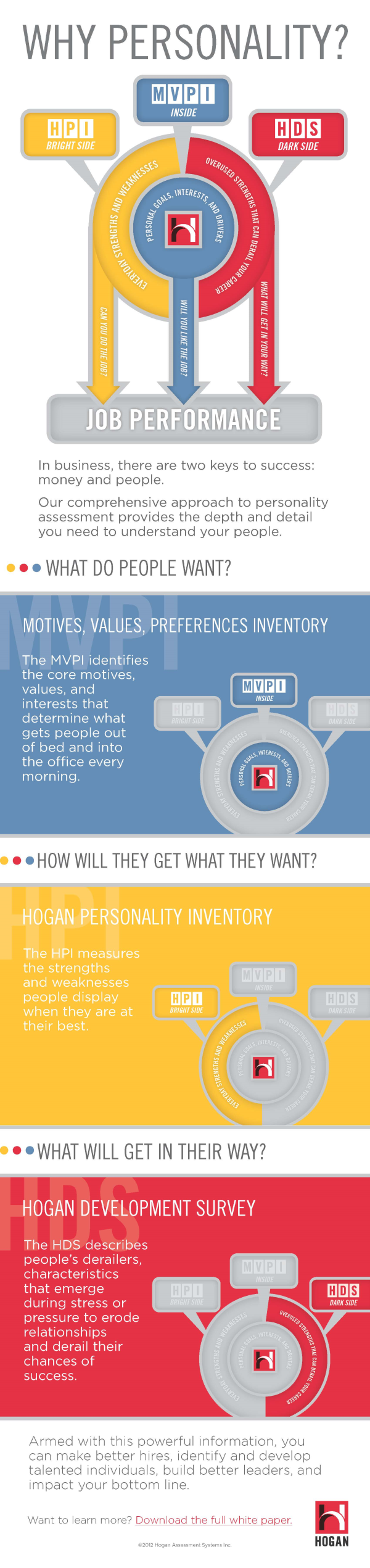
Our comprehensive approach to personality assessment provides the depth and detail
you need to understand your people.
+1.918.749.0632




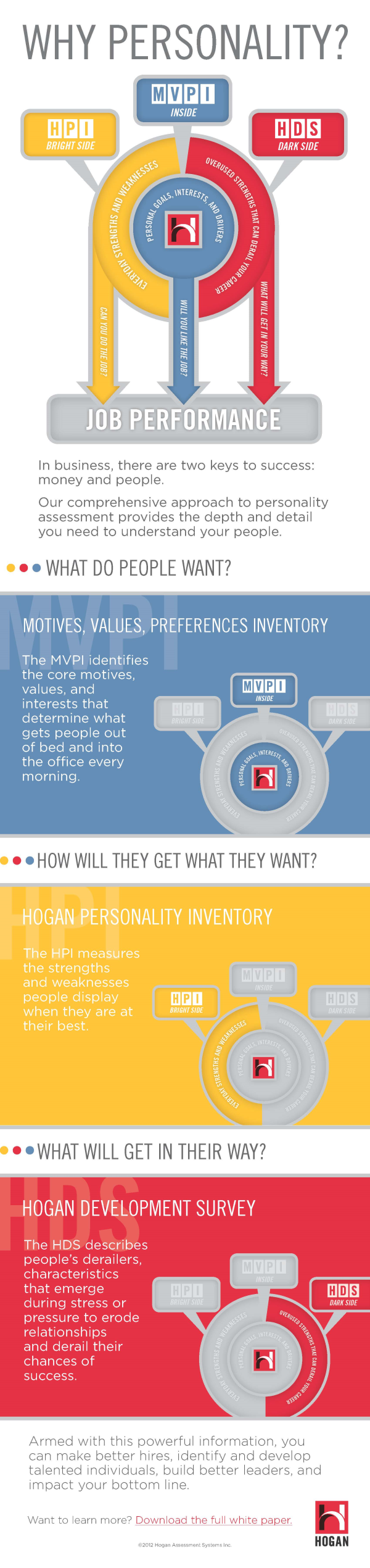
Our comprehensive approach to personality assessment provides the depth and detail
you need to understand your people.
Topics: HPI, MVPI, HDS, personality
Our comprehensive approach to personality assessment provides the depth and detail
you need to understand your people.
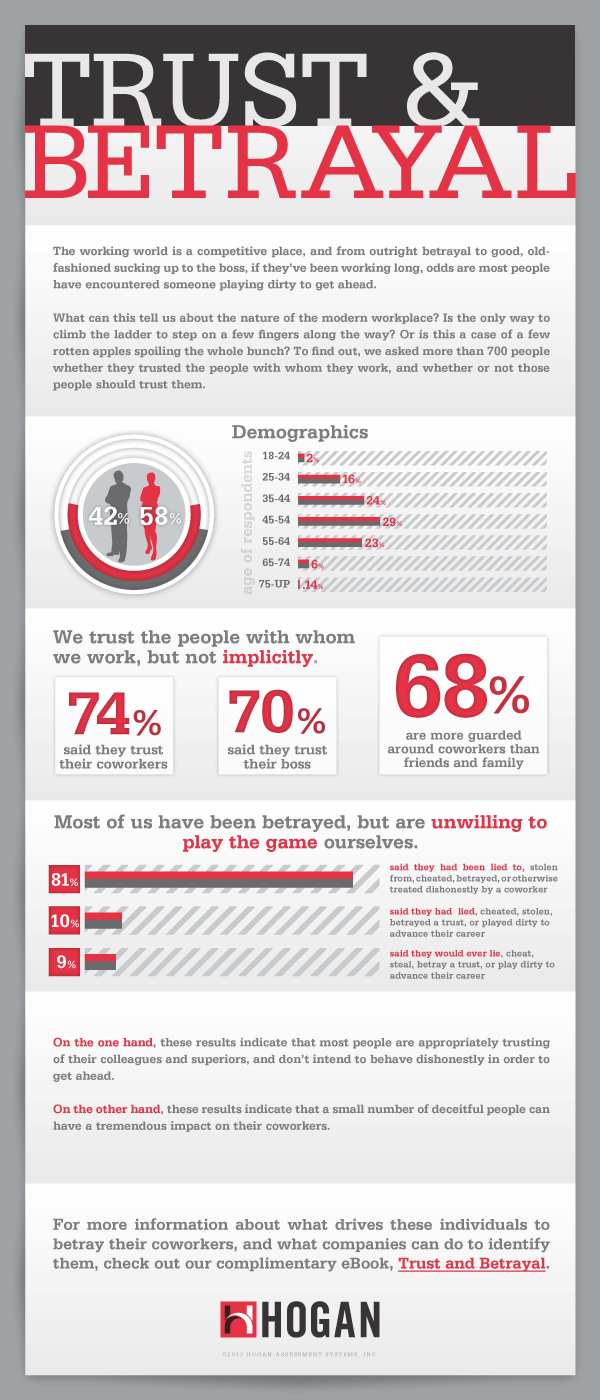
What drives individuals to betray their coworkers,
and what companies can do to identify them?
Topics: leadership, judgment, integrity, trust
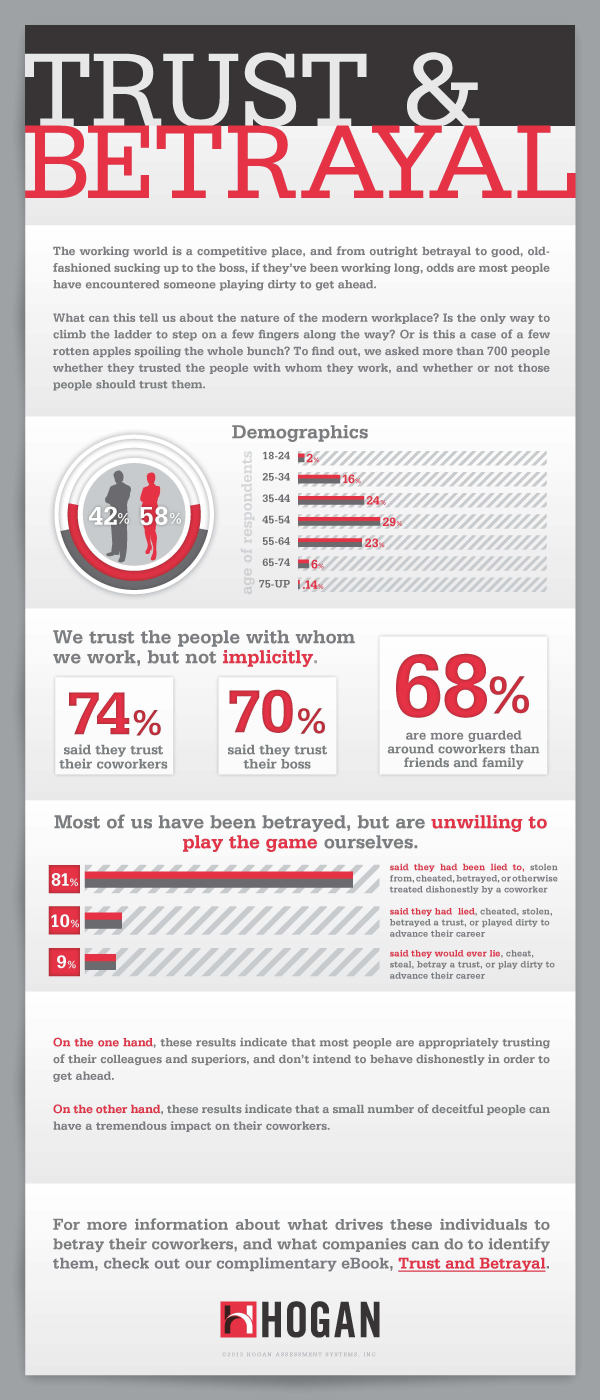
What drives individuals to betray their coworkers,
and what companies can do to identify them?
 I recently had the opportunity to work with a client on a succession planning project for the organization's executive team. The members of the this team have been with the organization for quite a long time and are nearing retirement. As a result, they are working on a five-year plan that includes both identifying and training a successor for each role. In essence, they are making their “if I get hit by or bus or just decide to play golf instead of work plan.” This conversation spurred a number of ideas and thoughts around leaving a legacy in an organization, but also about life. Basically, it got me thinking about my own “what if I get hit by a bus plan.”
Nearly a year ago, my husband and I welcomed our son, Logan, into our lives and this experience has caused me to reflect on the lessons I want to teach him, the values I hope to instill, as well as, more broadly, the mark I want to leave on the world and the legacy I hope to create. Reflecting on these personal goals brings me back to my conversations with my client because our legacy goes beyond our home life. Let’s face it, we spend most of our adult lives at work. This notion brings me back to the conversation with my client because much of what goes into identifying a successor in an organization relates to our own personal legacies in terms of the reputation or brand we’ve created and, as a result, the shoes we hope will fill it in our absence.
From an organizational perspective, the leaders create the culture and ultimately the values for the organization. It is the people at the top who define and influence the mission of the organization whether that’s done on paper or just by example. Therefore, during a succession planning process, leaders are challenged with not only thinking about filling their own shoes, but the culture they want to leave behind and create with a new leadership team.
From an assessment standpoint, leaders are challenged with thinking about the values, drivers, and behavioral characteristics that will result in the next generation of leaders doing it just as well and hopefully better than they did. That being said, succession planning should be about bringing the right people in, but also creating and allowing for opportunities for them to do it differently and better than it has been done in the past. Leaving a legacy is not only about continuing previous successes, but also transcending them.
The birth of my son made the previous statement real for me in many ways. My goal is to teach him, to provide him a framework and stable ground for success, and then to get out of his way so he can find his own path.
Topics: succession planning
 I recently had the opportunity to work with a client on a succession planning project for the organization’s executive team. The members of the this team have been with the organization for quite a long time and are nearing retirement. As a result, they are working on a five-year plan that includes both identifying and training a successor for each role. In essence, they are making their “if I get hit by or bus or just decide to play golf instead of work plan.” This conversation spurred a number of ideas and thoughts around leaving a legacy in an organization, but also about life. Basically, it got me thinking about my own “what if I get hit by a bus plan.”
Nearly a year ago, my husband and I welcomed our son, Logan, into our lives and this experience has caused me to reflect on the lessons I want to teach him, the values I hope to instill, as well as, more broadly, the mark I want to leave on the world and the legacy I hope to create. Reflecting on these personal goals brings me back to my conversations with my client because our legacy goes beyond our home life. Let’s face it, we spend most of our adult lives at work. This notion brings me back to the conversation with my client because much of what goes into identifying a successor in an organization relates to our own personal legacies in terms of the reputation or brand we’ve created and, as a result, the shoes we hope will fill it in our absence.
From an organizational perspective, the leaders create the culture and ultimately the values for the organization. It is the people at the top who define and influence the mission of the organization whether that’s done on paper or just by example. Therefore, during a succession planning process, leaders are challenged with not only thinking about filling their own shoes, but the culture they want to leave behind and create with a new leadership team.
From an assessment standpoint, leaders are challenged with thinking about the values, drivers, and behavioral characteristics that will result in the next generation of leaders doing it just as well and hopefully better than they did. That being said, succession planning should be about bringing the right people in, but also creating and allowing for opportunities for them to do it differently and better than it has been done in the past. Leaving a legacy is not only about continuing previous successes, but also transcending them.
The birth of my son made the previous statement real for me in many ways. My goal is to teach him, to provide him a framework and stable ground for success, and then to get out of his way so he can find his own path.
No one has time to read every new piece of research that could impact our field. As a result, it is hard to know what important new findings might pass us by. Luckily, the Hogan Research Division is here to help (and we welcome your contributions in return). Below are a handful of articles we found interesting.
Be sure to check out Part 1 and Part 2 of our review in case you missed them.
And again, we invite you to provide information relating to any other articles from the first three months of 2013 that we failed to include here.
Topics: psychology, research
No one has time to read every new piece of research that could impact our field. As a result, it is hard to know what important new findings might pass us by. Luckily, the Hogan Research Division is here to help (and we welcome your contributions in return). Below are a handful of articles we found interesting.
Be sure to check out Part 1 and Part 2 of our review in case you missed them.
And again, we invite you to provide information relating to any other articles from the first three months of 2013 that we failed to include here.
 In the world of I/O Psychology, we are often presented with statistical results on a daily basis. Although useful, this can be a problem if we don't understand how to interpret results presented to us or know what questions we should ask to make sure those results are accurate.
This pocket guide is a quick reference for individuals who are confronted with statistical or research terminology regularly used in I/O Psychology. It provides an overview of common statistical terms, techniques, and processes for your reference. With this information, you can be a better consumer of research results and, therefore, make better data-based decisions.
To purchase Statistics: A Pocket Guide for I/O Psychologists, visit the bookstore.
Topics: psychology, I/O Psychology
 In the world of I/O Psychology, we are often presented with statistical results on a daily basis. Although useful, this can be a problem if we don’t understand how to interpret results presented to us or know what questions we should ask to make sure those results are accurate.
This pocket guide is a quick reference for individuals who are confronted with statistical or research terminology regularly used in I/O Psychology. It provides an overview of common statistical terms, techniques, and processes for your reference. With this information, you can be a better consumer of research results and, therefore, make better data-based decisions.
To purchase Statistics: A Pocket Guide for I/O Psychologists, visit the bookstore.
