
From Resistance to Receptivity: Predicting Feedback Resistance

Posted by Erin Robinson on Tue, Feb 21, 2023

A business leader at a small conference table is conversing with an employee. The leader is consulting a clipboard of papers and has an open notebook and pen on the table. The employee gestures emphatically while speaking. It appears that they may be having a development conversation, and the employee may be responding with feedback resistance.

You’re giving feedback during a debrief, and suddenly the leader goes quiet. You can feel the rapport evaporate. This unpredictable shift caught you by surprise, and you wish you could have anticipated it in preparing for the feedback session. Predicting feedback resistance is not impossible, however, with all the Hogan personality data you have at your fingertips.

Hogan practitioners can successfully navigate feedback sessions and ongoing development discussions with leaders who compartmentalize or resist feedback, turning resistance into receptivity. Practitioners need to be aware of the likelihood of feedback resistance while interpreting results and during the session itself. By understanding the characteristics that might dispose people to resist feedback, practitioners can purposefully direct a feedback session toward a positive and empowering outcome: helping leaders cultivate strategic self-awareness and behavioral modification strategies to improve their performance.

In this article, we will cover five types of feedback resistance. The hostile, defensive, arrogant, and indifferent feedback resistance types all tend to be individual, while the fifth type, cultural, emerges from the organizational environment. Our next article about feedback will cover strategies for overcoming feedback resistance.

Let’s dive right in.

Types of Feedback Resistance

Certain scores or scale combinations on the Hogan Personality Inventory (HPI), Hogan Development Survey (HDS), and Motives, Values, Preferences Inventory (MVPI) might point to a likelihood of feedback resistance. For instance, someone who scores moderate (70%–89%) or high (90%–100%) on the HDS Cautious scale may resist change in how they work. By no means does this imply that every person with a high Cautious score will seem defensive during feedback or development. It does, however, indicate that a Hogan practitioner should deliver feedback mindfully, taking care to ask questions and demonstrate openness.

Note that the following overview of types of feedback resistance is not exhaustive. Neither are the scale scores we highlight for each type. Remember, feedback resistance is as unique and complex as each personality.

Hostile

Someone who offers hostile feedback resistance may have some combination of these scale scores: low Ambition (HPI), high Excitable (HDS), high Skeptical (HDS), and low Altruistic (MVPI).

Negative performance implications associated with low Ambition are lack of vision, energy, and drive, and lower confidence, which may cause them to view change as too hard. High Excitable is associated with moodiness, feeling easily frustrated and disappointed, emotional volatility, and being prone to quit in frustration. Someone with a high Skeptical score may take criticism personally and seem tense, upset, or angry. A person who scores low on the Altruistic scale can be perceived as tough, assertive, forceful, outspoken, and willing to confront problems.

Depending on the unique circumstances of a feedback session—up to and including the leader’s momentary frame of mind—hostile resistance might manifest as argumentation, emotional outbursts, or rejection.

Defensive

Defensive feedback resistance might be more likely in a leader who has some combination of these scale scores: low Adjustment (HPI), low Interpersonal Sensitivity (HPI), low Learning Approach (HPI), high Excitable, high Skeptical, and high Science (MVPI).

Someone who scores low on the Adjustment scale, while generally responsive to coaching and feedback, might seem overly self-critical, stress-prone, and anxious. Negative performance implications of low Interpersonal Sensitivity are criticism and skepticism. A low Learning Approach score may indicate an intolerance of development and a belief that traditional or non-skills-based learning is unpleasant or unhelpful. High Skeptical and high Science scores together could suggest someone who is suspicious about or mistrustful of claims not backed up by objective, verifiable data.

Defensive feedback resistance likely stems from negative beliefs about the reliability, purpose, or usefulness of development and may emerge in self-deprecation, anxiety, or doubt.

Arrogant

People who exhibit arrogant feedback resistance may have some combination of these scale scores: high Sociability (HPI), high Learning Approach, low Cautious, high Colorful (HDS), and high Recognition (MVPI).

A high Sociability scale score is associated with attention-seeking behavior and competition for the center stage. A high Learning Approach scale score is associated with valuing learning above doing and seeming like a know-it-all. Someone with a low Cautious score is likely to seem comfortable with risk and nonchalant about making mistakes. A high Colorful score may indicate someone who seems self-promoting, overcommitted, easily angered, and quickly bored. A leader with a high Recognition score probably values attention and public acknowledgement and may be described by others as seeming self-important or conceited.

Arrogant feedback resistance may emerge as a disbelief in or denial of the need for change and an attempt to preserve an inflated self-image by using performance, authority, or charm.

Indifferent

Indifferent feedback resistance may appear in someone who has some combination of these scale scores: average or high Adjustment, high Skeptical, high Reserved (HDS), high Leisurely (HDS), and high Imaginative (HDS).

Someone with average Adjustment might seem nonchalant about work, whereas someone with high Adjustment might tend to discount or ignore negative feedback because of strong self-confidence. A person scoring high on the Skeptical scale may seem indifferent to feedback because they are unpersuaded that change is necessary. Negative performance implications of high Reserved scores include interpersonal insensitivity, self-absorption, distant or absent communication, and disinterest in matters perceived as unrelated or unimportant. A person with a high Leisurely score could exhibit passive-resistant behavior by appearing neutral or agreeable but feeling resentful and ignoring feedback. A high Imaginative leader may discount others’ opinions and behave in an eccentric, distractable, or preoccupied manner.

Indifferent feedback resistance in a leader may resemble a lack of enthusiasm, withdrawal, unresponsiveness, distraction, or boredom, and it may also conceal other emotions.

Cultural

In a workplace environment in which individual growth and change are not celebrated, feedback resistance or compartmentalization may be more likely to occur. This may appear in an environment characterized by some combination of these values: low Power (MVPI), low Altruistic, high Tradition (MVPI), and high Security (MVPI).

A culture with low Power values would be unlikely to reward growth and challenge or display interest in achievement. Negative cultural implications of low Altruistic are an emphasis on personal responsibility and self-reliance to the degree that support or resources for development are lacking. A high Tradition culture is comfortable with established procedure and consequently tends to be resistant to change. A high Security culture will tend to favor rules and conformity and resist ambiguity, risk, performance appraisal, and innovation.

Cultural feedback resistance might appear as a lack of support for development or change and a fear of risk or failure.

Getting to Feedback Receptivity

Keep in mind that, for some scales such as Adjustment or Learning Approach, feedback resistance might be a behavior that can emerge with more than one score range. Low Adjustment could be a factor in feedback resistance in one leader, but so could high Adjustment in another. As always, individual self-awareness, the context for development, and scale combinations influence how feedback resistance might appear. After predicting the likelihood and type of feedback resistance that the leader might exhibit, a Hogan practitioner can strategize the best ways to minimize that resistance during a feedback session.

When we perceive and appreciate the everyday personality strengths, potential derailers, and the motives, values, and preferences that underlie individuals’ actions and choices, we gain a more complete picture of how to enable their success.

Look out for our upcoming blog about techniques for overcoming feedback resistance to learn how to personalize feedback to empower leaders.


Topics: leadership development

How to Incorporate Well-Being into Leadership Development

Posted by Hogan Assessments on Tue, Feb 07, 2023

A medium-skinned person with long, dark, curly hair sits at a desk in an office resting their head on their hand with a weary expression. Their other hand rests on top of a slew of papers spread around the desktop. The desk also holds a closed laptop, a task lamp switched off, a cup of writing utensils, and some books. The person is wearing a black and white plaid suit with a black blouse underneath. Behind them is a gray wall, a file cabinet, some binders, a globe, and some wall art and other decor. A houseplant and some long gray curtains are also visible in the frame of the photo. The photo accompanies a blog post about incorporating well-being into leadership development discussions.

Occupational well-being is an essential part of overall well-being. Effective leadership coaching will personalize developmental feedback to the leader’s needs based on the context of their role, function, and organization and on their personality. Individual differences in personality reveal how people experience well-being at work and how they manage stress. Leadership development should investigate how everyday personality characteristics, stress responses, and values can affect a leader’s well-being—and ultimately the well-being of the leader’s team and other stakeholders.

Well-being and development have always been close concepts, but organizations don’t seem to be drawing clear lines between development and well-being. Although 83% of US workers experience work-related stress,1 only 24% of employees strongly agree that their organization cares about their well-being.2 Unlike the goal of life coaching, however, leadership development’s goal is to equip leaders to build and maintain high-performing teams of people who effectively balance work and well-being.

When a leader’s occupational well-being is in balance, they can create work environments that better support their employees’ occupational well-being too. Leader behavior and relationships directly influence employee job satisfaction. Interpersonal relationships represent 39% of job satisfaction, and relationships with management represent 86% of satisfaction in work relationships.3 Employees experience more job satisfaction when their leaders prioritize, model, and actively support occupational well-being. After all, lack of support or recognition from leadership is the top driver of burnout.4

Read on to learn which Hogan scales have distinct bearing on well-being and how Hogan practitioners can incorporate well-being as a theme in leadership development conversations.

How Hogan Helps

Hogan’s personality assessments are objective tools that can help improve leader and employee well-being. While our assessments can give insight into the extent to which a person is concerned with well-being, they don’t measure well-being itself.

Hogan practitioners can use our assessments in development conversations to combat stress and burnout and improve well-being. They should first explain the purpose of development and what the assessments measure, then focus on these areas in the Hogan Personality Inventory (HPI) and the Motives, Values, Preferences Inventory (MVPI). The Hogan Development Survey (HDS) measures overused strengths that can become derailers. Practitioners should review high HDS scores for greater insight into potential performance challenges.

HPI

The HPI measures characteristics that describe how people tend to behave when they are at their best. Everyday personality strengths influence both managerial style and workplace reputation.

  • The Adjustment scale concerns how someone typically handles stress and coaching. Those with lower scores tend to be more stress-prone and coachable, while those with higher scores tend to be more stress-tolerant and resistant to feedback.
  • The Ambition scale refers to a person’s drive, energy, confidence, and initiative. A higher score might suggest behavior that focuses on work to the exclusion of well-being, while a lower score could imply the opposite.
  • The Interpersonal Sensitivity scale relates to communication style, such as whether someone is candid and argumentative or sensitive and diplomatic. A person with lower scores could seem insensitive toward the well-being or emotions of their employees or coworkers, while someone with higher scores could seem oversensitive.

MVPI

The MVPI measures personality from the inside, describing the values that drive our occupational goals. Put another way, values show what people most care about when it comes to work.

  • The Hedonism scale measures preference for formal or informal work environments. It can suggest how likely someone is to integrate work into their personal life.
  • The Altruistic scale measures preference for personal responsibility and self-reliance or helping and serving others. It can suggest how motivated someone is to improve others’ lives.

Emphasizing a leader’s interconnected strengths and preferences that already pertain to well-being can provide a natural segue into occupational well-being as a developmental theme.

Advice for Leadership Development Conversations

Understanding how personality affects learning will help a Hogan practitioner to approach these three areas of the leadership development process5:

1.    Enhance the learner’s receptivity to feedback and coaching.

Early in a development conversation, practitioners should draw a personalized connection between development and occupational well-being. If the leader has a high Altruistic score, the practitioner might connect that value to development by pointing out that a focus on well-being can increase employee retention. If the leader has a low Interpersonal Sensitivity score, the practitioner might explain that developing a variety of communication styles might make employees feel more connected and improve relationships.

2. Match feedback and coaching approaches to the learner’s style.

Effective leaders build and maintain high-performing teams. Leaders who learn about their own and their teams’ strengths and values also gain insight into improving the occupational well-being of both by reducing stress and increasing productivity.

Development, therefore, should help leaders become more self-aware and more perceptive of what their employees might need for well-being. Practitioners who build a development plan based on the leader’s learning style help provide optimal conditions for gaining strategic self-awareness.i

3.     Promote engagement and action in executing the development plan.

The development plan should, if executed well, enhance how a leader’s personality strengths positively influence behavior and reputation. According to Trish Kellett, MBA, director of the Hogan Coaching Network, “Developing the behavioral repertoire of leaders equips them to understand and approach people in even more impactful and effective ways.” While this achievement will likely improve well-being broadly, it may also be appropriate to develop specific action items related to occupational well-being goals. Goals that appear in a development plan should be tied to specific business outcomes. There’s a difference between intentional deep breathing before client video calls and leaving work an hour early twice a week for a guided meditation class. Both are ways to manage stress, but only the former is suitable for a development plan.

Development coaching offers the opportunity for leaders to learn strategies to combat stress and burnout and to improve their well-being and that of their employees. Incorporating well-being into leadership development conversations should become another approach in the Hogan practitioner’s repertoire.

Note

  1. For an extended discussion of learner styles, see pages 127–130 in Coaching the Dark Side of Personality.5

References

  1. The American Institute of Stress. (2022). Workplace Stress. https://www.stress.org/workplace-stress
  2. Harter, J. (2022, March 18). Percent Who Feel Employer Cares About Their Wellbeing Plummets. Gallup. https://www.gallup.com/workplace/390776/percent-feel-employer-cares-wellbeing-plummets.aspx
  3. Allas, T., & Schaninger, B. (2020, September 22). The Boss Factor: Making the World a Better Place Through Workplace Relationships. McKinsey Quarterly. https://www.mckinsey.com/capabilities/people-and-organizational-performance/our-insights/the-boss-factor-making-the-world-a-better-place-through-workplace-relationships
  4. Fisher, J. (2022). Workplace Burnout Survey. Deloitte. https://www2.deloitte.com/us/en/pages/about-deloitte/articles/burnout-survey.html
  5. Warrenfeltz, R., & Kellett, T. (2016). Coaching the Dark Side of Personality. Hogan Press.

Personality and Goals

Posted by Hogan Assessments on Tue, Jan 31, 2023

In this photo, a person with long, curly red hair and pale skin, who is wearing a loose white blouse and beaded jewelry, pins a photograph of a fashion model to a cork bulletin board. The board features various fashion sketches, photographs, and pages torn from magazines. It appears to be a vision board for goal setting. The room behind the person is out of focus, but a potted plant and a large mirror are visible against a white wall in the background. This photo accompanies a blog post about the relationship between personality and life goals.

People often see a new year as a time for goal setting. But what role does personality play in determining which life goals we decide to pursue?

Recently on The Science of Personality, cohosts Ryne Sherman, PhD, chief science officer, and Blake Loepp, PR manager, spoke with Olivia Atherton, PhD, assistant professor of psychology at the University of Houston, about personality and goal setting.

“Everything we do on a daily basis is goal driven,” Olivia said. “We all have life-orienting goals that motivate what we want to do and where we want to go.”

Let’s dive into this illuminating conversation about the degree to which personality influences the types of goals we set, reasons we might change our goals, and why we tend to place less importance on achieving goals over time.

Personality and Life Goals

Olivia and her colleagues surveyed more than 500 college students and followed up 20 years later to understand how personality affects motivation and achievement. Their project, the Berkeley Longitudinal Study (BLS), examined seven types of life goals in relation to personality and individual differences using the Big Five and other constructs.

As a quick reference for the following discussion, the Big Five personality traits are (1) extraversion, (2) agreeableness, (3) openness, (4) conscientiousness, and (5) emotional stability, which is sometimes called neuroticism. These five traits correspond roughly to the seven scales of the Hogan Personality Inventory. The seven types of life goals are (1) aesthetic goals, (2) economic goals, (3) family and relationship goals, (4) hedonistic goals, (5) political goals, (6) religious goals, and (7) social goals. These life goals have many parallels to the 10 scales of Hogan’s Motives, Values, Preferences Inventory.

The BLS found that personality does have an impact on the goals we pursue. Olivia’s research showed that the personality tendencies that people had at age 18 were related to how their goals changed over time. For instance, people who were more agreeable showed decreases in family and relationship goals in adulthood. This is because they invested in goal-relevant activities (forming relationships, marrying, having children). Therefore, they placed less importance on those goals as they achieved them.

A second finding from Olivia’s research was that some of the life goals that people found important at age 18 were related to how their personalities changed from ages 18 to 40. Those people who were more agreeable at age 18 and placed less importance on family and relationship goals at age 40 actually became more conscientious. This is likely because their new familial roles (i.e., spouses and parents) required a certain level of conscientiousness. In other words, achieving their goals contributed to changing that personality characteristic.

Personality and Goal Importance

While the BLS study didn’t focus on whether the same personality characteristics that predict goal importance are the same characteristics that predict goal achievement, it’s an intuitive assumption. “If your personality tendencies lead you to place importance on certain types of goals, the same characteristics may also be helpful for you in putting effort towards that goal and achieving it,” Olivia hypothesized.

“People with certain personality tendencies tend to place more importance on certain types of life goals,” she continued. “This means that these personality characteristics might be suited for different life goals.”

The links between personality and goal importance are intriguing—and even surprising:

  • ExtraversionExtraversion was linked with hedonistic goals, or life goals revolving around pleasure and fun.
  • Agreeableness – People who were more agreeable tended to place higher importance on social goals, or life goals focused on helping others.
  • Openness – Openness was related to the most types of life goals, likely because people with high openness tend to be interested in many things. Aesthetic goals, hedonistic goals, religious goals, and social goals were all linked to openness.
  • Conscientiousness – Being responsible, organized, and hardworking was most related to economic goals and family and relationship goals, or the domains of work and love.
  • Neuroticism – Neuroticism was associated with aesthetic goals, likely because the arts can serve as a creative outlet for those who tend to be more anxious or depressed.

Having goals helps us find purpose and meaning using the limited time, resources, and effort that we can expend. Connecting our goals to what matters most to us is a useful way of reaching toward what we want to achieve in life.

Advice for Goal Setters

Olivia shared three pieces of advice that put goal setting into the context of personality and development.

Because we pursue life goals over the course of a lifetime, there are many big, small, and individual ways to work toward achievement. We can leverage our personality strengths and values to identify the goals we want to devote our effort to accomplishing. We should also be mindful that the goals we pursue can cause development in our personality, as in the example of increased conscientiousness for those who pursued relationship and family goals.

2.     It’s OK to change your life goals.

Shifting life goals is a natural part of growing. In our late teens and early twenties, we tend to have the most life goals because we are still trying to determine what matters to us. As we age, we refine our values and revisit which goals we want to pursue. Goals can also become less important or relevant over time as we achieve them. Don’t be afraid to adapt the goals you emphasize as you develop along your life path.

3.     Revisit your goals at any time of the year.

While the beginning of a year is a good time to reflect and make plans, so is the beginning of a month, week, or day. There’s nothing magical about a new year for setting and pursuing goals. Be willing to start over and try again whenever you want.

“If you focus on pursuing the things that are interesting to you and working towards those goals, whatever it might be, I’m confident that people will end up in the places they want,” Olivia said.

Listen to this conversation in full on episode 67 of The Science of Personality. Never miss an episode by following us anywhere you get podcasts. Cheers, everybody!

How to Resign: Lessons from Christine Lambrecht and Jacinda Ardern

Posted by Kristina Schulz on Tue, Jan 31, 2023

In this photograph, a person with tan-painted fingernails holds a yellow cardboard file box filled with office supplies. Only the person’s midbody is in the frame, wearing a long-sleeved white shirt and black slacks. The box is rested on the edge of a dark wood table. The box contents include writing utensils in a mesh cup, a calculator, notebooks, folders, and a potted plant. Next to the table is a large potted plant in front of a window covered with blinds. Atop the table is an envelope that presumably contains a resignation letter. The photo accompanies a blog post about how to resign and how not to resign, based on the approaches to resignation taken by Christine Lambrecht and Jacinda Ardern. The blog post explains how the two politicians’ ways of resigning differed in terms of personality and strategic self-awareness.

How a person resigns from an important job says a lot about their personality. While personality is stable over time, some key moments put a bright spotlight on it. We witnessed moments like this earlier this month when the German Federal Minister of Defense Christine Lambrecht resigned, followed by the resignation of New Zealand Prime Minister Jacinda Ardern just hours later. The two departures, however, hold distinct lessons about how to resign. 

In nearly any job, your personality and its alignment to the role determine whether you will be successful. Politics is no different. When requirements for a job change or you no longer can live up to the requirements of the work you’re charged to do, do step away. Continuing a job based on ego alone can be damaging to your professional reputation, regardless of your gender or industry. 

Let’s have a closer look at the lessons in personality that can be gleaned from the resignations of Lambrecht and Ardern.

Ways of Resigning: Christine Lambrecht

Christine Lambrecht was appointed federal minister of defense by Olaf Scholz’s cabinet in December 2021. As Scholz officially stated on Twitter, “A cabinet led by me as Chancellor is at least half made up of women.”1,2 A lawyer by education, Lambrecht took office without a military or security background.

Until February 24, 2022, when the Ukraine war started, the office for defense hadn’t been in the limelight much. But after the war began, that changed—a lot. The expected focus of Lambrecht’s role was modernizing Germany’s armed forces, but she was slow to deliver. Her lack of experience and knowledge, as well as her insufficient curiosity and empathy, made her a mismatch for the position. 

Instead of taking the challenge head on to prove her leadership, Lambrecht isolated herself and wouldn’t listen to advice given by capable experts. Instead, she chose to ignore valuable information and put her focus on defending her erratic behavior to cover up her steady stream of mistakes in office, which the media had to report on. She even turned her private life into a political issue by taking her son for a ride in a government helicopter and photographing him for Instagram.

Her last act was a video that she posted on Instagram in December 2022,3 which showed her in front of exploding fireworks in the city of Berlin. Not only were the fireworks a reminder of the constant explosions in the horrific war in Ukraine, but her message was inappropriate and inaudible because of the background noise.

She took a little over a year before she finally put in her resignation. But instead of going public to explain herself, she published a short, written statement, blaming the media for her downfall. Translated from German, the statement4 reads:

“Today I asked the Chancellor to dismiss me from the office of Federal Minister of Defense. The media focus on my person for months hardly allows for objective reporting and discussion about the servicemen and women, the Bundeswehr, and security policy decisions in the interest of the citizens of Germany. The focus must be on the valuable work of the soldiers and the many motivated people in the division. I have therefore decided to make my office available. I would like to thank all those who are committed to our security every day and sincerely wish them all the very best for the future.”

The statement reflects the shortcomings in her personality that made her unqualified for this important position, especially during wartime. She took no responsibility for her disastrous performance. The statement showed no self-criticism, no awareness of the problem, and no signs of insight. 

Lastly, it must be said that it does not help women step up into leadership when they are appointed not for qualifications, but only for gender.

Ways of Resigning: Jacinda Ardern 

Only one day later, the Prime Minister of New Zealand, Jacinda Ardern, showed how to resign in a different and decent way. 

During her time as prime minister, Ardern proved herself to be a sensitive crisis manager. This quality earned her much international recognition. However, Ardern fell short of expectations when it came to economic issues, such as combating the housing shortage, inflation, and child poverty. Criticism of her therefore increased. 

Her amazing resignation speech about what the job required of her came as a complete surprise for everyone. Here’s an excerpt from the speech5:

“This has been the most fulfilling five and a half years of my life but has also had its challenges. Amongst an agenda focused on housing, child poverty, and climate change, we encountered a major biosecurity incursion, a domestic terror event, a major natural disaster, a global pandemic, and an economic crisis. The decisions that have had to be made have been continual, and they have been weighty.

“But I’m not leaving because it was hard. Had that been the case, I probably would’ve departed two months into the job. I am leaving because with such a privileged role comes responsibility—the responsibility to know when you are the right person to lead and also when you are not. I know what this job takes, and I know that I no longer have enough in the tank to do it justice. It’s that simple. But I absolutely believe and know there are others around me who do.”

Unlike Lambrecht’s resignation, Ardern’s was communicated openly with a personal message that revealed her selfless attitude and the sovereignty of her decision.

The Role of Strategic Self-Awareness

Both ways of resigning are a perfect reflection of the different personalities of two people who stood in the media spotlight for a long time. One blamed others for her decision to leave office, whereas the other resigned with vulnerability and transparency. While Christine Lambrecht’s resignation was long overdue, Jacinda Ardern’s was unexpected. 

Ardern used strategic self-awareness in tendering her resignation, knowing that she would no longer be matched for the challenges ahead of New Zealand. She acknowledged her failures and shortcomings after six years of crisis management and ongoing challenges. What may seem weak to some was actually the expression of her strong personality and an honest assessment of her own capabilities. Her statement will stay as a rare example of how to resign.

Lambrecht, on the contrary, tried to hide her obvious failure by blaming others. Neither her reign as Federal Minister of Defense nor her awkward way of resigning will be remembered. 

This blog post was authored by Nicole Neubauer, CEO of metaBeratung.

metaBeratung is a boutique management consultancy headquartered in Germany. The team of 17 consists of psychologists, consultants, and coaches who help clients make better hiring and development decisions. The offerings include Hogan certification training, Hogan reports, HR consulting, coaching, Hogan feedback conversations, and selection consulting. metaBeratung has been an authorized distributor for Hogan Assessments since 2005.

References 

  1. Paul, J. P. (2022, March 28). The Spectacular Failure of a Quota for Women. Cicerohttps://www.cicero.de/innenpolitik/kabinett-olaf-scholz-frauenquote-personalpolitik-ampel-regierung
  2. Scholz, O. [@OlafScholz]. (2020, November 27). Ich gebe hier heute das Versprechen ab: Ein von mir als Bundeskanzler geführtes Kabinett ist mindestens zur Hälfte mit Frauen besetzt! [Tweet]. Twitter. https://twitter.com/olafscholz/status/1332272206169124865?lang=de
  3. Lambrecht, C. [@christine.lambrecht]. (2022, December 31). Ich wünsche uns allen einen guten Rutsch in ein gesundes, glückliches und hoffentlich friedvolleres Jahr 2023 🍀 [Video]. Instagram. https://www.instagram.com/reel/Cm2Mks1BDj8/?utm_source=ig_web_copy_link
  4. Verteidigungsministerium [@BMVg_Bundeswehr]. (2023, January 16). Meldung – Bundesministerin der Verteidigung Christine Lambrecht erklärt: [Image attached] [Tweet]. Twitter. https://twitter.com/BMVg_Bundeswehr/status/1614918232665915392
  5. NZ Herald. (2023, January 18). Watch the moment tearful Jacinda Ardern announces her resignation as Prime Minister [Video]. YouTube. https://www.youtube.com/watch?v=qSUgBuSwFK8

The Importance of Inclusion and Belonging for Well-Being

Posted by Hogan Assessments on Tue, Jan 24, 2023

Three business colleagues of different races and ages walk together along a brick and glass hallway in a modern office. Their energetic postures and confident expressions suggest that they experience well-being in the workplace. The image accompanies a blog post about the importance of inclusion and belonging for well-being initiatives.

Organizations need to consider inclusion and belonging in their employee well-being initiatives. Diversity and equity are important, but inclusion and belonging give diversity and equity meaning. Belonging, especially, is a vital yet intangible outcome of excellent inclusion practices. A well-being initiative that incorporates inclusion and belonging prioritizes the unique perspectives that a diverse workforce offers.

The inclusion arm of diversity, equity, inclusion, and belonging (DEIB) strategies is often hard to measure. Diversity is a numerical fact about employees’ uniqueness. Equity is a body of strategic policy and procedure to benefit and protect employees. Inclusion necessitates leader and employee action to influence organizational culture. Even more abstract than inclusion, belonging is how individuals feel about the culture.

Let’s explore the difference between inclusion and belonging and how to emphasize inclusion and belonging in well-being initiatives.

The Difference Between Inclusion and Belonging

The difference between inclusion and belonging is straightforward. Inclusion is a behavior, and belonging is a feeling or outcome of that behavior.

So, inclusion might be catering a team lunch from a vegetarian restaurant. Belonging would be employees’ sense of appreciation about that decision. It’s easy to see why inclusion and belonging usually make it onto fewer spreadsheets and presentations than diversity and equity do.

In designing a healthy workplace, organizations need to consider inclusion and belonging. They influence both employee well-being and organizational performance. The presence of inclusion contributes to well-being and retention, whereas its absence contributes to stress and departures.1,2

Inclusion and belonging relate to the three “master motives” that drive human behavior. These include (1) getting along with others, (2) getting ahead of others, and (3) finding meaning. We humans have always lived in groups. In seeking to get along within our group, we pursue social acceptance and cooperation. When we vie for status within our group, we attempt to get ahead of others, sometimes excluding other group members. By trying to find meaning with respect to our group, we often identify our work as a significant component of our purpose in life. Altogether, these motives speak to why group acceptance matters so much to us.

More specifically, inclusion has to do with getting along with others, and belonging has to do with finding meaning. This socioanalytic view of personality explains why inclusion and belonging are so integral to well-being. They are deeply rooted in the origins of society itself.

Well-Being and Inclusion

When people perceive rejection by their group, they are not likely to perform at their peak. In an article for Forbes, Simi Rayat describes this state as a “neural seesaw,” tilting from high engagement and performance to high fear and anxiety.3

The absence of inclusion harms our well-being, but its presence improves our well-being. Experiencing workplace exclusion, such as being ignored, interrupted, or prevented from accessing the same resources as others, negatively influence mental health. On the other hand, acts of inclusion, such as respect and courtesy, seeking connection with others, and promoting the visibility of others, positively influence job satisfaction.3

An employee well-being initiative without inclusion as a significant component fails to account for the importance of getting along for team and organizational performance.

Well-Being and Belonging

Belonging at work speaks to our need for finding meaning in our lives. Like inclusion, belonging has positive effects on well-being. Social belongingness is related to identity, trust, participation, solidarity, and values within groups, teams, networks, and institutions.

As an emotion, belonging grows in the presence of inclusive actions. Feelings of social belonging contribute to well-being when fostered by “low stress, high role autonomy, social support, and quality leadership.”4 Data show that people tend to feel belonging when they are trusted and respected, when they feel safe to express their opinions, and when their contributions are valued.5 Conversely, feeling ignored, stressed, or lonely at work makes people feel as though they do not belong.

Nearly all these conditions that contribute to belonging fall within the influence of leaders. But how exactly can leaders establish inclusive practices to promote belonging in employees?

The Connection Between Inclusion, Belonging, and Well-Being

Well-being, inclusion, and belonging are inseparable. Organizations should integrate DEIB initiatives and well-being initiatives, particularly to ensure that employees have the same access to consistent well-being resources that meet their different needs.6 Passively providing resources alone does not address the need for inclusive actions and a sense of belonging. Achieving these relies on values, leaders, and employees.

Values

An inclusive culture starts at the top. Leaders’ values are likely to drive their decisions regarding organizational policies, programs, benefits, and culture. Likewise, values are likely to drive leaders’ behavior, which can influence employee well-being directly and indirectly.

Organizational culture stems from leader values. A team led by someone who values recognition will have a different culture than a team with a leader who values aesthetics. One leader is likely to emphasize visibility and the other quality. What constitutes inclusive behavior might differ somewhat based on the cultural context of these two teams.

Leaders

Organizations need to select and develop leaders who excel at promoting inclusive behavior. Key leader competencies that foster inclusion and belonging include listening to others, inspiring others, building relationships, caring about people, developing people, integrity, accountability, and other socioemotional skills.

Hogan Assessments provide a reliable, valid way to select and develop such leaders. Someone with a lower score on the Hogan Personality Inventory’s Sociability scale would tend to listen before speaking, resist distraction, and communicate in a more formal, structured way. Someone with a higher Sociability score would tend to be socially proactive, be team oriented, and build relationships with a wide range of people. Each of these personalities can support a diversity climate and promote the well-being of individual team members. Both personalities can do so even more effectively with awareness, strategy, and intention.

Employees

What makes employees feel that they belong differs by the employee. Broad practices of inclusion are excellent, of course (“we don’t interrupt each other” or “we use each other’s preferred method of address”). Specific inclusive actions will also help specific individuals feel belonging (“Amira is observing Ramadan, so let’s meet at the office, not a restaurant”). A relationship of trust is necessary between leaders and followers and among team members to facilitate inclusion and belonging on the individual level.

Organizations that understand the nuance of personalities in their company will be best positioned to build inclusion and belonging into a well-being initiative. Employees with high scores on the Motives, Values, Preferences Inventory’s Affiliation scale, for example, strongly value opportunities for collaboration and social contact. They might be more aware of or sensitive to exclusion at work. Similarly, employees with high MVPI Hedonism scores strongly value variety, excitement, and enjoyment in the workplace. They might become indifferent or discouraged without social relationships. On the other hand, leaders who invite meaningful connection help to ensure that people know their well-being matters at work.

Where to start? Personality assessment provides information about everyday personality characteristics, potential derailers, and the values, preferences, and biases of leaders and employees. This empowering knowledge is the first step in strategic intention to promote inclusivity and foster belonging as a cornerstone of any organizational well-being initiative.

References

  1. Prilleltensky, I. (2012). Wellness as Fairness. American Journal of Community Psychology, 49, 1–21. https://doi.org/10.1007/s10464-011-9448-8
  2. American Psychological Association. (2021). The American Workforce Faces Compounding Pressure: APA’s 2021 Work and Well-Being Survey Results. https://www.apa.org/pubs/reports/work-well-being/compounding-pressure-2021
  3. Ryat, S. (2022, July 18). The Powerful Connection Between Inclusion and Well-Being. Forbes. https://www.forbes.com/sites/forbescoachescouncil/2022/07/18/the-powerful-connection-between-inclusion-and-well-being
  4. Oyanedel, J. C., & Paez, D. (2021, August 30). Editorial: Social Belongingness and Well-Being: International Perspectives. Frontiers in Psychology, 12. https://www.frontiersin.org/articles/10.3389/fpsyg.2021.735507/full
  5. Twaronite, K. (2019, 11 May). Five Findings on the Importance of Belonging. EY.https://www.ey.com/en_us/diversity-inclusiveness/ey-belonging-barometer-workplace-study
  6. Maese, E., & Lloyd, C. (2022, February 21). It’s Time to Synchronize Your DEI and Wellbeing Strategies. Gallup. https://www.gallup.com/workplace/389957/time-synchronize-dei-wellbeing-strategies.aspx

Sam Bankman-Fried and the Psychology of Entrepreneurship

Posted by Hogan Assessments on Tue, Jan 17, 2023

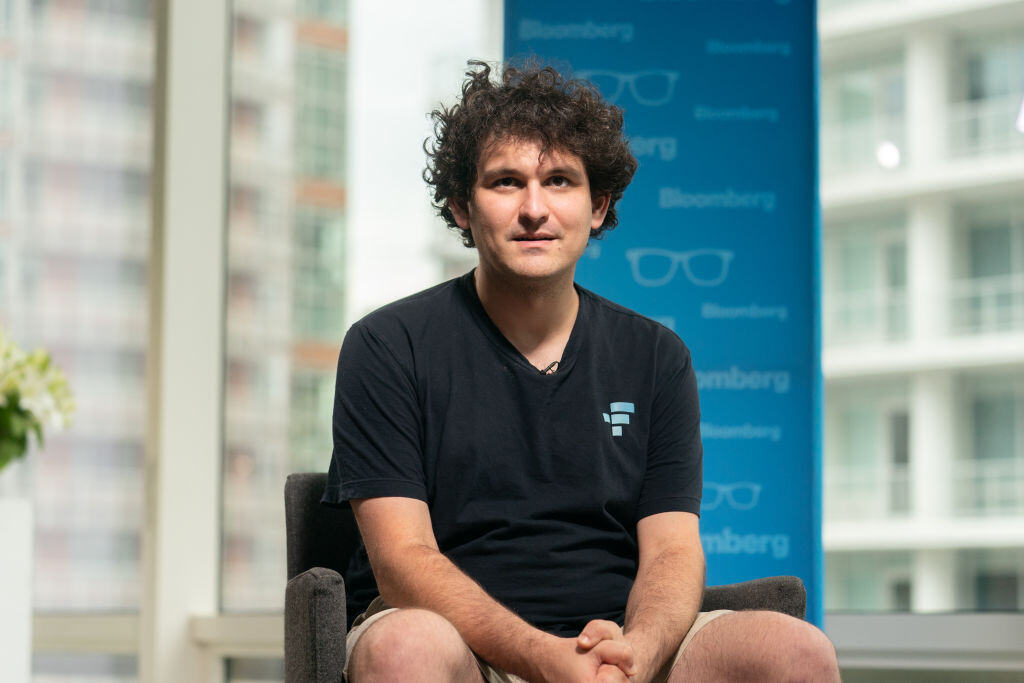
A photograph of Sam Bankman-Fried, founder of collapsed cryptocurrency exchange FTX. Bankman-Fried is seated wide-legged in front of a window through which skyscrapers can be seen. A blue banner, as used for an interview, is behind him. SBF gazes in the direction of the camera, and his hands are folded in his lap. He is a 28-year-old white man with unkempt, dark, curly hair. He is wearing a baggy black T-shirt and khaki cargo shorts. The photo accompanies a blog post about the personality of entrepreneurs and Bankman-Fried’s role in a particular kind of entrepreneurial culture.

The news about the spectacular collapse of the cryptocurrency exchange FTX and its 30-year-old multibillionaire founder Samuel Bankman-Fried raises some interesting questions. Who is Sam Bankman-Fried? What is Sam Bankman-Fried’s personality? Why did he behave this way? Let’s look at the personalities of entrepreneurs to explore some possible answers.

Who Is Sam Bankman-Fried? 

To understand the psychology of Bankman-Fried, it is useful to note that he belongs to a particular group of American businesspeople. Among them are Michael Milken, Jeffrey Skilling, and Bernard “Bernie” Madoff. Milken, an American financier, whose net worth is about $6 billion USD, was indicted for racketeering and securities fraud and spent time in prison. Skilling is a former McKinsey consultant and was the CEO of the failed energy trading company Enron. He was indicted for conspiracy, insider trading, and securities fraud and spent time in prison. Madoff, a financier and former chair of Nasdaq, once had a net worth of $64.8 billion. Madoff pleaded guilty to 11 federal felony charges and died in prison.

These men were all charming and socially skilled, intense, hardworking, and (for a time) very wealthy. They were also highly intelligent. For instance, in Skilling’s successful application to Harvard Business School, he wrote, “I am f—ing smart.” All of them were willing to ignore established rules and regulations while taking big financial risks, making them fearless in ways that few people are. Smart, charming, and fearless may sound like the description of a psychopath—except, unlike the typical psychopath (e.g., Al Capone), these men were well educated and had clear career focuses and professional identities.

These men can also be described as “entrepreneurs” who went too far in testing the limits—in professions where testing the limits is expected behavior.

The Personality of Entrepreneurs

Hogan has personality data on a sample of more than 500 entrepreneurs. Our data show that entrepreneurs (including Bankman-Fried) as a group are distinctive, with both expected and unexpected characteristics.

On our measure of everyday personality, entrepreneurs look like smart delinquents: bright, impulsive, edgy, colorful, and indifferent to authority. On our measure of dark-side personality characteristics, entrepreneurs look creative, which involves challenging norms. They also seem socially skilled (but not transparent) and somewhat duplicitous (delinquent). Most importantly, on our measure of values, entrepreneurs seem detail oriented, smart, analytic, risk seeking, norm defying, fun loving, and driven to win. It is surprising but important to note that they are not particularly motivated by money. They are much more powerfully motivated by fame, fun, and success, with wealth being a secondary consideration. 

Within a population of adventurous, norm-defying risk-takers, Bankman-Fried is unique only insofar as he is at the high end of the distribution of the characteristics that define entrepreneurs.

What Drives Entrepreneur Behavior?

Entrepreneurs are as necessary as they are troublesome. Entrepreneurs—as defined by our assessments—are essential for economic progress.

Creative Destruction

Capitalist (or free market) economies grow faster than regulated, managed economies and are how countries lift citizens out of poverty. The key feature of capitalist economies, as the great Austrian economist Joseph Schumpeter noted, is creative destruction. Economic progress depends on challenging norms, defying conventional wisdom, and disrupting standard practices. And creative destruction depends on a certain kind of leadership.

The Fall of Respectability

In his recent Wall Street Journal article, Adam Kirsch notes that modern entrepreneurs such as Steve Jobs, Elon Musk, and Sam Bankman-Fried have not only been disruptive, but have also abandoned respectability—and investors expect them to do so.

Being willing to ignore accepted standards of dress and behavior is the sign that the person is a disruptor. As Kirsch notes, “Silicon Valley has always looked for unicorns and disruptors, who by definition don’t respect the way that others do things.” Kirsch shares an anecdote about Jobs as an example: “One of the things that appealed to [Don Valentine, the founder of the investment firm Sequoia] about Jobs was that ‘he did a number of weird things . . . on purpose just to shock people.’”   

Kirsch contrasts the appearance and behavior of major players in the modern tech world (and Donald Trump) with the decorous appearance and conduct of old-school business giants such as Andrew Carnegie. Carnegie founded the Carnegie Steel Corporation in 1892 and became one of the richest men in US history upon its sale in 1901. In comparison, Sam Bankman-Fried famously negotiated a $200 million deal with Sequoia Capital in gym shorts with unkempt hair. The deal occurred during a Zoom meeting while Bankman-Fried was simultaneously playing the video game League of Legends.

The disheveled and ill-mannered Bankman-Fried seems to have come from a different culture compared to the well-groomed and well-mannered Carnegie. But what is going on beneath the surface?

A Socioanalytic Perspective on Entrepreneur Behavior

Our perspective on human behavior, socioanalytic theory, can help to explain. Socioanalytic theory fuses Sigmund Freud’s psychoanalytic theory, George Herbert Mead’s role theory, and Darwinian evolutionary theory. Socioanalytic theory holds that humans have always lived in groups with three universal motives. These are acceptance, status, and meaning.

Through this lens, all social behavior is a game during which the players negotiate for status and acceptance. After every interaction, participants’ reputations are slightly altered, either positively or negatively. Also note that, as Freud observed, all public behavior is a text to be interpreted. Finally, note that, as the ethologists point out, the essence of animal communication is deception.

With these observations in mind, we can conclude two things about the appearance and behavior of Carnegie and Bankman-Fried. First, both are putting on a carefully constructed performance—nothing about their behavior is spontaneous or natural. Second, both played to the same audience—namely, their investors—and not to the general public. Moreover, if their performances were discordant with the expectations of their intended audience, their enterprises would begin to fail. But most importantly, despite the superficial differences in apparent respectability, Carnegie and Bankman-Fried are much the same in underlying psychology: smart, analytical, competitive, audacious, and indifferent to the damage they might cause for others. 

This blog post was authored by Hogan Founder and President Robert Hogan, PhD, and Chief Science Officer Ryne A. Sherman, PhD.

Hogan Distributor A&D Resources Is Now Summit

Posted by Erin Robinson on Mon, Jan 09, 2023

A&D Resources, Hogan’s Scandinavia and Benelux distributor, now operates under the name Summit.

After A&D Resources merged with Summit Consulting, the two companies continued to operate under their respective names. However, they always had a vision of becoming one unified brand. From January 2023 onward, clients, partners, and prospects will see and experience the new brand, identity, and offices. Summit hopes its clients will appreciate it all as much as they do.

Merging two companies and brands comes with change. But for Summit, it only means a better experience and service for clients. The organization continues to work with the same professionalism and offerings clients are accustomed to—plus more.

“We have been waiting for this exciting opportunity for a long time, and now we can finally present our new company, our new HQ location, and our new name, Summit,” said Karsten Søderberg, CEO of Summit.

“It is a unique combination of business psychologists and expert consultants that we have brought together in one company, under one name,” continued Søderberg. “Our highly experienced consultants complement each other in delivering the best leadership, organizational, and talent development services.”

The new Summit operates in both the private and public sectors across Scandinavia and Benelux. As a Hogan distributor, the company offers the Hogan assessments, leadership development, coaching, 360-degree assessments, team development, competency mapping, Hogan certification, organizational learning, talent acquisition, succession planning, and many tailor-made solutions.

The new headquarters location is Sundkrogsgade 7, 2100 Copenhagen, Denmark. The HQ phone number is +45 45 85 15 15, and the new general email is support@summitlead.com. Visit summitlead.com to see the new website and branding.

Topics: personality, distributors

Leadership Pressure and Burnout: A Spotlight on Tracey DeSilva, VP at Bayer

Posted by Erin Robinson on Mon, Jan 09, 2023

tracey_desilva

Tracey DeSilva, vice president of learning and development at Bayer, has accumulated years of experience that have helped her become the trailblazing leader she is today. She credits being intentional in her earlier professional years as one of the main factors in her leadership success.

Focus on Job Skills, Not Job Title

DeSilva says she was intentional about lining up her personal and professional life, while focusing on learning new job skills rather than the job title. While the title may look very appealing to people who aspire to leadership positions, the skills, knowledge, and connections necessary to carry out the responsibilities are more important. Failing to master the necessary skills early in one’s career could potentially delay promotions or lead to failures later as a leader.

Be Visionary—Don’t Micromanage

As her roles became more challenging, DeSilva admits that she found the effort to be visionary to be a worthy one. As a leader, she was responsible for

  • creating the vision for her team,
  • managing other people’s careers,
  • understanding team members’ goals, and
  • creating an environment that supports their development.

She describes her leadership style as one that lacks micromanagement. Having a leader that allows team independence is critical for fostering individual professional growth. A leader that inspires the team and provides them with the opportunity to make mistakes and learn from them ultimately allows team members the range to develop their own working styles and advance within their careers.

Seek Executive Coaching and Mentorship

Although DeSilva embraces the challenges that come with leadership positions, like many other leaders, she too experiences the inevitable pressure and burnout that comes over time. Investing in mental well-being is critical to coping with burnout, pressures from having to meet wider company goals, and market instability.

DeSilva stresses the importance of mentorship and formal executive coaching. Although leaders can become overwhelmed, they must ensure that they are not placing that burden on their teams. Finding a mentor or coach who is completely objective is key to managing stress and helping leaders effectively deal with workplace pressures.

Thankfully, Bayer agrees with this sentiment and, through its leadership development programs, provided six months of formal coaching and specialized programs to create an environment that encourages health and wellness. Leaders not only encourage their team members to use these programs, but also serve as mentors to colleagues.

Lead Authentic Meetings to Increase Engagement

Leaders such as DeSilva watched themselves and their colleagues undergo changes during the COVID-19 pandemic. In times like this, a leader’s ability to adapt and respond to changes while remaining empathetic is critical.

While companies have ensured that employees have the necessities to work from home, it is up to the leaders to cultivate an authentic feeling of connectedness virtually while increasing engagement.

DeSilva explained that she established new ground rules to create a more authentic feeling for her teammates working virtually. She understands that working from home has meant a shift in priorities for her team members, especially primary caregivers. Although Zoom happy hours started out fun, they often felt too manufactured. Instead, she has made it a priority to regularly reach out for a more personal discussion with each team member. These emotional check-ins not only allow leaders to build relationships, but also understand how their team members are managing ever-changing professional and personal demands.

According to Princeton HR Insight’s 2022 HR Marketing Report, “Senior-level initiatives have an increased focus on leading during times of rapid change and empowering vs. directing to increase the engagement of their teams.”

Final Message to Future Leaders

Be intentional. Focus less on job titles and more on the skills that you will learn in each role. Speak routinely to the people who can influence your career trajectory while actively growing your network. Lean into discomfort and growth, and do not wait to feel fully confident to show up for a new challenge.

Editor’s note: A version of this post was first published by Princeton HR Insight, whose principal consultant Rebecca Feder is a member of the Hogan Coaching Network. Hogan extends special thanks to Shea Clarke of Princeton HR Insight, who authored the original spotlight, and Tracey DeSilva of Bayer for her exemplary leadership.

Topics: leadership development

HR Burnout: The Organization Is Fine, But Are You?

Posted by Erin Robinson on Tue, Jan 03, 2023

A white-haired person wearing glasses and a white blouse sits beside an early-career worker on a sofa discussing the contents of a clipboard. The two appear to be having a serious conversation, as an HR leader might have with an employee. The effect of HR burnout on the well-being of other employees is a main topic of the accompanying blog post.

Exhausted? Feeling cynical or negative? Checking out? It’s not just you—especially if you’re an HR professional. As much as burnout today is a global experience, even recognized by the World Health Organization, it has taken an especially serious toll on the very people who are deeply concerned with occupational well-being: human resources professionals.1 So, what’s led to the widespread HR burnout?

The COVID-19 pandemic caused unprecedented changes to the way we work. The toll of remote and hybrid work, the Great Resignation, quiet quitting, layoffs, talent shortage, increased concern for employee wellness, and the global recession have seemed to fall squarely on the shoulders of the HR department. Unsurprisingly, 86% of HR leaders experienced increased stress in 2021, 53% are burned out, and 48% are looking for a new job.2 Too much change too quickly with too few resources and security may lie at the root of why 44% of HR leaders say their stress has increased “dramatically” in the past year.

HR burnout impacts companywide well-being. The job duties of HR leaders encompass everything to do with people, including hiring, onboarding, safety, learning and development, firing, and the execution of other operational procedures.3 When HR professionals spend their time trying to boost companywide well-being, they sometimes pay with their own. Reduced professional efficacy in this sphere has a trickle-down effect to other employees, similar to how caregiver burnout affects dependents.

Read on to learn why the personality characteristics that make HR professionals excellent at their work also dispose them to burnout—and how organizations can help protect them.

Characteristics of HR Leaders

Using the Hogan Personality Inventory (HPI), Hogan Development Survey (HDS), and Motives, Values, Preferences Inventory (MVPI), we have analyzed the personality characteristics of HR employees and HR leaders, including HR managers and HR executives. Our data tell a fascinating story.

HR Employees

HR employees are responsible for benefits plans, compensation packages, training and development, and other personnel-related duties. They must anticipate problems and manage conflict effectively. Because they also ensure compliance with legal guidelines, they must readily adhere to standards and possess excellent communication skills. Since the role of HR can directly impact employee productivity and well-being, it is essential that HR duties are executed well.

HPI – HR employees tend to be good at listening to others and supporting teams, but they may also struggle with resilience and handling day-to-day stress. These characteristics are reflected in their tendency to score lower on the Adjustment and Ambition scales on average.

HDS – HR employees tend to manage their insecurities through intimidation or avoidance when under stress, though normally they are likely passionate, insightful, and kind. Derailing behavior can emerge when an everyday strength becomes overused during times of burnout. Someone who is typically careful and thorough might become risk-averse and fearful of failure, for example.

MVPI – HR employees tend to be uninterested in competition (lower Power scores), prefer to work alone (lower Affiliation), and prefer stable, predictable, low-risk work environments (lower Security). Their preferences for making decisions democratically, focusing on tasks, and maintaining structure probably have been challenged every workday during the unpredictable recent past.

HR Leaders

HR leaders differ from HR employees in both personality characteristics and job tasks, which have a greater focus on corporate strategy, policy, and compliance. Based on our analysis of more than 1,000 HR leaders, we have identified the characteristics that tend to differentiate HR leaders from other global professionals.4

HPI – HR leaders tend to take the lead and push for results, get along with others and avoid conflict, and focus on procedure and implementation. Their HPI personality data suggest they typically show strengths in operational leadership as opposed to strategic leadership.

HDS – HR leaders differ by rank in how they tend to overuse their strengths. When under stress, HR executives may seem arrogant, impulsive, eccentric, or untrustworthy. They might use intimidation or charm to manage their problems. HR managers, on the other hand, may seem perfectionistic, micromanaging, deferential, or ingratiating when under stress. They might tend to avoid directly confronting their problems.4

MVPI – HR leaders tend to desire helping others (higher Altruistic) and enjoying both work and life (higher Hedonism). They typically prefer to make decisions based on experience and instinct rather than objective data (lower Science).

HR Professionals and Burnout

The personality characteristics that make HR professionals successful at their jobs make them likely to burn out—regardless of whether they find their work rewarding or meaningful. According to Deloitte research, “87% of professionals surveyed say they have passion for their current job, but 64% say they are frequently stressed, dispelling the myth that passionate employees are immune to stress or burnout.”5 That HR professionals may still feel passionate about their role does not shield them from unmanaged chronic workplace stress.

HPI – Of the seven HPI scales, all seven of them are associated with burnout. While high scores and low scores both have positives and negatives, lower HPI scores tend to indicate higher likelihood of burnout. Two scales have particularly strong associations with burnout: lower scores on Adjustment and on Ambition, which data indicate are characteristic of HR professionals. Based on their HPI scores, HR employees may be particularly susceptible to burnout.

HDS – HR employees, managers, and leaders alike can be disposed to burning out depending on their HDS scores. High scores on this inventory show overused strengths and derailing tendencies. Of the 11 scales, eight are closely associated with burnout. Depending on the specific scale, a lower score or a higher score is correlated to burnout. HR employees seem especially likely to experience burnout based on their HDS data.

MVPI – Lower average scores on the Power, Altruistic, and Affiliation scales are associated with burnout for HR professionals. Because HR professionals tend to be uninterested in competition, value tasks and productivity, and prefer to work independently, their preferred professional environment also disposes them to burnout.

The tasks of HR professionals have not only changed dramatically in the last couple of years in response to remote work, but they have also come to the forefront of many companies’ strategy and forecasting. The lack of stability, staff, and supplies all serve to increase the stress of HR professionals, who may worry about productivity or accomplishing tasks. Adding to that the burden of setting new standards, raising morale, complying with changing policies, and addressing culture needs, it is no surprise that the professionals who care for others also need support.

Protecting HR Professionals from Burnout

Individual HR professionals can mitigate burnout by understanding how their personality characteristics might contribute to derailment. Personality assessment is the first step in gaining knowledge and beginning development.

Organizations can protect HR professionals from burnout by providing then with adequate technology, tools, budget, personnel, and executive support. According to Forbes, “HR departments report being underresourced with 73% saying they don’t have the tools and resources they need to do their job well.”7 When nearly three-quarters of HR professionals need more resources to perform their essential job functions, it’s unsurprising that they are experiencing ongoing stress at and about work. To a group of people who strongly prefer a stable work environment and dislike ambiguity (according to their higher scores on the MVPI Security scale), the disposition to plan, make careful decisions, minimize risk, and emphasize procedure may feel especially frustrating when they are also ill-equipped and understaffed.

Individuals can also protect themselves from burnout by leveraging strategic self-awareness to cope with stress in ways that will assuage underlying fears, stressors, or insecurities. In general, adequate sleep, moderate daily exercise, outdoor recreation, family activities or hobbies, and setting boundaries for work hours have helped other HR professionals manage stress, who report that their roles have changed significantly since 2020.6 Strategic self-awareness comes into play when someone who scores high on Reserved, for example, schedules solitary lunchtime walks to regain emotional balance after mornings full of video calls.

HR burnout is prevalent and serious, but it isn’t an insurmountable challenge. Overcoming burnout among HR professionals starts with understanding the organizational effects of personality.

References

  1. World Health Organization. (2019, May 28). Burn-out an “Occupational Phenomenon”: International Classification of Diseases. World Health Organization. https://www.who.int/news/item/28-05-2019-burn-out-an-occupational-phenomenon-international-classification-of-diseases
  2. Mayer, K. (2022, February 24). Burnout and Resignations Are Rampant in HR. What Leaders Need to Know. Human Resources Executive. https://hrexecutive.com/burnout-and-resignations-are-rampant-in-hr-what-leaders-need-to-know/
  3. Job Descriptions: Human Resource Manager. SHRM.. https://www.shrm.org/resourcesandtools/tools-and-samples/job-descriptions/pages/human-resource-manager.aspx
  4. Sherman, R. A., & Lemming, M. R. (2021, September 17). Who Becomes an HR Leader? Talent Quarterly. https://www.talent-quarterly.com/who-becomes-an-hr-leader/
  5. Fisher, J. (2018). Workplace Burnout Survey. Deloitte. https://www2.deloitte.com/us/en/pages/about-deloitte/articles/burnout-survey.html
  6. Ladika, S. (2022, March 14). Burnout Is a Problem for HR Professionals. SHRM. https://www.shrm.org/hr-today/news/hr-magazine/spring2022/pages/hr-practitioners-are-coping-with-burnout.aspx
  7. Kelly, J. (2022, April 14). 98% of HR Professionals Are Burned Out, Study Shows. Forbes. https://www.forbes.com/sites/jackkelly/2022/04/14/98-of-human-resources-professionals-are-burned-out-study-shows/

Topics: personality

The 2022 Derailers of the Year

Posted by Erin Robinson on Tue, Jan 03, 2023

Multicolored lanterns glow against a dark background in a low-angle photograph, symbolizing the new year. The photo accompanies a blog post about the 2022 derailers of the year.

It was quite a year, wasn’t it? From supply chain issues to quiet quitting, from Will Smith to Elon Musk, it seems as though 2022 was characterized by big events, big personalities, and big derailers.

Recently on The Science of Personality, cohosts Ryne Sherman, PhD, chief science officer, and Blake Loepp, PR manager, continued their annual tradition of breaking down the top derailers of the year.

As we did for 2020 in episode 16 and 2021 in episode 41, we highlight major events or significant people from this year that represent each of the 11 derailers from the Hogan Development Survey (HDS). The HDS measures ways that people can derail by overusing their personality strengths when under stress.

Let’s get right into the 2022 derailers of the year.

Excitable: Will Smith

Remember when Will Smith slapped Chris Rock at the Academy Awards? As such an unexpected and dramatic incident, this moment represents the Excitable scale. Excitability is about a volatile outburst while under stress or pressure or when not self-monitoring. That’s exactly happened to Will Smith. In a moment of anger, he allowed an emotional outburst to occur on full public display.

Skeptical: Magnus Carlsen

When one of the greatest players of all time walks away from a game, that creates conspiracy theories galore. The current world chess champion Magnus Carlsen has refused to play grandmaster Hans Niemann, alleging that Niemann cheats. This attitude represents the Skeptical scale, which can be characterized as distrustful, cynical, and critical. It shows skepticism to say, “Nope, I think you’re cheating, so I’m not going to play you.”

Cautious: China’s Zero-COVID Policy

China set a goal to reach zero cases of COVID—quite a challenge for a nation with such a huge population. The Cautious scale can describe fear of mistakes and a reluctance to take risks. Excessive caution in response to perceived threats can cost opportunities. The policy likely caused social consequences in China, as well as billions in GDP growth.

Reserved: Quiet Quitting

Quiet quitters may only do the minimum amount of work and actively avoid interaction and engagement. The Reserved scale regards keeping distance when under stress. By a popular definition of quiet quitting, these workers take a reserved approach to their jobs, doing just enough not to get fired and distancing themselves from the rest of the group.

Leisurely: Supply Chain Challenges and Inflation

The Leisurely scale refers to passive-aggressive behavior: publicly avoiding trouble but privately causing trouble. The supply chain may not always be in public view, but it’s always in the background causing problems. Supply chain challenges contributed to this year’s surge in inflation, a perfect depiction of stubborn, contrary, leisurely behavior.

Bold: Vladimir Putin

Vladimir Putin was our selection to represent the Bold scale because of his overconfidence and arrogance. Putin’s invasion of Ukraine likely has cost more than 100,000 lives. His assertions about the superiority of the Russian military have been belied by the success of the Ukrainian opposition. That overestimation about military competence and sense of entitlement perfectly capture the most extreme characteristics of boldness.

Mischievous: Sam Bankman-Fried

Billionaire entrepreneur Sam Bankman-Fried, founder of FTX, is currently facing charges of fraud surrounding his cryptocurrency business. The Mischievous scale concerns manipulating, bending, or breaking the rules—or believing that the rules don’t apply to you. It also has to do with charm and charisma. Bankman-Fried had to be charming and persuasive to get billions of dollars of investments, and he would have had to play fast and loose with the law to treat money in the way he has been charged. Mischief, indeed.

Colorful: Amber Heard v. Johnny Depp Trial

The spectacle of the Amber Heard and Johnny Depp trial represents the Colorful scale in that it relates to attention-seeking characteristics. The many emotions on display in the public divorce at times seemed self-promoting and intentionally dramatic. Whether followers were pro-Amber or pro-Johnny, the event garnered a lot of attention, emotion, and opinion.

Imaginative: CNN+

The Imaginative scale has to do with being overly creative in ways that are impractical or nonsensical. Despite the decline in viewership of 24-hour news networks, CNN invested hundreds of millions in the CNN+ subscription-only platform for exclusive news content. It took imagination to think subscribers would pay for content instead of consuming it for free on social media and other online news platforms. CNN+ dissolved after just one month.

Diligent: Elon Musk

The Diligent scale relates to micromanaging and obsessing about details. Elon Musk brought that management style from Tesla to Twitter, where it seemed to be less effective in a different corporate culture. His background in technology and past business success shows that his perfectionistic tendencies have worked well for him in the past. Musk’s diligence at Twitter, however, appears to be a classic expression of an overused strength.

Dutiful: The Royal Family

The British royal family represents the Dutiful scale by following the rules and deferring to authority. They demonstrate commitment to tradition that may not align with modern trends, and in doing so, they risk seeming rigid or stagnant. Even while experiencing grief or other strong emotions, the members of the royal family adhere to a prescribed set of rules and uphold the honor of their lineage. Their refusal to deviate from the way things have always been done shows how an excessive sense of duty can lead to derailment.

Listen to this conversation in full on episode 66 of The Science of Personality. Never miss an episode by following us anywhere you get podcasts. Thanks to our listeners for an amazing 2022. Cheers, everybody!

Topics: personality

Subscribe to our Blog

Most Popular Posts

Connect