---
title: Blog (39)
description: The Science of Personality (39)
---
[CONTACT US](https://info.hoganassessments.com/get-in-touch/?q=contact-us)
+1.918.749.0632
- [](http://www.linkedin.com/groups?gid=2199407&trk=myg_ugrp_ovr)
- [](https://www.facebook.com/hoganassessments)
- [](https://twitter.com/HoganAssessment)
- [](http://www.youtube.com/user/hoganassessments/featured)
- [](https://info.hoganassessments.com/CMS/UI/Modules/BizBlogger/rss.aspx?tabid=541267&moduleid=1088272&maxcount=25)
[](http://www.hoganassessments.com/)
[](http://www.hoganassessments.com/?q=content/international-training)
## [Thoughts on: New(ish) Directions for Vocational Interests Research](https://info.hoganassessments.com/blog/thoughts-on-newish-directions-for-vocational-interests-research)
Posted by [Hogan Assessments](https://info.hoganassessments.com/blog/author/hogan-assessments) on Wed, Apr 25, 2018
- [Tweet](https://twitter.com/share)
**This is a guest post written by Joel A. DiGirolamo, Director of Coaching Science for the [International Coach Federation](https://coachfederation.org/).*
I enjoyed reading the thought-provoking paper [“New(ish) Directions for Vocational Interests Research”](https://www.researchgate.net/publication/320211619_Newish_Directions_for_Vocational_Interests_Research)by Hogan and Sherman. It is jam-packed with concepts, models, and logic that offer fodder for many thought exercises.
I certainly agree with the assertion that “values are the real underlying subject matter of vocational psychology.” When looking more broadly, however, it seems to me that the following hierarchy exists:
Traits & Needs
↓
Values, Beliefs
↓
Attitudes & Interests
For example, imagine two individuals, Carrie and Linda, both with a trait or need to nurture. Now imagine that Carrie has a value or belief that strong security is necessary to nurture individuals. Linda, on the other hand, values inclusion in order nurture those on the periphery of a society. Taken to the next level, we can imagine that Carrie’s security value or belief could promote her taking on a conservative attitude and an interest in the military. Meanwhile, Linda’s inclusion value might cultivate a liberal attitude and an interest in protecting immigrants. Thus, we see that a common trait or need can manifest itself in significantly different behaviors. This example also illustrates Allport’s assertion that traits tend to be nondirectional and attitudes tend to be directional.
The statement, “In our view, people don’t have traits, they have goals, intentions, and agendas, and it is these motivational terms that explain their behavior—which traits describe,” greatly depicts the role of traits and the idea that motivation is really a moderator. We all have traits, needs, etc., but it is motivation that gets us off the sofa and is therefore a moderator toward action or behaviors.
Many theories and research studies related to interests and job satisfaction have been written over many decades. I believe there is a confounding factor in the motivation to work a specific job, however. As many describe, higher satisfaction is somewhat correlated with interests. Yet this doesn’t seem to account for those individuals who take specific jobs solely for the money they make. These individuals may be financially satisfied with their jobs but are not satisfying their intrinsic desires. I’ve always felt that individuals work either for meaning or money and that some are fortunate to derive both from their job.
In a related view, the table below is how I look at an individual’s job satisfaction in relationship to employer job satisfaction, which I am using as a proxy for job performance. In the top two quadrants, the employee may find meaning in their work and thus happy with their job even if they are not doing it well. The lower right quadrant may be a person who is working solely for money and thus unhappy with their job, but their employer is happy with what they are doing. The people in the lower left quadrant may be those individuals some refer to as unemployable. They’re both incompetent and unhappy.

As we look back at the material covered in the Hogan and Sherman piece, we can get a sense of deep understanding as to where interests that lead to job satisfaction come from. Backtracking from interests to values to needs and traits can bring greater understanding as to what may be driving an individual’s job satisfaction and possible conflicts therein. Returning to my example of the individual who takes a specific job simply for the money, we could easily imagine that this individual has a need for financial security. Perhaps they also have a trait of wanting to help people and have a good set of mathematical and financial skills. Maybe they have an interest in both financial work and helping others to become more financially stable. However, the only job they currently can find that they view as financially secure is one that does not help others, creating a possible internal conflict between the need for financial security and helping people. When queried as to their job satisfaction, it is easy to see how this internal conflict could leak out into conflicting measures of job satisfaction.
And so, we see the value this piece brings to bear; it highlights and takes a fresh, clear look at vocational interests in the context of the traits, needs, values, beliefs, attitudes, and interests. It is my hope that this piece enlivens and brings greater depth to the discussion on vocational interests.
0 Comments [Click here to read/write comments](https://info.hoganassessments.com/blog/thoughts-on-newish-directions-for-vocational-interests-research#comments-listing)
Topics: [Hogan](https://info.hoganassessments.com/blog/topic/hogan), [Bob Hogan](https://info.hoganassessments.com/blog/topic/bob-hogan), [Joel DiGirolamo](https://info.hoganassessments.com/blog/topic/joel-digirolamo), [ICF](https://info.hoganassessments.com/blog/topic/icf), [International Coach Federation](https://info.hoganassessments.com/blog/topic/international-coach-federation)
## [RECAP: Hogan Assessments Makes Waves in Budapest and Chicago Last Week](https://info.hoganassessments.com/blog/recap-hogan-assessments-makes-waves-in-budapest-and-chicago-last-week)
Posted by [Hogan Assessments](https://info.hoganassessments.com/blog/author/hogan-assessments) on Tue, Apr 24, 2018
- [Tweet](https://twitter.com/share)
**Hogan European Summit**
April is a hectic time of the year for the crew at Hogan Assessments, and this year was no different. In fact, our staff was widely represented in both the US and Europe during a week full of events.
The week began with a group of Hogan representatives traveling to Budapest, Hungary to attend the Hogan European Summit, which was organized by Hogan’s Managing Director of Europe, Zsolt Feher.
Held at the famous Gerbeaud Café in historic downtown Budapest, the event aimed to foster collaboration among our European distributors to facilitate growth across the continent and enhance Hogan’s brand visibility.
Dr. Hogan delivered the opening keynote address to set the tone for the Summit, which was followed by discussions regarding EU PR and marketing strategy by MITTE Communications, 360 and Global Talent Survey updates by Peter Berry Consultancy, an interactive strategy session, and product updates.
Hogan CEO Scott Gregory discussed absentee leadership on day two. This is a relatively new topic in the industry, and was thoroughly covered by Scott [in an article he wrote for Harvard Business Review](https://hbr.org/2018/03/the-most-common-type-of-incompetent-leader). The keynote was followed by sessions covering strategy for selection research and presentation, a General Data Protection Regulation (GDPR) update, distributor case study presentations, a Q&A session with Hogan Leadership, and an afternoon of sightseeing in Budapest.
We’re truly honored to have such a strong network of European distributors, and we look forward to future opportunities to bring everyone together in an effort to boost Hogan’s global presence.
**ICF “Future of Coaching in Organisations” Conference**
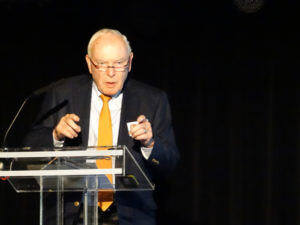Several members of the Hogan team remained in Budapest for the International Coach Federation’s “Future of Coaching in Organisations” Conference held at the Akvárium Klub. The event, featuring Hogan as the primary sponsor, aimed to bring the future of coaching into focus, and identified which new trends, technologies, and tools will determine organizational development and coaching.
The event featured several world-renowned coaches, and included presentations from Hogan’s Dustin Hunter and Zsolt Feher, as well as a keynote address by Dr. Hogan on “Coaching the Uncoachable.” Overall, the event was a huge success, and offered Hogan Assessments the unique opportunity to develop an even stronger rapport with the international coaching community and the European market. On behalf of the team at Hogan Assessments, we would like to thank our friends at ICF for such an incredible experience.
**Hogan Completes 10th Consecutive Year as SI****OP Platinum Sponsor**** **
Every year, Hogan Assessments is one of the most visible organizations at the annual [Society for Industrial and Organizational Psychology (SIOP) Conference](http://www.siop.org/conferences/18con/), and this year’s event in Chicago was no different.
Celebrating the 10th consecutive year as the Platinum Sponsor, the team at Hogan was strongly represented with 20 accepted submissions, again making Hogan one of the top non-academic organizations with the number of speakers featured on symposia, panel discussions, and posters.
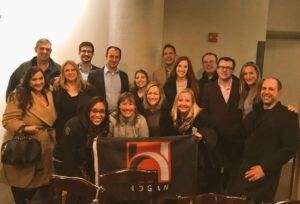Hogan staff members across all departments put in hundreds of hours of work in the weeks and months leading up to the conference to ensure Hogan is positioned as the premier organization in attendance. We would like to thank all of them for their hard work and dedication to making this year a huge success.
We would also like to thank everyone who was able to attend the annual University of Tulsa Wine Reception. When Bob and Joyce Hogan founded the TU I-O Psychology program decades ago, they had no idea it would develop such a strong pipeline of prestigious psychologists from future generations, including Hogan’s new CEO, Dr. Scott Gregory. Being able to connect with TU alumni at SIOP on an annual basis during this reception is a tremendous honor.
In closing, we would like to congratulate Sara Weston, who was the lucky recipient of the Apple Watch we gave away at the conference for posting a photo of the Hogan booth. The campaign was a lot of fun for everyone involved and, although only one person got a watch, Hogan donated $5 the ASPCA for every entry. So, your entry helped support a fantastic cause!
0 Comments [Click here to read/write comments](https://info.hoganassessments.com/blog/recap-hogan-assessments-makes-waves-in-budapest-and-chicago-last-week#comments-listing)
Topics: [coaching](https://info.hoganassessments.com/blog/topic/coaching), [Hogan](https://info.hoganassessments.com/blog/topic/hogan), [Budapest](https://info.hoganassessments.com/blog/topic/budapest), [EU Summit](https://info.hoganassessments.com/blog/topic/eu-summit), [Chicago](https://info.hoganassessments.com/blog/topic/chicago), [ICF](https://info.hoganassessments.com/blog/topic/icf), [International Coach Federation](https://info.hoganassessments.com/blog/topic/international-coach-federation)
## [Charisma: Not a Recipe for Better Leadership](https://info.hoganassessments.com/blog/charisma-not-a-recipe-for-better-leadership)
Posted by [Hogan Assessments](https://info.hoganassessments.com/blog/author/hogan-assessments) on Mon, Apr 23, 2018
- [Tweet](https://twitter.com/share)

**This is a guest blog post written by Nicholas Emler, Ph.D., a Professor of Social Psychology at the University of Surrey.*
Leadership was for too long grievously neglected by mainstream psychology, so it is good to see the topic more regularly getting serious scholarly attention; there is now a substantial body of informative research, in marked contrast to the situation 25 years ago. However, not all the scholarly attention has been beneficial. My concern on this occasion [relates to some recent work](https://thepsychologist.bps.org.uk/volume-31/march-2018/moving-psychology-forward-charisma) (Antonakis, 2018) on the link between leadership and charisma.
Antonakis makes useful points in this article, noting that charisma has suffered from fuzziness of definition. And his interpretation of charisma as persuasive signalling is an interesting route to rigour in research on charisma. However, the idea that successful leaders use rhetorical and presentational devices to enhance their persuasive impact on audiences [is not new](https://www.amazon.com/Our-Masters-Voices-Language-Body-language/dp/0415018757) (see Atkinson, 1984) and many of the insights of this earlier work have clearly been absorbed by professional politicians. Witness the now ubi quitous use of projection screens to allow speakers apparently to maintain eye contact with audiences while actually reading from a script.
Antonakis correctly observes that a leader judged charismatic by one audience can be seen as a dangerous demagogue by another but this does beg a very large question. Bad leadership can do immense damage, far beyond the effects of even the most energetic criminal individual. Promoting charisma as a desirable (and trainable) quality – the line taken by Antonakis – does nothing to address this. Indeed, quite to the contrary. Archie Brown, in his excellent *[The Myth of the Strong Leader](https://www.amazon.com/Myth-Strong-Leader-Political-Leadership/dp/0465027660)*, observes that charisma “is often dangerous and frequently overrated”. And the evidence that he is correct – on both points – is beginning to stack up. Boards of publicly traded companies have for some years supposed that they should appoint CEOs with charisma. The people they appoint following this dictum may deliver short-term profits but in the longer run they create chaos and ruin.
Having charisma and being persuasive can get you elected or promoted but does nothing to guarantee that you have either good judgment or the moral qualities needed successfully to meet the challenges of leadership. This relates to an important distinction, now recognised in the leadership literature, but neglected in Antonakis’s article, between leadership emergence and leadership effectiveness. Qualities of the person associated with one are barely related to qualities associated with the other. Interestingly, and perhaps surprisingly, among the qualities [that research is beginning to identify](http://faculty.washington.edu/mdj3/Humility%20and%20performance.pdf) as predictive of effectiveness is humility (Owens, Johnson, & Mitchell, 2013; Vera, & Rodriguez-Lopez, 2004). Humility goes with recognising one does not have all the answers – necessarily true of anyone providing leadership to a complex enterprise – and being willing to seek and listen to advice. Hitler, Musssolini, and the reverend Jim Jones may all have had charisma but none was burdened with humility (and the same looks to be true of some current world leaders).
Persuasive signalling matters for the reception and impact of one’s message but surely what should matter far more is the content of the message.
**References**
Antonakis, J. (2018) Moving psychology forward – with charisma. *The Psychologist*, March, 44-47.
Atkinson, M. (1984). *Our masters’ voices: The language and body language of politics*. London: Routledge.
Brown, A. (2014). *The myth of the strong leader: Political leadership in the modern age.* London: The Bodley Head.
Owens, B. P., Johnson, M. D., & Mitchell, T.R. (2013). Expressed humility in organizations: Implications for performance, teams, and leadership. *Organization Science*, 24, 1517-1538.
Vera, D., & Rodriguez-Lopez, A. (2004). Humility as a source of competitive advantage. *Organizational Dynamics, 33(4),* 393-408.
0 Comments [Click here to read/write comments](https://info.hoganassessments.com/blog/charisma-not-a-recipe-for-better-leadership#comments-listing)
Topics: [Hogan](https://info.hoganassessments.com/blog/topic/hogan), [charisma](https://info.hoganassessments.com/blog/topic/charisma)
## [Bob Hogan on Workplace Culture](https://info.hoganassessments.com/blog/bob-hogan-on-workplace-culture)
Posted by [Robert Hogan](https://info.hoganassessments.com/blog/author/robert-hogan) on Wed, Apr 18, 2018
- [Tweet](https://twitter.com/share)
Culture can best be defined in terms of the values that guide the behavior and decision making of a social unit—a team, a family, a business, etc. Culture is not vague and touchy-feely; cultures can be easily and reliably assessed using any number of commercially available survey instruments. Cultures have real, concrete behavioral consequences, and they directly influence the performance of business organizations. As Peter Drucker, the founder of modern management practices, observed: “Culture eats strategy for breakfast.” That is, no matter what strategy a company might adopt, the culture will enable *or prevent* that strategy from being implemented.
A concrete example might help. Several years ago, we were contacted by a newly opened, high end hotel in London because it was struggling financially. We assessed the top management team using our measure of values and found the following. On the one hand, the top management team had very high scores on the Customer Service, Aesthetics, and Hedonism scales, which meant that they cared deeply about quality, style, and providing a superb and enjoyable customer experience; these values are perfect for hospitality. On the other hand, the top management team scored low on the Power and Commerce scales—which meant that no one cared about making money or beating the competition—and this explained their poor financial performance.
There are four points about values that are worth noting. First, when people join organizations, they bring their own values with them, and the degree to which their values align with the values of the culture powerfully affects their subsequent performance. As Clarke Murphy, the CEO of Russell Reynolds Associates, observes, “We hire for talent but we fire for fit.” No matter how talented people might be, if their values are inconsistent with the culture of their organization, they will not succeed.
Second, the culture of an organization reflects the values of the executive team. On the one hand, the executives will largely share values—and those who don’t share the values of this team will leave. The values of the executives indicate the kinds of behaviors that are paid attention to and rewarded or punished accordingly. Over time, this process creates cultural homogeneity (Professor Ben Schneider calls this Attraction, Selection, Attrition–ASA). But no matter the terminology, culture is driven from the values of the people at the top.
Third, values are largely unconscious. People rarely reflect on their values because they are part of “the world taken for granted;” values are to people much like water is to fish—values are just part of the environment in which we operate. External feedback is usually needed to become aware of our values and our workplace culture.
Fourth, not all values are equally valuable. For example, some values like greed and selfishness create dysfunction in the groups and businesses where they exist; dysfunctional cultures seldom realize lasting success.
Finally, all successful teams share essentially the same values; these include tolerance, fitting in with the team, loyalty, hard work, a commitment to excellence, and an intense desire to beat the competition.
0 Comments [Click here to read/write comments](https://info.hoganassessments.com/blog/bob-hogan-on-workplace-culture#comments-listing)
Topics: [Hogan](https://info.hoganassessments.com/blog/topic/hogan), [culture](https://info.hoganassessments.com/blog/topic/culture), [Bob Hogan](https://info.hoganassessments.com/blog/topic/bob-hogan)
## [How the Best CEOs Differ from Average Ones](https://info.hoganassessments.com/blog/best-ceos-differ-average-ones)
Posted by [rtrost@hoganassessments.com](https://info.hoganassessments.com/blog/author/rtrosthoganassessments-com) on Mon, Apr 16, 2018
- [Tweet](https://twitter.com/share)

We all know the stereotypes: Great CEOs are extroverted. They’re self-promoting. They’re risk takers. But are these stereotypes true? Which traits actually differentiate CEOs from other executives? And, most important, which attributes separate successful CEOs from other CEOs?
There is a great deal of conjecture and mythology about CEOs and the attributes that define their success. Russell Reynolds Associates, in partnership with Hogan Assessment Systems, has led a research effort to separate myth from reality, identifying key indicators of leadership that have a measurable impact on a company’s growth. The results demonstrate that intensity, an ability to prioritize and focus on substance, and an ability to know what one doesn’t know (and utilize the best in what others do know) are more strongly related to best-in-class CEO leadership than traditional traits like extroversion or self-promotion.
We believe our data-based approach has particular relevance due to our use of Russell Reynolds Associates’ and Hogan’s proprietary psychometric databases at the core of the study. Other researchers have approached these questions about CEOs by conducting interviews, analyzing resumes, and even evaluating vocal patterns. We chose an in-depth approach, creating detailed psychometric profiles of 200 global CEOs, using the results of three well-established psychometric instruments: the [Sixteen Personality Factor Questionnaire (16PF)](https://en.wikipedia.org/wiki/16PF_Questionnaire), which provides an overall measure of adult personality, including interpersonal skills, emotional factors, resiliency, and communication style; the [Occupational Personality Questionnaire (OPQ-32)](https://en.wikipedia.org/wiki/OPQ), which measures management and leadership style and behavior, including how people try to influence others, their approaches to innovative thinking, and self-motivation; and the [Hogan Development Survey](https://www.hoganassessments.com/assessment/hogan-development-survey/), which measures areas for development or potential derailing factors in managers and executives, including their decision-making style and independence of thinking. We validated the trends we discovered in another global sample of 700 CEOs produced by our partners at Hogan and subsequently compared these CEOs to the non-CEO executives in our proprietary database of 9,000 senior leaders.
Our analysis revealed that CEOs differ meaningfully from the overall executive population across many personality attributes. Two traits in particular stand out: an ability to embrace appropriate risks and a bias toward acting and capitalizing on opportunities. We consider these traits the “essence” of the CEO personality. In other words, a CEO is significantly less cautious and more likely to take action when compared to other senior executives.
As for the stereotypes, while we confirmed that CEOs in general are more likely to be risk takers than other executives, we did not find that they are consistently extroverted or self-promoting.
In addition, six other traits differentiate the typical CEO from other executives on a statistically significant basis:
- drive and resilience
- original thinking
- the ability to visualize the future
- team building
- being an active communicator
- the ability to catalyze others to action
It’s rare to have such detailed psychometric data related to the mindset of the CEO. It is even rarer to be able to link psychometric data to corporate performance. To make that link, we applied a quantitative hurdle of 5% compound annual growth rate during the CEO’s tenure.
When we compared the results of the best-performing CEOs to those of their less successful peers, we found that best-in-class CEOs stand out in three ways:
- **They show a greater sense of purpose and mission, and demonstrate passion and urgency.** These traits often manifest themselves as intensity, impatience, and an eagerness to move forward as well as a strong sense of ownership and immersion in activities. Researchers at McKinsey [recently published related observations pertaining to new CEOs](http://www.mckinsey.com/business-functions/strategy-and-corporate-finance/our-insights/ceo-transitions-the-science-of-success). In short, they asserted that the worst thing new CEOs can do is “sit on their hands.” The best-performing CEOs “move boldly and swiftly to transform their companies.” We don’t advocate decisions and actions that are overly spontaneous or impulsive, but we do value efficiency and speed in analyses and when acting on strategy.
- **They value substance and going straight to the core of the issue.** They have an ability to rise above the details and understand the larger picture and context. They have a keen sense of priorities as they think and act. We summarize this as an ability to “separate the signal from the noise.” Great CEOs have a “nose” for what are the most significant issues, challenges, threats, and opportunities facing an organization. While they draw on myriad inputs and discussions, their views about prioritization are clear and often quite independent. Ram Charan spoke to HBR about this several years ago in the context of [“making tough calls.”](https://hbr.org/2013/11/you-cant-be-a-wimp-make-the-tough-calls) We are seeing this play out right now, for example, in the retail space, where forces are creating tremendous complexity for CEOs. As retail is increasingly omnichannel, online, digital, and global, CEOs need to be thinking about consumer demand fluidity, globalization, regulations, and exchange-rate volatility, to name a few issues that barely scratch the surface of what retail CEOs are juggling.
- **They have a greater focus on the organization, outcomes and results, and others than on themselves.**They “know what they don’t know” and have an ability to be open-minded, seek additional information, and actively learn. This notion of a relatively modest CEO is counterintuitive for many. At the same time, there has been a good deal of writing about the usefulness of humility in CEOs. Our finding is data-based evidence that the Level 5 CEOs described in Jim Collins’s book [*Good to Great*](https://www.amazon.com/dp/0066620996/?tag=googhydr-20&hvadid=31433852325&hvpos=1t1&hvnetw=g&hvrand=11457617167078309110&hvpone=16.99&hvptwo=34&hvqmt=e&hvdev=c&hvdvcmdl=&hvlocint=&hvlocphy=9001931&hvtargid=kwd-24841833&ref=pd_sl_5wxput0jv7_e) — leaders who are [“a study in duality: modest and willful, shy and fearless”](https://hbr.org/2005/07/level-5-leadership-the-triumph-of-humility-and-fierce-resolve) — can be related to desirable organizational results. Warren Buffett is a wonderful example of how this set of traits can play out in a leader: Despite overseeing what could be considered one of the most successful companies ever founded, Buffett estimates that he spends 80% of his day learning in an effort to understand businesses, markets, and opportunities. We summarize, of course, that great CEOs need to have the capacity to act boldly in difficult and uncertain situations; to be able to develop and articulate a strong point of view; and to be highly determined. The additional point here is that the most-successful CEOs also need to believe that the best idea wins and that they often obtain the best ideas based largely on how they work with others in a collaborative way.
There is no single profile for the successful chief executive. In every case, boards will have a broad set of business conditions to assess before determining their target profile. Some companies may require a true extrovert — someone willing to trumpet the company’s successes through constant and varied social gatherings. Others may benefit from a quieter approach, from a leader who can build relationships without appearing too “salesy” and who can avoid spooking relevant markets. But at the top of the list should always be the ability to embrace effective and appropriate risks and the ability to act on opportunities in high stakes situations — especially when the “right” action is not initially clear. These are the headlining traits that separate CEOs from other senior executives.
When a board wants to increase their odds of hiring a successful leader, it should interview and assess candidates for intensity and impatience, find those who focus on core issues, and search for a leader with the ability to have a point of view while still being open-minded and recognizing the power of the organization around him or her. These characteristics of our best-in-class CEOs will benefit almost every business, as they are clear markers for the ability to act quickly, draw nonobvious and nonlinear conclusions, connect thoughtfully across a wide variety of channels, and take advantage of digital and market disruption — all essential in today’s dynamic markets.
*Dean Stamoulis leads Russell Reynolds Associates’ Center for Leadership Insight. He provides guidance to boards and chief executive officers on how to build excellent leadership teams. This advisory work includes optimizing hiring, promotion, and succession decisions, and contributing to the development of promising senior executives.*
**This article was written by Dean Stamoulis of Russell Reynolds Associates, [and was originally published by Harvard Business Review](https://hbr.org/2016/11/how-the-best-ceos-differ-from-average-ones) on November 15, 2016.*
0 Comments [Click here to read/write comments](https://info.hoganassessments.com/blog/best-ceos-differ-average-ones#comments-listing)
Topics: [Leadership Selection](https://info.hoganassessments.com/blog/topic/leadership-selection)
## [Unleash Your Future Leaders’ Full Potential](https://info.hoganassessments.com/blog/unleash-future-leaders-full-potential)
Posted by [Hogan Assessments](https://info.hoganassessments.com/blog/author/hogan-assessments) on Wed, Apr 11, 2018
- [Tweet](https://twitter.com/share)
**[This article was originally published](https://www.talent-quarterly.com/) in the Competency Issue of Talent Quarterly earlier this month, and was authored by David Hoff, Chief Operating Officer and Executive Vice President of Leadership Development at [EASI Consult](http://www.easiconsult.com/index.html). [Visit Talent Quarterly’s website](https://www.talent-quarterly.com/buy-magazine) to purchase the full issue as well as all previous issues. *
IN LAST YEAR’S BULLSHIT ISSUE (TQ 14), W. Warner Burke, Ph.D., wrote a column about his work researching and defining learning agility. If step one was introducing the world to learning agility, then step two is showing how it can be put to practical use in organizations. It’s time to take that step.
Building on the work of University of Michigan professor D. Scott DeRue, who identified the learning agility dimensions of speed and flexibility, Burke pinpointed seven others in his Talent Quarterly article: performance risk taking, interpersonal risk taking, collaborating, information gathering, feedback seeking, experimenting, and reflecting.
Burke and DeRue differentiated between learning agility and ability. While ability consists of horsepower or intelligence, agility is the versatility to access capabilities for solving problems in situations in which you don’t know what to do. Ability is certainly important—to a point. But then agility steals the show.
Motivation impacts learning agility. You can have the capability, but not the interest, to demonstrate it. Context affects the degree to which agility is demonstrated. Some contexts or environments support learning agility, and others stifle it. Lastly, defensiveness is the enemy of learning agility. Once the “buts” start, the gift of feedback stops being given.
So how do you then apply learning agility to support development? By beginning with selection and continuing through new employee orientation, training and leadership development, performance management and development, and coaching.
The data collected from these individually focused efforts can be aggregated to promote decision-making and action at the team, department, division, and even organization levels. I’d like to focus on three applications using learning agility as part of the solution: orientation, coaching, and succession planning.
**1. Orientation**
It’s been well documented that new employees decide whether they’re going to stay with their employer within their first 90 days of employment. Problem is, most organizations do a poor job of engaging their new employees on day one, failing to tell them, “We want you,” “We feel honored that you selected us,” and “We want this to be a mutually beneficial relationship.”
I’m not talking about the balloons and company T-shirt. I’m suggesting that, from the jump, we share with our new employees the information we learned during the selection process, including any testing and structured interview results.
At a high level, we should tell them, “This is why we selected you.” It’s also a great time to say, “Here are a few things we found during the selection process that we think could be strengthened.”
Imagine if an employee heard this on the first day of their new job: “As part of our session today, we’re going to ask you about your learning agility. We’re going to talk about what learning agility is, along with the information you provided us. We’re going to put together your selection information with your learning agility results and you’re going to sit with your supervisor and talk about your first 6 to 12 months here, as well as some projects we would like you to undertake.”
Or this: “Most importantly, we want to talk with you about those projects in the context of areas we think you can improve, along with the learning agility dimensions that can be strengthened.”
This conveys that you’re glad to have your new employee on board, you want to engage them as quickly as possible, and their continuing development with the company begins now. Not a bad opening message, right?
**2. Coaching**
Companies approach coaching in a variety of ways. In this example, we’re talking about skilled or certified people (internal or external) who are working with a group of predetermined high-potentials. The coaches will meet with their high-potentials over the course of 6 months either on a regular schedule, or around key events or projects in the HiPos’ lives.
The engagement will begin with data collection. This could consist of a cognitive ability test; a personality test; a competency 360 questionnaire (if the company has one); a series of interviews with some combination of the boss, direct reports, and peers; or any of the three ways of collecting information on the person’s learning agility (asking them, observing them, or testing them).
This information will then be combined into an individual report, which the coach will share with the high-potential. The conversation that ensues is for the high-potential to understand the information, and if anything is factually incorrect, then the coach would correct that.
From that point, the coach and the high-potential would schedule a meeting with the HiPo’s supervisor. The purpose? For all three individuals to agree on the objectives of the coaching engagement. They’ll agree on the timing of a “close-out” meeting, where they review the degree to which the coaching objectives have been accomplished. The high-potential can share with the boss what he learned from the assessment report.
The conversation should include what the high-potential’s performance objectives are for the coming year. Ideally, the discussion would include, at a high-dimension level, their learning agility strengths and development areas. You want to talk about the high-potential’s development areas. This will be a focus of the coaching meetings, and something we want the supervisor to know and support.
Let’s say the high-potential employee needs to successfully launch a new product and gain 1 percent market share in the next 12 months. He’s going to need the help of many support groups to get this done. His learning agility information indicates he’s high in speed, but low in reflecting, feedback seeking, collaborating, and interpersonal risk taking.
In the meeting with the coach, the employee is getting ready to conduct a new product kickoff meeting. They talk about how he can include some of the learning agility information to ensure a more successful launch. The HiPo created a list of all the groups that needed to be included in the launch, met with them, and collected input on what needed to be done and whether he had missed anyone. That added a few people to his original list.
He and the coach talk about how he’s going to announce and build feedback seeking and reflecting into his ongoing monthly meeting with the product launch team. But prior to the next monthly product launch meeting, the high-potential tells his coach that one of the support groups hasn’t honored its agreement. The HiPo and the coach then talk about how to approach this person and get his support in the future. That’s interpersonal risk taking.
The coach and high-potential continue to iterate before and after launch meetings, then conclude with a close-out meeting with the supervisor. This last meeting is mostly a formality, though; after all, the boss has been observing the HiPo’s progress over the previous 6 months.
**3. Succession Planning**
When organizations are trying to prepare for future openings in critical jobs due to promotions, retirements, and voluntary and involuntary turnover, the people being reviewed haven’t previously done the job being discussed. As we look at candidates for an open position, we need to look at what they’ve done (performance) and what they might do (potential).
In this case, many companies use an assessment tool called a 9 Box, where one side is performance (the X axis in a matrix from low to high) and the other is potential (the Y axis from low to high). These organizations do a great job in describing past performance, but struggle with how to measure potential and, as a result, sometimes use it interchangeably with performance.
But loop in learning agility and now you can measure potential using the DeRue/Burke dimensions. Potential can be quantified and plotted from 0 to 100 percent on the Y axis. This, along with the performance information on the X axis, will array your talent across the matrix.
If you want to better understand the needs of a candidate from the potential perspective, you’d start by looking at their lowest dimension scores. Let’s say on the performance side, you realize this person has never had an international assignment. The lowest ratings on potential or learning agility are in the areas of flexibility, performance risk taking, and collaborating. Your task is to then integrate the learning agility dimensions with the international assignment.
Typically in a succession planning situation, that candidate is assigned a mentor. The mentor incorporates into his or her discussions how the overall assignment is going, as well as how the candidate is addressing the learning agility dimensions involved.
The mentor is also responsible for reporting back to the succession planning group how the candidate has performed on that particular assignment, and whether he’s now ready for a bigger role.
Learning agility can be a powerful tool in your talent management toolbox. When leveraged properly, it’ll help you develop your people—and help them optimize their performance and unlock their full potential.
*David Hoff is chief operating officer and executive vice president of leadership development at EASI Consult, where he leads organization transformation projects utilizing assessment and development expertise. He spent 17 years at Anheuser-Busch Companies, Inc. in various positions, including director of international human resources.*
**Photo by [Marcus Benedix](https://unsplash.com/photos/7c3mrD9IGiU?utm_source=unsplash&utm_medium=referral&utm_content=creditCopyText) on [Unsplash](https://unsplash.com/search/photos/dog?utm_source=unsplash&utm_medium=referral&utm_content=creditCopyText)*
0 Comments [Click here to read/write comments](https://info.hoganassessments.com/blog/unleash-future-leaders-full-potential#comments-listing)
Topics: [EASI Consult](https://info.hoganassessments.com/blog/topic/easi-consult), [David Hoff](https://info.hoganassessments.com/blog/topic/david-hoff)
## [Dr. Jekyll + Mr. Jobs](https://info.hoganassessments.com/blog/dr-jekyll-mr-jobs)
Posted by [Hogan Assessments](https://info.hoganassessments.com/blog/author/hogan-assessments) on Mon, Apr 09, 2018
- [Tweet](https://twitter.com/share)
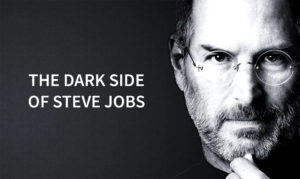**This article was originally published in the Competency Issue of Talent Quarterly earlier this month. [Visit their website](https://www.talent-quarterly.com/buy-magazine) to purchase the full issue as well as all previous issues.*
**IN THIS SPECIAL ESSAY, Jorge E. Fernandez, a consultant with the Hogan Coaching Network, examines mercurial Apple founder Steve Jobs using the Hogan Development Survey (HDS), which describes the dark side of personality—qualities that emerge in times of increased strain that can disrupt relationships, damage reputations, and hinder peoples’ chances of success.**
**By assessing dark-side personality, you can recognize and mitigate performance risks before they become a problem. Here, Fernandez tracks the major steps of Jobs’s storied career, from Apple’s humble beginnings to the company’s unprecedented comeback two decades later, and all the sabotaging and backstabbing in between.**
**Introduced in 1997, the HDS is the only personality assessment that identifies critical blind spots that lead to career derailment. How might Jobs’s career have progressed if the inventory existed in the 1970s? Here’s what Jobs’s trajectory—and the HDS—can teach you when it comes to developing the next great leaders.**
I’m probably the first person ever to compare Steve Jobs to Billy Joel, so here goes nothing: In his 1989 hit “I Go to Extremes,” the Rock and Roll Hall-of- Famer succinctly captured the unpredictable quality of the artistic temperament when he sang, “I don’t know why I go to extremes / Too high or too low, there ain’t no in-betweens.” Much like the protagonist in Joel’s song, the Apple cofounder’s professional life stands out for its sharp ups and downs, with few in- betweens. (Nailed it.)
Jobs once said that he liked “living at the edge of the humanities and technology.” Indeed, he found the navigation of that intersection highly stimulating and very fruitful, but it was also far from straight. There were jagged edges to Jobs’s personality that, yes, drove him to extremes. He experienced uncommon success and failure. This begs the question: What propelled the rises and precipitated the falls?
Robert Hogan’s socioanalytic theory postulates that we all strive to get ahead, get along, and find meaning. Therefore, what we all have in common is the need to compete, the need to cooperate, and the need to make sense of our lives. Where we differ is how we go about meeting these needs inside and outside of work.
In organizations, it can be hard to find meaningful work and harder still to reconcile the tension between winning and relating. How we deal with competing tensions impacts our job performance.
Toward that end, Robert and Joyce Hogan designed the Hogan Development Survey (HDS) to measure working adults’ characteristic behavior under unusual circumstances, like when facing heavy workloads, tight deadlines, shifting priorities, new competitors, and changing technology.
The assessment aims to predict how others see us when we’re on our worst behavior. Our counterproductive conduct is often triggered by anxiety, apathy, boredom, or fatigue. More importantly, we all develop particular strategies for coping with difficult situations with varying degrees of success.
Here are the 11 personality-based risk factors measured by the HDS:
- Excitable: behaviors ranging from enthusiasm to explosiveness
- Skeptical: behaviors ranging from perceptiveness to suspiciousness
- Cautious: behaviors ranging from prudence to passivity
- Reserved: behaviors ranging from calm to noncommunicative
- Leisurely: behaviors ranging from agreeableness to stubbornness
- Bold: behaviors ranging from con – dent to arrogant
- Mischievous: behaviors ranging from adventuress to reckless
- Colorful: behaviors ranging from motivating to distracting
- Imaginative: behaviors ranging from creative to confusing
- Diligent: behaviors ranging from conscientiousness to meticulousness
- Dutiful: behaviors ranging from ac- commodation to vacillation
The construction of Steve Jobs’s HDS profile is reverse-engineered from non-fictional accounts of his life story. Jobs was unpredictable, erratic, and an emotional roller coaster, which points to a high risk score in excitable. What those who worked closely with Jobs would have noticed most was his emotional explosiveness. Ironically, this same quality also made possible the contagious passion he had for his work. He often acted in an unforgiving, uncompromising manner.
Above all else, Jobs had to feel in complete control. This means a high risk score in skeptical. Collaborators had to live with Jobs’s suspiciousness and argumentativeness, but it also enabled keen perceptiveness and perseverance. Temerity and incivility were distinct characteristics of Jobs’s behavior; therefore, cautious was a low risk factor. Jobs was clearly an abrasive loner, which means high risk on reserved. But his reserved nature also enabled great powers of concentration and task orientation.
Jobs didn’t suffer from conflict aversion, which indicates low risk of leisurely behavior. An enfant terrible, Jobs is a high risk on bold, but his boldness also brings forth unusual confidence and initiative. He was as original as he was impractical (high risk on imaginative), extremely meticulous (high risk on diligent), and positively unaccommodating and defiant of authority (far from dutiful). In sum, he was an intensely driven man with a paradoxical nature and distinctly Jekyll and Hyde qualities.
When you go to extremes—there’s Joel again—you almost become a caricature of yourself. All nuances are lost. And, quite ironically, your unique excellence becomes your fatal aw. The Greeks had a name for this kind of metamorphosis: areté hamartia. To avoid your genius from becoming your demon, finding a niche is crucial. As educational psychologist Lee Cronback once put it, “If for each environment there is a best organism, for each organism there is a best environment.”
In other words, you should aim to find a place where your personality can prosper. Jobs’s genius and demon sent him on a whirlwind career tour.
**The Atari Beginnings: Bold and Mischievous**
Jobs was among the first group of employees at Atari. Hired as a technician, he struck chief engineer Al Alcorn as very bright and enthusiastic about technology. He quickly managed to improve the video games … and rub many of his coworkers the wrong way. (It wouldn’t be the last time.) To keep the peace, Jobs was assigned to work at night and later as an independent consultant. Incidentally, on one of those consulting jobs he joined forces with his close friend and future Apple cofounder Steve Wozniak.
During the collaboration, Jobs artificially imposed a deadline for project delivery to suit his own purposes and neglected to tell Wozniak that there was a bonus involved for designing the game with a minimum of chips. (Wozniak met both criteria, but never saw the bonus.)
In a brief period, Jobs demonstrated his inability or unwillingness to get along with others as well as his facility for manipulation and deviousness. His obnoxious and offensive behavior would have gotten him fired at Atari and probably many other outfits, but company founder Nolan Bushnell saw Jobs’s entrepreneurial potential and found ways to work around his abusive behavior.
**The Early Apple Days: Skeptical and Diligent**
From 1976 to ’78, Jobs and Wozniak collaborated successfully on the Apple I and II, with Wozniak bringing his technical gifts as an engineer to the mix and Jobs contributing his design savvy. In addition to the two Steves, two Mikes also played important roles at Apple: Mike Markkula, the first major Apple investor and chairman, and Mike Scott, Apple’s president. Markkula was allergic to conflict and needed Scott to manage Jobs, but Jobs had to be in total control of his destiny and thus was allergic to authority. It was a recipe for disaster.
Naturally, Jobs clashed with Scott over everything from product quality to, yes, employee badge numbers. Scott assigned #1 to Wozniak and #2 to Jobs, who demanded to be #1. Scott’s solution? Give Jobs badge #0. The more substantive, but no less dramatic, confrontations were product-centered: Scott felt perfectionism shouldn’t push out pragmatism. Jobs’s relentless aesthetic perfectionism pulled him in the opposite direction.
**The First Brush with Failure: Excitable and Diligent**
By 1980, Jobs was looking to fashion his own machine. As it so happened, John Couch, a former Hewlett-Packard engineer, was running the “Lisa” project for Apple. Originally aimed at the corporate market to fill a void left by the failed Xerox Star, Jobs envisioned the Lisa as the equivalent of a Volkswagen: an inexpensive and user-friendly product for the masses. Guess what happened next?
Couch and his team of engineers deeply resented Jobs’s incessant meddling and barrage of insults, Markkula and Scott orchestrated a restructuring in response to Jobs’s maddening behavior, and Jobs was given the title of “non-executive chairman of the board,” a public relations role without any operational responsibilities.
**The Birth of the Macintosh: Excitable and Mischievous**
Jobs originally hired Jef Raskin to write the manual for the Apple II. Raskin would later become the manager of Apple’s publications department, but what he really wanted to do was build a cheap computer for the general public. So he convinced Markkula to put him in charge of a small development project: the Macintosh.
Meanwhile, Jobs was actively looking for vindication after being booted from the Lisa project, so he set his sights on the Macintosh. Jobs was fascinated by Raskin’s vision of a truly personal computer for the everyman, but Raskin was cost-conscious and didn’t believe passion for the product should be the primary focus. Once again, these incompatible values led to disruptive battles.
Things got so difficult, in fact, that Raskin wrote a memo to Scott titled “Working for/with Steve Jobs.” Raskin asserted that he liked Jobs, but found him an impossible collaborator. “He’s extraordinarily seductive,” Raskin wrote. “He would have made an excellent king of France.”
More truth bombs: “He is a dreadful manager … Jobs regularly misses appointments … He does not give credit where due … He is often irresponsible and inconsiderate … He does not keep promises.”
The power struggle between Raskin and Jobs forced Scott and Markkula to intervene once again—but in a twist, this time they sided with Jobs. (Raskin ended up working for Canon, where he built the unsuccessful Canon Cat.)
With Raskin gone, Jobs would take full command of the Macintosh division. A renegade artist at heart, he regularly used maxims like “Don’t compromise” and “It’s better to be a pirate than join the Navy” to motivate the Mac team. Jobs believed in feeding everyone’s competitive fire by finding a foe to wage a war against, like IBM, Xerox, and even the Lisa division. He often crossed the line between inspiration and intimidation. As Bud Tribble, a software designer and colleague of Herzfeld on the Mac project, said, “In his presence, reality is malleable. He can convince anyone of practically anything. It wears off when he is not around, but it makes it really hard to have realistic schedules.”
As a result, the Mac was completed woefully behind schedule and well over budget. In fact, the Lisa was already one year ahead of the Mac, causing Jobs to lose a $5,000 bet to the Lisa’s project leader. He was such a bad loser, however, that on the occasion of the Lisa’s launch, he deliberately and publicly stated that the Mac and the Lisa would be incompatible. Machiavelli would have been proud.
In 1983, Jobs hooked in John Sculley, a marketing executive from Pepsi, with a simple challenge: “Do you want to spend the rest of your life selling sugared water or do you want a chance to change the world?” When Sculley became Apple’s CEO that year, he merged the Lisa and Macintosh divisions with Jobs in command. Jobs immediately declared many of the Lisa team members failures before cutting their jobs.
To be fair, the Lisa was a great machine—it was just overpriced, incompatible with the Apple II and IBM computers, and incapable of finding a market. Not that the Macintosh was an instant success: Though the technology was dazzling, the computer was slow and susceptible to overheating, and didn’t sell especially well upon release.
When Jobs went into blame-storming mode, Sculley was tasked with managing his mood swings. In response, Jobs turned against his CEO, going so far as to plot a boardroom coup. The failed plot led to Sculley stripping Jobs of his duties—again—and banishing him to a ceremonial role in an empty building that Jobs subsequently dubbed “Siberia.”
**A Labor of Revenge: Skeptical and Mischievous**
In 1985, Jobs left Apple and started NeXT Inc., where he hoped to create a computer for the higher-education market alongside a group of key former Apple employees. At Apple, Jobs was a division leader, but now he was in charge of the whole company. Without any checks on his power, he ran amok, paying $100,000 to a design guru to create the NeXT logo and completely rebuilding the company’s brand-new headquarters (twice), among other questionable decisions. In Jobs’s eyes, all things at NeXT had to be elegant and cutting-edge; the inordinate value he placed on aesthetics left little or no room for practicalities.
His punishing management style, meanwhile, remained intact. According to NeXT employees, he was still unable to keep his opinions to himself, and he continued to put people down to show he was superior. His extraordinary attention to the smallest details tormented his employees and predictably led to delays in completion and cost overruns. He eventually had to turn to outside investors to keep the company afloat.
In the final analysis, NeXT was a technical and artistic triumph, but a financial disaster. One of those triumphs? The NeXTSTEP software, which turned out to be Jobs’s ticket back to Apple.
**The Hobby: Imaginative and Bold**
Executives at NeXT condescendingly referred to Jobs’s other entrepreneurial venture, Pixar, as “the hobby.” Before it became a massively successful animation studio, Pixar was a tightly knit group run by two highly capable computer scientists with an interest in art: Ed Catmull and Alvy Ray Smith. When Jobs purchased the outfit in 1986—he was enamored with computer graphics— both men made it a point to keep the new owner and banker at a distance.
To drive revenue, Jobs wanted to sell Pixar’s computers to the mass market. When he opened sales offices in several major cities to no avail, he turned his attention to Pixar’s software, RenderMan, aiming to simplify it for the everyman. The Pixar team tried to dissuade him, indicating the product was too sophisticated.
They were right: RenderMan was indeed too expensive and difficult, so it never took flight.
Smith saw Jobs as a master manipulator and frequently clashed with him over various decisions. After resigning from Pixar, Smith went on to start a company called Altamira, which was later acquired by Microsoft.
Despite all of Jobs’s bold plans, Pixar, like NeXT, continued to bleed money. The financial picture was so bleak that Jobs nearly sold the company to Microsoft, but had a change of heart when he saw the first completed scene of Toy Story in 1994, a year before its release. It was a wise decision.
**A Return and Labor of Love: Mischievous and Colorful**
In 1996, Apple CEO Gil Amelio knew the Mac operating system needed a major overhaul. So he took a big, prohibitively expensive step to acquire NeXT for its powerful software, absorbing Jobs in an advisory role as part of the deal. The move unwittingly resulted in Amelio’s demise: Jobs secretly sold the Apple stock that he had acquired with the sale ofNeXT,breaking the promise he made to Amelio to hold off for a minimum of 6 months. When Apple’s stock predictably plummeted to the point where the company was facing bankruptcy, Amelio was fired in the summer of 1997. In swooped Jobs to save the day as an advisor, a dozen years after being exiled.
Before Jobs reclaimed his CEO title, however, he wanted to gauge whether Apple could even be saved. His assessment led him to conclude the company had too much inventory, too much middle management, too many factories, and ineffective marketing. So he dismissed the board that had presided over the company’s deterioration, brought inventory down to just four products, sold a number of factories, laid off thousands of middle managers, and secured a $150 million investment from Microsoft to remedy the cash crisis.
Jobs’s swiftness and laser-sharp focus were instrumental in saving Apple. His actions led to profits just one year after assuming command. For him, it was all about getting back to the basics of great products, great marketing, and great distribution.
**Character, Context, and Competence**
Jobs’s professional life illustrates that competence is a byproduct of a mixture of character and context. You can argue he was most successful when his back was against the wall: once when Apple was still a tiny startup fighting for survival, and again when he played the part of the cash-strapped underdog striving valiantly to infuse a moribund company with his ferocious entrepreneurial spirit.
Two executives in particular complimented Jobs beautifully during Apple’s renaissance: Jonathan Ive and Tim Cook. Ive, who was Apple’s head of industrial design, predated Jobs’ second coming. He is as nice as Jobs was mean, and his approach to design is as analytical as Jobs’swas intuitive, but both men were highly visual and fervently believed that complexity must be understood and simplified. Their collaboration led to an extraordinary array of elegant solutions.
While Jobs made it a point to call Apple’s products revolutionary, the company actually didn’t invent the computer, portable music player, smartphone, or specialty retail store. Instead, its products were evolutionary; all were great refinements of cruder versions that others had rushed to market.
In 1998, looking for someone to build a system like Dell’s, Jobs met Tim Cook. The ex-IBM industrial engineer knew a great deal about manufacturing and sup- ply chains, and his role became implementing Jobs’s intuition, which he did with admirable efficiency and frugality. Cook is as poised as Jobs was petulant, and as low-profile as Jobs was visible. More importantly, he freed Jobs of all operational duties and allowed him to concentrate on more creative, strategic aspects of the business.
In Ive and Cook, Jobs had lieutenants who acted as faithful disciples and successfully edited the extraneous. Remember: Jobs was notoriously impulsive and intuitive. Despite his outward audacity, he was always worried about things going wrong. He was a person constantly reaching for the stars, needing others to keep his feet on the ground. His supporting cast tried to keep him as centered as possible.
But when Jobs wasn’t in startup or turnaround mode, he tended to act imprudently. In the midst of Apple’s transformation, he indulged in irregular financial practices that in 2007 occasioned a full SEC investigation concerning backdated stock options.
The SEC absolved Steve Jobs but formally charged Fred Anderson, Apple’s former chief financial officer, and Nancy Heinen, the company’s former general counsel. Anderson and Heinen settled the charges against them without declaring any wrongdoing, but clearly felt scapegoated.
Joe Nocera, who covered the mess for the New York Times, wrote, “Rarely have so many avoidable problems been created by one man’s obsession with his own image. Then again, this is Steve Jobs we are talking about.” It was another episode where Jobs’s contempt for authority and immovable will created an environment conducive to solid professionals acting against their better judgment, and could have very easily—and deservedly—derailed him as well.
At NeXT, Jobs found himself in full command and with ample resources, which led to frequent overindulgences. And instead of conjuring up ideas for electronic products for the mainstream consumer, he was largely constricted to an educational market that was very conservative and with limited resources.
At Pixar, Jobs was an owner and financier. He had no hand in developing the hardware or software and was a stranger to the movie industry. Without the ability to see himself as the prototypical customer, his instincts betrayed him, and Pixar’s anti-autocratic work culture mostly deflected Jobs’ dictatorial ways. Still, his eye for computer graphics helped him spot a good thing when he saw it—Toy Story—and he ultimately brought his cold, calculating instincts to the negotiating table to orchestrate Pixar’s eventual sale to Disney.
By the time he returned to Apple, Jobs understood the importance of surrounding himself with people who weren’t afraid to say no. Cook recalled: “I realized really early that if you didn’t voice your opinion, [Jobs] would mow you down. He takes contrary positions to create more discussion because it may lead to a better result. So if you don’t feel comfortable disagreeing, then you’ll never survive.”
At Apple, you had to be able to take a stand, endure sharp attacks, and always remember who was king. Cook, who succeeded Jobs as Apple’s CEO after
his death in 2011, accepted that. “Some people resent that Steve gets credit for everything,” Cook said, “but I’ve never given a rat’s ass about that.” No wonder Adam Lashinsky, author of Inside Apple, claims it takes an egoless fanatic to prosper at the company.
Jobs was a renegade artist who saw the world as a hierarchy, with him on top and everyone else below. He viewed people as either useful or useless to him. His shocking lack of concern for relationships seriously hampered his ability to get along with people of all ranks, especially those in authority.
ROBERT HOGAN HAS SAID THAT THE best leaders “get along to get ahead.” The Level 5 leader (resolved and humble) that Jim Collins discovered while studying corporate transformations supports Dr. Hogan’s point. Jobs certainly knew how to get ahead; in fact, he was virtually unstoppable—to his detriment. And when he didn’t have any constraints, he would overdo everyt
hing and fizzle out (NeXT) or promote an irrelevant vision (Pixar). It wasn’t until he came back to Apple that he regained his stride in full.
The most salient thing about Jobs’s dark-side profile is how clear and well defined it is. To bring it all back to Billy Joel, there are only high scores and low scores, with nothing in between. What leaps out is an intensely driven man with minimal self control. Jobs was fiercely independent, defiant, and prone to abrasive and abusive behavior if anyone dared to get in his way.
He built an organization in his own image. Apple was a company of paradoxes; it was Bohemian and Puritanical, and Jobs was, too. It was innovative, efficient, strategic, and tactical, just like him. The heaven of technology and the humanities could only be paved through Jobsian hell.
0 Comments [Click here to read/write comments](https://info.hoganassessments.com/blog/dr-jekyll-mr-jobs#comments-listing)
Topics: [dark side](https://info.hoganassessments.com/blog/topic/dark-side)
## [Leader Focus: View Leadership Through the Right Lens](https://info.hoganassessments.com/blog/leader-focus-view-leadership-right-lens)
Posted by [Hogan Assessments](https://info.hoganassessments.com/blog/author/hogan-assessments) on Fri, Apr 06, 2018
- [Tweet](https://twitter.com/share)
Most organizations classify career advancement as transitioning into a series of people leadership roles. But, what does that mean for an organization’s high performers whose strengths are not aligned with the abilities to manage themselves and others effectively?
For instance, some leaders are all about results. Take Oracle CEO, Safra Catz, for example. She is widely known as an aggressive businesswoman who aims to win at all costs. On the other hand, someone like Andre Young, AKA Dr. Dre, is considered by his peers to be an innovative thought leader who focuses on the big picture. Both have experienced a tremendous amount of success in their careers, but they did so with very different approaches.** **
Hogan’s [Leader Focus Report](https://www.hoganassessments.com/hogan-leader-focus/) offers organizations a solution designed to help determine the leadership style employees display, and what leadership role might be the best fit for them. This report simplifies and provides insight into six leadership dimensions that influence leadership style and effectiveness:
- **Results Leader **— Key focus is on winning. They set high goals for themselves and others, and may sacrifice relationships to achieve outcomes.
- **People Leader **— Key focus is on relationships. They are skilled at building and maintaining relationships with others, but may struggle at handling conflict and holding staff accountable.
- **Process Leader** – Key focus is on implementation. They focus on creating, following and enforcing policies, but may resist change and innovation.
- **Thought Leader** – Key focus is on ideas. Skilled in idea generation and strategic problem-solving, but may lack the focus to follow through on implementation.
- **Social Leader** – Key focus is on people. Skilled at communicating, networking and developing connections, but may not listen effectively.
- **Data Leader** – Key focus is on information. Strong analytical leadership style, but may rely too heavily on numbers and resist intuitive decision making.
These six dimensions outline how a leader manages self, career, and relationships, priorities on which a leader will focus, and how he or she will define success. Grounded in decades of global research on leader performance, the Leader Focus Report is designed to help an organization’s leaders understand their reputation and unique brand using data rather than intuition.
[Click here for more information,](https://www.hoganassessments.com/products/leader-focus/) or contact a Hogan consultant today at 918.749.0632.
0 Comments [Click here to read/write comments](https://info.hoganassessments.com/blog/leader-focus-view-leadership-right-lens#comments-listing)
## [The Most Common Type of Incompetent Leader](https://info.hoganassessments.com/blog/common-type-incompetent-leader)
Posted by [Hogan Assessments](https://info.hoganassessments.com/blog/author/hogan-assessments) on Mon, Apr 02, 2018
- [Tweet](https://twitter.com/share)

A young friend recently remarked that the worst boss he ever had would provide him with feedback that always consisted of “You’re doing a great job.” But they both knew it wasn’t true — the organization was in disarray, turnover was excessive, and customers were not happy. My friend was giving it his all, but he needed more support and better feedback than he received. He wanted a leader who would be around when he needed them, and who would give him substantive advice, not platitudes. As a measure of his frustration, he said, “I would rather have had a boss who yelled at me or made unrealistic demands than this one, who provided empty praise.”
Researchers have studied managerial derailment — or the dark side of leadership — for many years. The key derailment characteristics of bad managers are well documented and fall into three broad behavioral categories: (1) “moving away behaviors,” which create distance from others through hyper-emotionality, diminished communication, and skepticism that erodes trust; (2) “moving against behaviors,” which overpower and manipulate people while aggrandizing the self; and (3) “moving toward behaviors,” which include being ingratiating, overly conforming, and reluctant to take chances or stand up for one’s team. The popular media is full of examples of bad leaders in government, academia, and business with these characteristics. However, my friend was describing something arguably worse than an incompetent boss. His manager was not overtly misbehaving, nor was he a ranting, narcissistic sociopath. Rather, his boss was a leader in title only — his role was leadership, but he provided none. My friend was experiencing *absentee leadership*, and unfortunately, he is not alone. Absentee leadership rarely comes up in today’s leadership or business literature, but [research](http://onlinelibrary.wiley.com/doi/10.1111/j.1467-8551.2009.00672.x/abstract) shows that it is the most common form of incompetent leadership.
Absentee leaders are people in leadership roles who are psychologically absent from them. They were promoted into management, and enjoy the privileges and rewards of a leadership role, but avoid meaningful involvement with their teams. Absentee leadership resembles the concept of rent-seeking in economics — taking value out of an organization without putting value in. As such, they represent a special case of [laissez-faire leadership](https://tu-dresden.de/mn/psychologie/lehrlern/ressourcen/dateien/lehre/lehramt/lehrveranstaltungen/Lehrer_Schueler_Interaktion_SS_2011/Lewin_1939_original.pdf?lang=en), but one that is distinguished by its destructiveness.** **
Having a boss who lets you do as you please may sound ideal, especially if you are being bullied and micromanaged by your current boss. However, a [2015 survey](https://hbr.org/2015/06/the-top-complaints-from-employees-about-their-leaders) of 1,000 working adults showed that eight of the top nine complaints about leaders concerned behaviors that were *absent*; employees were most concerned about what their bosses *didn’t*do. Clearly, from the employee’s perspective, absentee leadership is a significant problem, and it is even more troublesome than other, more overt forms of bad leadership.** **
[Research](https://econtent.hogrefe.com/doi/abs/10.1027/2151-2604/a000189) shows that being ignored by one’s boss is more alienating than being treated poorly. The impact of absentee leadership on job satisfaction outlasts the impact of both constructive and overtly destructive forms of leadership. Constructive leadership immediately improves job satisfaction, but the effects dwindle quickly. Destructive leadership immediately degrades job satisfaction, but the effects dissipate after about six months. In contrast, the impact of absentee leadership takes longer to appear, but it degrades subordinates’ job satisfaction for at least two years. It also is related to a number of other negative outcomes for employees, like [role ambiguity](http://www.tandfonline.com/doi/abs/10.1080/02678373.2014.957362), [health complaints](https://www.amazon.com/When-Leadership-Goes-Wrong-Destructive/dp/1617350672), and [increased bullying](http://psycnet.apa.org/buy/2006-23528-006) from team members. Absentee leadership creates employee stress, which can lead to poor employee health outcomes and talent drain, which then impact an organization’s bottom line.
If absentee leadership is so destructive, why don’t we read more about it in the business literature? Consider a story I recently heard about the dean of a well-known law school: Two senior, well-regarded faculty members called the provost to complain about their dean because, they said, *he wouldn’t do anything*. The provost responded by saying that he had a dean who was a drunk, a dean who was accused of sexual harassment, and a dean who was accused of misusing funds, but the law school dean never caused him any problems. So, the provost said, the faculty members would just have to deal with their dean.
Like the provost in this example, many organizations don’t confront absentee leaders because they have other managers whose behavior is more overtly destructive. Because absentee leaders don’t actively make trouble, their negative impact on organizations can be difficult to detect, and when it is detected, it often is considered a low-priority problem. Thus, absentee leaders are often silent organization killers. Left unchecked, absentee leaders clog an organization’s succession arteries, blocking potentially more effective people from moving into important roles while adding little to productivity. Absentee leaders rarely engage in unforgivable bouts of bad behavior, and are rarely the subject of ethics investigations resulting from employee hotline calls. As a result, their negative effect on organizations accumulates over time, largely unchecked.
If your organization is one of the [relatively few](https://hbr.org/2013/05/talent-management-boards-give) with effective selection and promotion methods in place, then it may be able to identify effective and destructive leaders. Even if your organization isn’t great at talent identification, both types of leaders are easy to spot once they are on the job. They also produce predictable organizational outcomes: Constructive leadership creates high engagement and productivity, while destructive leadership kills engagement and productivity. The chances are good, however, that your organization is unaware of its absentee leaders, because they specialize in flying under the radar by not doing anything that attracts attention. Nonetheless, the adhesiveness of their negative impact may be slowly harming the company.
The war for leadership talent is real, and organizations with the best leaders will win. Reviewing your organization’s management positions for absentee leaders and doing something about them can improve your talent management arsenal. It’s likely that your competitors are overlooking this issue or choosing not to do anything about it, like the university provost. Doing nothing about absentee leaders is easy. Just ask any absentee leader.
*[This article was originally written](https://hbr.org/2018/03/the-most-common-type-of-incompetent-leader) by Scott Gregory for Harvard Business Review on March 30, 2018.*
0 Comments [Click here to read/write comments](https://info.hoganassessments.com/blog/common-type-incompetent-leader#comments-listing)
Topics: [Harvard Business Review](https://info.hoganassessments.com/blog/topic/harvard-business-review), [CEO](https://info.hoganassessments.com/blog/topic/ceo)
## [Mentoring or Coaching: Are They Different and Does It Really Matter?](https://info.hoganassessments.com/blog/mentoring-coaching-different-really-matter)
Posted by [Hogan Assessments](https://info.hoganassessments.com/blog/author/hogan-assessments) on Mon, Apr 02, 2018
- [Tweet](https://twitter.com/share)
**This article was written by Rob Field, Learning and Development Director at [Advanced People Strategies.](https://www.advancedpeoplestrategies.co.uk/)*
In organisations today, change is constant, rapid and relentless. Learning needs to follow this. Helping individuals and teams in this context is always challenging.
Coaching and mentoring have a key role to play, but they are very different even though the terms seem to be used interchangeably. Any sharing of knowledge, experience or advice, in my opinion, is always good as it can accelerate the process. Mentoring can, conversely, create a perpetuation of similar tried and tested approaches and a feeling of obligation to follow the advice of a more senior and more experienced mentor. Solid mentoring relationships can create opportunities that otherwise would not exist.
Great coaching is designed to free the thinking and allow much deeper re ection on motivations and an increase in self-awareness. Time and space to consider what energises and what drains in conjunction with values and beliefs. This encourages individuals to identify their personal goals, create a vision for their own future and how they move into that future space. The power comes from them driving the agenda and making choices that they want to commit to.
“‘I am able to control only that of which I am aware. That of which I am unaware controls me. Awareness empowers me.” — Sir John Whitmore
Clarity of understanding and awareness are the precursor to making impactful decisions. They assist with what to focus on and how, while supporting meaningful performance improvement. Developing awareness leads to developing skills and modifying behaviours. Increasingly organisations are under pressure to deliver for their customers and the time for development is often heavily scrutinised. Developing talent is critical to business success so e ective coaching can add real value. Performance, motivation and engagement go hand in hand.
For organisations, two ways to add value with coaching. Firstly, look to develop the skills of your managers and leaders to coach effectively so they appreciate the benefits this style can bring. It will impact the culture of the organisation. It will drive engagement, ultimately adding to the bottom line though improved performance and discretionary effort. Second, use some external coaches. The external element brings a neutrality that can offer further benefits and that can challenge in ways that internal coaches may find difficult.
The context within which organisations operate is changing fast due to external factors, requiring new leadership qualities.
Coaching and mentoring both have a place. They can both be positive. They are different and the difference matters!
Know the difference. Do both!
0 Comments [Click here to read/write comments](https://info.hoganassessments.com/blog/mentoring-coaching-different-really-matter#comments-listing)
Topics: [coaching](https://info.hoganassessments.com/blog/topic/coaching)
[Previous](https://info.hoganassessments.com/blog/page/38) [All posts](https://info.hoganassessments.com/blog/all) [Next](https://info.hoganassessments.com/blog/page/40)
### Subscribe to our Blog
[](http://cta-redirect.hubspot.com/cta/redirect/153377/711cc0c8-c2ea-4b1c-b2eb-bc52e9361086)
### Meet Our Bloggers
[Blaine Gaddis](https://info.hoganassessments.com/blog/blaine-gaddis/)
[Chris Duffy](https://info.hoganassessments.com/blog/chris-duffy/)
[Dan Paulk](https://info.hoganassessments.com/blog/dan-paulk/)
[Darin Nei](https://info.hoganassessments.com/blog/darin-nei/)
[Dustin Hunter](https://info.hoganassessments.com/blog/dustin-hunter/)
[Jackie Sahm](https://info.hoganassessments.com/blog/jackie-vanbroekhoven/)[Jennifer Lowe
](https://info.hoganassessments.com/blog/jennifer-lowe/)[Jesse Whitsett](https://info.hoganassessments.com/blog/jesse-whitsett/)[Jocelyn Hays](https://info.hoganassessments.com/blog/jocelyn-hays)
[Krista Pederson](https://info.hoganassessments.com/krista-pederson)[
Kristin Switzer
](https://info.hoganassessments.com/blog/kristin-switzer/)[Michael Sanger](https://info.hoganassessments.com/blog/michael-sanger)
[Miranda Hanes](https://info.hoganassessments.com/blog/miranda-hanes/)[Morgan Meister-Murry](https://info.hoganassessments.com/blog/morgan-meister/)
[Rebecca Callahan](https://info.hoganassessments.com/rebecca-callahan)[Robert Hogan](https://info.hoganassessments.com/blog/robert-hogan/)
[Scott Gregory](https://info.hoganassessments.com/scott-gregory?&t=19495)[Steve Nichols](https://info.hoganassessments.com/blog/steve-nichols/)
[Tomas Chamorro-Premuzic](https://info.hoganassessments.com/blog/tomas-chamorro-premuzic/)
### Most Popular Posts
### Connect
### [How To Buy Why Hogan?](http://www.hoganassessments.com/content/how-buy)
© 2014 Hogan Assessment
Systems
[Privacy Policy](http://www.hoganassessments.com/content/privacy-policy) | [Legal Policy](http://www.hoganassessments.com/content/legal-policy)