
The Easy Way to Increase Diversity, Equity, and Inclusion in Your Organization

Posted by Ryne Sherman on Tue, Dec 03, 2019

tim-mossholder-UcUROHSJfRA-unsplash

Diversity, equity, and inclusion. If you work in human resources, or a related field, you’ve heard these terms before and, odds are, you have some idea of what they mean. But just so that we are all on the same page, I’ll use the following, heavily borrowed, definitions for diversity, equity, and inclusion:

  • Diversity includes all the ways in which people differ from each other. Though this is often limited to race, ethnicity, and gender, it more broadly includes age, nationality, religion, disability, sexual orientation, socioeconomic status, education level, marital status, language, and physical appearance. Diversity also includes differences in ideas, perspectives, and values.
  • Equity concerns fair treatment, access, and opportunity for all people. Equity is about providing recognition, promotion, and compensation that is consistent with one’s work and qualifications. No one should be provided special treatment or privileges based on anything but performance.
  • Inclusion concerns creating working environments where everyone feels welcomed, respected, supported, and valued. Inclusive environments embrace diversity.

There are at least three reasons organizations should care about diversity, equity, and inclusion. The first is moral. Basic standards of human decency tell us that all people are of value and have something to contribute to society. Moreover, all people – regardless of background – deserve to be treated fairly, sharing equally in the benefits and burdens of society.

The second reason to care about diversity, equity, and inclusion is legal. Title VII of the Civil Rights Act of 1964 prohibits employment discrimination based on race, color, religion, sex, and national origin. The act also established Equal Employment Opportunity Commission (EEOC) which further expanded Title VII to include discrimination based on age, gender, and disability. Ultimately, organizations found to be in violation of the laws are subject to legal ramifications including fines.

The third reason to care about diversity, equity, and inclusion is to do better business. Solving business problems like growing market share, understanding clients for different markets, and ensuring your advertising isn’t off-putting to certain groups is easier and more efficient with people from a diverse set of backgrounds. In 2015, Bud Light added the tag line “The perfect beer for removing ‘no’ from your vocabulary for the night” to their label. The advertising was immediately criticized. One cannot help but think that if the marketing team had included just one woman, they would have immediately realized this was a really bad idea.

The good news is that many organizations today get it. In 2005, fewer than 20% of the Fortune 500 had officers/programs for diversity and inclusion. In 2016, that number was closer to 60% and is poised to climb even higher. Diversity, equity, and inclusion are good for the organization and they are here to stay. But many organizations still struggle to increase their diversity and inclusion. The purpose of this essay is to make the scientific case for the use of personality assessments as a direct way to increase diversity, equity, and inclusion. 

Making Personnel Decisions

When it comes time to hire someone, or to promote someone to a higher role, there are lots of valid ways organizations can go about doing this. Obvious options include asking for referrals, looking at resumes, and conducting an interview. All these methods, to various degrees, are valid predictors of workplace performance. Unfortunately, all these methods are also heavily subject to bias. Referrals practically guarantee that you will reduce diversity (i.e., people tend to only refer people with whom they are familiar, and we tend to be most familiar with people who are similar to us). While resumes may appear to be unbiased, they frequently include opportunities for implicit bias to occur. For example, some names may reflect ethnicity (e.g., John Logan vs. Juan Lopez) and even educational experiences may be a better reflection of parental socioeconomic status than ability to perform on the job. And, of course, interviews are full of opportunities for bias to creep in. The data are clear, with classic methods of making personnel decisions, you get increased workplace performance, but also increased bias. Ultimately, this reduces diversity, equity, and inclusion.

The good news is that it is easy to eliminate bias from personnel decisions: just make decisions at random. That is, if you decide to hire or promote people on a completely random basis (i.e., rolling dice, drawing names out of hat), it is guaranteed that you will not be making biased decisions. Unfortunately, it is also guaranteed that you will not be making the most effective decisions in terms of your organization’s long-term performance.
Untitled-1

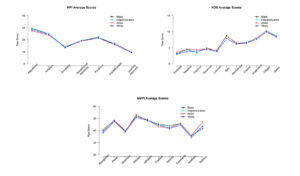
But there is still one more alternative, one way that you can increase both long-term performance and increase your organization’s diversity, equity, and inclusion: scientifically validated personality assessments. Decades of research on personality assessment (broadly speaking) show effectively zero differences in scores due to race, gender, ethnicity, nationality, language, physical appearance, education level, or disability. (There are age differences, but these reflect maturity and are not biased against older adults.) At Hogan, we gather personality data from millions of people – from virtually every ethnic background – all over the world on an annual basis. Our own data show no meaningful differences in test scores as a function of group status. As just one example, the figures below show average scores on our three core assessments – the HPI, the HDS, and the MVPI – for different U.S. racial categories. The scores are so close that they are virtually identical.

But with personality assessments, you don’t just get diversity, equity, and inclusion. As already mentioned, you can do that simply by choosing people at random. With scientifically-validated personality assessments, you also get a track record of predicting workplace performance. Yes, you can have your cake and eat it too.

TL; DR

The point here is simple: If all personnel decisions were made using scientifically-validated personality assessments, unfair discrimination in the workplace would cease to exist. Personality assessments lead to increased productivity and engagement, as well as increased diversity, equity and inclusion. If you are serious about increasing diversity, equity, and inclusion in your organization, using scientifically-validated personality assessments is an easy way to do that.

Want to learn more about personality tests? Check out The Ultimate Guide to Personality Tests

Topics: DE&I

Ignition: A Guide to Building High-Performing Teams

Posted by Hogan Assessments on Tue, Nov 26, 2019

Ignition_ePub-CvrDespite the fact that teams vary widely in terms of their goals and composition, there is one right way to build a team, and many wrong ways, according to a new book by Gordon J. Curphy, Dianne L. Nilsen and Robert Hogan. The success of any team depends on having the right foundation in place.

In their book, titled “Ignition: A Guide to Building High-Performing Teams,” the authors provide insights into how to solve problems commonly faced by teams in today’s complex, fast-paced organizations. Case studies include combining teams as part of a re-organization, virtual teams, and matrixed teams, as well as fixing broken teams and developing high-potentials into effective team leaders.

“This book is the single best source available on how to carry out the fundamental task of building and maintaining a high-performing team,” says Curphy. “It outlines 40 team-improvement activities that are practical and effective. The exercises are based on the notion that teams need to do real work to become more effective.”

“Ignition” is intended as a reference book. Readers are encouraged to review the first two chapters to understand the overall considerations in building teams and how to set up and run team engagements. Then, chapters can be selected by the reader that most closely parallel the specific team issues they need to address.

The 15 “Ignition” chapters and 40 team improvement activities are linked to the Team Assessment Survey, which provides benchmarking feedback and helps teams pinpoint problem areas. In addition, downloadable supporting materials, such as PowerPoint decks, forms, handouts and articles are provided to help team leaders and facilitators more easily address team dilemmas and needs.

“Ignition: A Guide to Building High-Performing Teams” is available for purchase on Amazon for $49.99.


Topics: teams

Robert Hogan Tours Europe with Awair and 3 Minute Mile

Posted by Hogan Assessments on Tue, Nov 26, 2019

191014-Hogan-Paris-01*This guest post was authored by Giuliana Mason, Marketing & Communications Manager for Awair.

Effective Leadership: It’s Not What You Think

Is Humility the new Effectiveness when it comes to leadership-related topics? It’s what two different international audiences, in Paris and London, respectively, were able to discuss with Dr. Robert Hogan earlier in October.

The events were organized by Awair, Hogan Distributor in Italy, France, and Spain – and 3 Minute Mile, Hogan Distributor in the UK. The two consultancies merged at the beginning of 2019 and operate now as a single company, although both through their original brand names.

In Paris, Dr. Hogan delivered his speech in the academic context of ESCE business school, with whom Awair partnered for this special occasion. Some 200 among HR managers, consultants, and executive search professionals attended the event, along with undergraduate students who gladly welcomed the opportunity to listen to the talk of one of the greatest I/O psychologists of our times, also taking part in the lively Q&A session which followed.

Same interest, different setting in London: in this case, 3 Minute Mile’s brand new office in Hammersmith hosted Dr. Hogan for a more intimate, peer-to-peer discussion with around 60 HR experts and managers who were lucky and quick enough to be able to book a place at the event, as it sold out in just a few hours.

Once again, Dr. Hogan’s direct style and compelling reasoning brought great food for thought to listeners: why is charisma so (over)rated? What is the difference between Emergence and Effectiveness, and how to recognize both trends in a leader? What are the main traits of a really successful business leader? Among those, humility is an important one, with all its consequences: being able to listen and to learn from others and from experience, to reckon own team contribution, to foster a trial-and-error culture, to nurture trust, openness, and personal development. The list goes on and embraces several of the features often associated with thriving leadership in the era of digital disruption.

Here is video footage from the events:


ThreeFish Consulting: 5 Questions on High Potential Talent

Posted by Hogan Assessments on Tue, Nov 19, 2019

TFCTake5_PP1*This is an interview with Dr. Pradnya Parasher, Founder & CEO of ThreeFish Consulting, on High Potential Talent Development in India. 

In India, tenure and seniority have traditionally tipped the scales while creating a leadership pipeline. Now that old rules are being questioned, is it time to throw out all of the old and ring in everything new? Maybe not!   

Q1. Are you seeing Indian companies looking at identifying high potential employees?

Indian companies have valued tenure, loyalty, and seniority – this has its own due merit as experience and wisdom accompany seniority. With the advent of high-profile hires from management schools and diverse talent pools, Indian companies are looking at talent development differently. Accelerating the growth of high potential employees and scientific, methodical assessment of potential are therefore gaining traction. Newer talent management practices of assessment and diagnostics such as our personality-based tools now prove invaluable.

Tenure is not irrelevant – organizational knowledge, wisdom, the maturity which comes with age and experience are all products of tenure. Within the same system, the need isto additionally look for those who we can stretch more, earlier in their careers. High potential employees like to be challenged – if not challenged, they can get bored and seek their challenge elsewhere. Therefore, identification of high potentials is not just to accelerate careers but also to identify those gems who are ready to take on higher challenges; and should be challenged.

Q2. How has the Hogan High Potential Model worked for you in India?

The Hogan High Potential Model is well-researched. Leadership themes and competencies defined in the Hogan High Potential Model are quite universal and generalizable to the Indian work context. It identifies nine leadership competencies that are clustered under three themes.

  • Leadership Foundations
  • Leadership Effectiveness
  • Leadership Emergence

Traditional Indian companies seem to value effectiveness and foundations. Multinationals and fast-growing Indian companies value leadership emergence more. High potential identification processes are often biased toward noticing “Emergent” leaders and overlooking “Effective” leaders. Using the Hogan HiPo model, organizations are able to see if they are operating with similar bias.

Q3. Where have you seen the Hogan High Potential Model being implemented successfully in India?

We’ve successfully deployed the Hogan High Potential Model across multiple sectors – traditional manufacturing, insurance, andprivate universities are some cases. Indian companies are under tremendous pressure to grow their leadership talent. Many of them find value in using well-researched, standard models of leadership, even as they pursue defining their company-specific leadership competency models.

We are currently working with an Indian agribusiness company that has recently acquired companies in Europe and Americas, and are leveraging Hogan’s HiPo model to quick-start data-driven leadership development.

Q4. So how do you typically work with the Hogan High Potential Model in India?

It’s a simple online hour-long assessment of the same three Hogan inventories – HPI, HDS, and MVPI. A validated report is generated that gives people a range of scores on the set of nine competencies. In-depth, one-on-one coaching sessions are scheduled to debrief the results, generate insights, and build targeted development plans. Sometimes, development continues in the form of micro-learning modules or ongoing coaching for change.

Aggregate, group level data is analyzed to get a baseline of the current leadership talent pool. Group level analysis enables organizations to note strengths and gaps in talent.

Individual talent “deep dives” include triangulating data from Hogan assessments, current and past performance records, and self-reports from the concerned person. This combination aides the creation of robust career development and leadership development plans for individuals. The company is able to objectively understand each individual – a strengths and opportunities matrix with assessment of potential can be evolved.

Q5. What, if any, are the challenges in this deployment?

The Hogan High Potential Model is a standardized model. Wherever companies have their own leadership competency model, they would like to assess potential against their competencies. In that case, we recommend a mapping of Hogan scales to the company’s competency model for evaluating potential.

However, I see more opportunities and benefits than challenges. Hogan’s HiPo solution is reliable, scalable, and easy to deploy globally. That is the key advantage that all of our clients have valued when adopting this solution.

Topics: Hogan, high potentials

Authentic Talent Consulting Hosts HR Conference in Paris

Posted by Hogan Assessments on Tue, Nov 12, 2019

Screen Shot 2019-11-12 at 12.07.32 PMHogan distributor, Authentic Talent Consulting, hosted a conference titled “Recruiting Leaders: Why do we make bad hires?” on October 15 at The Opera Patio in Paris featuring Dr. Robert Hogan. Speaking to an audience of 60 leading HR professionals, Dr. Hogan’s talk focused on the importance of humility in leadership.

In his presentation, Dr. Hogan pointed out that the reasons organizations have traditionally promoted charismatic individuals into leadership roles is because there has been a false vision of leadership since the 1970s. We have lived in a culture where charisma is the desired quality when it comes to leadership. However, what organizations fail to understand is the difference between leadership emergence and leadership effectiveness. Although charismatic employees tend to emerge as leaders in their organizations, new studies show that humble individuals are much more effective, which results in stronger employee engagement and organizational performance.

Prior to Dr. Hogan’s presentation, Chloë Touati, co-founder of Authentic Talent Consulting, spoke to the audience about how organizations make mistakes in hiring and identifying leaders because they focus too much on competencies and not enough on values. She outlined three primary ways companies can find the right match between a candidate’s values and their own:

  • Organizations need to develop a strong understanding of their values and be honest about them with candidates. Just because a company has its values listed on its website or office walls doesn’t mean it’s the truth. Organizations need to truly know their values and be open and authentic when communicating with candidates.
  • Companies all over the world use personality assessments to predict performance, but it’s also important to use assessments that measure values.
  • Organizations should stop recruiting people who are all alike. Instead, they should hire people with the values that match the desired organizational culture.

Also speaking at the event were two clients of Authentic Talent Consulting. Their session focused on how they use Hogan’s assessments for leadership development and identifying leaders who are a good cultural fit for their organizations. They also spoke to the audience about the importance of derailers and how they can negatively impact organizational and team performance.

Overall, the event was a huge success, and those in attendance got an in-depth look at how using Hogan the right way can have a significant impact on organizations all over the world. Here’s a video recap of the event:

Topics: distributors

ICF Germany, RELEVANT Managementberatung to Present Second German Prism Award

Posted by Hogan Assessments on Tue, Nov 05, 2019

Untitled-1Time is running out to register for ICF Deutschland’s Coaching Day 2019 and also to register for the second German Prism Award, an annual award jointly sponsored by Hogan Assessments and RELEVANT Managementberatung. ICF Coaching Day will take place on November 15-16, with the German Prism Award Gala occurring from 7:00-9:00pm on Friday, November 15 in Munich.

The award, modeled after the ICF’s International Prism Award, is given to organizations with programs that make a difference in the coaching community through professionalism, quality and innovation. The nominees – all DAX 30 companies – represent a variety of industries, and each are tasked with providing insight into how their coaching programs contribute to the achievement of important corporate goals and advance the coaching profession.

“We are honored to be able to sponsor this prestigious award again this year,” says RELEVANT owner, Dr. René Kusch. “Last year’s event was a huge success, and we look forward to replicating that again this year with a stellar group of nominees.”

Last year’s inaugural German Prism Award was given to CMS Law Tax, an international law firm with 74 offices worldwide, for its Partner Peak Performance Program (PPP) that was designed for the organization’s leaders and “rainmakers.” Its cutting-edge coaching program and robust coaching culture is what set the company apart from the competition.

“CMS Law Tax really set the standard for future recipients of the German Prism Award,” says Kusch. “Their coaching program embodies the true spirt of the award, which is to advance the coaching profession and move German companies forward.”

Click here to purchase tickets and to learn more about the event.

Topics: RELEVANT, ICF, International Coach Federation, German Prism Award, Coaching Day

A&D Resources to Expand into Nordics

Posted by Hogan Assessments on Thu, Oct 17, 2019

A&D_Logo_300A&D Resources, the authorized Hogan Assessments distributor in Denmark and Benelux, is expanding its business operations into Finland, Norway, and Sweden, making it the premiere Hogan distributor in the region.

Specializing in the assessment and development of individuals, teams and organizations, A&D is considered the leading assessment firm in Denmark. This expansion into the Nordics can largely be attributed to the organization’s history of success in the surrounding region and also because of its work globally.

“We are fortunate to have a strong reputation within our industry, whether we’re in Denmark, Benelux, or beyond, and that’s because we deliver results,” says Hans Ove Dahl, A&D’s managing director. “We’re firm believers that if you build a talented team using Hogan’s assessments, which are widely considered the most predictive assessments for workplace performance, you’ll have a competitive advantage that other organizations simply can’t match.”

A&D partnered with Hogan in 2002, and has since experienced rapid growth, both in the size of the organization and its geographic footprint. Originally operating only in Denmark, A&D made the strategic move to expand its offerings into Benelux in recent years. This new expansion into the Nordics further solidifies its presence in northern Europe.

Scott Gregory, CEO of Hogan Assessments, believes this new development will be mutually beneficial for both Hogan and A&D.

“At Hogan, we have a robust network of distributors all over the globe, and A&D has been there with us since the very early days,” says Gregory. “As that relationship developed and strengthened over time, we began to find new and innovative ways to help each other grow our businesses. This is another example of our collaborative efforts to improve the global workforce through the use of valid, scientific assessments for employee selection and development.”

A&D plans to be operational in all three Nordic countries in the coming weeks and expects this to be a seamless transition.

“Our expansion into the Benelux countries helped to prepare us for entering into new markets,” says Dahl. “It’s obviously a very exciting time for our organization, and we look forward to working with our new friends in the Nordic region.”

Topics: distributors

RELEVANT Releases Article on Humility and New Leadership

Posted by Hogan Assessments on Tue, Oct 15, 2019

Screen Shot 2019-10-15 at 9.48.06 AMFor years, organizations across the globe have notoriously and foolishly promoted charismatic individuals into leadership roles, only to see these clever office politicians fail time and time again.

In response to this global epidemic, RELEVANT Managementberatung and Hogan recently collaborated on a new article titled “Our View on New Leadership: How to Grow Humility in Charismatic Leaders.” The article, which will be accessible to RELEVANT’s newsletter subscribers first, was co-authored by RELEVANT Founder Dr. René Kusch, RELEVANT Senior Consultant Annette B. Czernik, Dr. Robert Hogan, and Dr. Ryne Sherman. It provides an in-depth look, backed by years of data, at why humble, driven leaders are more successful than their charismatic counterparts. Here’s an abstract of the article:

Emergent leaders, the ones that get noticed, promoted, and pampered in their organizations, typically exhibit strong self-confidence, decisiveness, and visionary thinking – which are not bad things. These characteristics are related to charisma. Too much might be as unacceptable as too little, though. Charisma has a dark side; it is linked to narcissism, and narcissism comes with disastrous side effects. 

Multiple studies have revealed that it is humility in leadership that ensures results, productivity, and effectiveness of an organization. Humility is a personality trait that is not glamorous at all, and often overlooked. Yet, it seems what many companies are missing in their endeavors to face and cope with the exigencies the 4th industrial revolution is presenting. According to their conversation on leadership 4.0 at the World Economic Forum’s annual meeting of the new champions, working with millennials, leaders say humility works better than bossing around (Vanham, 2019). Today, there are fewer possibilities for dysfunctional narcissistic leaders to mask or coat their misconduct. It is a huge opportunity for HR departments to make identifying humble leaders and developing humility in charismatic leaders a priority.

The article outlines in great detail the reasons why charismatic leaders fail at an alarming rate, and how humble leaders are critical to organizational success. Click here to access the full-length version.

Topics: distributors

Five Marketing Trends in the New Era of Assessment and Why You Shouldn’t Fall for Them

Posted by Ryne Sherman on Mon, Oct 14, 2019

siora-photography-M40oeDRSgcI-unsplashAlmost every week I learn about a new psychological assessment company entering the marketplace. Although each company is different, they all tell the same story. First, they tell you that hiring is broken; Personality tests don’t work anymore; Recruiting is out-of-date. Second, they tell you that their company has the answer. Finally, they hit you with the marketing smokescreen: a list of sophisticated-sounding technological advancements designed to confuse you, misguide you, and make you feel like you are missing out. You are not missing out, but you are falling for the common marketing trends used by these new companies. In this article, I expose these trends so that you won’t fall for them.
Trend #1: Neuroscience

Some companies measure how fast you react to flashing objects on a computer screen and say that their assessments are based on neuroscience. Neuroscience is the study of the structure and function of the nervous system. Even though such a broad definition leaves room for debate, the reality is that neuroscience concerns the function of individual neurons and the brain (i.e., a large mass of neurons). So unless the assessment you are taking is directly recording brain activity, it isn’t neuroscience. Pushing the spacebar in response to images on a computer screen isn’t neuroscience. You don’t have to take my word for it. Check the table of contents of this book on neuroscience methods. Here’s another. No mention of measuring reaction times to flashes on a screen. Don’t fall for the neuroscience routine when it’s just measuring reaction time.

Unfortunately, the deception isn’t as innocent as calling a reaction time task neuroscience. Recent scientific studies have shown that reaction time tasks of individual differences are psychometrically useless. First, these tasks are designed to eliminate individual differences. If individuals don’t get different scores on the tasks, how they can possibly predict individual differences in performance? Second, these tasks have poor test-retest reliability. This means that you won’t get the same score each time you complete the tasks. If the scores you get back are random, how can they predict performance? Last, and not surprisingly, these tasks don’t predict real-world outcomes. One recent study showed that self-report measures of personality predicted 20 (out of 30) life outcomes and that reaction time tasks predicted none. Don’t fall for computer-based reaction time tasks that don’t predict anything.

Trend #2: Big Data / Deep Learning

Some companies brag about their stacks of big data and their use of machine learning or artificial intelligence to produce talent insights. However, if you dig deep, you find that most of the data these companies collect is useless; they aren’t even using it. For example, millions of mouse movements, keystrokes, and response times can be measured in a 10-minute assessment. But are they consequential? Do they predict anything? How is moving your mouse five pixels to the left before you respond to a question even relevant to your job as a store clerk? Evidence indicates that these sorts of micro-movements don’t predict anything and aren’t job relevant. Modern assessments might measure millions of things that you do, but only a few of them predict job fit and job performance. Unless the assessment is asking the right questions and measuring the right things, the big data are just another smokescreen.

The second thing you find as you dig deep (and you should be digging deep) into these assessment companies is that the sophisticated statistical methods they tout don’t provide the new insights they promise. Recent advances in deep learning and artificial intelligence have made news; and, these areas are poised to advance human progress. But these techniques are most beneficial for complex problems and huge data sets, not on data sets with a few hundred people and a handful of variables. Don’t fall for grandiose claims about big data and artificial intelligence that aren’t bringing new talent insights.

Trend #3: Gamification

Another marketing trend to watch out for is gamification. Gamification is defined as adding game-like elements such as points, scores, trophies, competition, and entertaining environments to existing assessments. The idea is that if job applicants have more fun taking the assessment, they will be less likely to drop out of the application process. Although the data show that candidates do enjoy game-based assessments, the data also show that gamification doesn’t improve performance predictions. Research indicates that applicants who drop out during the assessment process are unlikely to be your strongest candidates anyway. So you aren’t losing high-quality candidates due to dropout during assessment.

Further, measuring psychologically stable characteristics (e.g., IQ, personality) via games is extremely difficult. Although there is evidence that cognitive ability can be measured via game-based assessments, measuring personality using game-based assessments doesn’t work. In addition, assessments that claim to be game-based often aren’t games at all. In fact, most are just boring psychology laboratory tasks, like the Go, No-Go. Dr. Richard Landers—a global expert on game-based assessments—points out that dressing up boring tasks and adding arbitrary point systems doesn’t make something a game. Don’t fall for games that don’t predict performance.

Trend #4: Profile Matching

Everyone wants to hire high-performing employees. One intuitive way to do that is to hire people who are like your current high performers. Several new companies use a profile-matching approach. First, they assess your high performers. Next, they see what differentiates your high performers from some larger population of people who have taken the assessments. The differences between the two create a high-performer profile. At face value this approach sounds perfect, but it is deeply flawed as the following example demonstrates.

Imagine you are the owner of a professional basketball team. You have three superstars and would like more superstars. A company promises to use their assessments to help you find superstars. First, they measure your three superstars on basketball-relevant skills: speed, height, shooting ability, etc. Next, they compare your players to a large population. Lo and behold, they find out that your superstars are faster, taller, and better shooters than the general population. On this basis, they recommend that you hire players who are fast, tall, and great shooters.

I’m sure you can see the problem here. The assessment company you hired isn’t differentiating between your high performers and your low performers. They are simply telling you what differentiates people, who work in your organization (professional basketball players) from those who work in other organizations (everyone else). Although this profile matching approach used by many companies seems intuitive, it doesn’t work. Only a proper validation study that differentiates high and low performers will give you an accurate profile. Don’t fall for assessments that are only validated on high performers.

Trend #5: Emphasizing Irrelevant Information

The last marketing trend is something that shysters have been doing for a long time: emphasizing features of a product that don’t really matter. New and old assessment companies often emphasize the total number of applicants, time to hire, and the diversity of the hiring class as selling points. The odd thing about emphasizing these is that you don’t need an assessment company to do any of them. A simple lottery will do. That is, if you hire people randomly, you are sure to increase the total number of applicants and the diversity of the hiring class, and likewise you will decrease time to hire. The problem is, when it comes to performance, hiring randomly doesn’t work.

When it comes to performance, the only thing that matters is validity: how well does the assessment predict performance? The reality is that some assessments predict job performance better than others. Rest assured that assessment companies that don’t show or emphasize validity don’t have any. With no validity, they have no choice but to emphasize irrelevant features. The good news is that you don’t have to trade predictive validity for these less relevant features. Well-validated assessments predict job performance and do not discriminate with regard to race, religion, sex, gender, ethnicity, or sexual orientation. As a result, well-validated personality assessments help you build a workforce that is high-performing and diverse. Don’t fall for assessments that emphasize irrelevant information.

Conclusion

Many of the new assessment firms use flashy technology and claim new insights into workplace performance. Hiring managers and HR professionals need to be wary of companies using these common marketing trends. Only two things matter in psychological assessment: fairness and predicting performance. Companies that emphasize neuroscience, big data, and gamification are often trying to distract you from the fact that their assessments don’t predict workplace performance.

Topics: Hogan, Big Data, gamification, deep learning, diversity

The Dark Side of Leadership: 11 Reasons Leaders Fail

Posted by Hogan Assessments on Tue, Oct 08, 2019

11_Reasons_1200x630Being awarded a leadership role within an organization may feel like an amazing accomplishment, but that is only half the battle. The second, and arguably most important half, lies in building and maintaining a highly effective team.

However, according to a study conducted on UK workers, managers are failing miserably at this task, and are instead fostering feelings of hate and resentment among their workers. The survey states that while 22% of the UK public say they hate their boss, a more staggering 52% claim that their boss is their main cause of job dissatisfaction. So, where is it that managers are going wrong, and what can they do improve their employees’ perception of them?

Compelling research by V. Jon Bentz – Vice President for Human Resources at Sears during the 1970s – found that managerial failure had little to do with IQ or personal attractiveness. Rather, it was linked directly to interpersonal competence. And, since personality is at the core of interpersonal competence, we can use personality assessments – such as those we have developed at Hogan – to identify the 11 personality scales that cause leaders to fail time and time again.

The Hogan Development Survey, introduced in 1997 by Drs. Robert Hogan and Joyce Hogan, is the only personality assessment that identifies critical blind spots that lead to career derailment. It helps leaders by providing insights about their counterproductive tendencies – or “risk factors” – that inevitably cause managerial failure. These characteristics become heightened during times of stress, and result in poor relationships with employees and other key stakeholders.

To lead a team more successfully, leaders need to be aware of these 11 personality scales or “derailers”:

  • Excitable – People scoring high on this scale have lots of energy and enthusiasm for new projects. However, they quickly become disinterested when projects don’t go according to original plans. They tend to express their frustrations with people and projects publicly in emotional outbursts, creating an unsettling workplace atmosphere, where employees walk on eggshells for fear of upsetting or disappointing their manager.
  • Skeptical – Leaders scoring highly on this scale are distrustful of others, believing that others will stab them in the back as soon as they let their guard down. While this approach keeps the leader attuned to the sometimes-ugly underbelly of organizational politics, this person is ultimately unable to gain anyone else’s trust either. This ultimately results in a completely dysfunctional work environment where decisions are made via secret meetings and without open discourse.
  • Cautious – Cautious leaders operate in constant fear of making a mistake. They believe that you can never be certain of anything and operate with the worst-case-scenario in mind. As a result, they are reluctant to try new approaches or to make-decisions of any real consequences. Their subordinates learn to work around them if they want to get anything accomplished.
  • Reserved – Reserved leaders believe that work is done best when people can focus in complete solitude. They keep face-to-face time to a minimum and lock themselves away when things get stressful. Reserved leaders are also less sympathetic to other people’s problems which results in their subordinates viewing them as cold, hard-nosed, and unhelpful.
  • Leisurely – Leisurely individuals show up as polite and socially skilled when leading a team, which is why they are often liked and respected within their organization. However, after working closely with these people for some time, employees will see through the smokescreen and notice many fatal flaws. When faced with real challenges, these leaders are not very productive, and will react by finding ways to avoid and deflect responsibility.
  • Bold – Bold leaders are inspiring, courageous, and confident. While employees may learn a lot from these individuals about how to rise to the top of organizations, they can also be challenging to work for. They refuse to acknowledge or take accountability for their mistakes and failures – for fear of losing face – and so the blame will always fall on employees. Likewise, these individuals take credit for major wins, and are bad at recognizing and rewarding hard work from their team.
  • Mischievous – Mischievous people love thrill and excitement and thrive in high-octane situations. Leaders scoring highly here are willing to take risks and will spring into action during times of stress. In a leadership role, this is certainly necessary, but challenges arise for workers when leaders score too highly here. These leaders sometimes lack consideration for their workers, who put in the groundwork that set them up for success, and who are most impacted when taking on large, ambitious projects.
  • Colorful – Colorful leaders enjoy being the center of attention, and thrive during stressful situations too, but in different ways. Whereas mischievous leaders live for the rush of high-risk projects, colorful leaders enjoy the fame and attention these projects bring, which can work against their favor. Employees often find these leaders chaotic and erratic to work with and will have to deal with poor organization and indecisiveness.
  • Imaginative – Imaginative people are highly creative and love to engage in brainstorming sessions. They view even simple problems as immensely complex and in need of highly innovative solutions. As leaders, they become easily bored by daily tasks and activities and are easily distracted by their own thoughts. As a result, their subordinates view them as unfocused and impractical.
  • Diligent – Diligent individuals are perfectionists and have a hard time delegating work efficiently among their staff. As a result, they tend to complete most tasks themselves – taking on more than they can manage – which hinders quality and turnaround. These leaders are challenging to work with, in that they slow down productivity and micromanage their staff.
  • Dutiful – Dutiful leaders lack initiative and resourcefulness. In stark contrast to the diligent leader, these individuals rely too heavily on their team-members, hoping that they will carry the project through to completion without having to take any real responsibility or make any risky decisions.

As job dissatisfaction continues to rise, the employee-employer relationship is becoming more important. In order to successfully manage a team and lead it towards great results, leaders from all organizations need to form meaningful connections with their employees. Developing and maintaining awareness of these 11 derailers can help top-level management and team leaders to foster stronger working relationships with their employees. Only then can a manager successfully lead a team towards greatness and achieve strong results.

Topics: leadership development

Subscribe to our Blog

Most Popular Posts

Connect