Advanced People Strategies to Host Hogan UK Seminar

Posted by Hogan Assessments on Tue, Sep 24, 2019

APSLogo2018-02Advanced People Strategies (APS), an official Hogan distributor in the UK, will host a Hogan UK Seminar on October 22 in London featuring Dr. Robert Hogan and Peter Berry, managing director of Peter Berry Consultancy and originator of the Hogan 360.

The event is focused on Diversity & Inclusion, which has become a primary focus for organizations worldwide. Beyond the moral and legal obligations, organizations should focus on D&I to improve their business. Solving problems like increasing market share, understanding different markets, and ensuring your advertising translates across groups and cultures is much easier when employees come from diverse backgrounds.

That’s where Hogan can help. Hogan’s personality assessments, which are backed by decades of science and data, equip organizations with and easy-to-implement solution to improve D&I, as well as overall productivity and engagement.

This 1-day seminar for HR and People Development Professionals will explore how leadership personality and behavior impacts today’s increasingly diverse workforce. The cost to attend the event is £295 + VAT, which includes a morning of expert speakers, lunch, networking and, for those who are already Hogan Certified, an opportunity to attend the Hogan 360 accreditation workshop with Peter Berry. You can register here for the event!


Topics: Hogan

You Might Be a Narcissist If…

Posted by Blake Loepp on Tue, Sep 17, 2019

Egocentric or Egoistic Person Concept

A narcissist is defined as “a person who has an excessive interest in or admiration of themselves.” Given their self-obsession, it seems obvious that narcissists would be more likely to overuse first-person pronouns like “I,” “me,” “my,” and “mine.” We might especially think this is true on social media, where everyone has a platform to reach society. After all, what could be a better way to express your narcissism than talking about yourself to the entirety of the internet? But, according to a new study published in the Journal of Language and Social Psychology, our intuitions are wrong.

This new study, authored by several personality psychologists including Hogan’s own Ryne Sherman, analyzed data on narcissism and word use from 15 samples in multiple languages. Both written and spoken words were analyzed using the Linguistic Inquiry and Word Count (LIWC), which categorizes words into 72 distinct linguistic categories, including first-person pronouns. Among those categories analyzed, 17 were statistically significantly related to scores on narcissism.

A narcissist may be more inclined to use:

  • Sports-Related Words – Narcissism was most positively correlated with using sports-related words (r = .042). So, if you’re sitting around the water cooler at work and you hear co-workers throwing out phrases like “that presentation was a home run” or “we really knocked that one out of the park” or “that meeting was a slam dunk,” you might be dealing with a narcissist.
  • Swear Words – The study found that narcissists tend to use more swear words (r = .032). One linguistic marker of disagreeableness is the use of swear words, and narcissists tend to be disagreeable. Narcissists also like to do whatever it takes to be talked about, and swear words generally get peoples’ attention. So, when you hear those four-letter words trickling down the hallway at work, you might be listening to a narcissist.
  • Sexual Words – Consistent with other empirical research and theory, narcissists tend to use more sexual words (r = .031). “The idea is that narcissistic people will use sexual language to create a sexualized environment, perhaps as a means to signaling their own sexual availability or to prime sexual concepts in the minds of sexually available others.” So, when your coworker insists on sprinkling in sexual innuendo throughout the course of conversation, you might have a narcissist on your hands.

On the other hand, narcissists tend to avoid:

  • Tentative Words – The study concluded that narcissists use fewer tentative words (r = -.045), such as “maybe,” “perhaps,” and “guess.” Because grandiose narcissists are self-assured and confident, it shouldn’t be surprising that they avoid using tentative words. So, when your work colleague says, “I guess we should have tried a different approach” or “perhaps there was a better way to handle this,” you’re probably NOT dealing with a narcissist.
  • Fear/Anxiety Words – It should come as no surprise that narcissists use fewer words associated with fear and anxiety (r = -.065), but the potential reasons why are interesting nonetheless. One explanation is that narcissistic people actually experience little fear or anxiety. Another explanation is that narcissistic people may have some anxiety and fear, but they don’t register consciously and, therefore, aren’t expressed in language. So, if you’re in a meeting and a person says, “I’m afraid we don’t have a solution at this time,” you most likely are NOT in the presence of a narcissist.

Perhaps (see what I did there?) the most surprising result is that the study did not see a high correlation between first-person pronouns and narcissism. So, just because someone says “I” and “me” a lot doesn’t mean they’re a narcissist. Of course, they still could be, but it’s less likely than those who constantly use sports analogies, swear words, or sexual language.

Although the study did not reveal pronounced linguistic patterns, it did show that narcissism can be associated the words we use to communicate with others. This study should serve as a strong foundation for future research on narcissists as new text analytics emerge. Until then, you can use this study to sniff out the narcissists among the masses.

Topics: Hogan

RELEVANT Managementberatung Partners with ICF Germany for 2nd Annual German Prism Award

Posted by Hogan Assessments on Thu, Sep 12, 2019

RELEVANTHogan distributor, RELEVANT Managementberatung, is partnering again with the International Coach Federation Germany chapter to present the 2nd Annual German Prism Award, awarded to companies making a difference in the coaching community through professionalism, quality, and data.

The selection process and criteria were modeled after ICF’s International Prism Award, which has been granted annually since 2005 to companies that stand out through the establishment of a coaching culture with extraordinary results in difficult change processes. Past winners of this prestigious award include Coca Cola, SAP, Airbus, and several other prominent companies. The Inaugural German Prism Award was awarded last year to CMS Law Tax, an international law firm with more than 70 offices worldwide.

“We are proud of the partnership we’ve formed with the ICF, and we’re excited to continue the momentum we built from last year’s event,” says RELEVANT owner, Dr. René Kusch. “Our goal from the very beginning was to advance the coaching profession, and this award honors the very best in the field.”

Those nominated are coaching programs that have innovative concepts and/or have made a significant contribution to achieving important corporate goals. The award will be presented on Friday, November 15 during ICF Germany’s Coaching Day in Munich. You can purchase tickets here to attend the event.

“There are so many strong candidates among this year’s nominations, but that’s exactly what we were hoping for,” says Kusch. “Although there can only be one winner, it’s wonderful to see so many organizations across Germany implementing such robust coaching programs. It’s obviously become a point of emphasis for German organizations, and we believe it will have a tremendous positive impact on the German workforce and the country as a whole.”

Topics: Hogan, RELEVANT, ICF, International Coach Federation, German Prism Award

Working Together in Trying Times

Posted by Hogan Assessments on Wed, Sep 11, 2019

World Trade Center 9/11 Memorial, Manhattan, New York, USA

During the last few new employee orientation sessions at Hogan, I have been asked “what is the most exciting project you have ever worked on in 23 years at Hogan?” Given today’s date, I thought I would share my response.

The most rewarding project I have been a part of was helping America recover from the attacks occurring on 9/11/01. This project was bittersweet, on one hand we were reminded every day about how a group of cowards shattered lives, drove fear into our country, and changed the face of travel forever. On the other hand, the challenge we faced brought out the best in people, it changed perspectives, started conversations, and led individuals to set aside their personal aspirations to help society as a whole.

We rarely talk publicly about Hogan’s involvement post 9/11, primarily because we did it to serve, not to brag. That said, here is a little Hogan history that I hope never gets lost.

Once the shock of the attack had settled, Congress quickly passed the Aviation Transportation Security Act (ATSA), creating DHS and the TSA. Based on Hogan’s reputation, we were quickly asked to help select a workforce of over 100,000 people. Our challenge was to provide a valid, predictive assessment program.

For over three years, members of the Hogan team worked day and night in DC, airports, and conference rooms around the country. We created the Aviation Security Screener Employment Test (ASSET). We validated the ASSET, deployed it on a third-party system, and then trained others in the use of the data.   In the end, we screened several million applicants. TSA agents became the public face of safety and security. Countless studies were carried out and we proved we could predict key criteria.

One year into the project we were challenged to work on another start-up, the FFDO program. This program is the only one in the world that screens, selects, and trains commercial pilots to carry a weapon in the cockpit — as the last line of defense. Once again, our reputation for assessment excellence and experience in military and law enforcement put us front and center.  I will never forget being onsite for the first training program and watching pilots cross the stage as deputized federal agents.

The rest is history and like any government project, eventually our involvement came to an end.

At Hogan, we make it a priority to remind our employees that what they do every day, regardless of their role, makes a difference. It makes a difference not only to the client organizations, but also to their employees, customers, and communities.

Hogan has a strong tradition that all of our employees continue to support – and for that dedication I say thank you to them. They should be proud of who we are and what we do. I know I am.

Topics: Hogan

How Personality Assessments Improve Safety at Work

Posted by Hogan Assessments on Tue, Sep 03, 2019

Personality tests for safety

Gaining the best and most suitable employees for your company is the key to success. Nowadays, companies are trying to hire the best of the best and are putting a lot of effort into new and exciting forms of recruiting. While a strong recruiting strategy provides only one major advantage for most companies, it is substantial for other companies.

Hiring the wrong employee for a job can inevitably lead to underperformance, which can cost millions and expose other employees to increased risk. Every year, companies within the EU lose billions of euros from accidents, injuries at work and other damages. In 2017, European companies lost more than € 476 billion, which was a staggering 3.3% of the European Union’s GDP.

It goes without saying that industries with higher levels of physical labor, such as construction, oil and gas, are at greatest risk from accidents at work and injuries. Companies working in security-conscious industries need to take additional measures to ensure that they hire the right people and create a safe environment for their employees.

The Right Safety Culture

When selecting employees for a job, it is simply not enough to interview candidates during the interview process on security-related topics. If the candidates apply for any position, they will probably match up for the job – and rightly so! During the recruitment phase, candidates tend to become “yes people” – eager to fill in as many boxes as possible in order to secure the job. Employers in the safety-conscious industries have a duty to ask themselves – “How can I really know if this person will act locally in a responsible manner?” Without the right occupational safety culture, a company poses a threat to its employees and revenue.

To ensure a safe work environment and attract the right people, more and more companies are choosing to conduct personality analysis in the hiring process. Personality testing can be incorporated into the recruitment strategy of any business without much effort. This is recommended, especially in security-conscious industries.

Personality Assessment and Personality Traits

Personality ratings can be used to rate applicants for certain personality traits that are most important to the industry in which they compete. Applicants who score high for certain characteristics can be identified and selected for the job. While those who achieve low scores can be filtered out and directed by employers in a different direction.

Interview with Zsolt Feher, Managing Director of Hogan Assessments

Zsolt Feher, Managing Director of Hogan Assessments, explains in an interview how a personality assessment in terms of safety-relevant behavior looks exactly, which personality traits are taken into account and how these ultimately improve safety in the workplace.

  • What are the benefits of a safety assessment compared to other measures such as health and safety training etc.?

Security controlling requires other actions and measures. Let’s assume that security is based on four “pillars”: training, rules, equipment and what else we bring – our character. Often organizations have the first three pillars but forget that we are all individuals who have different views and different ways of dealing with security. We think it is essential to use personality measurements to determine who is safer and who does not. We do not change the first three pillars, but we have this fourth as a sort of add-on to personalize all four pillars in even greater detail. And everyone knows that four legs are more stable than three.

  • What are the anticipated reactions of HR departments and works councils when a safety assessment is to be incorporated into the recruitment process? How are these assessments usually integrated?

Safety assessments are mostly used in the form of a pre-selection, as one of several competencies that are considered. Organizations, of course, will always give priority to experience and expertise, especially in technical areas, while security is seen as an additional area. We work a lot with energy and mining companies, where safety is much more important. We were one of the first consulting companies to provide this assessment online. But of course, we do understand that field workers do not automatically have global access to computers and iPads, so they simultaneously make the assessment available in the old-fashioned way, with paper and pencil. We do not consider it advisable to apply safety assessments to managers or executives, as it focuses on individuals with specific responsibilities. For others, additional reports are available, depending on which job our clients want to evaluate.

  • Which security-conscious actions can be measured with the safety assessment and in what form?

We mainly focus on six different components/competences:

  • The first concerns a person’s willingness to follow rules. Low-scoring employees (“low scorer”) may tend to ignore the rules, while high-scoring employees (“high scorer”) follow these rules without hesitation.
  • The next component deals with dealing with stress. Low scorers are prone to stress; these employees are easily panicked under pressure and make mistakes. High scorers usually stay constant.
  • The third area concerns aggression: Low scorers may lose control and make mistakes more easily. High scorers know how to control themselves.
  • The next component is about the ability to concentrate. Low scorers are more distracted and may be more likely to make mistakes. High scorers, on the other hand, remain able to concentrate longer.
  • Then we also consider the risk appetite. Low scorers tend to take unnecessary risks. High scorers, on the other hand, avoid risky actions.
  • The sixth and last component concerns the training ability. Low scorers tend to ignore training and feedback. High scorers, however, fit well in training.

All of these areas are important separately, but of course also in combination. One might assume that a questionnaire is needed, which asks the person directly about his/her safety-related attitude. But, that’s not true – and that’s why it’s so hard to manipulate the outcome of the assessment. We use a questionnaire focused on competencies, strengths, and weaknesses, also called the HPI (Hogan Personality Inventory), which considers all important personality traits and considers only those people who are more inclined to safety from a person more averse to security differ. Items such as “Do you know why the stars sparkle – yes/no?” are difficult to answer if someone wants to influence the outcome. So, it’s better.

  • Have companies that have taken up and carried out this safety assessment noticed a significant or at least noticeable trend in the safety-conscious behavior of their employees?

It is difficult to change personality. That’s why 80% of all New Year’s resolutions never work. Real change is very difficult and requires a lot of effort and concentration. We therefore suggest applying this assessment to preselection in order to avoid hiring people with demonstrably high security risks. When used as a development tool in the field, it can see exactly where more attention needs to be given on an individual basis. For example, “What are the weaknesses of a colleague?” In the beginning, the employees must learn to understand themselves, for which we must give honest feedback. Once they understand why they are in danger (some points are harder to understand than others), then the company can start with a development program or individual safety coaching. It also gives the company the opportunity to redesign certain groups: bringing together safety-conscious individuals and persons who are not secure. People with a high level of security usually help the other team members to raise their awareness, especially if they have proven to be self-learners.


The results are easily perceptible and easy to quantify: before we install our program, we observe injuries at work or worse. After screening our employees through our review process, we have achieved excellent results with lower injury rates and fewer fatalities. In total, European companies save about 64 million in operating costs and just under 1,700 production days due to fewer accidents.

  • What are the most common reactions or feedback from workers who have gone through the safety assessment? (For example, do you tend to accept or reject it?)

This is my favorite part in this program. Usually, when we give feedback (especially after they do not even understand what the questions are for sure), we often hear first, “Who told you that about me?” A certain amount of anxiety or resistance to this “weird” situation exists every time before the feedback starts. But as soon as we share our insights, almost all participants open up relatively quickly. They find our observations fascinating and amazed how accurate our review can be. Once they understand that the result suit them, we can evaluate what should change in this respect, which usually works very well.

  • Are there any disadvantages to safety assessments?

I would say, “No, no way.” The process will require some internal “marketing,” especially if the company has to negotiate with unions in this context. In development situations, it’s not about getting rid of the low scorers, but about building their security awareness, with the bonus of having fewer injuries, which should be in everyone’s interest.

  • Which culture-specific differences should be considered when implementing and carrying out a safety assessment?

We use the same skills all over the world. In addition, our standards in this case are geared towards a world population. Most of our reports can be normalized in a number of ways: for example, if a company wishes to complete the questionnaire in Polish and receive the report in French Canadian, then we can easily do so as nearly 60 languages ​​are offered in our system.

  • Will more and more companies use this safety assessment in the coming years?

Twenty years ago, when we started to realize bigger projects, safety was one of the most common areas for this assessment. Our company has grown organically since then, as has the use of these reports.

*This was originally published as a two-part series via Zukunft Personal Blog on June 5 and June 11. It includes a guest article authored by Zsolt Feher, as well as a Q&A piece with the author.

Topics: personality

Mitigating Banking and Financial Risk Requires Better Leadership Selection

Posted by Ryne Sherman on Tue, Aug 27, 2019

hunters-race-MYbhN8KaaEc-unsplash-600×400

On December 14th, 2017 the Australian government launched the Royal Commission into Misconduct in the Banking, Superannuation, and Financial Services Industry. The Commission was launched on the heels of numerous banking scandals involving the Big Four Australian banks. The Commission provided a preliminary report in August of 2018 and the final report was made public in February of 2019. Ultimately, the Commission found evidence of bribery, forgery, inadequate lending practiceslying to regulators, and even charging fees to people who were dead.

The preliminary Commission report concluded that the primary cause of this misconduct was:

“…greed – the pursuit of short-term profit at the expense of basic standards of honesty…From the executive suite to the front line, staff were measured and rewarded by reference to profit and sales…When misconduct was revealed, it either went unpunished or the consequences did not meet the seriousness of what had been done.”

All of this brings back memories of the 2007-08 financial crisis in the US. Much like in the US, calls for more stringent regulations are inevitable. However, such regulations are unlikely to mitigate devious financial practices in the future. Indeed, as the Commission pointed out:

“…The law already requires entities to ‘do all things necessary to ensure’ that the services they are licensed to provide are provided ‘efficiently, honestly and fairly’. Much more often than not, the conduct now condemned was contrary to law. Passing some new law to say, again, ‘Do not do that’, would add an extra layer of legal complexity to an already complex regulatory regime…”

Further, the strategies currently being implemented to mitigate the risk-taking culture of banking and finance risks do not appear to be working. As Alessandra Capezio, a professor at the Australian National University, points out, the problem is not the standards and regulations of the banking and financial industries: it is the people in the industry, particularly the leadership.

It should surprise no one that the banking and financial services industries attract people who are interested in, and motivated by, money. Our own data on the personalities of more than 10,000 leaders in the banking and financial services industries from all over the world confirm this: people in this sector score well-above average on Commerce, a scale measuring the degree to which one is interested in business and financial pursuits.

However, being interested in money is not all that makes banking and finance leaders unique. They also score higher than average on Power – the desire to have authority over others and control of resources, Ambition – the tendency to take charge and compete with others, and Mischievousness – the tendency to manipulate others and bend the rules. Further, banking and finance leaders also tend to score below average on Security – the desire for predictability and stability, Prudence – the tendency to display high moral / ethical standards, and Dutiful – the tendency to conform and obey regulations set by others. Overall, these data paint the picture of the typical banking and financial industry leader just as described by the Commission and Capezio: greedy, risky, manipulative, and self-interested.

This is not to say that all banking leaders fit this description. In fact, the history of corporate financial scandals – including the recent banking scandals in Australia – is peppered with moralistic whistleblowers who brought the truth to the public. But these folks are exceptions to the rule.

What can be done about the problem of risky and malicious practices that seem to run rampant in the banking and financial services industries? The answer is not more regulations. As we have seen time and time again, the kinds of people who become leaders in these institutions are not bound by regulations. If the root cause of the problems facing the banking and financial services industry is the leadership, then the solution is to select better—more ethical—leadership. Fortunately, there are hundreds of years of research on the science of personality, leadership, and organizational effectiveness that can be used to inform leadership decisions. Unfortunately, many organizations – including financial organizations – continue to ignore the benefits of scientifically-validated personality assessments for leadership selection. In doing so, they put themselves, their employees, and their customers at risk.

Topics: Hogan, Australia, banking, Leadership Selection, finance

Hogan Offers Advanced Interpretation and Advanced Feedback Certification

Posted by Hogan Assessments on Wed, Aug 21, 2019

hacw_workshop_options-1024×433-600×254

Are you already Hogan Certified but want to further hone your interpretation or feedback skills? Hogan has you covered.

Earlier this year, Hogan expanded its Global Learning offerings to include the Hogan Advanced Interpretation Workshop and the Hogan Advanced Feedback Workshop. Both workshops were introduced because of popular demand based on survey results from newly Hogan Certified users.

The one-day Hogan Advanced Interpretation Workshop was designed for practitioners looking to gain deeper interpretive insights from Hogan Assessment data. This course teaches professionals to:

  • Connect Hogan data points across scales and assessments for more robust interpretations
  • Extract maximum value from subscales
  • Learn advanced interpretation techniques around low HDS and low MVPI scores

Skills acquired in this applied workshop prepare attendees to analyze Hogan data at a deeper level.

The one-day Hogan Advanced Feedback Workshop was designed for practitioners who wish to receive more extensive instruction and practice delivering effective Hogan feedback. This course teaches professionals to:

  • Deliver Hogan feedback within a cohesive frame
  • Apply best practices for Hogan feedback delivery
  • Troubleshoot common issues, such as resistance to feedback
  • Connect assessment results to job context
  • Create developmental action plans

Skills acquired in this experiential workshop prepares participants to deliver high-impact Hogan feedback.

The remaining Hogan Advanced Interpretation Workshops in the US in 2019 include:

  • Minneapolis, MN – September 12
  • Portland, OR – September 19
  • Washington, DC – September 26
  • Chicago, IL – October 24
  • Dallas, TX – November 14
  • Atlanta, GA – December 5
  • Portland, OR – December 5

The remaining Hogan Advanced Feedback Workshops in the US in 2019 include:

  • Minneapolis, MN – September 12
  • Washington, DC – September 26
  • Chicago, IL – October 24
  • Dallas, TX – November 14
  • Atlanta, GA – December 5

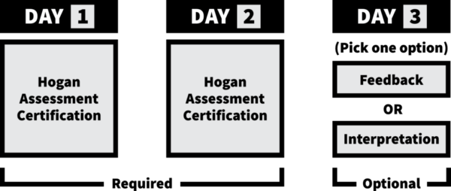
For those who are not Hogan Certified, two-day Hogan Assessment Certification Workshops will be held during the two days prior to each advanced workshop in all host cities. Each of the two, one-day advanced workshops are also available upon request for those who have previously completed the Hogan Assessment Certification Workshop. Hogan Certified users can email training@hoganassessments.com to register for an advanced workshop separately.

For more information, visit www.hogancertification.com.

Topics: coaching, feedback, Hogan, Hogan Certification Workshop

Ryan Ross Returns to India

Posted by Hogan Assessments on Wed, Aug 14, 2019

RRTF

*This post was authored by ThreeFish Consulting.

ThreeFish Consulting, the authorized distributor for Hogan Assessments in India, welcomed back Ryan Ross, Managing Partner of Hogan Assessments, for a series of three client events across the country to provide thought leadership around the Science of Personality.

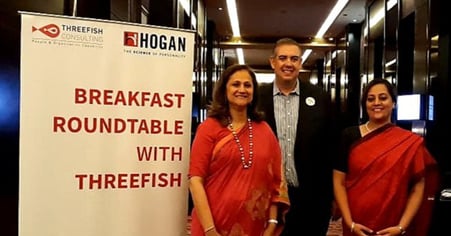
The first stop on the tour was in Pune in the western part of the country. The ThreeFish Breakfast Roundtable on July 30th at the JW Marriott was well attended by Hogan Users and a wider audience from a range of industries who were interested in learning more about Hogan and the Science of Personality. This was a great “launch” event for Pune as it was the first time ThreeFish-Hogan held a client event in the city. “The growth of ThreeFish into Pune marks an important milestone – while support has existed in the local market for several years, Pune-based businesses are demanding quality assessments, and Threefish is equipped to meet their need” said Ryan. Given the mixture of current and potential clients, Ryan’s talk focused on the link between personality, leadership, and organizational performance. Elaborating on the view, ‘Who you are is how you lead’, Ryan said “it was such a great event, the way the audience engages in such a lively and smart conversation is one of the best things about being in India. Too often participants are quiet or shy, but not in Pune. It was a thrill from a presenter’s standpoint.“ The engaged audience had a lively conversation around how our personality affects the way we think, behave, make decisions, and build relations, ultimately impacting our performance.

After wrapping up in Pune, the team was off to the ‘Garden City of India,’ Bangalore, wheree we hosted the next Breakfast Roundtable on July 31. It was a warm gathering with Hogan users from both corporate and independent practitioners. There was a lot of excitement in the community to participate in a ThreeFish-Hogan gathering given the long gap since the last event. Ryan’s talk, ‘Chasing Leadership Trends – a Recipe for Disaster’, discussed two key macro trends in leadership hiring – ‘short-termism’ which leads to the celebrity CEO and ‘trend-chasing’, where our knowledge on effective leadership is often ignored. Ryan talked about the “multiplier effect” of good and bad leadership across the organization, drawing attention to Laissez Faire leadership. Reflecting on leadership from the lens of the led, Ryan elaborated on what employees actually want from their leaders, which are the four core aspects of effective leadership: Integrity, Inspiration, Competence, and Vision. The talk was a success with the Bangalore audience and was reflected in the lingering conversations over a cup of “chai” and the buzz that followed. “Bangalore is such a smart market, it is an established market, and one in which practitioners are not only implementing current practices, but being bullish about introducing cutting edge ideas,” Ryan said after the event. 

Then, it was off to the premier event, the TechHR Conference 2019 in Gurgaon hosted by People Matters where Hogan-ThreeFish were Gold Sponsors. There was a packed hall on the main stage for Ryan’s session entitled, ‘Bright and Shiny or B.S. – The Role of AI in Talent Acquisition.’ Ryan acknowledged that digital innovations and advances in AI have produced a range of novel talent identification and assessment tools which promise to help organizations improve talent acquisition capabilities. However, he raised the important question of whether these are indeed bright and shiny promises that can propel HR into the digital playing field, or BS promises that are overhyped, over-promising, and perhaps even dangerous to the future of the organization?  Ryan shared his perspective that AI, big data, deep learning all have the potential to help but we must use our ethics and beliefs to guide the future. ‘Bright and Shiny’ can be cool, until it rusts. Ryan’s advice was to choose wisely. The question he posed the audience was “Just because we can, should we?” The immediate discussions among the audience were proof that the question was still very much a subject for debate.

“I have been traveling to India for over a decade,” said Ryan.  “It is such an amazing country with immeasurable potential.  Honestly the amount of skill and talent in the HR/OD space is somewhat intimidating. That said, because India believes in data, it is quite easy to strike up a conversation about assessments and personality – because this is a market that understands assessment has a job to do – that is predict performance.”

Topics: Hogan, Big Data

Is Mental Toughness Part of Personality?

Posted by Hogan Assessments on Tue, Aug 06, 2019

mental toughness

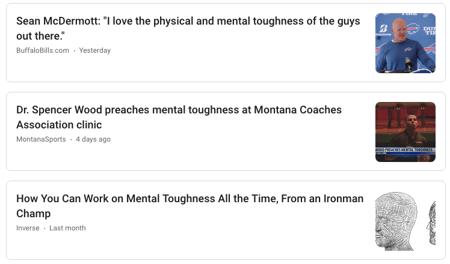
Do us a favor. Go to Google and search for the term “mental toughness.” Then click on “news” to see the latest news on mental toughness. We can almost guarantee that you will find an article published within the past three days. Doing this exercise on August 6, 2019 yielded the results on the right.

The point is, people – particularly sports coaches and athletes – talk about mental toughness as a key ingredient for success virtually all the time. Clearly, the concept of mental toughness is of wide interest and importance. But what is mental toughness exactly and how is it related to personality? A few years ago, we set out to investigate this question. Last week, our findings were published in the journal Personality and Individual Differences. In this post, we summarize the key results.

Locating Mental Toughness

Although scholars define mental toughness in slightly different ways, they all agree that mental toughness includes self-confidence, competitiveness, and emotional control. As such, our goal was not to try to determine which definition is correct, but rather to understand how the core of mental toughness was related to standard personality instruments.

To do so, we had nearly 500 participants – including 90 current or former collegiate athletes – complete an assessment of mental toughness and several normal personality assessments including the HEXACO-60, the Hogan Personality Inventory (HPI), and the Hogan Development Survey (HDS). The mental toughness questionnaire asked participants the degree to which they agreed with statements like “I have unshakeable confidence in my ability,” and “I am committed to completing the tasks I have to do.”

Next, we used machine learning techniques to determine the degree to which we could reproduce scores on the measure of mental toughness based only on scores on the personality assessments. We found that we could reproduce an individual’s mental toughness scores with a very high degree of accuracy (r = .70), indicating that mental toughness is a part of personality. Moreover, we found that mental toughness is made up of several dimensions of the HEXACO model of personality: parts of extraversion, conscientiousness, and emotionality. People high on mental toughness tended to endorse items related to pushing for results, having high energy levels, and having a high degree of self-confidence.

We found an even more direct link between mental toughness and the HPI. Specifically, the core components of the Ambition scale (Competitive, Self-Confident, Accomplishment, and Leadership) were strongly associated with mental toughness scores. In terms of the HDS, we found that a combination of subscales stemming from Excitable, Cautious, Bold, Imaginative, and even Dutiful were most related to mental toughness.

Summary

Mental toughness is found everywhere in the world of sports, and for good reason. Scores on mental toughness measures predict performance in Australian football, cricket, gymnastics, soccer, and tennis. Beyond this, mental toughness also predicts performance in non-athletic contexts. Our data show that mental toughness is not outside the scope of personality. In fact, using standard personality assessments, we can accurately reproduce one’s score on a mental toughness measure.


*This post was authored by Georgi P. Yankov of Development Dimensions International and Ryne Sherman.

Topics: personality

VIDEO: How Do You Derail?

Posted by Hogan Assessments on Tue, Aug 06, 2019

Screen-Shot-2019-08-06-at-10.42.07-AM

At Hogan, we talk a lot about derailers and the dark side of personality. When the pressure’s on, the line between strength and weakness isn’t always clear — drive becomes ruthless ambition, attention to detail becomes micromanaging, perceptiveness turns to cynicism, etc. The dark side of personality derails careers and companies, but it doesn’t have to.

The Hogan Development Survey (HDS) describes the dark side of personality – the qualities that emerge in times of increased strain that can disrupt relationships, damage reputations, and derail peoples’ chance of success. But, how do these situations play out in the workplace? What kind of behaviors should you be on the lookout for? And, most importantly, how do you derail?

In this video, co-workers Kevin, Tina, Diego, Janice, and Lawrence give us an up-close look at the Dark Side of personality. For more information, visit www.howdoyouderail.com.

Topics: dark side, Hogan, dark side of personality, Hogan Assessment Systems, Craig Cole, Juan Fiol, Firethief Productions

Subscribe to our Blog

Most Popular Posts

Connect