Hogan’s Krista Pederson Tours Indonesia with Experd Consulting

Posted by Hogan Assessments on Tue, Jan 28, 2020

KP IndonesiaHogan’s distributor in Indonesia, Experd Consulting, welcomed Krista Pederson, director of Asia Pacific business development at Hogan, to Jakarta. While she was there, the group visited the University of Indonesia’s psychology department, where Krista alongside Emilia Jakob, Experd’s vice president, taught a class on “Hogan Personality Assessments and Cross-Cultural Leadership” at a department-wide event.  Afterward, they spent time with the dean of the psychology department discussing potential cooperation and research projects.

During Krista’s time in Jakarta, Eileen Rachmann, CEO of Experd, arranged several business development meetings with major Indonesian banks and financial institutions to discuss using Hogan for talent and leader selection, especially with regard to making sure there is a company culture fit. Krista also shared Hogan’s findings on what Indonesian leaders’ personalities look like as compared to the leader personalities of their major trading partners, Japan, India, US, South Korea, and Singapore.

Hogan has found that emergent leaders in Indonesia tend to be higher on Prudence, Inquisitive, and Learning Approach, compared to the leaders of their top trading partners. Although this doesn’t provide information about effective leaders, it does provide an interesting context for Indonesian leaders when working with leaders and teams from other countries. We intend to continue our research into this area, especially with regard to what effective leader personalities in Indonesia look like.

Finally, Krista met Experd ‘s Hogan team and toured the Experd office building. Experd has been working on expanding its cooperation with several higher institutions across Indonesia using Hogan and looks forward to greater growth in the coming years.

Topics: Hogan

8 Common Personality Types

Posted by rtrost@hoganassessments.com on Tue, Jan 28, 2020

Personality Types

When discussing personality, it’s common to hear people refer to themselves or others as “Type A” or “Type B.” Or, for those who have taken the Myers-Briggs Type Indicator, acronyms like ISTJ or ENTP or INFP are so commonplace they frequently show up in online dating profiles.

At Hogan, we’ve historically steered away from labeling people as a certain “personality type” based on their assessment results. The primary reason for this is that personality trait scores lie on a continuum and dividing people into convenient buckets sacrifices precision. Further, even two people with highly similar personality profiles can be dramatically different from each other if they only differ on a single scale.

So, what’s the value of assigning personality types? First, types give people a natural way to think about those around them. Second, personality types refer to the whole person and not just various aspects of personality. Third, applying types to people makes personality easy to understand when it comes to coaching and development.

Although Hogan still avoids labeling people with types, we did a deep dive into our archive to see if there were some common types we could discover. Using the data of 332,935 individuals who completed the Hogan Personality Inventory, Hogan Development Survey, and the Motives, Values, Preferences Inventory, we identified eight different personality types – or common profiles – that can be applied to the vast majority of the working population.

Most Common Personality Types

Rebels – These individuals represent 8.0% of the sample group. Their scores suggest that they are interested in being famous, wealth, having power, and living a luxurious life. They are also seen by others as sociable and curious in daily behavior, but can also be emotional, distrustful of others, and rule-breaking. Entrepreneurs make up a large percentage of this group.

Marketers – Representing 18.2% of the sample group, Marketers are seen as highly motivated to compete, win, push for results, and make money. At their best they are bright, sociable, and ambitious at work. However, they also tend to take big chances and are overconfident in their abilities. This profile group is commonly seen amongst salespeople.

Proletarians – We identified that 13.7% of those observed are what we refer to as Proletarians. These individuals are interested in stability and simplistic lifestyle. Others consider them to be hardworking, reserved, and careful. They generally make solid employees and prefer to work without being bothered. These people are equally represented across most professions.

Congenials – At 17.2% of the sample group, Congenials are viewed by others as lacking motivational and career interests. They tend to be introverted, but also relaxed, friendly, polite, and rule-abiding at work. Owing to their friendly nature, these individuals regularly receive high performance ratings from their supervisors. Congenials are commonly found in administrative and clerical roles.

Over-Achievers – This group represents 16.6% of the individuals we studied. Unsurprisingly, Over-Achievers are interested in career success, but they do insist on playing fair. They are hardworking, bright, and resilient to stress. While our data suggest that these individuals are well-suited for leadership positions, they tend to be stuck in individual contributor roles, largely due to the fact that they refuse to play politics.

Networkers – Representing 12.8% of the group, Networkers tend to be interested in fame and being liked by others. They are sociable, cool-headed, and bright in daily behavior. That said, they are also known to break the rules, take risks, be overly dramatic, and often times impractical. Because of their ability to connect with others and their willingness to play politics, Networkers make up a large percentage of leadership roles.

Misfits – Misfits make up 6.9% of the group we studied. They are highly motivated by fear with a strong desire for stability and to enjoy life. They also tend to be emotionally volatile and have difficulties building close relationships due to excessive reclusiveness. Our data indicate that many individuals in this group are struggling to find the right career fit for them.

Preppers – At 6.5% of the group, Preppers are like Misfits in that they are motivated by fear with a strong desire for stability. What makes them different than Misfits is that they are dependable when they can keep their emotions in check. This group is introverted and always prepared for the worst. Individuals fitting this profile often work in the security sector.

Assigning personality types to people will never be an exact science, regardless of the amount of data collected or the tools used to measure personality. Still, it is often useful to look at the person as a whole instead of thinking of individuals as simply a mixture of the same chemicals. Our data indicate that there are in fact eight robust personality types – or personality profiles – that are meaningfully related to work and career outcomes.

Want to learn more about personality tests? Check out The Ultimate Guide to Personality Tests

Topics: personality

Leaders around the World: Who Comes out on Top?

Posted by Hogan Assessments on Mon, Jan 20, 2020

leaders-image*This is a guest post authored by Adrian Chew, principal consultant at Peter Berry Consultancy (PBC). 
Globalization and the expansion of organizations across international borders have created opportunities and challenges for current and future leaders. As a consultant, psychologist, and coach, I am excited to see more organizations around the world investing in psychometric and multirater feedback data for leadership development.

Having reputational data available can be tremendously helpful to leaders for understanding and narrowing down key areas to focus on for development. Many multirater assessments allow leaders to compare themselves to other leaders around the world using global benchmark scores (for example, the Hogan 360°, powered by PBC, does this). Having the ability to use benchmarks to understand how leaders differentiate themselves is great, considering how globally connected we are. But given how diverse we are from country to country and culture to culture, are we missing any critical nuances that need to be considered when supporting our leaders and managers in their development?

As part of our commitment to better understanding leadership and talent, PBC recently conducted a study looking at observed leadership behavior around the world. The study was based on data collected from 2012 to 2017 using the Hogan 360°. The data consisted of more than 5,600 ratings of 1,642 leaders in eight countries: Australia, Denmark, Greece, Japan, Mexico, Singapore, the United Kingdom, and the United States. Essentially, we wanted to see if leaders around the world tended to show up in similar ways.

The Similarities

Two key themes emerged from our findings. The first was that leaders around the world are still struggling to fully demonstrate the competencies often associated with transformational leadership: building and maintaining relationships with others; motivating and coaching others; and holding others accountable to work toward innovative and strategic business outcomes. In fact, it was in the Hogan 360°’s Working on the Business competency quadrant where we saw the least amount of variability among leaders.

Secondly, but unsurprisingly, we found most leaders — particularly those in the U.S., U.K., Australia, Japan, and Singapore — were rated highest in the Working in the Business competency quadrant, especially with regard to perceived work ethic, industry knowledge, and expertise. This seems to reflect a common phenomenon observed in so many organizations, where technical expertise and operational prowess are catalysts for progression into people management and leadership roles, while relationship management skills and the capability to motivate others are much less prevalent.

The Differences

We saw the most variation in leaders when it came to how resilient and emotionally intelligent they appeared. Leaders also differed significantly in how invested they were in building trust and rapport with others through strong relationships. For example, we found that leaders in Mexico are more likely than leaders in the other countries in the sample to be perceived as polite, respectful, and able to manage stress well. This may be a reflection of the expectation that leaders in Mexico need to be flexible, hardworking, and operate with integrity (Kowske & Anthony, 2007). In contrast, leaders from the U.K. appeared to have less of a focus on managing their emotions.

We also saw a lot of variability in leaders when it came to the Hogan 360°’s Relationship Management competency quadrant. Leaders from Mexico once again showed strengths in this domain, with leaders from Greece, Australia, and the U.S. also scoring relatively high. Leaders from Denmark, Japan, and Singapore scored particularly low for this domain. When we investigated this further, we learned that leaders from Japan had been rated particularly low for the People Skills competency, which included behaviors associated with being a positive role model, making others feel valued, and being warm and thoughtful in interactions with others. Considering the high in-group collectivist culture that likely exists in countries such as Japan and Singapore, where duties and obligations take precedence over personal needs, this seems to make sense. 

So, knowing that there are, indeed, differences in what can be expected of leaders around the world, what can we do?

  • The use of standard global benchmarks can be used to provide a baseline for leaders who increasingly need to operate more globally.
  • The use of country-specific benchmarks in 360° assessments can help organizations better understand how local leaders compare with each other (while accounting for country-specific nuances in expected leadership behavior).
  • By recognizing nuances and better understanding the expectations that teams, colleagues, and managers have of their leaders, organizations can become more focused and prioritize relevant areas for their leaders to develop professionally.
  • We can continue to help leaders of leaders understand differences in their teams’ behavior.

You can read more about our findings on how leaders from each country scored in our white paper.

Topics: personality

ICF Coaching Day 2019: Agile Leadership in a Digital World

Posted by Hogan Assessments on Tue, Jan 07, 2020

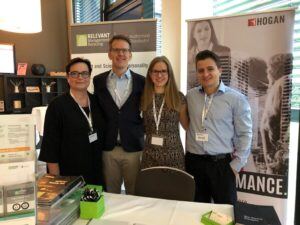
0*This is a guest post authored by Annette Czernik, senior consultant at RELEVANT Managementberatung.

This year’s Coaching Day 2019, an international two-day congress for the coaching industry, was held November 15 and 16 in Munich, Germany. Once again, the event focused on future-oriented topics relating to agility, digitalization, and leadership. The diverse program was designed by the International Coach Federation (ICF) Germany with various speakers, experts, and insiders. RELEVANT Managementberatung was involved in different ways.

Panel Discussion

The panelists on the panel “Coaching & Digitalization – Opportunities, Threats & Ethical Aspects” discussed the introduction of digitalization into the coaching process in a very controversial way. There was a lot of curiosity but also restraint and resistance.

ICF Germany Prism Award

One of the highlights of Coaching Day 2019 was the presentation of the second Prism Award of ICF Germany, sponsored by RELEVANT. You can read about the importance of the ICF Prism Award here.

The Prism Award 2019 went to Adidas and Vodafone for their outstanding coaching programs. The jury’s special prize, awarded for the first time this year, went to Volkswagen for its differentiated system of interlocking coaching offerings, which was recognized as the “lighthouse of the industry.”

In his laudation to Adidas, René Kusch, PhD, said, “Other coaching programs can learn a lot from Adidas. In the competition for the German Prism Award, the jury particularly emphasized your commitment to the evaluation of the seemingly soft topic ‘coaching process.’ You have calculated the return on investment of your measure at 130%. Even if numerics cannot always take everything into consideration, numbers are the language that secures our community a place at the table of line managers. Your program is a great example of how coaching can make a real difference.”

Dr. Kusch praised Vodafone’s coaching program: “Vodafone is part of the spearhead of digitization in Germany. Your presentation will give us a glimpse of how Vodafone is helping to shape technological progress — perhaps we should say technological revolution. You are the first to put [5G] into operation. What is possible with it all fascinates me. Among other things, it is one of the prerequisites for autonomous vehicles. You have just teamed up with UnityMedia. The mobile phone industry is undergoing considerable upheaval. Your concept Coaching @ Vodafone is geared to the changes and challenges [the industry is facing]. You describe [strategic self-awareness] as a core competence at Vodafone. Your coaching uses content and methods to promote [Vodafone’s core competences]. Consistently. And it’s so fresh and modern that you don’t immediately notice this theoretical foundation.”

Workshop: “How to Develop Humility in Alpha People”

On the second day, as part of HR BarCamp, RELEVANT held a workshop, “How to Develop Humility in Alpha People,” for interested attendees. The main focus was on charismatic managers, who typically show self-confidence, determination, and visionary thinking.

Charisma ensures that managers in companies are recognized. However, too much charisma can become a weakness. Many charismatic leaders with power become narcissists, which can have devastating effects on others.

Today, there are fewer ways for narcissistic leaders to hide misconduct. To meet the demands of the fourth industrial revolution, companies need leaders who can be effective through others. Humility allows leadership teams to deliver business results, be productive, and be effective.

In an interactive workshop session, we explored our views on

  1. The difference between individual emergence and team effectiveness at work,
  2. How emerging and effective leaders can be identified in organizations, and
  3. How the coaching abilities of overly charismatic leaders can be improved with an empirically proven approach and discussed with candidates.

We enjoyed the intensive exchange with the participants and continued some of the discussions afterward. Strategic self-awareness is important to everyone, and we are delighted that we can make a significant contribution to this with the Hogan assessment suite.

If you are interested in delving into our workshop topic, we would like to give you access to our article, “Our View on New Leadership: How to Develop and Assess Humility in Charismatic Leaders,”  which we wrote with Robert Hogan, PhD, and Ryne Sherman, PhD. We are proud of the article with all modesty, and we are looking forward to your feedback!

We took a lot of food for thought, ideas, and insights from Coaching Day 2019. It was touching to see the joy of the winners of the ICF Germany Prism Award. And we were pleased about the possibilities of looking at the quality of coaching from different angles (e.g., with regard to ethics, the use of diagnostics, standardized processes, etc.). Next year we will be there again, and we are looking forward to it.

Topics: coaching, RELEVANT, International Coach Federation

Assessing Global Talent: Using Personality for Talent Across Asia and the Globe

Posted by Hogan Assessments on Tue, Jan 07, 2020

Assessing Global Talent

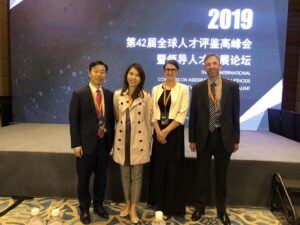
Krista Pederson, director of Asia-Pacific business development at Hogan, spoke at the 42nd International Congress on Assessment Center Methods and Developing Leadership Talent, held in Shanghai from November 13 to November 15, 2019.

In a presentation titled “Assessing Global Talent: Using Personality for Talent Across Asia and the Globe,” Pederson discussed leadership across cultures. She explained how Hogan does assessment translations and uses local and global norms. She also shared Hogan’s unique point of view on cross-cultural topics, including our focus on researching leadership personality within a country’s borders, instead of cross-cultural constructs across countries or regions.

Pederson’s presentation was completely full, as were many of the other conference sessions. More than 50 CEOs, leaders, and top business and psychology professors gave presentations about leadership development and assessment centers. Keynote speakers included Sharif Khan, GEO HR GM for Microsoft, Asia; William C. Byham, PhD, DDI co-founder and executive chairman; and He Jinghua, vice dean of Tencent College. The conference was well attended—more than 350 CEOs, CHROs, and other business leaders joined.

Global interest in assessment and talent selection is increasing, especially in China. The market in China is diversifying, with fewer state-owned enterprises and multinational corporations and a rise in the number of privately owned enterprises. As diversification occurs, there is a rapidly increasing need for using data and assessments to solve talent issues across all levels of organizations.

Hogan has millions of data points on the global market and has done robust studies on personality in Asia and around the globe. We plan to continue our investment and growth in the Asia-Pacific market and look forward to working with our distribution network to meet the needs of the privately owned enterprises that are experiencing rapid growth and looking for a scientific, data-based talent metric.

If your company is interested in using Hogan in China or elsewhere in Asia, let us know. We are happy to work with our distributors to solve your talent needs.

Topics: Hogan, global talent, executive assessments

metaBeratung CEO Nicole Neubauer Featured in Spiegel Wissen

Posted by Erin Robinson on Tue, Dec 17, 2019

Screen Shot 2019-12-17 at 11.32.45 AMNicole Neubauer, CEO of metaBeratung, an official Hogan distributor in Europe, was recently featured in an article for Spiegel Wissen, one of Germany’s most prominent journals. The article, “Training Charisma: Do I Have the Julia Roberts Smile?” recounts Neubauer’s professional development and her rise to CEO of metaBeratung.

During an interview for the article, Neubauer reflected on her personality and the importance of reputation to her career path. As an introvert, she found that the path to her current position was a long one. She had to train herself to be charismatic and comfortable in a leadership position. She had to learn how to become more relaxed and self-confident when speaking in front of groups, holding keynotes, or otherwise taking the lead.

Today, Neubauer is pleased with the progress she has made in her professional development, and she says that constant learning and self-improvement are integral to career growth. She credits Hogan’s personality assessments with helping her to learn about her reputation and adapt her behavior to maximize her leadership potential.

“Thanks to Hogan Assessment Systems (who we are proud to distribute since 2005), your assessments helped me understand my strengths, weaknesses, and main drivers,” she posted on LinkedIn. “Fine-tuning behavior by coaching, I am what I am today: CEO of a management consultancy who is pushing personality out there for the past almost 15 years with a great team [at] metaBeratung.”

Topics: Hogan

Hogan Delivers Leadership Presentation to Rotary Club of Tulsa

Posted by Erin Robinson on Fri, Dec 13, 2019

AmbErinOn December 4, Hogan Managing Consultants Amber Burkhart, PhD, and Erin Laxson, PhD, were the featured speakers at the Rotary Club of Tulsa’s weekly meeting. One of the most notable speaking engagements in the Tulsa area, the event was attended by 200 business leaders, one of whom described Burkhart and Laxson as “world-class professionals.”
As featured speakers, Burkhart and Laxson joined the likes of prominent business magnates, such as oil and gas entrepreneur T. Boone Pickens and billionaire philanthropist George Kaiser. Notable elected representatives, such as Sen. Jim Inhofe, Sen. James Lankford, and Gov. Kevin Stitt, have also spoken at the Rotary Club of Tulsa.

Here are just a few of the highlights of Burkhart and Laxson’s presentation.

Using Personality Assessments to Identify Effective Leaders

Using personality assessments is key to targeting your leadership development investment for organizational success. But this doesn’t mean that you’ll end up with a homogenous organization or team. Effective leaders are those who are concerned with building high-performing teams that have the right mix of skills and characteristics. They recruit talented people. They put people in the appropriate positions. And they create employee engagement based on trust.

Effective leaders promote diversity and inclusion. In our research, we’ve discovered that effective leaders are more optimistic and diplomatic and less arrogant and critical. In the workplace, leaders who have these attributes will discourage discrimination and prejudice, show respect for others, value diverse perspectives, relate well to a variety of people, recognize each person’s unique potential, and treat employees fairly regardless of their differences.

Hogan recently collaborated with a global beverage company to improve the company’s practices for identifying and developing future leaders. We examined relationships between assessment results and performance data to create a selection profile with individual characteristics most predictive of future leader performance.

We then placed candidates into five leadership fit classifications based on the number of scales passed in the profile. The more scales a candidate passed, the greater the candidate’s potential as a future leader. Looking at the correlations between the profiles and specific key performance indicators, Hogan’s researchers were able to identify candidates who were three times more likely to have higher performance overall and three times more likely to have higher leadership potential.

The Bottom Line

The quality of your organization’s executive leadership has a major impact on the potential bottom line. Studying the ROI of leaders, economists have found that CEOs, for example, account for 14% to 29% in firm performance. When a company’s CEO changes, business performance does too.

Management quality drives business performance at every organizational level, and well-managed organizations are more profitable for everyone—including the employees. In fact, compared to average performers, high-performing executives can add $42 million to company profits over the course of their tenure. Knowing these facts, wouldn’t you want to know which leaders your organization should invest its time and money in before those investments are made?

Topics: Talent Development

Get Hogan Advanced Certified in 2020

Posted by rtrost@hoganassessments.com on Tue, Dec 10, 2019

Certification ImageReady to take your Hogan skills to the next level? Once you earn your official certification to administer Hogan’s personality assessments, you’ll have the opportunity for more extensive training in administering Hogan’s personality assessments.

Hogan offers two options for advanced certification to help people build upon skills developed during the Hogan Assessment Certification workshop (which is a prerequisite for completion of either advanced certification course): Advanced Interpretation and Advanced Feedback.

Advanced Interpretation

The Advanced Interpretation workshop will help you learn how to extract the maximum interpretive value from Hogan personality assessment results to help your organization best understand potential and current employees and leaders.

In this course, you’ll develop expertise in techniques for using our three core personality assessments. You’ll also gain practice synthesizing subscales and scale combinations, including resolving competing or complex scale combinations, to form a more nuanced, in-depth, individualized picture of how someone is likely to behave in the workplace.

The course will teach you how to avoid common interpretive mistakes, such as framing lower Hogan Personality Inventory (HPI) scores in a harsh or negative light, disregarding no- or low-risk Hogan Development Survey (HDS) scores, or misunderstanding the way that low scores operate on the Motives, Values, and Preferences Inventory (MVPI) scales.

Lastly, you’ll compare and contrast your insights with interpretations from Hogan’s experts. This guided practice will enable you to become confident in your ability to bring the assessment data to life in the real world. 

Advanced Feedback

Like the Advanced Interpretation workshop, the Advanced Feedback workshop was designed for people who have already earned official Hogan Assessment Certification. In this course, you’ll learn how to deliver high-impact feedback to help people who have taken the assessments get the most out of their results.

This course will cover the different types of feedback, including debriefing, developmental feedback, and coaching. You’ll understand how to structure a feedback session using the comprehensive model, the values model, the job requirements model, or the competency model, and you’ll know how to choose the most appropriate model for each feedback session’s objectives.

You’ll also walk away with a firm understanding of methods for troubleshooting some of the common problems that occur during the feedback delivery process. For example, some participants might not trust the accuracy of the assessment results, or they might feel as if the results are accurate in their personal lives but not at work. After taking Advanced Feedback, you’ll feel at ease responding to situations like these.

Finally, you’ll have the opportunity to roleplay conducting a feedback session in a supervised setting. You’ll develop experience encouraging participation from the feedback recipient and in planning developmental action based on the assessment results and the person’s job responsibilities.

Register Today

Begin the process of deepening your interpretation and feedback delivery skills today. Click here to check out our course schedules and sign up for a certification workshop near you.


Topics: certification

Evolutionary Model, Modern Results: Introducing the New Hogan Business Reasoning Inventory (HBRI)

Posted by Erin Robinson on Tue, Dec 10, 2019

Business Reasoning InventoryOur hominid ancestors constantly had to solve problems related to survival. They had to find food, water, shelter, and protection from predators. They also had to keep peace within the group and defend themselves and their groups against attacks by competing groups. If they did not solve these problems sufficiently, they died—whereas those who successfully managed the entire range of problems prevailed.
But the demands of survival changed constantly. Only groups that adapted and improved their survival techniques in the face of constantly shifting environmental pressures became our more recent ancestors—the ultimate winners in the race for survival.

From an ancestral point of view, critical reasoning means being able to solve a wide range of problems effectively. In a modern business context, critical reasoning, or business reasoning, involves (a) accurately forecasting sequences of events in and outside of one’s organization, (b) recognizing when those forecasts do and do not apply, and (c) making appropriate business decisions based on those forecasts.

According to Peter Drucker, PhD, the fabled management philosopher, businesses struggle because leaders make poor decisions about resource allocation. Ideally, leaders should direct money and energy toward activities that increase profitability. Instead, they often designate organizational resources toward projects that have little significance in the long term.

Directing resources toward activities that increase profitability requires three things. First, it requires a clear-minded view of the problem to be solved. Second, it requires a rational analysis of possible solutions. Finally, it requires a critical evaluation of each solution’s consequences. Leaders with good business reasoning skills (a) identify and understand critical problems, (b) construct rational solutions to these problems, and (c) act based on the anticipated consequences of each solution.

Although most people understand the importance of business reasoning for the success of an organization, new managers and executives are rarely selected based on their ability to make good decisions, according to Justin Menkes, PhD. When hiring candidates for management and executive positions, organizations need a sound, defensible method to evaluate candidates’ business reasoning skills.

That’s why the Hogan Business Reasoning Inventory (HBRI) was created. The HBRI allows organizations to fairly and accurately evaluate candidates’ business reasoning skills. The HBRI is based on three assumptions. First, it assumes that good business decisions require clear thinking, rational analysis, and critical evaluation. Second, it assumes that business reasoning skills can be measured and that the results of this measurement process can be used to evaluate candidates for managerial and executive positions. Third, it assumes that the results of this measurement process predict managerial and executive performance.

Hogan is pleased to announce that the HBRI is evolving, effective December 4, 2019. The updated HBRI provides the same overall business reasoning score as the current version, but the Tactical and Strategic subscales will be replaced with two new subscales. The new subscales measure Qualitative Reasoning, which involves working with data visualization, logic, and verbal information to solve problems, and Quantitative Reasoning, which involves working with mathematical and spatial information to solve problems.

Committed to constantly improving our assessments and products, we are confident that the new HBRI will provide a better user experience for our clients. In the modern business world, organizations that hire leaders with strong business reasoning skills will triumph.

Topics: cognitive

Using Cognitive and Personality Assessments Together Improves Employee Selection

Posted by Blake Loepp on Wed, Dec 04, 2019

Cognitive and Personality AssessmentsOne of the primary tasks of leadership is to effectively and efficiently allocate an organization’s resources. In business, this requires leaders to make critical decisions that ultimately determine the success or failure of the organization. However, making good business decisions alone is not enough to guarantee success. Effective leaders must also have the interpersonal skills to get along with others and build high-performing teams. Both critical reasoning skills and interpersonal skills are effective predictors of performance. Logically then, employers who care about job performance should want to know two things: do my employees make good decisions and do they have the interpersonal skills to effectively function? The best way to answer these questions is by using assessments.

Cognitive assessments, such as the Hogan Business Reasoning Inventory (HBRI), are some of the most robust predictors of job performance. Any job that requires solving problems, evaluating the consequences of various solutions, or weighing solutions against each other can benefit from cognitive assessments that accurately measure one’s critical reasoning skills. Effective critical reasoning requires three things:

  1. A clear-minded view of the problem – Too often leaders spend time solving the wrong problem or problems that aren’t actually problems at all.
  2. A rational analysis of possible solutions to the problem – Some solutions are bound to be more effective than others, so being able to analyze those solutions rationally and objectively is important.
  3. An accurate forecast of each solution’s consequences – Some solutions may cause future problems, so the cost and impact of the various solutions must be considered.

Using cognitive assessments to measure job candidates across these three core areas tells us how a person will go about making decisions and whether they will be effective in doing so. However, cognitive assessments don’t give us a full picture of how someone is going to work in a modern collaborative workplace. That’s where personality assessments come into play.

Personality assessments give us valuable insights into an individual’s day-to-day behavior. Using scientific assessments like the Hogan Personality Inventory (HPI), the Hogan Development Survey (HDS), and the Motives, Values, Preferences Inventory (MVPI), employers get answers to three key questions about the individual:

  1. How will they perform when they are at their best?
  2. What behaviors will derail their chances of success?
  3. What motivates and drives them?

The answers to these questions are critical when determining if someone is a good fit for a particular job. A job candidate can possess the desired interpersonal skills to perform the job, but they won’t be happy if their core values don’t match the values of the organization. On the other hand, someone can be a perfect match for an organization from a values standpoint but lack the interpersonal skills that lead to success in that role.

Cognitive assessments and personality assessments measure two different things, and that’s good news for employers. This means that both cognitive and personality assessments add useful information about potential job candidates with little redundancy. By assessing job candidates in terms of both their decision-making and interpersonal skill, hiring managers give themselves the best chance at hiring high-performers.

Topics: cognitive

Subscribe to our Blog

Most Popular Posts

Connect