Our Assessments Work Anywhere

Posted by Hogan Assessments on Thu, Aug 01, 2019

brett-zeck-eyfMgGvo9PA-unsplash

*This post was authored by Ryne Sherman and Brandon Ferrell.

A recently published study suggests that some of the most common personality assessments (i.e., one’s based on the Big 5) don’t work in other countries. The study was published in a prestigious journal (Science Advances, impact factor > 12), and it has already gained prominent media attention. One outlet said that these personality tests don’t hold up around the world. NPR said that personality tests don’t reveal the real you. Reading these articles might make you conclude that personality assessments just can’t be used in other countries. Fortunately, despite what the economists who contributed to the article and the journalists who are covering it might have you believe, such a conclusion is just wrong. In what follows, we show you why.

Comparing Assessments Across Borders and Languages

If you had a rod that measures 1 meter in Australia, but 2 meters in Kenya, you have a big problem. Clearly, the term “1 meter” doesn’t mean the same thing in different locations or different languages. As a principle of measurement, you want to be sure that whatever you are measuring in one location (or one language) is the same thing that you are measuring in another. In terms of personality assessment, comparing countries (or languages) absolutely requires that the assessments are used in the same fashion across countries and languages. Psychologists use a metric called the congruence coefficient to determine the degree to which instruments are measuring the same thing. Scores on the metric can range from -1.00 to +1.00, with higher scores indicating greater similarity. The accepted standard for declaring the instruments as similar is a congruence coefficient > .84. The recently published study found average congruence coefficients of .73 and .71 in survey data gathered in so-called non-WEIRD countries (e.g., Kenya, Philippines, Colombia, etc.).

Hogan Data

At Hogan, we conduct more than 1 million personality assessments per year with data coming from more than 100 countries, in 47 languages, all around the world. Our assessments are completed by working adults who are either applying for jobs, or as part of their current job’s developmental curriculum. Our flagship measure of personality, the Hogan Personality Inventory, measures 7 personality characteristics that are closely related to the Big 5. In examining our archive, we identified 52 countries with sufficient HPI data to conduct the exact same analysis conducted by the economists. Here is what we find across the 52 countries:

Table 1. Average Congruence Coefficient for 52 Countries on the HPI.

Country Congruence Coefficient   Country Congruence Coefficient
Canada .99 Kenya .96
Australia .99 Norway .96
South Africa .98 Philippines .96
United Kingdom .98 Switzerland .95
France .98 Chile .95
Sweden .98 Malaysia .95
Germany .97 China .95
Singapore .97 Portugal .95
New Zealand .97 Austria .95
Italy .97 Ireland .95
Czech Republic .97 Montenegro .95
Hong Kong .97 Russia .94
India .97 Thailand .94
Netherlands .97 Pakistan .94
Greece .97 Japan .93
Serbia .97 Poland .93
Denmark .97 Taiwan .93
Finland .97 Ukraine .93
Croatia .97 Turkey .93
Hungary .97 Saudi Arabia .93
Spain .97 United Arab Emirates .92
Brazil .97 South Korea .92
Belgium .96 Indonesia .91
Romania .96 Mexico .91
Argentina .96 Colombia .91
Slovakia .96   Peru .90

Every single country exceeds the .84 threshold for similarity. The lowest congruence coefficient we found was for Peru (.90). As a direct comparison with the recently published work, we find much higher congruence coefficients for Kenya (.96 vs. .71), Colombia (.91 vs. .72), Philippines (.96 vs. .72), and Serbia (.97 vs. .79). These results are in stark contrast to the conclusions drawn by popular media: high quality personality assessments work – and measures exactly what we think it is measuring – in other countries and languages all around the globe. 

We Aren’t the Only Ones

In 2002, a book chapter by Rolland reported average congruence coefficients of .92 with French and .93 with U.S. English across 15 different countries (including non-WEIRD countries: Malaysia, Korean, Philippines, & China). The most comprehensive published research of this question to date found an average congruence coefficient of .93 across 50 different countries (including Turkey, Serbia, Japan, South Korea, Hong Kong, Thailand, Indonesia, Burkina Faso, Kuwait, Philippines, Russia, China, India, Malaysia, Botswana, Nigeria, Ethiopia, Lebanon, Uganda, & Morocco; which collectively averaged .91). Another paper by De Fruyt and colleagues extended this analysis to adolescents, reporting an average congruence coefficient of .92 across 24 different countries (including Malaysia, Serbia, South Korea, Japan Iran, Thailand, Hong Kong, Turkey, China, and Uganda; which collectively averaged .90).

The point here is this: the largest, most comprehensive studies and databases speaking to the universality of personality factor structures have all come to the conclusions that these personality dimensions are universal. So why did this recent study come to the opposite conclusion?

So…What’s Wrong with that Study?

Research published in academic journals typically must go through a rigorous (and at times, somewhat arbitrary) review process. This involves subjecting the research to review by external experts in the field who scrutinize the work for potential errors and mistakes. Despite this process, it is sometimes the case that flawed work, or flawed conclusions, slip through the cracks. Such is the case with the article in question here. There are two critical problems.

First, the analyses and conclusions of this paper rest on data gathered using a 15-item measure of personality. The 15 items are a subset of items from a medium-length (but well-validated) 44-item measure of personality, known as the Big Five Inventory. It is not clear how these 15 items were chosen (as part of a larger survey), or their psychometric properties. However, it is clear that short measures of personality frequently show poor results. By comparison, studies demonstrating the universality of personality structures (including our own data) used longer, and undeniably far superior, measures of personality. Thus, the results of this study could be adequately summarized as garbage in, garbage out.

Second, the study in question regularly notes that many of the people surveyed had trouble understanding the questions they were being asked, in some cases it was not clear that the participants were even literate. It should come as no surprise that if people cannot read, or understand, the items on a personality assessment that their responses to the questions are necessarily nonsense. If responses to a personality assessment are effectively random, it is certain that there will be no congruence. Further, if even only a sizable proportion of the respondents cannot read the questionnaire but respond anyway, this will necessarily drive congruence coefficients down, perhaps even below the threshold for similarity. By comparison purposes, the participants in all of the studies demonstrating the universality of personality structures were educated well-enough to read and understand the questionnaires. Put another way, the results of this study demonstrate that if people cannot read your test, they will not respond in logically coherent ways.

Summary

In summary, the sky is not falling for personality assessment. The evidence, to date, overwhelmingly demonstrates that the Big 5 personality structure is universal. When high-quality measures of personality are used, and the respondents can read and understand the questions, the structure of personality looks incredibly similar across culture and language. It is far more likely that this study’s failure to replicate this structural similarity is due to poor data quality rather than the outlandish notion that personality structures are different in non-WEIRD cultures.

Topics: personality

RELEVANT Managementberatung Hosts JAM SESSION in Frankfurt

Posted by Hogan Assessments on Tue, Jul 30, 2019

RELEVANT-Frankfurt

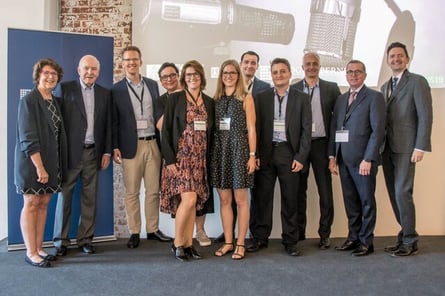
RELEVANT Managementberatung, an authorized Hogan distributor in Germany, recently hosted its JAM SESSION titled ‘New Leadership? Authentic in Turbulent Times’ with more than 100 attendees on July 4 at the Klassikstadt in Frankfurt. The purpose of the event was to bring clients, HR professionals, and business leaders together to jointly discuss opportunities and risks of leadership in the context of new work.

RELEVANT partnered with Odgers Berndtson to host the event, which featured the following speakers:

  • Dr. Robert Hogan, Hogan Assessments – Dr. Hogan spoke to the crowd about how humility outperforms charisma when it comes to effective leadership.
  • Dr. Scott Gregory, CEO, Hogan Assessments – Dr. Gregory served as a speaker of one of five breakout sessions. His discussion focused on the science of personality and how to derive value from big data. The other four sessions featured representatives from CMS Legal, Fondsdepot Bank, Beiersdorf, and Daimler.
  • Dr. Niklas Friedrich, Vodafone – Dr. Friedrich, who serves as Vodafone’s Head of People & Organizational Strategy, presented to the crowd about Vodafone’s initiative to “futurize leadership” across the organization.
  • Marcus Reif, HR expert, speaker and blogger – Mr. Reif spoke about “how to stay relevant in turbulent times” before the official agenda was concluded and the networking continued.

Dr. René Kusch of RELEVANT Managementberatung and Daniel Nerlich of Odgers Berndtson served as facilitators and hosts for the event, creating an atmosphere of curiosity, ease, fun, and sagacity. Thus, attendees who had just met easily engaged in meaningful conversations, laughed together, and challenged each other’s thinking. Dr. René Kusch, initiator of the JAM SESSION said that “There were vivid interactions throughout the entire event, and a heightened common understanding that personality always is the stable factor in turbulent times was palpable. Attendees came to know how to use Hogan for the recruiting and development of leaders and teams.”

Following the event was a celebratory “Dinner with the Hogans,” attended by the RELEVANT team, Hogan’s Managing Director for Europe Zsolt Feher, Dr. Hogan, and Wendy Hogan. The group dined in Frankfurt’s city center, talking shop, sharing personal stories, and enjoying fine cuisine.

Feedback from participants who attended the event was overwhelmingly positive. The event has already led to significant business development opportunities, with people interested in learning more about humility and also how they can get Hogan-certified. Overall, the event was a huge success, and we owe our appreciation to RELEVANT and Odgers Berndtson for making it a reality. Prost!

Topics: Hogan, Frankfurt

metaBeratung Hosts ‘Future of Leadership’ Events in Zurich and Munich

Posted by Hogan Assessments on Tue, Jul 30, 2019

0

Our friends at metaBeratung, an authorized Hogan distributor in Germany and Switzerland, recently hosted events in Zurich and Munich, featuring Hogan Founder and Chairman Dr. Robert Hogan, Hogan CEO Dr. Scott Gregory, IMD Business School Professor John Weeks, and metaBeratung CEO Nicole Neubauer.

The events, titled ‘Future of Leadership: From Charisma to Humility,’ were held at Hotel Widder in Zurich on July 2and at Hotel Bayerischer Hof in Munich on July 3, and the events were attended by more than 140 business leaders and talent management professionals in Zurich and more than 70 in Munich.

With humility being the core theme of the events, Dr. Hogan spoke about the importance of identifying and promoting humble leaders, as opposed to their charismatic, and likely ineffective, counterparts. Organizations for decades have heavily leaned toward the promotion of charismatic leaders because they are socially and politically skilled. However, Hogan’s research on leadership shows that although these leaders tend to emerge within organizations, they historically are less effective than humble leaders.

Professor Weeks spoke to attendees about how leaders should act as role models with a positive, skillful, and intentional approach to engaging their teams. This heavily relies on leaders following the age-old adage “actions speak louder than words.”

Neubauer’s presentation focused on the topic of women in leadership. With research showing that women tend to be more humble than men, she highlighted how important it is for women to become more visible within their organizations. Simply put, equality between men and women in organizations is something that does not exist and is in desperate need of improvement.

Overall, the events were a huge success for metaBeratung, IMD Business School, and Hogan. It’s so exciting to see the work our distributors are doing globally to raise awareness about the importance of personality and how it affects leadership and organizational performance.

Topics: Hogan, John Weeks

Personality Theory and the Nature of Human Nature

Posted by rtrost@hoganassessments.com on Mon, Jul 29, 2019

personality theory

People are the deadliest invasive species in the history of the earth. People have the potential to kill every living thing and, in certain instances have already done so (e.g., passenger pigeon, western black rhinoceros, great auk) or are on their way to doing so (e.g., sea turtle, elephant, tiger, polar bear). Given their frightful potential and worldwide presence, it would be useful to know something about people. Personality psychology is the “go-to” discipline for understanding people; personality psychology is the only discipline whose primary focus is the nature of human nature. What does personality psychology tell us about human nature? The answer depends on whom you ask, or more precisely, to which personality theory you subscribe.

Keep reading to learn more about the history of personality theory, different theoretical approaches, and the role of personality in organizational and leadership performance.

History of Personality Theory

Modern personality psychology began in Vienna at the end of the 19th century, where an amazing flowering of human creativity brought revolutions in a wide variety of fields including architecture, music, physics, medicine, music, painting, literature, economics, and especially philosophy. Personality theory started as a psychodynamic version of psychiatry—mental illness was hypothesized to be a function of intrapsychic dynamics and the physical symptoms were secondary. The pioneers of this new way to conceptualize psychic troubles included Pierre Janet (who was French), Sigmund Freud, Carl Jung, Alfred Adler, Otto Rank, Erik Erikson, and others. Personality theory was a vibrant intellectual activity for 70 years but by the early 1970s, some prominent personality psychologists began to argue that personality theory was pointless, that only data mattered. In retrospect, Walter Mischel’s (1968) critique of personality psychology was more a symptom of the decline of personality theory than a cause—it reflected a changing culture rather than creating one.

The collapse of interest in personality theory created a hole in our ability to understand human affairs. This is because personality theory is unavoidable: everything we do depends on our assumptions about human nature. Even social psychology depends on (often untenable and unspecified) assumptions about human nature. We need to make these assumptions explicit for two reasons: (1) ideas have consequences—they drive everything we do; and (2) knowledge proceeds more efficiently from error than from confusion—bad ideas can be corrected, but unspecified assumptions lead to futility.

Types of Personality Theory

There are three major theories of personality, with subtypes within each. The first is the many versions of psychodynamic theory associated with clinical psychology. The second personality theory is trait theory, which concerns cataloguing dimension of individual differences. The third is interpersonal theory which largely concerns career coaching and development—i.e., applications to everyday life. In the following paragraphs, we briefly describe the history of each personality theory, identify its core assumptions, and evaluate the consequences of these assumptions.

Psychodynamic Theory

Psychodynamic theory dominated personality psychology for 70 years and contains many valid insights. For example, early experience shapes later personality, much social behavior is unconsciously motivated, people are inherently irrational, and psychology can be used for human betterment. The three major assumptions of psychodynamic theory are: (1) everyone is somewhat neurotic; (2) the goal of life is to overcome one’s neurosis; and (3) the goal of personality assessment is to identify the sources of one’s neurosis. The problem with psychodynamic theory is the first assumption; everyone is not neurotic. Although most people have issues that bother them from time to time, to be neurotic is to be dysfunctional on a continuing basis and that is obviously not true for most people. In addition, as positive psychology points out, the absence of neurosis does not guarantee happiness or success. Lastly, diagnosing psychopathology is not the primary goal of personality assessment. Despite its compelling subject matter, psychodynamic theory pointed personality psychology in the wrong direction for 70 years. Positive psychology (Seligman, 2002) is a superficial, but natural, reaction to the excesses of psychodynamic theory.

Trait Theory

Trait theory began in the 1930s as an academic exercise in classification and is largely defined by the writings of Gordon Allport (1937), Raymond Cattell (1943), Hans Eysenck (1947), and their students. The goal of trait theory is to classify the structure of personality; the units of analysis are “traits,” defined as (a) recurring behavioral tendencies; and (b) neuropsychic structures. The behavioral tendencies can be observed; the neuropsychic structures are inferred and believed to correspond to the behavioral tendencies. Trait theory makes three major assumptions: (1) everyone has traits; (2) the goal of life is to discover one’s traits; and (3) the goal of personality assessment is to measure traits. Despite the immense popularity of trait theory in modern psychology, it has limited utility as a personality theory for several reasons; here we will mention three. First, trait theory describes behavior in terms of traits, and then explains behavior in terms of traits (e.g., Mike Tyson is aggressive because he has a trait for aggressiveness); this is a tautology—as Walter Mischel (1968) pointed out long ago. Second, the search for the neuropsychic structures that explain the consistencies in behavior is a worthy project, but it is a project for neuro-scientists, not personality psychologists (it is also a project that has, thus far, yielded less than spectacular results). And third, the accepted taxonomy of traits, the Five-factor model (Wiggins, 1996), is based on ratings of school children in Hawaii (Digman, 1963) and Air Force enlisted men in Texas (Tupes & Crystal, 1961). Trait theory has in fact produced an common language for describing the reputation of others and identified a replicable structure underlying the trait terms. Nonetheless, it is not clear that the Five-Factor Model is (a) the most useful model for describing or predicting human behavior. In fact, there is compelling evidence showing that lower-order trait variables predict important outcomes better than the higher-order variables of the Five Factor Model (Brown & Sherman, 2014; Luminent, Bagby, Wagner, Taylor, & Parker, 1999; Paunonen & Ashton, 2001; Watson, 2001).

Interpersonal Theory

Interpersonal theory is based on the writings of William McDougall (1908), George Herbert Mead (1934), Henry Stack Sullivan (1953), George Kelly (1955), Timothy Leary (1957), and Jerry Wiggins (1996). The goal of interpersonal theory is to understand how people interact with others and how those interactions influence subsequent interactions. Interpersonal theory makes three major assumptions: (1) almost everything consequential in life occurs during social interaction, or as part of preparation for future social interaction, (2) the goal of life is to find and retain a productive place in one’s social network, and (3) the goal of personality assessment is to describe and predict how people will behave in social interactions. Interpersonal theory differs from trait and psychodynamic theory in three important ways. First, trait and psychodynamic theory assume that the way we think about ourselves drives our social interaction whereas interpersonal theory assumes that our social interaction drives how we think about ourselves (others teach us how to think about ourselves). Second, trait and psychodynamic theory define maturity as self-understanding whereas interpersonal theory defines maturity as the ability to interact productively with others (i.e., as social skill). Third, trait and psychodynamic theory ignore reputation, whereas interpersonal theory assumes that establishing and maintaining one’s reputation is crucial for a productive life.

Socioanalytic Theory

Our perspective on personality theory, socioanalytic theory, integrates interpersonal theory with evolutionary psychology. Socioanalytic theory makes three major assumptions: (1) People always live in groups, and every group has a status hierarchy and a religion; (2) the goals of life concern getting along, getting ahead, and finding meaning; and (3) the goal of assessment is to predict individual differences in the ability to get along, get ahead, and find meaning. There are huge individual differences in peoples’ ability to get along, get ahead, and find meaning and there are huge payoffs in terms of fitness for being able to do so.

Evolutionary Theory

Evolutionary theory tells us that life is about competition. There is competition at the individual level (within groups) for status, power, and social acceptance; this competition is driven by sexual selection (Ridley, 1991). Then there is competition between groups for territory, market share, political dominance, and ultimately survival. Warfare drives human evolution at the group level (Turchin, 2006).

There are major individual differences in the ability of individuals to compete for status, and there are major differences in the abilities of groups to compete for survival (e.g., the Rohingya). Although psychologists focus almost exclusively on within-group competition, between group competition is more consequential. What is good for the individual may or may not be good for the group. Free riders—rent seekers who enjoy the benefits of group living without contributing to its maintenance and functioning—represent one such example (Cornes, 1986). On the other hand, what is good for the group is usually good for the members. Success at within-group competition is a function of social skill, which includes the ability to get along with others (to avoid expulsion from the group) and to get ahead (to maximize one’s resources). Success in between-group competition is a function of leadership.

Socioanalytic theory concerns predicting and explaining effectiveness of both individuals and groups.

Individual Effectiveness

Within-group competition takes place during social interaction—interaction is where the action is. In order to interact, people need an agenda for the interaction and they need roles to play. Overt agendas vary across interactions, but the covert agenda for most interactions concern negotiations for belonging and status. Three components of personality shape interactions: identity, reputation, and social skill. Our identities are the generic roles we take with us to each interaction; they determine the roles we play and how we play them. After every interaction there is an accounting process and people gain or lose a little bit of status; our reputations reflect the outcome of this accounting process. Reputations are inherently evaluative and indicate how well we are doing in the process of within-group competition. Social skill is what translates identity into reputation. Dysfunctional people choose maladaptive identities, create bad reputations for themselves, and lack the social skill needed to change the cycle. Competent people use their social skill to create reputations that match their identities and maximize their social and economic wellbeing.

Personality research has traditionally focused on studying the self and identity, but that search has not been productive. After 100 years, we still have no taxonomy of identities, no agreed upon methodology for measuring identity, and no useful generalizations about identity to report. Identity concerns the “you” that you know, and Freud would say (correctly) that the “you” that you know is hardly worth knowing—because you made it up. Your identity is the story you tell yourself about yourself, it is largely imagined and only loosely tied to reality.

In contrast, socioanalytic theory focuses on reputation—reputation is the “you” that others know. Reputation is easy to study by means of observer ratings. The Five-Factor Model of personality (Wiggins, 1976) is a robust taxonomy of reputation and, over the past 20 years, we have accumulated an abundance of findings regarding personality and many important life outcomes: marital satisfaction, health status, academic performance, substance abuse, driving records, income, social class, etc. (Roberts, et al., 2007; Ozer & Benet-Martinez, 2006). The best predictor of future behavior is past behavior, reputation is the summary of peoples’ past behavior, therefore reputation is the best data source we have regarding peoples’ future behavior. In our view, assessment should focus on reputation and not identity.

Let us clarify a key point here: although reputation (i.e., how others evaluate you) is the best predictor of future behavior, this does not mean that self-report assessments are useless. In our view, self-reports contain both identity claims (i.e., views of yourself that might not be true) and reputational information (certain identity claims are reliably associated with reputational outcomes). The reputational information is important, and the identity claims often muddy the water. Moreover, self-reports that are empirically tied to reputation (i.e., people with high scores on scale X are described by others as Y) are enormously useful. For example, the Hogan Personality Inventory (HPI: Hogan & Hogan, 2007) includes a scale called “Learning Approach.” People with high scores on this scale are described by others as smart, up-to-date and well-informed. Our emphasis on reputation does not imply that self-report tools are useless.

Nonetheless, we understand that identity research will not go away because people enjoy navel gazing and find discussions of identity fascinating. Although the academic study of identity has not been productive, there are three points about identity that are worth noting. First, Erikson (1963) argued that maturity depends on achieving a stable sense of identity. He defined identity in interpersonal terms—when behaving in ways that are most comfortable to yourself, you are most valuable to those people whom you most value—and we agree with him. Second, the Identity scale on Holland’s (1973) Self-Directed Search is the most valid scale on the inventory, based on external correlates. Third, the Identity HIC on the Hogan Personality Inventory is a highly valid component of the HPI based on external correlates. When identity is defined as having a sense of where your life is headed and what that means to others—not who you are but what you are trying to do—it is a meaningful and consequential concept.

Before ending this discussion of competition at the individual level, we should note how psychodynamic theory and trait theory define self-awareness and how we define self-awareness. Freud and Allport thought introspection and self-analysis leads to self-awareness, whereas we think performance analysis leads to self-awareness. The distinction is the same as that between Freud’s and Socrates’ definitions of self-awareness. The ancient Greeks valued self-knowledge: the inscription over the tomb of the Cumaean Sybill was “Know Thyself.” But for the Greeks, self-knowledge concerns understanding one’s performance capabilities and limitations. This is how we define self-awareness. We use personality assessment to create “strategic self- awareness” and enhance peoples’ ability to get along and get ahead.

Group Effectiveness

Chimpanzee troops engage in genocide, ancient humans engaged in genocide, Native Americans practiced genocide—human history is a record of constant warfare. The Old Testament of the Bible is full of suggestions of the following variety: “When you capture a city, put to the sword all the men in it…utterly destroy them…save alive nothing that breatheth…As for the women and children, you may take them as plunder for yourselves” (Deuteronomy 2:10- 20). In the history of our species, if your tribe was overrun by another tribe, your opportunities for reproductive success ended abruptly. This is the reason we believe between-group competition trumps within-group competition. Success at within-group competition means nothing if you lose the between-group competition.

It seems clear that the success of armies, athletic teams, business enterprises, universities, religious organizations—any collective activity—depends on the leadership of that collectivity. But from WWII until the early 1980s, academic psychology thought individual differences in the talent for leadership was a myth, that leadership was situational, and if you were successful in a leadership role, you were just lucky. As of today, there is still no consensus regarding the characteristics of competent leaders. In our view, the academic study of leadership suffers from five major problems: (1) the wrong definition of leadership; (2) no attention to the consequences of leadership; (3) no attention to the subordinates’ view of leadership; (4) no attention to derailment; and (5) no attention to personality. Progress is being made, but these issues remain salient. We now take them up in turn.

Defining Leadership

Most research defines leadership in terms of the people at the top of organizations. But who gets to the top of large, hierarchical, bureaucratic, male-dominated organizations? People with good political skills who win the within-group competition for status. A meta-analysis of leader personality (i.e., the personality of people in leadership roles) indicates that leaders tend to score low on Neuroticism and high on Extraversion, Openness, and Conscientiousness (Judge, Bono, Ilies, & Gerhardt, 2002). Clearly these individuals have talent for acquiring status. But, do they have any talent for leading their groups to success?

An alternative view of leadership, and one that we prefer, is to define leadership from the perspective of group effectiveness. For the most part, people are biologically wired to behave selfishly (Dawkins, 1976). However, people are also capable of altruism when altruism (a) serves their long-term self-interest or (b) promotes the interests of those sharing their genetic material (Fletcher & Doebeli, 2008; Hamilton, 1964a, b; Nowak, Tarnita, & Wilson, 2010; Trivers, 1971). Further, the history of human warfare and modern team sports indicates that cohesive and coordinated groups outperform disorganized groups. Thus, in our view, the primary goal of leadership is to persuade people to temporarily set aside their selfish desires for the good of the group. In this view, leadership should be evaluated on the basis of the group’s performance, not on the basis of one’s ability to gain leadership positions. Politicians are skilled at gaining leadership positions; effective leaders are skilled at building and maintaining high-performing teams.

When it comes to competition between groups, leadership plays a critical role (Hanson, 2001; Hogan & Kaiser, 2005; Kaiser, Hogan, & Craig, 2008). Obvious examples include:

  • The recent and sustained success of the New England Patriots football team compared to the recent and sustained failure of the Cleveland Browns football team
  • The success of the Union Army over the Army of Northern Virginia in the US civil war
  • The sustained success of Royal Dutch Shell Petroleum company compared to the colossal failure of Enron

There are many such lists of competing organizations outperforming one another. Researchers are finally beginning to understand that the leadership of an organization has consequences for the members of the organizations. For example, economists (who are interested in the financial consequences of personality) estimate that CEOs account for between 17% to 30% of the variance in firm financial performance (Hambrick & Mason, 1984; Hambrick & Quigley, 2014; Mackey, 2008; Quigley & Graffin, 2016; Quigley & Hambrick, 2014). CEO personality is more important for firm performance than any other factor except the industry sector in which the firm competes.

If leadership is about building teams, then it is important to know how the teams react to the leadership to which they are exposed. The team members are the consumers of leadership and will react accordingly. Employee engagement can be easily assessed using survey methodology. Over the past 20 years, overwhelming evidence shows that employee engagement predicts every significant organizational outcome, positive or negative, including absenteeism, turnover, productivity, quality, and customer service ratings. The lower the engagement levels, the worse the outcomes, the higher the engagement levels the better the outcomes (Harter, Schmidt, & Hayes, 2002). But most importantly for this discussion, the personalities of the managers create the engagement levels of their staff. And, on average, what do those personalities look like? The news is not encouraging.

Incompetent Leadership

Consider the following from various lines of survey research. A recent survey of the UK public indicated that 22% of people hate their boss, 52% of people name their boss as their main cause of dissatisfaction, 20% would forgo a pay raise if someone would fire their boss, and an astonishing 12% of respondents admit to having imagined killing their boss (Whitfield, 2018). In a similar US survey, 65% of Americans say they would prefer getting rid of their boss to receiving a pay raise (Casserly, 2012). On this basis, we estimate that 65% to 75% of managers in the U. S. economy, public and private sector, are incompetent and alienate their subordinates.

In an important piece of unpublished research, V. Jon Bentz, Vice President for Human Resources at Sears during the 1970s, hired hundreds of new managers using an assessment center (Bentz, 1985). All newly hired managers were bright and personally attractive. Bentz was a meticulous record keeper; he found that 65% of these new managers failed (the number is important). He found that the reasons for their failure nicely fit into 11 categories which, upon closer examination, nicely paralleled the DSM III, axis 2 personality disorders. Thus, managerial failure seems unrelated to intellectual competence (e.g., IQ), and directly related to interpersonal competence. Personality is the core of interpersonal incompetence and thus the core of managerial failure.

Effective Leadership

There is little agreement in the academic research regarding effective leadership (i.e., the characteristics of people who can build and maintain high performing teams), though three lines of research converge to define effective leadership: (1) Implicit leadership theory (Kouzes and Posner, 2008); (2) Research on emergent vs. effective managers (Luthans, Hodgetts, & Rosenkrantz, 1988); and (3) Research on organizational effectiveness (Collins, 2001).

Implicit leadership theory. Implicit leadership theory is based on the assumption that, because leadership has been such an important factor in human history, people have a rough intuitive sense of the characteristics of good leaders. Kouzes and Posner devised a simple but effective way to summarize those intuitions: ask people to describe the best and the worst bosses they ever knew. The results, aggregated over millions of responses, suggest that people believe good leaders share four characteristics. First, effective leaders have integrity—they keep their word, they do not play favorites, they do not self-deal, and they live up to their obligations. Because lying, along with money, is the mother’s milk of politics, many politicians quickly lose their credibility as leaders. Second, team captains are usually the best players on the teams, professional sports coaches are usually former athletes, etc. Consequently, effective leaders need to have real expertise in whatever business a team’s major focus might be. Newly minted officers in the military have credibility issues because they lack deep knowledge of operations at the daily level, and experienced enlisted personnel tend not to take them seriously as a result.

Subordinates are more likely to have faith in leaders who know something about the business that they are leading. Third, the fate of any organization depends on the outcomes of all the decisions that are made on a daily basis. Good leaders need to be able to make sound, defensible decisions quickly and on the basis of limited information. Making good decisions also involves changing bad decisions when it becomes apparent that they are wrong—good leaders can admit their mistakes. Finally, good leaders project a vision and create persuasive stories about why what the team or group is doing is important. In summary, implicit leadership theory offers a great deal of evidence to indicate that effective leaders are perceived as having integrity, competence, good judgment, and vision.

Emergent versus Effective Leaders. Luthans and his colleagues (1988) gathered comprehensive data on 457 managers from several organizations over a four-year period. At the end of the study, they collected performance data on the managers. They found two groups of high performers: (1) those who advanced rapidly in the organization; and (2) those whose teams performed well. There was a 10% overlap in the groups (r = .30). The important finding concerned how the two groups spent their time. The people who advanced rapidly spent their time networking. The people whose teams performed well spent their time working with their teams. These two types of managers map directly on to the concepts of leadership emergence and effectiveness previously discussed. Emergent managers are regularly identified as high potential employees, while effective managers are overlooked because they do not stand out and play organizational politics. It is the is process of promoting emergent managers, and overlooking effective managers, that creates the high rate of managerial failure in corporate affairs.

Organizational Effectiveness. Collins and his colleagues (2001) studied the Fortune 1000 companies to identify companies with 15 years of mediocre financial performance and then 15 years of superior performance. He found 11 companies that fit this profile. For comparison purposes, he also identified 11 companies, in the same industry, who showed only mediocre performance across the same time period. Analyses revealed that the cause of the turnarounds was the arrival of new CEOs. But the crucial finding is not that CEOs matter, but rather what kind of CEO matters. And the answer is the CEO personality is what mattered. In particular, the 11 successful CEOs were: (1) fiercely competitive and hard-working; and (2) humble, modest, and understated. That is, this group of high-performing CEOs were, in Luthan’s (1988) terms, effective not emergent. Thus, the available evidence indicates that effective leaders are (a) trustworthy, (b) competent, (c) have good judgment, (d) project an appealing vision, and (e) blend fierce ambition with personal humility. Thus, leadership effectiveness is a function of personality.

Last Thoughts on Personality Psychology

Personality psychology began as an applied activity (Stagner, 1937) and at its best it remains an applied activity directed at solving real problems for real people. The key problems for personality research concern predicting and explaining the outcomes of within and between group competition. Career success (the result of within-group competition) and organizational effectiveness (the result of between-group competition) are the most crucial issues in life. How can personality psychology help people have more successful careers? Mostly by creating strategic self-awareness and eliminating self-defeating behavior. How can personality psychology help organizations become more effective? Mostly by helping them hire effective leaders.

Want to learn more about personality tests? Check out The Ultimate Guide to Personality Tests

*This article was written by Dr. Robert Hogan and Dr. Ryne Sherman for a special issue of Personality and Individual Differences.

Allport, G.W. (1937). Personality: A Psychological Interpretation. New York: Holt, Rinehart, & Winston.

Bentz, V. J. (1985). A view of the top: a thirty-year perspective of research devoted to the discovery, description and prediction of executive behavior. Invited address, Division 14, 93rd Annual Convention, American Psychological Association, Los Angeles, CA.

Brown, N. A., & Sherman, R. A. (2014). Predicting interpersonal behavior using the inventory of individual differences in the lexicon (IIDL). Journal of Research in Personality, 51, 23-28.

Casserly, M. (October, 2017). Majority of Americans would rather fire their boss than get a raise. Forbes. Retrieved from: https://www.forbes.com/sites/meghancasserly/2012/10/17/majority- of-americans-would-rather-fire-their-boss-than-get-a-raise/#37f6c2ae6610

Cattell, R. B. (1943). The description of personality. Journal of Abnormal and Social Psychology, 38, 476-506.

Collins, J. (2001). Good to Great. New York: HarperCollins.

Cornes, R. (1986). The Theories of Externalities, Public Goods, and Club Goods. Cambridge, UK: Cambridge University Press.

Dawkins, R. (1976). The Selfish Gene. Oxford: Oxford University Press.

Digman, J. M. (1963). Principal dimensions of child personality as inferred from teachers’ judgments. Child Development 34, 43-60.

Erikson, E. (1963). Childhood and society. New York: Norton.

Eysenck, H. J. (1947). Dimensions of Personality. London: Metheun.

Fletcher, J. A., & Doebeli, M. (2008). A simple and general explantion for the eovluton of altruism. Proceedings of the Royal Society B: Biological Sciences, 276(1654).

Hambrick, D. C., & Mason, P. A. (1984). Upper Echelons: The organization as a reflection of its top managers. Academy of Management Review, 9(2), 193-206.

Hambrick, D. C., & Quigley, T. J. (2014). Toward a more accurate contextualization of the CEO effect on firm performance. Strategic Management Journal, 35, 473-491.

Hamilton, W. D. (1964a). The genetical evolution of social behaviour. Journal of Theoretical Biology, 7(1), 1-16.

Hamilton, W. D. (1964b). The genetical evolution of social behaviour. Journal of Theoretical Biology, 7(1), 17-52.

Hanson, V. D. (2001). Why the West has Won. London, UK: Faber and Faber.

Harter, J.K., Schmidt, F.L. & Hayes, T.L. (2002). Business-unit-level-relationships between employee satisfaction, employee engagement, and business outcomes: a meta-analysis. Journal of Applied Psychology, 87, 268-279.

Hogan, R. & Hogan, J. (2007) Hogan Personality Inventory, 3rd Edition.

Tulsa: Hogan Press. Hogan, R., & Kaiser, R. B. (2005). What we know about leadership. Review of General Psychology, 9(2), 169-180.

Judge, T.A., Bono, J.E., Ilies, R., & Gerhardt, M.W. (2002). Personality and leadership. Journal of Applied Psychology, 87, 765-780.

Kaiser, R. B., Hogan, R., & Craig, S. B. (2008). Leadership and the fate of organizations. American Psychologist, 63(2), 96-110.

Kelly, G. A. (1955). The Psychology of Personal Constructs. New York: Norton.

Leary, T. (1957). Interpersonal Diagnosis of Personality: A Functional Theory and Methodology for Personality Evaluation. Eugene, OR: John Wiley & Sons.

Luminent, O., Bagby, R. M., Wagner, H. L., Taylor, G. J., & Parker, J. D. A. (1999). Relation between alexithymia and the five-factor model of personality: A facet-level analysis. Journal of Personality Assessment, 73, 345-358.

Luthans, F., Hodgetts, R.M., & Rosenkrantz, S.A. (1988). Real managers. Cambridge, MA: Ballinger.

Mackey, A. (2008). The effect of CEOs on firm performance. Strategic Management Journal, 29, 1357-1367.

McDougall, W. (1908). Introduction to Social Psychology. London: Methuen & Co.

Mead, G. H. (1934). Mind, Self, and Society. Chicago, IL: University of Chicago Press.

Mischel, W. (1968). Personality and Assessment. Mahwah, NJ: Lawrence Erlbaum Associates.

Nowak, M., Tarnita, C., E., & Wilson, E. O. (2010). The evolution of eusociality. Nature, 466, 1057-1062.

Ozer, D. J., & Benet-Martinez, V. (2006). Personality and the prediction of consequential outcomes. Annual Review of Psychology, 57, 401-421.

Paunonen, S. V., & Ashton, M. C. (2001). Big five factors and facets and the prediction of behavior. Journal of Personality and Social Psychology, 81(3), 524-539.

Quigley, T. J., & Graffin, S. D. (2017). Reaffirming the CEO effect is significant and much larger than change: A comment on Fitza (2014). Strategic Management Journal, 38, 793-801.

Quigley, T. J., & Hambrick, D. C. (2014). Has the “CEO effect” increased in recent decades? A new explanation for the great rise in America’s attention to corporate leaders. Strategic Management Journal, 36, 821-830.

Ridley, M. (1991). The Red Queen: Sex and the Evolution of Human Nature. New York: HarperCollins.

Roberts, B. W., Kuncel, N. R., Shiner, R., Caspi, A., & Goldberg, L. R. (2007). The power of personality: The comparative validity of personality traits, socioeconomic status, and cognitive ability for predicting important life outcomes. Perspectives on Psychological Science, 2(4), 313-345.

Seligman, M.E.P. (2002). Authentic Happiness: Using the New Positive Psychology to Realize Your Potential for Lasting Fulfillment. New York: The Free Press.

Stagner, R. (1937). Psychology of personality. New York: McGraw-Hill.

Sullivan, H. S. (1953). The Interpersonal Theory of Psychiatry. New York: Norton.

Tupes, E. C., and Christal, R. E. (1961). Recurrent personality factors based on trait ratings (USAF ASD Tech. Rep. No. 61-97); Lackland Air Force Base, TX: U. S Air Force.

Turchin, P. (2006). War and peace and war. New York: Penguin.

Trivers, R. L. (1971). The evolution of reciprocal altruism. Quarterly Review of Biology, 46, 35-57.

Watson, D. (2001). Procrastination and the five-factor model: A face level analysis. Personality and Individual Differences, 30, 149-158.

Whitfiled, H. (2018). Horrible bosses: Have you ever imagined killing your boss? Focus. https://www.expertmarket.co.uk/focus/horrible-bosses

Wiggins, J. S. (1996). The five-factor Model of personality: Theoretical Perspectives. New York: Guilford.

Topics: personality

Hogan’s General Employability Helps Organizations Recruit the Right Candidates

Posted by Hogan Assessments on Tue, Jul 23, 2019

Picture1

The success of any organization depends on the people who work in it. Therefore, it is crucial for businesses to hire the right employees. Using valid assessment tools such as General Employability, companies can more easily identify the personality characteristics that predict employability across a wide range of jobs. In turn, businesses are more productive, have less turnover, have more satisfied and engaged employees, and are more financially successful.

Employability is defined as the ability to find a job, the ability to retain it, and the ability to find a new job should the first one go away. There are three key components of employability that the assessment considers:

  • People Skills – Getting along well with others and working well in teams. People who score high on this skill seem friendly, pleasant, and helpful.
  • Learning Skills – Learning the essential functions of the job and acquiring new skills as the job changes over time. Individuals with learning skills are likely to be bright, curious, and motivated to learn.
  • Work Ethic – Taking instruction, working hard, and producing high-quality results in a timely fashion. Employees with good work ethic are hardworking, productive, and dependable.

Gathering responses to items such as “I am sensitive to others’ feelings” and ”I avoid trouble at all costs,” the assessment provides a general employability score. The overall score reflects the degree to which the candidate is generally employable and likely to be a productive employee. Those with exceptionally high scores (e.g., 90% or above) can often be hired straight away assuming they meet other basic job qualifications.

The General Employability assessment is an accurate predictor of on-the-job performance. It is suitable for a wide variety of non-leadership roles in virtually all industries. For instance, it is highly effective in the recruitment of bank tellers. With the General Employability tool, recruiters were able to accurately identify low and high performing bank tellers. Further, they found that the high scorers were two times more likely to be highly rated for their customer service than low scorers.

Zsolt Feher, Managing Director Europe of Hogan Assessments said “Employers report that most of their employee-related complaints concern three basic problems: poor interpersonal skills, poor personal management, and poor problem-solving skills. With General Employability, organizations will be able to obtain valuable insights into these three key areas. It is a huge time-saver for recruiters as they can leverage the power of data and predict candidates’ work ability and future success in the workplace.”  

Topics: employability, Hogan, candidate selection, General Employability

G’day out there from Hoganland

Posted by Hogan Assessments on Tue, Jul 16, 2019

PBCTricky-1

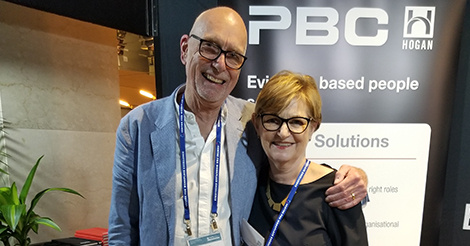
PCL’s Dr. Geoff Trickey (L) and PBC’s Shayne Nealon (R) take a moment to celebrate a triumphant tour

I have just returned from another fantastic voyage to the East. And since this e-postcard has only so much room to spare, I’ll cut right to the chase. It was my absolute pleasure traveling to and across Australia as I accompanied Peter Berry Consultancy (Hogan’s premier distributor) for their 2019 Thought Leadership Forum. This series of events featured the Australian Psychological Society’s biannual I/O Psychology Conference (IOP) as a capstone, of which PBC continues to be the sole platinum sponsor.

The following was just some of my report from the antipodes:

  • The PBC Hogan User conferences in Sydney, Melbourne and Adelaide were each a huge success. With legendary style, Peter Berry, Managing Director and Shayne Nealon, Managing Partner of PBC delivered presentations on client case studies and the latest innovations on the Hogan 360. A special highlight was when an executive from Australia’s national cricket team gave a ripper presentation on their usage of Hogan and the benefits it has brought to the organization. Public and private sector executives, academics, consultants and coaches were all in attendance.
  • Dr. Geoff Trickey, founder of Hogan’s elite UK distributor PCL, not only presented on his well-researched Risk Type Compass (a metric for measuring risk appetite and the behaviors associated with eight different risk orientations), he also won “Best Paper” at the IOP event for a related study. Go Geoff!
  • Speaking of IOP, the well-oiled machine that is the PBC team captivated several audiences across the conference halls with their engaging talent management topics:
    • Mark Do: Contemporary trends in personality and leadership assessment: Where are we now and where are we headed
    • Adrien Chew: Observed leadership behavior around the world: Exploring reputational differences of leaders across countries using 360s.
    • Kalani Koswatta Liyanage: What makes an effective leader? The impact of gender and personality on perceived leadership effectiveness.
    • Dr. Lynne Cruickshank: (1) Personality and High Performing Teams: Examining the relationship between personality and team performance. / (2) Engaging a Multi-Generational Workforce: Investigating differences in Values and Personality.
  • I’d also like to take a moment here to state my gratitude to Hogan’s Drs. Darin Nei and Brandon Ferrell, and PBC’s Dr. Lynne Cruickshank for their invaluable contributions as co-authors on a cross cultural paper featuring the Hogan360 (a topic which was also presented across the events). It was recently accepted by a peer-reviewed journal for publication. Congratulations you three! More to come on that soon…

If you didn’t get a chance to join and want to know more about these highly interesting topics, please contact a PBC consultant for more information related to any of the above. They are always happy to oblige. Wait…did you not know any of this was happening? You must not be on the PBC Newsletter. I highly suggest you enroll!

Well, until next time my friends,

Your devoted Asia Pacific correspondent, resident blogger, and current Hogan Senior Strategist,

Michael Sanger

Topics: Hogan, Geoff Trickey, Hogan 360

Defining Leadership

Posted by SGregory on Tue, Jul 09, 2019

iStock-1037401190

There are numerous perspectives and fundamental disagreement about the true definition of leadership. The good news is, most definitions of leadership fit into two broad categories. On one hand, we can think of a person who has a supervisory or management title as being a leader. On the other hand, we can think of a person who supports and guides a group to work toward common goals as being a leader. The first definition is based on a person’s formal role within an organization. The second definition is based on the function the leader serves and the group’s outcome.

Most books about leadership either explicitly or implicitly define leadership in terms of who is in charge, as does much of the academic study of leadership. The assumption is that leadership is about the position rather than the person. How do you know someone is a leader? You see if they have a title that implies they are in a leadership role. How do you study leadership to understand what it is about? You find people who are in leadership positions and study what they are doing. Who writes books about leadership? People who have been in leadership positions. Whose leadership books get published? Those who have had leadership titles in companies with recognizable brands. How does one get better at leadership? They read those books. The authors must know something about leadership, because they have been in leadership positions, right?

Maybe not. A large global survey of employee attitudes toward management found that less than half of respondents trust their boss. Another study suggests that about 50% of employees who quit their jobs do so because of their managers. Moreover, research indicates that somewhere between 30%-60% of those in leadership roles are actively destructive to their organizations. Based on these abysmal statistics it is likely that many authors of popular leadership books are part of the problem, not the answer. We can’t assume that people who are or have been in leadership roles can tell us much about how to be effective leaders. 

If you really want to understand what leadership is about, it is useful to start with three fundamentals about humans. First, we are biologically wired to live in groups. Second, because we are group-living, we are motivated to get along with other people because there is safety in numbers. Third, we are also hard-wired to compete for resources because better food and access to other resources maximizes our individual chance for survival.

People are inherently driven by two competing motives that can destroy group success. We all need to get along, but we also need to get ahead. Those needs are at odds, and when unmanaged in groups, the groups fail. The most successful groups are able to get along and get ahead. 

People rarely are balanced across these two motives. Some may be overly careful about going along with the group to avoid conflict. If the group is overly focused on harmony, it likely will lack direction. They may be happy and kind to each other, but they may not accomplish much. Others may be overly competitive in a way that destroys group harmony. If group members are focused on competing with each other, the group likely will be directionless because of competing perspectives. Only when both motives are managed and balanced within the group can it achieve safety in numbers and access to the resources necessary for survival. That was true thousands of years ago for groups living in caves, and it remains true today in the modern corporate world.

Leveraging Personality to Define Leadership

A more productive way to define leadership is about group outcomes. The purpose of leadership is to help group members balance needs for getting along and getting ahead in a way that maximizes the group’s success. If we define leadership as helping the group to succeed, suddenly a title or position becomes irrelevant. 

There is a great deal of high-quality research on the personality characteristics of effective leaders. Essentially, there are three aspects of personality that impact leadership ability:

  1. The Bright Side – This describes day-to-day work reputation, and characteristics like drive, emotional resilience, and one’s ability to work well with a variety of people. This is particularly important for leadership success. 
  2. The Dark Side – These are characteristics that can be overused, especially when a leader is reacting in the moment, not self-managing, or stressed. These characteristics are known to interfere with communication and relationship-building, gaining buy-in and clarity on direction, and the ability to balance conformity with being flexible and independent-minded. 
  3. The Inside (Values) – Although related to personality, values are different. They are more about one’s intentions or preferences and are key to the fit between a leader and his/her organization’s values.  For example, an individual who values and creates a culture of creativity and experimentation will not fit very well in a nuclear facility where processes and protocols must be followed precisely to ensure safety.

Personality predicts leadership ability. By using personality measures, you can gain insight into one’s ability to lead effectively, even if they’ve never been in a position of leadership. Understanding a person’s natural strengths and development needs concerning integrity, judgment, competence, and vision can help organizations strategically invest in development activities that will improve performance in leadership roles.

So, based on the points in this article, here are five essential things we know about leadership:

  1. Leadership is about the ability to guide and help a group to achieve its goals. It’s not about a title or position.
  2. Leading is about providing a group with direction and making sure the group works together to pursue that direction.
  3. The ultimate test of whether one is a leader is whether one’s group is successful.
  4. It is largely unimportant whether one thinks they are a leader, but it is critically important whether others think they are.
  5. Leadership effectiveness is not a mystery. Understanding the similarities and gaps between one’s personality characteristics and those related to leadership success can provide one with the strategic insight to lead effectively.

Topics: leadership development

Transformational Leadership: It’s Not What You Think

Posted by SGregory on Tue, Jun 25, 2019

Scott_IMG_9325_FB

The idea of transformational leadership sounds good when taken at face value. A transformational leader is someone who instills pride, respect and trust in its followers. They inspire and motivate people beyond expectations, sparking innovation and change. And, if you look up “transformation” in the dictionary, you will see it defined as “a thorough or dramatic change in form or appearance.” So, what organization wouldn’t want to introduce some form of transformational leadership to respond to the disruption caused by the current digital revolution?

Although transformational leadership seems like a good idea in theory, it is nothing more than charismatic leadership with a different and more appealing name. A recent study published by the Journal of Personality and Social Psychology shows that there is plenty to dislike about charismatic leadership. In fact, there is little evidence to show that there is a strong correlation between charisma and effective leadership. So, because charismatic leadership and transformational leadership are essentially the same thing, it’s important to understand how this style of leadership has been so widely adopted across the globe.

According to another study published by the Academy of Management, “there is a widely shared consensus that charismatic–transformational leadership is a particularly effective form of leadership.” However, there are some major issues with this assumption, given that this leadership style is fundamentally flawed. There should instead be a shift towards a new and more empirically defined form of leadership, where leaders are appointed based on capability and skill as opposed to charisma.  

First, it is widely assumed that leadership is defined as “a person who has a leadership or managerial title.” The problem with that definition is that it doesn’t address how that person assumed the leadership position in the first place. Organizations across the world are notorious for promoting charismatic and politically savvy employees into leadership roles because they seem leaderlike. Some people can charm their superiors into thinking they would be effective leaders. They tend to be confident, creative, charming, and flashy, which helps them stand out in comparison with their peers. However, although their personality makes them seem “transformative,” in reality they are often ineffective leaders.

Second, there are several inconsistencies when it comes to measuring leader effectiveness. In a 2008 study conducted by Robert B. Kaiser, Robert Hogan, and S. Bartholomew Craig, the authors outlined these inconsistencies. For example, some organizations measure leadership effectiveness through manager evaluations. Others measure it through subordinate evaluations. Some are based solely on financial results. This diversity in methodology has delivered mixed results, essentially making any conclusions on leader effectiveness inconclusive. Therefore, there is often no real evidence connecting hiring or promoting charismatic-transformational leaders with improved organizational results.

Third, because charismatic-transformational leadership has been deemed by so many to be an effective form of leadership, there is a presumed “fear” among researchers to debunk this myth, which is ironic. If there is evidence to suggest that this leadership style is ineffective, yet nobody wants to go against popular consensus, wouldn’t calling out these “experts” be transformative in and of itself?

The bottom line is that charismatic-transformational leadership is prevalent in organizations on a global scale, but there is little evidence to suggest it is effective. This leads us to one crucial question that organizations everywhere should be asking: How successful could we be if we did not assume that charismatic-transformational leadership leads to leadership effectiveness?

This is a complex problem with a simple solution: Define leadership correctly and then identify effective leaders through the use of valid personality assessments.

You cannot define leadership as someone who is in a managerial role or someone who has been promoted simply because he or she is inspiring and socially confident. You have to define leadership as a person who builds and maintains a high-performing team. When organizations do that, they have a completely different view of what makes for an effective leader.

Then, through the use of valid and reliable assessment measures, they can better identify those who will be successful. One of the characteristics that organizations need to look for in leaders is humility. Effective leaders are more modest; they focus on team performance and are willing to admit mistakes, share credit and learn from others. These are the type of leaders that can inspire true positive change and innovation.

Topics: leadership development

RELEVANT Managementberatung Partners with ICF Germany for German Prism Award (Applications are open)

Posted by Hogan Assessments on Tue, Jun 11, 2019

icf-prism-relevant-logo–600×485

Hogan distributor, RELEVANT Managementberatung, has partnered with the International Coach Federation Germany chapter to present this year´s German Prism Award, awarded to companies making a difference in the coaching community through professionalism, quality, and data.

The selection process and criteria were modeled after ICF’s International Prism Award, which has been granted annually since 2005 to companies that stand out through the establishment of a coaching culture with extraordinary results in difficult change processes. Past winners of this prestigious award include Coca Cola, SAP, Airbus, and several other prominent companies.

“Continuing our partnership with the ICF to present the German Prism Award after a great start in 2018 is a perfect opportunity for us,” says RELEVANT owner, Dr. René Kusch. “At RELEVANT, we are fully committed to advancing the coaching profession, and this award is symbolic of that commitment.”

Those nominated are coaching programs that have innovative concepts and/or have made a significant contribution to achieving important corporate goals. The award will be presented on November 15 during ICF Germany’s Coaching Day in Munich, and applications will be accepted through July 16.

“We look forward to a long and prosperous relationship with ICF Germany for many years to come,” says Kusch. “The ICF is the world’s premier coaching organization, and it is an honor to be involved of something we believe will be a high-profile distinction for German coaching programs in the future.”

Topics: Hogan, Hogan Assessment Systems, ICF, International Coach Federation

Infelligent Hosts “Refresh Mindset for Leadership Forum”

Posted by Hogan Assessments on Tue, Jun 11, 2019

Infelligent-1-1

Infelligent Coaching & Consulting, Hogan’s distributor in Taiwan, hosted a “Refresh Mindset for Leadership Forum,” on April 12. Their audience of nearly 100 guests was comprised of many distinguished corporate leaders. Ken Sun, General Manager of Microsoft Taiwan, and Enid Tsai, General Manager of Hiwin Technology, shared their success stories based on Hogan related concepts. Abby Hsieh, Managing Director of Ogilvy Group Taiwan acted as the moderator.

In his opening remarks, Jim Hwang, General Manager of Infelligent, shared insights on transforming talent selection strategies. Based on Hogan’s research on Humility and Emergence vs Effectiveness, he suggested that corporations should not identify talent only based on performance approval, likability and willingness – these are common traits we often find in charismatic people who are not necessarily effective leaders. Studies show humble people make the effort to develop teamwork and help others; they focus more on team success rather than personal glory. Identifying high potential candidates with scientific assessments like the Hogan assessments, differentiates emergent leadership (generated by charisma) and effective leadership (generated by humility) and finds the leaders who are focused on building effective teams; who invites new ideas and feedback; who are willing to admit mistakes; and who gives credit to the teams and colleagues.

Ken Sun shared how Hogan’s concept of “Leadership Effectiveness” was also one of the keys to Microsoft’s comeback. When Satya Nadella took on the role of CEO at Microsoft, the quiet, humble, and disciplined leader set out to create a culture of “growth mindset” and followed this up with several innovative measures. He successfully reignited the employees’ passion and energy, built up a style of open communication, and completely transformed Microsoft, bringing it back to the leading position in the market.  

Enid Tsai shared about a similar successful transformation that took place at Hiwin Technology. This traditional automated device manufacturer refreshed its culture and explored new applications for these devices. Hiwin achieved global recognition with endless innovative projects such as “The Sound of Blooming,” installation – the world’s largest mechanical flower at Taichung Flora Expo and also a “Smart Coffee Shop”.

These organizations’ leaders worked hard to change the employee mindset, and this drove organizational transformation. When the new values and culture become part of an organization, engagement and inclusivity grows, and innovation grows too. Using scientific, unbiased tools like Hogan, to be able to effectively select leaders who can drive this transformation is key in the entire process.

The event concluded with a dialogue between these distinguished leaders. All of them agreed an organization’s culture is one of the keys to its transformation. A leader’s style directly impacts the culture. Humility in leaders with growth mindset opens the mind to innovation and learning and creates a culture that creates possibilities, and will drive the organizations ahead to the future. Hogan Research has studied humility extensively, and continues to explore its impact on global leadership.

Topics: Hogan, Hogan Assessment Systems, Infelligent

Subscribe to our Blog

Most Popular Posts

Connect