The Summer Slump: Are you bored at work or bored with work?

Posted by Natalie O'Neal on Wed, Jun 25, 2014

Beach resized 600Well it’s officially summer – purveyor of fun in the sun, snow cones, and vacation. Oh, and the summer workday slump. Have you found yourself perusing more pop news sites, taking more Buzzfeed quizzes, and streaming the World Cup behind your Excel spreadsheets?

Turns out, you’re not the only one. In his Management Today blog, Dr. Tomas Chamorro-Premuzic sites some pretty interesting statistics about online leisure activity and work: “A recent survey by the National Bureau of Economic Research asked people a very simple question: 'What are you not doing when you are online?' The most common answer, by far, was 'working' - 35%, compared with 15% for 'watching TV', 12% for 'sleeping', and 4% for 'relaxing and thinking'.”

“If this is true,” he continues, regarding the 35% who would be working, “there are two potential implications. The first is that people are a lot less productive than they could be...The second - alternative - explanation is that most employees are spending more time at work than needed.”

So we get to choose between the possibilities that work suffers – imagine the benefits of a 35% increase in productivity – or leisure time suffers.

“Indeed, if online leisure time does not harm productivity, then why pay people to spend that time at work?” says Chamorro-Premuzic.

Unfortunately, there may be a more serious issue underlying our online leisure habits. “Online leisure time makes work - or at least being at work - less boring. So, ironically, the very activity that serves as a coping mechanism for the underlying boringness of work keeps them at the job for longer than needed,” says Chamorro-Premuzic.

So maybe we should start asking ourselves, is our newly acquired Facebook addiction a result of a summer slump or a bored cry for help?

The Summer Slump: Are you bored at work or bored with work?

Posted by Hogan Assessments on Tue, Jun 24, 2014


Beach resized 600Well it’s officially summer – purveyor of fun in the sun, snow cones, and vacation. Oh, and the summer workday slump. Have you found yourself perusing more pop news sites, taking more Buzzfeed quizzes, and streaming the World Cup behind your Excel spreadsheets?

Turns out, you’re not the only one. In his Management Today blog, Dr. Tomas Chamorro-Premuzic sites some pretty interesting statistics about online leisure activity and work: “A recent survey by the National Bureau of Economic Research asked people a very simple question: ‘What are you not doing when you are online?’ The most common answer, by far, was ‘working’ – 35%, compared with 15% for ‘watching TV’, 12% for ‘sleeping’, and 4% for ‘relaxing and thinking’.”

“If this is true,” he continues, regarding the 35% who would be working, “there are two potential implications. The first is that people are a lot less productive than they could be…The second – alternative – explanation is that most employees are spending more time at work than needed.”

So we get to choose between the possibilities that work suffers – imagine the benefits of a 35% increase in productivity – or leisure time suffers.

“Indeed, if online leisure time does not harm productivity, then why pay people to spend that time at work?” says Chamorro-Premuzic.

Unfortunately, there may be a more serious issue underlying our online leisure habits. “Online leisure time makes work – or at least being at work – less boring. So, ironically, the very activity that serves as a coping mechanism for the underlying boringness of work keeps them at the job for longer than needed,” says Chamorro-Premuzic.

So maybe we should start asking ourselves, is our newly acquired Facebook addiction a result of a summer slump or a bored cry for help?


Women in Leadership Series: Part III

Posted by Rebecca Callahan on Tue, Jun 24, 2014

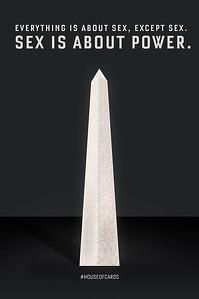
Power“A great man once said, everything is about sex. Except sex. Sex is about power.” –Frank Underwood, House of Cards, #1.9

In modern socioanalytic theory, we like to focus on how we depart from Freud in our thinking. To Freud, everything was motivated by sex. To us, everything is motivated by status and power. Although we have to agree to disagree with the ghost of Freud on that one, lately I’ve been thinking he was onto something.

We face the constant over-sexualization of women in every aspect of modern life, from the media’s obsession with women’s appearances, to sexism in the workplace, to blatant rape culture. The vortex of attention on women’s appearances, bodies, and sexuality is so consuming and so seductive that even women talk about other women like they’re animals. Can we stop talking about Hillary Clinton’s hair? Seriously. 

The oversexualization of women is rampant, and it’s hard to believe it’s not linked to women’s anemic presence at the executive levels

Oh, Freud, late have I loved you.

You were right, Freud, it is all about sex, because sex is a proxy.
An excuse.
A distraction. 
A Trojan horse.

Sex is a proxy for power. If we denigrate women sexually in the workplace, we aim to take away their power. It’s a diversion for the real issue: the crisis of power being in the hands of women. 

Fascinatingly, when we look at women’s leadership derailers against men’s, we see two major trends. Women are much more dutiful, which means they defer to authority more and assert their opinions less. Women are also much less mischievous, the Machiavellian tendency, which means they don’t go pushing their own agendas. Women are conditioned to relinquish power, instead of taking it when deserved. Our constant belittling, sexualizing, and demeaning goes so far as to impact women’s personalities on a mass scale.

So think before you talk about one of your female colleagues, before you criticize someone’s appearance in front of your daughter (or, more importantly, your son), and before you click on an article about celebrity bikini bodies and give Us Weekly some ad revenue.

Do yourself a favor: get educated. You can start here.

Topics: women in leadership

Women in Leadership Series: Part III

Posted by Hogan Assessments on Mon, Jun 23, 2014

Power“A great man once said, everything is about sex. Except sex. Sex is about power.” –Frank Underwood, House of Cards, #1.9

In modern socioanalytic theory, we like to focus on how we depart from Freud in our thinking. To Freud, everything was motivated by sex. To us, everything is motivated by status and power. Although we have to agree to disagree with the ghost of Freud on that one, lately I’ve been thinking he was onto something.

We face the constant over-sexualization of women in every aspect of modern life, from the media’s obsession with women’s appearances, to sexism in the workplace, to blatant rape culture. The vortex of attention on women’s appearances, bodies, and sexuality is so consuming and so seductive that even women talk about other women like they’re animals. Can we stop talking about Hillary Clinton’s hair? Seriously.

The oversexualization of women is rampant, and it’s hard to believe it’s not linked to women’s anemic presence at the executive levels.

Oh, Freud, late have I loved you.

You were right, Freud, it is all about sex, because sex is a proxy.
An excuse.
A distraction.
A Trojan horse.

Sex is a proxy for power. If we denigrate women sexually in the workplace, we aim to take away their power. It’s a diversion for the real issue: the crisis of power being in the hands of women.

Fascinatingly, when we look at women’s leadership derailers against men’s, we see two major trends. Women are much more dutiful, which means they defer to authority more and assert their opinions less. Women are also much less mischievous, the Machiavellian tendency, which means they don’t go pushing their own agendas. Women are conditioned to relinquish power, instead of taking it when deserved. Our constant belittling, sexualizing, and demeaning goes so far as to impact women’s personalities on a mass scale.

So think before you talk about one of your female colleagues, before you criticize someone’s appearance in front of your daughter (or, more importantly, your son), and before you click on an article about celebrity bikini bodies and give Us Weekly some ad revenue.

In Defense of Personality Tests

Posted by Natalie O'Neal on Mon, Jun 23, 2014

quizRecent pop personality quizzes such as those found on BuzzFeed make light of our fascination with personality and the practicality of self-awareness. While these may be fun coffee break activities, they don’t warrant much in terms of scientific feedback and tend to give personality tests a bad rap in a professional setting. When I explain my job to my friends, they’re always amazed that personality is measurable. In a recent Forbes’ article, Dr. Tomas Chamorro-Premuzic defends seven “common arguments against the use of personality tests in the workplace.”

People can fake their answers
Well, in the first place, “when tests are adequately designed,” says Chamorro-Premuzic, “it is not easy to guess what different questions assess, or how different answers will be interpreted, making deliberate manipulation quite ineffective…Second, good tests not only allow for a certain degree of dishonesty – they actually encourage it.” We all want to present a favorable image when interviewing or talking about ourselves which isn’t necessarily a bad thing. Those that fudge the lines of truth a bit could just be demonstrating their knowledge of social etiquette and behavior. “In short,” says Chamorro-Premuzic, “people may try to fake, but they are generally not smart enough to fool good psychometric tests – and if they are, they should be hired anyway.”

Tests are inaccurate
“Yet 50-years of psychological research show that self-perceptions are inaccurate and inflated, as our unconscious desire to feel good about ourselves – our optimism bias – is much more powerful than our enthusiasm for reality,” counters Chamorro-Premuzic. “In line,” he continues, “the accuracy of scientific personality tests does not depend on the degree to which scores align with test-takers’ self-perceptions, but on the tests’ ability to predict respondents’ actual behavior: what they do, rather than how they think of themselves.”

Personality changes from situation to situation
While your behavior may change depending on the situation, your personality doesn’t. It is your personality that “affects and predicts how you are likely to behave in different situations,” explains Chamorro-Premuzic.

Tests are unfair
It’s true that some people do better than others on personality tests, but, “when those differences in performance are actually related to job potential (e.g., a person’s ability to sell insurance, drive a bus, or manage a winning team), then surely it would be more unfair to hire the weaker candidates,” says Chamorro-Premuzic.

Tests are reductionist and “pigeonhole” people
Actually, people are reductionist and “pigeonhole” people through stereotypes. “Personality tests focus on generic patterns of thought, action and behavior. They are therefore color blind and gender neutral, as well as unrelated to a person’s educational or socioeconomic background,” claims Chamorro-Premuzic.

Tests are intrusive and pick up private abnormalities
“Scientific tests comply with strict ethical standards and national laws for both research and practice,” explains Chamorro-Premuzic, “and their administration requires the test-taker’s consent and involves a transparent exchange with the test-taker (unlike, for example, in the case of big data and social analytics), who is usually provided with some feedback after completing the test.

Success depends on context, so how can you give the same test to everyone?
While every job is somewhat different, “successful employees tend to be more or less similar everywhere,” says Chamorro-Premuzic.

If you want an expanded version of this blog, check out the original post on Forbes.

In Defense of Personality Tests

Posted by Hogan Assessments on Sun, Jun 22, 2014

quizRecent pop personality quizzes such as those found on BuzzFeed make light of our fascination with personality and the practicality of self-awareness. While these may be fun coffee break activities, they don’t warrant much in terms of scientific feedback and tend to give personality tests a bad rap in a professional setting. When I explain my job to my friends, they’re always amazed that personality is measurable. In a recent Forbes’ article, Dr. Tomas Chamorro-Premuzic defends seven “common arguments against the use of personality tests in the workplace.”

People can fake their answers
Well, in the first place, “when tests are adequately designed,” says Chamorro-Premuzic, “it is not easy to guess what different questions assess, or how different answers will be interpreted, making deliberate manipulation quite ineffective…Second, good tests not only allow for a certain degree of dishonesty – they actually encourage it.” We all want to present a favorable image when interviewing or talking about ourselves which isn’t necessarily a bad thing. Those that fudge the lines of truth a bit could just be demonstrating their knowledge of social etiquette and behavior. “In short,” says Chamorro-Premuzic, “people may try to fake, but they are generally not smart enough to fool good psychometric tests – and if they are, they should be hired anyway.”

Tests are inaccurate
“Yet 50-years of psychological research show that self-perceptions are inaccurate and inflated, as our unconscious desire to feel good about ourselves – our optimism bias – is much more powerful than our enthusiasm for reality,” counters Chamorro-Premuzic. “In line,” he continues, “the accuracy of scientific personality tests does not depend on the degree to which scores align with test-takers’ self-perceptions, but on the tests’ ability to predict respondents’ actual behavior: what they do, rather than how they think of themselves.”

Personality changes from situation to situation
While your behavior may change depending on the situation, your personality doesn’t. It is your personality that “affects and predicts how you are likely to behave in different situations,” explains Chamorro-Premuzic.

Tests are unfair
It’s true that some people do better than others on personality tests, but, “when those differences in performance are actually related to job potential (e.g., a person’s ability to sell insurance, drive a bus, or manage a winning team), then surely it would be more unfair to hire the weaker candidates,” says Chamorro-Premuzic.

Tests are reductionist and “pigeonhole” people
Actually, people are reductionist and “pigeonhole” people through stereotypes. “Personality tests focus on generic patterns of thought, action and behavior. They are therefore color blind and gender neutral, as well as unrelated to a person’s educational or socioeconomic background,” claims Chamorro-Premuzic.

Tests are intrusive and pick up private abnormalities
“Scientific tests comply with strict ethical standards and national laws for both research and practice,” explains Chamorro-Premuzic, “and their administration requires the test-taker’s consent and involves a transparent exchange with the test-taker (unlike, for example, in the case of big data and social analytics), who is usually provided with some feedback after completing the test.

Success depends on context, so how can you give the same test to everyone?
While every job is somewhat different, “successful employees tend to be more or less similar everywhere,” says Chamorro-Premuzic.

If you want an expanded version of this blog, check out the original post on Forbes.

The Intuitive Manager

Posted by Natalie O'Neal on Thu, Jun 19, 2014

Intuition resized 600I don’t know about you, but whenever I have a tough decision to make and no reasoning tools at my disposal, I tend to do one of two things: 1) eeny, meeny, miny, mo; or 2) go with my gut (otherwise known as intuition).


While these two methods have served me well in the past when choosing a chocolate bar over skittles or picking a light blue over a slightly lighter blue shirt to buy, I can’t imagine using a nursery rhyme when it comes to something as important as hiring. And yet, some managers use such arbitrary techniques to find new talent and promote internally.

“Unsurprisingly, most people overestimate their intuitive powers, much like they overestimate their sense of humour, creativity, and sex appeal,” writes Dr. Tomas Chamorro-Premuzic in a recent Forbes article. Just because someone flashes a smile during an interview and says all the right things, doesn’t mean they’ll be a good fit for the job. In other words, it’s not enough to rely purely on intuition.

Fortunately, intuition during the selection process can be a skill when it is informed by good data, such as validated personality assessment results. “In line,” continues Chamorro-Premuzic, “purely intuitive managers may face extinction only if they ignore the valuable information provided by data. At the same time, those managers who are capable of data-driven intuition will remain in demand, and increasingly so.”

In conclusion, Chamorro-Premuzic asserts that “modern management calls for leaders who are logical, empirical, and intuitive. They must have both IQ and EQ and question their own judgment by remaining humble and maintaining their ingenuity.” So, go with your gut! But make sure it’s well informed.

Drinks with Hogan | Bad Managers

Posted by HNews on Mon, Jun 16, 2014


In the sixth installment of our video series, Drinks with Hogan, Dr. Tomas Chamorro-Premuzic, Hogan’s vice president of research and innovation, and HR iconoclast William Tincup discuss what to do with bad managers.


Topics: bad managers, Drinks with Hogan

The Worst Interview Question Ever

Posted by Ryan Daly on Thu, Jun 12, 2014

maze resized 600
“What is your greatest weakness?” is the worst interview question, ever.

Here’s why you should be asking candidates about their greatest strength. 

What is your greatest weakness? If there was such a thing as a universally despised interview question, this would top the list. Sell me this pencil is a close second.

Job candidates hate this question because it puts them in an impossible situation. On the one hand, they could actually admit their greatest weakness. But, would you hire someone who told you that they were unorganized or tended to butt heads with his or her coworkers? On the other hand, he or she could lie and spin a strength. Sometimes I’m too hardworking. Of course you are. The last time I was interviewing for jobs, I mastered the art of cheeky avoidance. I possess super-human strength, but only when I’m angry.

The interviewers, for their part, hate this question because it’s cliché, and because they know it will be met with a B.S. answer, no matter how cleverly they ask. My favorite example is, tell me why, in five years, I have to fire you. My favorite answer? Economic downturn.

And, even if we managed to get a completely honest answer, would it even matter? The answer is no, for three reasons:

  1. First, they probably don’t know the answer. A 2006 analysis of 360-degree ratings showed strong a correlation between peer and supervisor ratings, but there was only a modest correlation between self-supervisor and self-peer ratings. In other words, most people have no idea how the rest of the world sees them. As one of my colleagues often puts it, everyone thinks they are smart, funny, and great in bed, but that doesn’t mean it’s true.
  2. Next, anyone with the level of self-awareness it takes to actually pinpoint their greatest weakness (and the cajones to tell you) likely also possesses the presence of mind to put mechanisms in place to prevent that weakness from impacting his or her performance. For example, someone who knows that he or she tends to procrastinate (like me) will set hard deadlines for him or herself and use scheduling and productivity apps to keep them on track.
  3. Finally, most of your hires won’t fail because of their greatest weakness. Most of them will fail because they overplay their greatest strength. Here’s the science: a 2009 study of personality information from 126 managers and performance ratings from 1,500 of their coworkers showed that, as levels of certain strengths increased past a certain point, their effectiveness decreased. Anyone who has been in the workforce long has seen how this plays out. An ambitious new employee on your sales team turns cutthroat under the pressure to meet his or her numbers, and starts competing with members of his or her own team. Or, a detail-oriented accounting manager turns into a micro-manager.

I’m certainly not saying that weaknesses don’t impact our performance — they do. But weaknesses are easy to spot, and easy to compensate or correct. Because overused strengths are born in our blind spots, they can be hard to spot until they’ve already had a devastating effect.

Topics: interviewing

The Worst Interview Question Ever

Posted by Hogan Assessments on Wed, Jun 11, 2014

maze resized 600
“What is your greatest weakness?” is the worst interview question, ever.

Here’s why you should be asking candidates about their greatest strength. 

What is your greatest weakness? If there was such a thing as a universally despised interview question, this would top the list. Sell me this pencil is a close second.

Job candidates hate this question because it puts them in an impossible situation. On the one hand, they could actually admit their greatest weakness. But, would you hire someone who told you that they were unorganized or tended to butt heads with his or her coworkers? On the other hand, he or she could lie and spin a strength. Sometimes I’m too hardworking. Of course you are. The last time I was interviewing for jobs, I mastered the art of cheeky avoidance. I possess super-human strength, but only when I’m angry.

The interviewers, for their part, hate this question because it’s cliché, and because they know it will be met with a B.S. answer, no matter how cleverly they ask. My favorite example is, tell me why, in five years, I have to fire you. My favorite answer? Economic downturn.

And, even if we managed to get a completely honest answer, would it even matter? The answer is no, for three reasons:

  1. First, they probably don’t know the answer. A 2006 analysis of 360-degree ratings showed strong a correlation between peer and supervisor ratings, but there was only a modest correlation between self-supervisor and self-peer ratings. In other words, most people have no idea how the rest of the world sees them. As one of my colleagues often puts it, everyone thinks they are smart, funny, and great in bed, but that doesn’t mean it’s true.
  2. Next, anyone with the level of self-awareness it takes to actually pinpoint their greatest weakness (and the cajones to tell you) likely also possesses the presence of mind to put mechanisms in place to prevent that weakness from impacting his or her performance. For example, someone who knows that he or she tends to procrastinate (like me) will set hard deadlines for him or herself and use scheduling and productivity apps to keep them on track.
  3. Finally, most of your hires won’t fail because of their greatest weakness. Most of them will fail because they overplay their greatest strength. Here’s the science: a 2009 study of personality information from 126 managers and performance ratings from 1,500 of their coworkers showed that, as levels of certain strengths increased past a certain point, their effectiveness decreased. Anyone who has been in the workforce long has seen how this plays out. An ambitious new employee on your sales team turns cutthroat under the pressure to meet his or her numbers, and starts competing with members of his or her own team. Or, a detail-oriented accounting manager turns into a micro-manager.

I’m certainly not saying that weaknesses don’t impact our performance — they do. But weaknesses are easy to spot, and easy to compensate or correct. Because overused strengths are born in our blind spots, they can be hard to spot until they’ve already had a devastating effect.

Subscribe to our Blog

Most Popular Posts

Connect