People in the Middle Do the Actual Work

Posted by HNews on Wed, Aug 21, 2013

Middle Managers“You don’t start at the top if you want to find the story. You start in the middle, because it’s the people in the middle who do the actual work in the world.”
Malcolm Gladwell, journalist and bestselling author

Unfortunately, many companies spent the past decade diverting resources from middle management, creating a talent vacuum that has proved difficult to fill. Without proper development, a company’s most valuable assets – their people – can derail and fall short of performance expectations. There are four ways companies get managing their middle managers wrong:

1)     They promote the wrong people. Many organizations rely on performance appraisals and supervisor nominations to identify and promote talented individuals rather than objective measures.

2)     They don’t effectively train them. Most companies focus their development efforts at the extremes of their management hierarchies rather than honing in on the central figures – the middle managers.

3)     They stress them out. The shift to more flat organizational structures has placed the lion’s share of pressure and accountability on the shoulders of middle managers.

4)     They let them disengage. In a 2007 study, 41% of HR leaders said engagement among mid-level managers had dropped noticeably over the previous 18 months.

How can organizations turn their underperforming middle managers into a group of competent, engaged leaders? Find out in our ebook, 4 Ways Companies Are Failing Their Middle Managers And Why It’s Killing Innovation.

Interpreting HPI Subscales

Posted by Hogan News on Wed, Aug 21, 2013

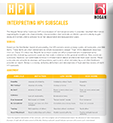
HPI Item Themes2The Hogan Personality Inventory is measure of personality assessment that provides leaders the strategic self-awareness they need to get along and get ahead. Raw scores on HPI subscales, available in many of Hogan’s reports, allow interpretation above and beyond main scale scores.

The HPI subscales are valuable tools for coaches and feedback providers. They provide an abundance of nuance for interpreting results. Subscales allow the interpreter to find distinctions among average scores and identify differences among individual with similar scale scores. Although main scale score interpretation is valuable alone, users will find that supplementing that interpretation with subscales increases the power of the instrument across applications.

For assistance interpreting the HPI subscales, download our white paper.

Topics: HPI, Hogan Personality Inventory

Interpreting HPI Subscales

Posted by HNews on Tue, Aug 20, 2013


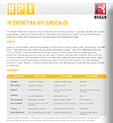
HPI Item Themes2The Hogan Personality Inventory is measure of personality assessment that provides leaders the strategic self-awareness they need to get along and get ahead. Raw scores on HPI subscales, available in many of Hogan’s reports, allow interpretation above and beyond main scale scores.

The HPI subscales are valuable tools for coaches and feedback providers. They provide an abundance of nuance for interpreting results. Subscales allow the interpreter to find distinctions among average scores and identify differences among individual with similar scale scores. Although main scale score interpretation is valuable alone, users will find that supplementing that interpretation with subscales increases the power of the instrument across applications.

For assistance interpreting the HPI subscales, download our white paper.


Q&A with Robert Hogan: Engagement and Workaholics

Posted by Robert Hogan on Mon, Aug 19, 2013

QA quick search for the word engagement yields more than 6 million websites, thousands of books, and myriad articles. Yet, a Gallup poll showed that more than 71% of American employees are disengaged at their jobs, indicating that although most companies recognize employee engagement as important, many still struggle to understand it. Dr. Robert Hogan discusses the concept of engagement, work-life balance, and workaholics in this Q&A.

Q: What is engagement?
A: Engagement refers to how employees perceive their jobs and employers. It is an ideal state rarely fully achieved. It is the opposite of alienation. When employees are engaged, they like their jobs, they work hard at their jobs, they take initiative, and they show loyalty. When employees are alienated, they hate their jobs, they don’t work very hard, they never take initiative or show loyalty. The data are perfectly clear, when employees are engaged, their employers make more money. And engagement is easy to measure.

Q: What are some of the hallmarks of an engaged employee?
A: Positive attitudes, hard work, loyalty, low absenteeism, low turnover, high productivity, and high customer service ratings.

Q: Most people have 24/7 access to their phones and email accounts. Although that gives most people added freedom, it also comes with the expectation of constant availability. Do you think this blurring of the line between work life and family/home life makes people more engaged or less engaged at their job?
A: You have the question backwards. How people react to constant availability depends on how engaged they are. The more engaged an employee, the more he or she will be willing to bring work into their family/home life.

Q: How would you define a workaholic in the typical negative context? Are there certain characteristics or derailers that you would see in a typical workaholic?
A: A workaholic is someone who works constantly to defend him or herself against anxiety and the threat of being criticized or rejected. There is neurotic propulsion to their work efforts – they are driven, rigid, inflexible, and afraid of innovation or change.

Q: What is the difference between a workaholic and an engaged workaholic? What kind of characteristics are you likely to see in an engaged workaholic?
A: For a workaholic, engagement would be therapeutic. Engaged people find their work meaningful. A big problem for workaholics is that they are seeking meaning and purpose and can’t find it. An engaged workaholic would be a terrific employee.

Q: What are the different reasons these two types of people are likely to burn out?
A: A disengaged workaholic is already burnt out. They live in a state of psychological burn out. Workaholics are fragile by definition. An engaged workaholic will burn out by taking on too much work.

Q: How can companies build engagement in their workforce and prevent burnout?
A: First, assess the current level of engagement to identify pockets of alienation. Second, fire the managers who run the operations that are alienated. Third, train the remaining managers on how to be good managers. Fourth, follow up with successive assessments of employee engagement. Fifth, some employees are impossible to engage, so don’t hire any more of them.

Topics: employee engagement, workaholics

Q&A with Robert Hogan: Engagement and Workaholics

Posted by RHogan on Sun, Aug 18, 2013

QA quick search for the word engagement yields more than 6 million websites, thousands of books, and myriad articles. Yet, a Gallup poll showed that more than 71% of American employees are disengaged at their jobs, indicating that although most companies recognize employee engagement as important, many still struggle to understand it. Dr. Robert Hogan discusses the concept of engagement, work-life balance, and workaholics in this Q&A.

Q: What is engagement?
A: Engagement refers to how employees perceive their jobs and employers. It is an ideal state rarely fully achieved. It is the opposite of alienation. When employees are engaged, they like their jobs, they work hard at their jobs, they take initiative, and they show loyalty. When employees are alienated, they hate their jobs, they don’t work very hard, they never take initiative or show loyalty. The data are perfectly clear, when employees are engaged, their employers make more money. And engagement is easy to measure.

Q: What are some of the hallmarks of an engaged employee?
A: Positive attitudes, hard work, loyalty, low absenteeism, low turnover, high productivity, and high customer service ratings.

Q: Most people have 24/7 access to their phones and email accounts. Although that gives most people added freedom, it also comes with the expectation of constant availability. Do you think this blurring of the line between work life and family/home life makes people more engaged or less engaged at their job?
A: You have the question backwards. How people react to constant availability depends on how engaged they are. The more engaged an employee, the more he or she will be willing to bring work into their family/home life.

Q: How would you define a workaholic in the typical negative context? Are there certain characteristics or derailers that you would see in a typical workaholic?
A: A workaholic is someone who works constantly to defend him or herself against anxiety and the threat of being criticized or rejected. There is neurotic propulsion to their work efforts – they are driven, rigid, inflexible, and afraid of innovation or change.

Q: What is the difference between a workaholic and an engaged workaholic? What kind of characteristics are you likely to see in an engaged workaholic?
A: For a workaholic, engagement would be therapeutic. Engaged people find their work meaningful. A big problem for workaholics is that they are seeking meaning and purpose and can’t find it. An engaged workaholic would be a terrific employee.

Q: What are the different reasons these two types of people are likely to burn out?
A: A disengaged workaholic is already burnt out. They live in a state of psychological burn out. Workaholics are fragile by definition. An engaged workaholic will burn out by taking on too much work.

Q: How can companies build engagement in their workforce and prevent burnout?
A: First, assess the current level of engagement to identify pockets of alienation. Second, fire the managers who run the operations that are alienated. Third, train the remaining managers on how to be good managers. Fourth, follow up with successive assessments of employee engagement. Fifth, some employees are impossible to engage, so don’t hire any more of them.

Topics: employee engagement

Feedback is the Breakfast of Champions

Posted by Hogan Assessments on Fri, Aug 16, 2013

“Happy are they who can hear their detractions and put them to mending”
 - William Shakespeare, Much Ado About Nothing

If Shakespeare is right then no one can perform optimally without feedback. Yet according to the revered American psychologist Abraham Maslow most of us are torn about giving and receiving critical feedback. He referred to this as “the need to know and the fear of knowing.”  Managers especially have a hard time obtaining useful feedback. In power relationships such as between the boss and the bossed people will not speak “their truth” if they believe it will come back to bite them. Therefore, in my experience the best solicited feedback is confidential feedback. To maintain the confidentiality you need an unbiased third party to do the surveying.

Beyond confidential feedback, managers, if they are to improve, need what my colleague Robert Hogan calls Strategic Self-Awareness. Allow me to explain; things that are known to us and known to others is public knowledge. What is known to us and unknown to others is private knowledge. The fascinating knowledge is the information that is known to others but unknown to us, commonly referred to as blind spots. When that information is revealed to us, those are illuminating moments that facilitate dramatic change. These blindside moments are sometimes hurtful but always instructive. What is unknown to us is usually well-known to others. To see ourselves as others see us is strategic self-awareness.

Through the use of assessment tools (personality tests, 360 evaluations) managers can systematically enhance learning and gain self-awareness. However, not all assessment instruments are equally effective in building strategic self-awareness. Firstly, the assessment should be designed for the workplace. This means that managers are profiled and compared to other managers along dimensions that are relevant to job performance.  

Secondly, the assessment should be able to detect two types of performance problems: deficiencies when managers display too little of an important leadership behavior and excesses when managers apply a particular behavior too much. Deficiencies normally fall in the category of public knowledge. However, excesses which ironically are strengths overused constitute blind spots. Feedback delivered in terms of too little/underdoing and too much/overdoing makes it instantly clear what you (the manager) needs to do to improve. Regrettably, most leadership assessment operates on the assumption that more is better.

First Seek Feedback, then Feed Forward

We all require feedback to determine where we stand, to establish the direction we are headed and to measure our progress along the chosen developmental path. Feedforward, the brainchild of renowned executive coach Marshall Goldsmith comes in the form of ideas you can put into practice in the future. Simply put feedback is about yesterday and feedforward is about tomorrow. The procedure is easy to implement: Describe your developmental goal in a one to one dialogue with anyone you know, ask for two suggestions and end by saying thank you. No evaluation or discussion around the ideas put forth are permitted by the solicitor of ideas. The beauty of feedforward is that it does not arouse defensiveness. In fact, it is energizing and forces us to follow-up: by asking, listening and enlisting others in our initiative for personal change. So remember first seek feedback then feedforward.

Guest author: Jorge Fernandez

Topics: strategic self awareness, feedback

Feedback is the Breakfast of Champions

Posted by Hogan Assessments on Thu, Aug 15, 2013

“Happy are they who can hear their detractions and put them to mending”
 – William Shakespeare, Much Ado About Nothing

If Shakespeare is right then no one can perform optimally without feedback. Yet according to the revered American psychologist Abraham Maslow most of us are torn about giving and receiving critical feedback. He referred to this as “the need to know and the fear of knowing.”  Managers especially have a hard time obtaining useful feedback. In power relationships such as between the boss and the bossed people will not speak “their truth” if they believe it will come back to bite them. Therefore, in my experience the best solicited feedback is confidential feedback. To maintain the confidentiality you need an unbiased third party to do the surveying.

Beyond confidential feedback, managers, if they are to improve, need what my colleague Robert Hogan calls Strategic Self-Awareness. Allow me to explain; things that are known to us and known to others is public knowledge. What is known to us and unknown to others is private knowledge. The fascinating knowledge is the information that is known to others but unknown to us, commonly referred to as blind spots. When that information is revealed to us, those are illuminating moments that facilitate dramatic change. These blindside moments are sometimes hurtful but always instructive. What is unknown to us is usually well-known to others. To see ourselves as others see us is strategic self-awareness.

Through the use of assessment tools (personality tests, 360 evaluations) managers can systematically enhance learning and gain self-awareness. However, not all assessment instruments are equally effective in building strategic self-awareness. Firstly, the assessment should be designed for the workplace. This means that managers are profiled and compared to other managers along dimensions that are relevant to job performance.  

Secondly, the assessment should be able to detect two types of performance problems: deficiencies when managers display too little of an important leadership behavior and excesses when managers apply a particular behavior too much. Deficiencies normally fall in the category of public knowledge. However, excesses which ironically are strengths overused constitute blind spots. Feedback delivered in terms of too little/underdoing and too much/overdoing makes it instantly clear what you (the manager) needs to do to improve. Regrettably, most leadership assessment operates on the assumption that more is better.

First Seek Feedback, then Feed Forward

We all require feedback to determine where we stand, to establish the direction we are headed and to measure our progress along the chosen developmental path. Feedforward, the brainchild of renowned executive coach Marshall Goldsmith comes in the form of ideas you can put into practice in the future. Simply put feedback is about yesterday and feedforward is about tomorrow. The procedure is easy to implement: Describe your developmental goal in a one to one dialogue with anyone you know, ask for two suggestions and end by saying thank you. No evaluation or discussion around the ideas put forth are permitted by the solicitor of ideas. The beauty of feedforward is that it does not arouse defensiveness. In fact, it is energizing and forces us to follow-up: by asking, listening and enlisting others in our initiative for personal change. So remember first seek feedback then feedforward.

Guest author: Jorge Fernandez

Topics: feedback

Survey Results: How Employees View Their Boss

Posted by Hogan News on Wed, Aug 14, 2013

The relationship between employees and their bosses, as well as that between followers and leaders, is one of the most studied and discussed topics in business and psychology. Yet, it remains one of the least understood. Hogan conducted a survey of 1,000 respondents examining the relationship between employees, bosses, and personality.

Rate of Bad Managers
Research shows us that more than roughly 60% of people currently in a leadership position will fail, usually due to flaws in interpersonal behavior that prohibit them from forming and maintaining a high-functioning team. Our survey results support this research – the average respondent would be willing to work for fewer than half of their former bosses (around 45%).

Respondents were most likely to describe bad bosses as:

Arrogant 52%
Manipulative 50%
Emotionally Volatile 49%
Mircomanaging 48%
Passive Aggressive 44%
Distrustful of Others 42%

As job level increases, there are no significant differences in terms of how people describe bad bosses.

Great bosses, on the other hand, were most likely to be described as:

Trustworthy 81%
Calm Under Pressure 64%
Responsible 63%
Inspirational 59%
Good at Business Strategy 48%
Tactful 47%

As job level increases, people are more likely to describe good bosses as good at business strategy, and less likely to describe good bosses as sociable.

Why can’t we be friends?

  • Respondents were most likely to say it is important for them to like their boss.
  • Likewise, respondents were most likely to say it is important for their boss to like them.
  • Respondents were evenly split when asked if they work harder for bosses they consider friends.

Lonely at the top: As job level increases, people are less likely to say it is important that their bosses like them or that it is important they like their bosses.

Topics: leadership, bad managers

Survey Results: How Employees View Their Boss

Posted by HNews on Tue, Aug 13, 2013

The relationship between employees and their bosses, as well as that between followers and leaders, is one of the most studied and discussed topics in business and psychology. Yet, it remains one of the least understood. Hogan conducted a survey of 1,000 respondents examining the relationship between employees, bosses, and personality.

Rate of Bad Managers
Research shows us that more than roughly 60% of people currently in a leadership position will fail, usually due to flaws in interpersonal behavior that prohibit them from forming and maintaining a high-functioning team. Our survey results support this research – the average respondent would be willing to work for fewer than half of their former bosses (around 45%).

Respondents were most likely to describe bad bosses as:

Arrogant 52%
Manipulative 50%
Emotionally Volatile 49%
Mircomanaging 48%
Passive Aggressive 44%
Distrustful of Others 42%

As job level increases, there are no significant differences in terms of how people describe bad bosses.

Great bosses, on the other hand, were most likely to be described as:

Trustworthy 81%
Calm Under Pressure 64%
Responsible 63%
Inspirational 59%
Good at Business Strategy 48%
Tactful 47%

As job level increases, people are more likely to describe good bosses as good at business strategy, and less likely to describe good bosses as sociable.

Why can’t we be friends?

  • Respondents were most likely to say it is important for them to like their boss.
  • Likewise, respondents were most likely to say it is important for their boss to like them.
  • Respondents were evenly split when asked if they work harder for bosses they consider friends.

Lonely at the top: As job level increases, people are less likely to say it is important that their bosses like them or that it is important they like their bosses.

Topics: bad managers

Your Middle Managers are Getting a Bum Rap

Posted by Ryan Daly on Mon, Aug 12, 2013

Middle managers are perhaps the most maligned individuals in the corporate world. Most view them as roadblocks whose sole purpose is to prevent efficiency or innovation. And when business consultants come in, middle managers are the first to go.


At Hogan, we think middle managers get a bum rap. Rather than the useless bureaucrats they are made out to be, middle managers can be the key to an effective organization.

A recent article on Slate illustrates my point.

If there was ever an easy example of how layers of ineffective middle managers can break down organizational effectiveness, it’s the U.S. government and its public-facing agencies (think the IRS, the passport office, etc.). Five minutes in the DMV is all it takes to send the most levelheaded among us into a white-hot rage.

But a recent article titled “The Most Efficient Office in the World” describes a Manhattan passport office that not only received rave reviews from the authors’ friend, a management consultant, but from the general public as well (the site has a startling 4.5 stars on Yelp).

What is the secret to this lowly agency’s runaway customer satisfaction? Its manager, Michael Hoffman:

[Hoffman] faces the same combination of constraints that many middle managers in the corporate world do. He has to deal with some amount of standardization… [and] he receives visits from his supervisors at the State Department and the regional passport headquarters, who evaluate him based on performance metrics like cost savings and the rate at which passport applications are processed.

But Hoffman also has a great deal of discretion in how the place is run: the layout of the various waiting rooms, the particular queues that move people through the application process (Hoffman has chosen four: one for appointments, one for walk-ins, a special-requests line, and one for applicants with complicated cases), and the color of the walls (they’re currently a dull institutional blue; he’s planning on painting them a cheerier yellow). And it’s his job to motivate and manage his workforce. He promotes high-performing agents and disciplines—or in extreme instances even fires—lower-performing ones. He’s been given enough autonomy within the context of a federal bureaucracy to make the passport experience in New York terrible or fantastic, and… Hoffman, a modest and unassuming mid-level bureaucrat with a fondness for baseball, has just done a great job of using his power to make the office run really well.

If Hoffman can take a model of inefficiency and turn it into a place of which people are at least tolerant, imagine what a manger of his caliber could do with the resources of a private corporation.

Want more information on mid-level managers? Check out our latest ebook, Four ways you’re failing you’re middle managers, and why it’s killing innovation.

Subscribe to our Blog

Most Popular Posts

Connect