It’s All Greek To Me (Iliad Series Part I)

Posted by Hogan Assessments on Thu, Apr 04, 2013

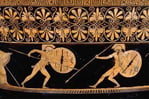
IliadEver wonder how your personality assessment results compare to well-known figures in history? What about ancient Greek heroes? In their article “Homer and Big 5,” Rastislav Duriš, an HR consultant, and Matus Porubjak, a philosophy professor, explore the socio-psychological aspects of Homer’s famous war epic, the Iliad, by putting the head-butting heroes, Achilles and Agamemnon, to the Hogan test.

Hellenic thinkers and orators, like Homer, dealt with subjects of the human condition and broached many topics which subsequently manifested as modern-day psychology. Ancient Greece is the cradle of one of the earliest personality typologies – Hippocrates’ division of people into sanguine, choleric, melancholic and phlegmatic types. Although personality research has advanced since then, it is illuminating (not to mention fun) to retrospectively apply it to ancient Greek history. By applying current psychological models of personality to a close reading of the first song of the Iliad, uriš and Porubjak were able to make assumptions based on content analysis about the Greek heroes’ inner motivators and derailers.

When analyzed using the Hogan Development Survey (HDS) scales, Achilles, the Achaean warrior who flew off the handle and dragged his Trojan opponent’s lifeless body around for days after his best friend was killed in battle, is (not surprisingly) high on the Excitable scale. His moodiness and irritability are coupled with a low Adjustment score on the Hogan Personality Inventory (HPI) to make one pretty emotionally volatile and unpredictable Greek guy. High scores in Ambition (HPI) and Tradition also explain his competitive nature and intense loyalty to his friend’s memory.

Agamemnon, the Achaean king who stole the Trojan king’s daughter only to give her back and then steal Achilles’ girlfriend, has scores similar to those of Achilles. Add in low Prudence (HPI) and high Bold (HDS) scores and you’ve got a stubborn king who thinks he’s the bee’s knees. His values? Power and Recognition. All this coupled with high Skeptical and Mischievous scores (HDS) creates the potential for a power hungry, mistrusting ruler who would quickly kick his army to the curb and flee the scene as soon as the going got tough – which he almost did (a couple of times).

Field Guide to SIOP

Posted by Blaine Gaddis on Thu, Apr 04, 2013

It’s April again, which means three things – taxes are due, my March madness bracket is hanging by a thread, and SIOP season is here! Every year, I look forward to SIOP for the opportunity to present recent Hogan research, the chance to attend sessions and learn about other advances in the I-O community, and the informal reunions with friends and colleagues. More than anything, however, I look forward to people watching at SIOP. There are certain types of people you can find in the exhibitor’s hall or attending sessions, but to date no attempt has been made to catalog these species. So, with tongue firmly planted in cheek, we provide the first ever field guide to people watching at SIOP.

  1. The Tourist – Frequently seen in its natural habitat of the exhibitor’s hall, this creature wanders the booths with the sole purpose of gathering souvenirs from as many vendors as possible. This species is often noted for having a SIOP conference bag or other tote stuffed with its various finds.
  2. The Loiterer – These curious squatters can be found in the exhibitor’s hall looking for available seating inside vendors’ booths. Confusing these seats for common hotel meeting areas, The Loiterer takes up indefinite residence without even attempting to engage vendors in conversation.  They may catch up on emails, chat with colleagues, interview job candidates, or even nap, but make no mistake about it – these uninvited guests are hanging out until they’re good and ready to leave. 
  3. The Party CrasherThis nocturnal species is seen from the late afternoons through the very late nights. Lacking proper invitations to popular parties and receptions, they attempt to gain access by identifying invited guests they know, entering with groups of invited guests, or finding unguarded entries.
  4. The Rager – Although long removed from graduate school, The Rager attempts to relive glory days and party like it's 1999. They may not actually attend conference sessions to learn, but can frequently be seen starting after lunch. Although The Rager and The Party Crasher are easy to confuse, telltale markers of Ragers are bloodshot eyes, complaints of headaches or lack of memory, and wearing the previous day’s clothes. 
  5. The Bro – These younger males often confuse SIOP with spring break and are relatively unconcerned with learning and developing their professional network. Known for their overly casual appearance, tight shirts, flip-flops, and indoor use of sunglasses, this creature wants everyone at SIOP to know just how cool they really are.
  6. The Party Girl – The female counterpart to The Bro is The Party Girl.  Scientists suspect that this species may also confuse SIOP for spring break as evidenced by a manner of appearance more typically seen in bars or dance clubs than professional conferences. Because of their striking appearance, The Party Girl is frequently surrounded by many Bros.
  7. The Card Dealer – This creature just had 500 business cards printed, and between Thursday and Sunday will hand ALL of them out. They give out cards to former colleagues, eager students, presenters, waiters, bartenders, the maid, and drop them in containers for every drawing and contest they see. 
  8. The Lifelong Learner – This species is known for an overly serious approach. They attend all advanced workshops and CE courses, and their program may be torn and tattered from overuse.
  9. The Contrarian – This curious creature attends many sessions at SIOP, but with the sole purpose of arguing against the topics discussed. This species mourns the loss of debate sessions at the conference, and may attempt to revive them informally by frequently arguing against ideas and those offering them. 
  10. The Human Acronym – This species is observed across herds of academics and practitioners. They may be known as Professor Dr. John/Jane Doe, Ph.D., or may hand you a business card that reads John/Jane Doe, M.S., MBA, PHR, ABD, BA. The Human Acronym frequently lists all their achievements since high school in an attempt to wow fellow SIOP attendees.

We hope this Field Guide helps you prepare for the conference jungle and all the creatures you may encounter there. The Society for Industrial/Organizational Psychology is a phenomenal organization and Hogan is proud to sponsor the conference each year. We're looking forward to seeing you in Houston!

Topics: SIOP

Field Guide to SIOP

Posted by Hogan Assessments on Wed, Apr 03, 2013

It’s April again, which means three things – taxes are due, my March madness bracket is hanging by a thread, and SIOP season is here! Every year, I look forward to SIOP for the opportunity to present recent Hogan research, the chance to attend sessions and learn about other advances in the I-O community, and the informal reunions with friends and colleagues. More than anything, however, I look forward to people watching at SIOP. There are certain types of people you can find in the exhibitor’s hall or attending sessions, but to date no attempt has been made to catalog these species. So, with tongue firmly planted in cheek, we provide the first ever field guide to people watching at SIOP.

  1. The Tourist – Frequently seen in its natural habitat of the exhibitor’s hall, this creature wanders the booths with the sole purpose of gathering souvenirs from as many vendors as possible. This species is often noted for having a SIOP conference bag or other tote stuffed with its various finds.
  2. The Loiterer – These curious squatters can be found in the exhibitor’s hall looking for available seating inside vendors’ booths. Confusing these seats for common hotel meeting areas, The Loiterer takes up indefinite residence without even attempting to engage vendors in conversation.  They may catch up on emails, chat with colleagues, interview job candidates, or even nap, but make no mistake about it – these uninvited guests are hanging out until they’re good and ready to leave.
  3. The Party CrasherThis nocturnal species is seen from the late afternoons through the very late nights. Lacking proper invitations to popular parties and receptions, they attempt to gain access by identifying invited guests they know, entering with groups of invited guests, or finding unguarded entries.
  4. The Rager – Although long removed from graduate school, The Rager attempts to relive glory days and party like it’s 1999. They may not actually attend conference sessions to learn, but can frequently be seen starting after lunch. Although The Rager and The Party Crasher are easy to confuse, telltale markers of Ragers are bloodshot eyes, complaints of headaches or lack of memory, and wearing the previous day’s clothes.
  5. The Bro – These younger males often confuse SIOP with spring break and are relatively unconcerned with learning and developing their professional network. Known for their overly casual appearance, tight shirts, flip-flops, and indoor use of sunglasses, this creature wants everyone at SIOP to know just how cool they really are.
  6. The Party Girl – The female counterpart to The Bro is The Party Girl.  Scientists suspect that this species may also confuse SIOP for spring break as evidenced by a manner of appearance more typically seen in bars or dance clubs than professional conferences. Because of their striking appearance, The Party Girl is frequently surrounded by many Bros.
  7. The Card Dealer – This creature just had 500 business cards printed, and between Thursday and Sunday will hand ALL of them out. They give out cards to former colleagues, eager students, presenters, waiters, bartenders, the maid, and drop them in containers for every drawing and contest they see.
  8. The Lifelong Learner – This species is known for an overly serious approach. They attend all advanced workshops and CE courses, and their program may be torn and tattered from overuse.
  9. The Contrarian – This curious creature attends many sessions at SIOP, but with the sole purpose of arguing against the topics discussed. This species mourns the loss of debate sessions at the conference, and may attempt to revive them informally by frequently arguing against ideas and those offering them.
  10. The Human Acronym – This species is observed across herds of academics and practitioners. They may be known as Professor Dr. John/Jane Doe, Ph.D., or may hand you a business card that reads John/Jane Doe, M.S., MBA, PHR, ABD, BA. The Human Acronym frequently lists all their achievements since high school in an attempt to wow fellow SIOP attendees.

We hope this Field Guide helps you prepare for the conference jungle and all the creatures you may encounter there. The Society for Industrial/Organizational Psychology is a phenomenal organization and Hogan is proud to sponsor the conference each year. We’re looking forward to seeing you in Houston!

The Leadership Potential Report by Denison Consulting and Hogan

Posted by Hogan News on Tue, Apr 02, 2013

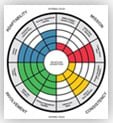
Denison ThumbDeveloped in partnership by Denison Consulting and Hogan, the Denison Leadership Potential Report (DLPR) is a new product that provides a statistically valid prediction of leadership potential. This is accomplished by aligning an individual’s inherent leader attributes—as measured by Hogan assessment tools—to the twelve leadership competencies defined by the Denison Leadershhip Development Model.

The DLPR is generated from responses to the Hogan Personality Inventory, the Hogan Development Survey, and the Motives, Values, Preferences Inventory and depicts an individual’s potential to exhibit each of the twelve Denison leadership competencies based on his/her personality and values. Competencies are scored as either excellent, high, moderate or low potential and are grouped into the four traits of the Denison Model.

Read more and view a sample report

Topics: HPI, MVPI, leadership, HDS, Hogan scales

The Leadership Potential Report by Denison Consulting and Hogan

Posted by HNews on Mon, Apr 01, 2013


Denison ThumbDeveloped in partnership by Denison Consulting and Hogan, the Denison Leadership Potential Report (DLPR) is a new product that provides a statistically valid prediction of leadership potential. This is accomplished by aligning an individual’s inherent leader attributes—as measured by Hogan assessment tools—to the twelve leadership competencies defined by the Denison Leadershhip Development Model.

The DLPR is generated from responses to the Hogan Personality Inventory, the Hogan Development Survey, and the Motives, Values, Preferences Inventory and depicts an individual’s potential to exhibit each of the twelve Denison leadership competencies based on his/her personality and values. Competencies are scored as either excellent, high, moderate or low potential and are grouped into the four traits of the Denison Model.

Read more and view a sample report


Topics: Hogan scales

Clear As Mud

Posted by Morgan Meister on Mon, Apr 01, 2013

BuzzwordsEffective communication lies at the heart of every successful organization. During an age characterized by hyper-connectivity, you would think that communication in the workplace would be clearer than ever. The truth is, the very concept of simple, effective communication is a dying art increasingly compromised by shallow buzzwords and one dimensional corporate speak.

Have you ever walked out of a meeting and asked yourself, “What exactly did we just spend 45 minutes discussing?”  If you answered “yes,", you’re definitely not alone. Long winded diatribes, vague descriptions, and the inability to communicate a desired message effectively happens all too often within the workplace.

To put things into perspective, have you had an opportunity to “shift a paradigm” or “look for synergies” to “advance the cause” lately? Or have you successfully “peeled back the onion” or “circled the wagons” to “integrate value added processes” for a new client?  I can’t say that I’ve participated in any of these metaphorical tasks or if I even fully comprehend what they mean. However, I can assure you that upon hearing these euphemisms, I’ve engaged in the following familiar action items: “zoning out,” “falling asleep at the wheel,” or “taking a mental vacation.”

The problem of talking without saying anything of substance has become rampant in recent years. Forbes recently published an article satirizing some of the most over-used and despised buzzwords prevalent in our everyday corporate lives.  In the spirit of March Madness, they were creative enough to put the terms in an easy to follow bracket format with witty, comical definitions. Here are a few more of my favorites referenced in a similar article published by hr-heaven:

As you are aware I’m patronizing you by insinuating that you don’t know what I’m talking about by reminding you what I’m talking about.
Break through the clutter Can you cut through the BS and get to the point?
Dive deep Passive/aggressive suggestion directed to others to let them know they didn’t do enough research.
Globalization We’re going to try to sell our stuff to the world, but “export” doesn’t sound sexy enough
Take it offline Could you just shut up in front of all these people
Go back to square one Let’s start over – what we’ve got so far could be produced by Kindergartners.

Humor aside, managers are constantly looking for more effective ways to connect with their workforce.  At the end of the day, it’s not just the most qualified or intelligent managers that set themselves apart, but also those managers who are able to articulate their message in a concise and actionable fashion that see results. With that in mind, the next time you sit across from a client or have an opportunity to take the lead on a project, set clear expectations and be transparent…unless you want to muddy the waters with a bunch of incoherent babble. 

Topics: good managers, managers

Clear As Mud

Posted by Hogan Assessments on Sun, Mar 31, 2013

BuzzwordsEffective communication lies at the heart of every successful organization. During an age characterized by hyper-connectivity, you would think that communication in the workplace would be clearer than ever. The truth is, the very concept of simple, effective communication is a dying art increasingly compromised by shallow buzzwords and one dimensional corporate speak.

Have you ever walked out of a meeting and asked yourself, “What exactly did we just spend 45 minutes discussing?”  If you answered “yes,”, you’re definitely not alone. Long winded diatribes, vague descriptions, and the inability to communicate a desired message effectively happens all too often within the workplace.

To put things into perspective, have you had an opportunity to “shift a paradigm” or “look for synergies” to “advance the cause” lately? Or have you successfully “peeled back the onion” or “circled the wagons” to “integrate value added processes” for a new client?  I can’t say that I’ve participated in any of these metaphorical tasks or if I even fully comprehend what they mean. However, I can assure you that upon hearing these euphemisms, I’ve engaged in the following familiar action items: “zoning out,” “falling asleep at the wheel,” or “taking a mental vacation.”

The problem of talking without saying anything of substance has become rampant in recent years. Forbes recently published an article satirizing some of the most over-used and despised buzzwords prevalent in our everyday corporate lives.  In the spirit of March Madness, they were creative enough to put the terms in an easy to follow bracket format with witty, comical definitions. Here are a few more of my favorites referenced in a similar article published by hr-heaven:

As you are aware I’m patronizing you by insinuating that you don’t know what I’m talking about by reminding you what I’m talking about.
Break through the clutter Can you cut through the BS and get to the point?
Dive deep Passive/aggressive suggestion directed to others to let them know they didn’t do enough research.
Globalization We’re going to try to sell our stuff to the world, but “export” doesn’t sound sexy enough
Take it offline Could you just shut up in front of all these people
Go back to square one Let’s start over – what we’ve got so far could be produced by Kindergartners.

Humor aside, managers are constantly looking for more effective ways to connect with their workforce.  At the end of the day, it’s not just the most qualified or intelligent managers that set themselves apart, but also those managers who are able to articulate their message in a concise and actionable fashion that see results. With that in mind, the next time you sit across from a client or have an opportunity to take the lead on a project, set clear expectations and be transparent…unless you want to muddy the waters with a bunch of incoherent babble. 

Topics: good managers

Hogan to Present at the 28th Annual SIOP Conference

Posted by Hogan News on Fri, Mar 29, 2013

siopIf you're attending the 28th Annual Conference of the Society for Industrial and Organizational Psychology in April, check out some of our esteemed Hogan colleagues as they present our latest research.

THURSDAY, APRIL 11

International Perspectives on Combining Personality and Multirater Feedback Data
Many organizations include personality assessments and multirater feedback instruments in selection batteries or development initiatives, but they rarely combine these sources of information to maximize developmental outcomes that mutually benefit individuals and the organization. Participants will share international perspectives on combining these sources of information and the ROI of doing so.
Blaine Gaddis

Comparability of Scores: Equivalence Issues in Testing Across Countries
This study considers approaches to a range of issues relating to score comparability in multinational testing. These range from use of DIF and generalizability theory through applications of SEM to more general considerations of the impact of cultural differences on attitudes to testing.
Kevin Meyer, Jeff Foster

Job Analytic Comparisons of Competency Requirements in Global Managerial Jobs
Existing research has examined similarities and differences in global leader behavior. However, these initiatives focus on the individual as their unit of analysis. This research uses jobs as the unit of analysis, analyzing archival job data to examine similarities and differences in competencies required for managerial jobs around the world.
Dara Pickering, Blaine Gaddis

Identifying Critical Job Family Competencies: Within and Across Job Families
This study used data-driven best practices to identify the most critical competencies for 4 job families: service and support; professionals, operations, and trades; and technicians and specialists. Although subject matter experts rated 4 competencies as critical across the 3 job families, other competencies were unique to each job family.
Ashley Palmer, Steve Nichols

A Sticky Topic: Using Personality Tests in Selection Settings
Industry remains hesitant to utilize personality tests in applicant screening due to low criterion validity in predicting job performance. An expert panel is consulted on the use of personality tests in selection settings toward improving criterion validity and offers recommendations promoting the use of personality data in selection.
Kevin Meyer

The Role of Theory in Advancing Personality Assessment at Work
Toward making innovations “stick,” 4 leading personality researchers discuss the role of theory in advancing personality test use in work settings. Key issues include why theory is especially important in this area, which theoretical principles are important, hurdles blocking utilization of theory, and the future of personality assessment at work.
Robert Hogan

FRIDAY, APRIL 12

Leadership Assessment: Contemporary Issues and Challenges in Demonstrating Value
Identifying and developing leadership talent continues to be a key concern for organizations. Recent advances in technology and research have spurred the development of automated assessments and models to leverage data, making leadership assessment more accessible and affordable. This session explores opportunities to demonstrate the value of assessment to organizations.
Ryan Ross

Why Is the Leadership Development Industry Failing?
Since 1995, leadership development has grown 30% into a $12B industry in the U.S. In the same time, public confidence in leadership has declined 30%, and most corporations report lacking adequate leadership capacity. This session discusses why the leadership industry seems to be failing and what to do about it.
Robert Hogan

Industry Differences: Mine Is Unique…Right?
Organizations believe important differences between industries exist and request industry-specific comparisons. This symposium will explore the size of differences in personality traits, values, competencies, and attitudes between industries. Job function and managerial level differences are also presented. Implications, including those for selection and development, are discussed.
Steve Nichols, Jeff Foster

Advances in the Use of Personality to Predict Workplace Criteria
Although research relating personality to work outcomes has progressed, more is needed to refine the criteria that are predicted by different traits and relevant boundary conditions involved. This session presents 4 papers that approach the issue of what is understood about using personality tests to predict criteria from different perspectives.
Ashley Palmer

SATURDAY, APRIL 13

Linking Personality and 360 Assessments to Coach and Develop Leaders
This session examines the combination of personality and 360 (multirater) assessment for the development of leaders. Two empirical studies demonstrate how coaching insights are produced by the convergence of the 2 types of assessments. In addition, 2 large-scale organizational case studies demonstrate the application and practical utility of the approach.
Rodney Warrenfeltz

Destructive Leadership: A Holistic View for Minimizing its Toxic Influence
This session focuses on consolidating current research on destructive leadership to support a more comprehensive definition. It emphasizes the importance of considering leaders, followers, and the environment in the destructive leadership process. Moreover, it examines this process in a specific context to gain insight into preventing destructive leadership in organizations.
Robert Hogan

Topics: SIOP

Hogan to Present at the 28th Annual SIOP Conference

Posted by HNews on Thu, Mar 28, 2013

siopIf you’re attending the 28th Annual Conference of the Society for Industrial and Organizational Psychology in April, check out some of our esteemed Hogan colleagues as they present our latest research.

THURSDAY, APRIL 11

International Perspectives on Combining Personality and Multirater Feedback Data
Many organizations include personality assessments and multirater feedback instruments in selection batteries or development initiatives, but they rarely combine these sources of information to maximize developmental outcomes that mutually benefit individuals and the organization. Participants will share international perspectives on combining these sources of information and the ROI of doing so.
Blaine Gaddis

Comparability of Scores: Equivalence Issues in Testing Across Countries
This study considers approaches to a range of issues relating to score comparability in multinational testing. These range from use of DIF and generalizability theory through applications of SEM to more general considerations of the impact of cultural differences on attitudes to testing.
Kevin Meyer, Jeff Foster

Job Analytic Comparisons of Competency Requirements in Global Managerial Jobs
Existing research has examined similarities and differences in global leader behavior. However, these initiatives focus on the individual as their unit of analysis. This research uses jobs as the unit of analysis, analyzing archival job data to examine similarities and differences in competencies required for managerial jobs around the world.
Dara Pickering, Blaine Gaddis

Identifying Critical Job Family Competencies: Within and Across Job Families
This study used data-driven best practices to identify the most critical competencies for 4 job families: service and support; professionals, operations, and trades; and technicians and specialists. Although subject matter experts rated 4 competencies as critical across the 3 job families, other competencies were unique to each job family.
Ashley Palmer, Steve Nichols

A Sticky Topic: Using Personality Tests in Selection Settings
Industry remains hesitant to utilize personality tests in applicant screening due to low criterion validity in predicting job performance. An expert panel is consulted on the use of personality tests in selection settings toward improving criterion validity and offers recommendations promoting the use of personality data in selection.
Kevin Meyer

The Role of Theory in Advancing Personality Assessment at Work
Toward making innovations “stick,” 4 leading personality researchers discuss the role of theory in advancing personality test use in work settings. Key issues include why theory is especially important in this area, which theoretical principles are important, hurdles blocking utilization of theory, and the future of personality assessment at work.
Robert Hogan

FRIDAY, APRIL 12

Leadership Assessment: Contemporary Issues and Challenges in Demonstrating Value
Identifying and developing leadership talent continues to be a key concern for organizations. Recent advances in technology and research have spurred the development of automated assessments and models to leverage data, making leadership assessment more accessible and affordable. This session explores opportunities to demonstrate the value of assessment to organizations.
Ryan Ross

Why Is the Leadership Development Industry Failing?
Since 1995, leadership development has grown 30% into a $12B industry in the U.S. In the same time, public confidence in leadership has declined 30%, and most corporations report lacking adequate leadership capacity. This session discusses why the leadership industry seems to be failing and what to do about it.
Robert Hogan

Industry Differences: Mine Is Unique…Right?
Organizations believe important differences between industries exist and request industry-specific comparisons. This symposium will explore the size of differences in personality traits, values, competencies, and attitudes between industries. Job function and managerial level differences are also presented. Implications, including those for selection and development, are discussed.
Steve Nichols, Jeff Foster

Advances in the Use of Personality to Predict Workplace Criteria
Although research relating personality to work outcomes has progressed, more is needed to refine the criteria that are predicted by different traits and relevant boundary conditions involved. This session presents 4 papers that approach the issue of what is understood about using personality tests to predict criteria from different perspectives.
Ashley Palmer

SATURDAY, APRIL 13

Linking Personality and 360 Assessments to Coach and Develop Leaders
This session examines the combination of personality and 360 (multirater) assessment for the development of leaders. Two empirical studies demonstrate how coaching insights are produced by the convergence of the 2 types of assessments. In addition, 2 large-scale organizational case studies demonstrate the application and practical utility of the approach.
Rodney Warrenfeltz

Destructive Leadership: A Holistic View for Minimizing its Toxic Influence
This session focuses on consolidating current research on destructive leadership to support a more comprehensive definition. It emphasizes the importance of considering leaders, followers, and the environment in the destructive leadership process. Moreover, it examines this process in a specific context to gain insight into preventing destructive leadership in organizations.
Robert Hogan

MVPI Item Themes

Posted by Hogan News on Thu, Mar 28, 2013

MVPI ThumbThe Motives, Values, Preferences Inventory identifies the core goals, drivers, and interests that determine what gets people to the office each day. The MVPI consists of 10 primary scales, which are further divided into five item themes. The MVPI item themes provide additional interpretive power by categorizing participants’ responses to the questions that compose each MVPI scale.


MVPI Item Themes:

  • Lifestyles - The manner in which a person would like to live
  • Beliefs - “Shoulds”, ideals, and ultimate life goals
  • Occupational Preferences - The work an individual would like to do, what constitutes a good job, and preferred work materials
  • Aversions - Reflects attitudes and behaviors that are either disliked or distressing
  • Preferred Associates - The kind of people desired as coworkers and friends

Read more about interpreting the MVPI Item Themes


Topics: MVPI, values, scales

Subscribe to our Blog

Most Popular Posts

Connect