Meet ‘That Guy’

Posted by Hogan Assessments on Mon, Sep 03, 2012

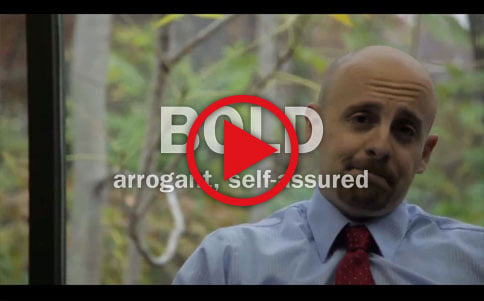
You’ve seen him around the office, he’s made sure of it. He’s the boaster, the big timer, the guy who never seems to mind tooting his own horn. Some call it hubris, but are you really going to question God’s gift to business?

On the climb up the corporate ladder, the line between strength and weakness isn’t always clear. The same confidence and willingness to take credit that helped ‘that guy’ early in his career can turn into a sense of entitlement under the pressure of the corner office.

Watch this video to see ‘that guy’ at work, or visit www.howdoyouderail.com to view the entire HDS video series. Follow on Twitter @ImHiBold #howdoyouderail

1084 bold vid

Topics: derailment

The Rocket Model: Team Power

Posted by Hogan Assessments on Mon, Sep 03, 2012

Rocket Model

Team power can be defined as the quantity and quality of resources available to a team. Resources include facilities, office space, computers, telecommunication systems, specialized equipment, software systems, budgets, and the level of authority granted to teams. Executive leadership teams often have many resources and wide discretion in decision-making—for example, the authority to spend billions to acquire other companies. In contrast, task forces such as the 9/11 Commission or the National Commission on Fiscal Responsibility and Reformcan only make recommendations and have little authority to make final decisions.


All groups and teams need resources in order to succeed. However, the resources that they need will depend on their goals. Account executives who are part of a regional sales group will need computers, customer resource management software, sales collateral, and travel budgets. A professional hockey team needs training facilities, hockey equipment, chartered aircraft, etc., to successfully compete. A lack of physical resources or the authority to acquire them will impede team and group success. For example, we know a manager of a talent acquisition team for a major retailer who had to have all staffing decisions approved by three layers of management. Virtually every decision, no matter how small, needed the blessing of the Senior Vice President of Human Resources. This bureaucratic structure significantly reduced the team’s ability to make timely hiring offers, and they routinely lost highly qualified candidates.

Leaders need to clarify their team or group’s purpose before worrying about the resources they need to succeed. Is the team to be held accountable for making recommendations or achieving results? If it is the latter, then how do these results impact the larger organization? Teams that make big contributions need more power than those that make few contributions. Clarifying who makes the decisions about physical assets, budgets, and authority can help improve commitment and cohesiveness; nothing will disempower a group or team faster than discovering that upper management will make all the calls.

The default position for most leaders and teams is to ask for more resources, yet research shows that most teams squander what they are given. More often than not, teams have all they need to succeed, but for many it is easier to acquire more rather than change how they could use their existing resources differently. One hallmark of good leaders is that they get results in spite of budget, equipment, or facilities shortcomings.  

Topics: leadership, teams, employee engagement, The Rocket Model, team performance, Groups, Team Facilitation, Curphy Consulting Corporation, Followership

The Rocket Model: Team Power

Posted by Hogan Assessments on Sun, Sep 02, 2012

Rocket Model

Team power can be defined as the quantity and quality of resources available to a team. Resources include facilities, office space, computers, telecommunication systems, specialized equipment, software systems, budgets, and the level of authority granted to teams. Executive leadership teams often have many resources and wide discretion in decision-making—for example, the authority to spend billions to acquire other companies. In contrast, task forces such as the 9/11 Commission or the National Commission on Fiscal Responsibility and Reformcan only make recommendations and have little authority to make final decisions.

All groups and teams need resources in order to succeed. However, the resources that they need will depend on their goals. Account executives who are part of a regional sales group will need computers, customer resource management software, sales collateral, and travel budgets. A professional hockey team needs training facilities, hockey equipment, chartered aircraft, etc., to successfully compete. A lack of physical resources or the authority to acquire them will impede team and group success. For example, we know a manager of a talent acquisition team for a major retailer who had to have all staffing decisions approved by three layers of management. Virtually every decision, no matter how small, needed the blessing of the Senior Vice President of Human Resources. This bureaucratic structure significantly reduced the team’s ability to make timely hiring offers, and they routinely lost highly qualified candidates.

Leaders need to clarify their team or group’s purpose before worrying about the resources they need to succeed. Is the team to be held accountable for making recommendations or achieving results? If it is the latter, then how do these results impact the larger organization? Teams that make big contributions need more power than those that make few contributions. Clarifying who makes the decisions about physical assets, budgets, and authority can help improve commitment and cohesiveness; nothing will disempower a group or team faster than discovering that upper management will make all the calls.

The default position for most leaders and teams is to ask for more resources, yet research shows that most teams squander what they are given. More often than not, teams have all they need to succeed, but for many it is easier to acquire more rather than change how they could use their existing resources differently. One hallmark of good leaders is that they get results in spite of budget, equipment, or facilities shortcomings.  

Movie Quote of the Month

Posted by Hogan News on Fri, Aug 31, 2012

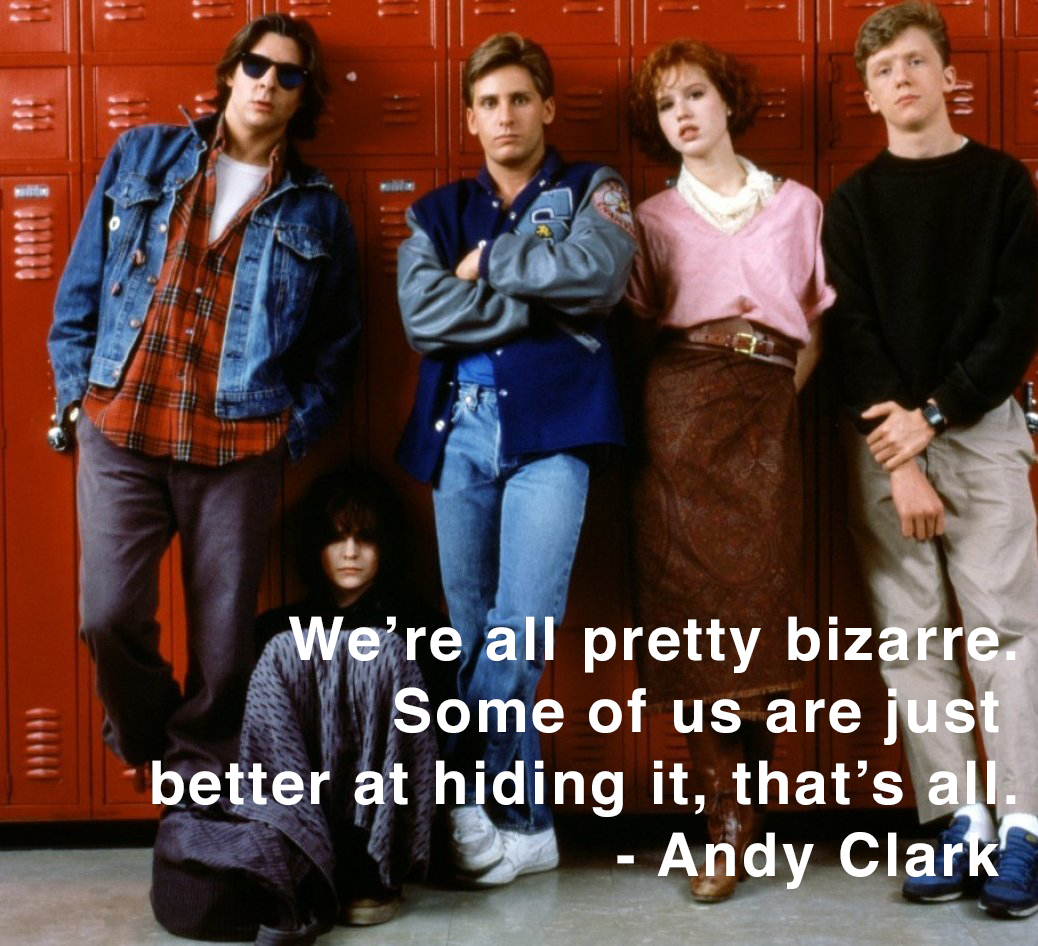
Every now and then we come across a piece of pop culture that perfectly captures what we do here at Hogan. This one is from the 1984 John Hughes classic, “The Breakfast Club.”

Enjoy.

the breakfast club the breakfast club 14129074 1038 946

Topics: movie quote, breakfast club

Movie Quote of the Month

Posted by HNews on Thu, Aug 30, 2012

Every now and then we come across a piece of pop culture that perfectly captures what we do here at Hogan. This one is from the 1984 John Hughes classic, “The Breakfast Club.”

Enjoy.

the breakfast club the breakfast club 14129074 1038 946

Topics: breakfast club

The Rocket Model: Three Ways to Improve Buy-In

Posted by Hogan Assessments on Mon, Aug 27, 2012

Rocket ModelThe current thinking about employee engagement is somewhat misguided since leaders tend to get all of the blame for having disengaged employees. Missing from this perspective is the fact that team members also bear some responsibility for where they fall on the disengagement-engagement continuum. All leaders can do is create an environment conducive to team member Buy-In; after that, it is up to each team member to decide to become fully engaged and committed to team success. There are three things that leaders can do to foster Buy-in: 1) establish credibility, 2) paint a compelling picture of the future, and 3) empower team members.

Establish Credibility. Interviews with thousands of people and over a million 360-degree feedback ratings show that credibility is a critical component of leader effectiveness and team success. Credibility can be defined as the degree to which members believe in the leader; it has two components—trust and expertise. Trust concerns building strong relationships with others, and expertise concerns having the relevant knowledge and skills. Because trust and expertise are independent, leaders and members can have a variety of high and low combinations.

The fact that trust and expertise are both needed to establish credibility leads to interesting group dynamics. For example, teams often recruit new leaders and members because they possess needed expertise, but they may not be listened to until the other members begin to trust them. If seasoned veterans have the required knowledge and skill set, but are difficult to work with, they will not influence decision-making. Leaders who want to improve their credibility need (at least) moderate levels of relevant expertise and team members must be able to trust them.

Leaders must then persuade the team that each member has the expertise needed to perform in their respective roles. This will build trust between team members and enhance group cohesiveness. If any team member lacks credibility, then Buy-In will suffer and the team may fail.  Leaders can help those players who lack credibility by gaining the trust of other team members and providing additional coaching or training.

Paint a Compelling Vision of the Future. Some people are gifted orators who can inspire others. Research shows that leaders who paint powerful visions of the future have subordinates who exert extra effort towards team and group goals. However, few leaders provide clear visions for their teams or groups. When asked to describe their vision for their teams, most leaders are stumped but may make lengthy presentations. It is somewhat ironic that people work hard to attain leadership positions but cannot explain why anyone should join their teams. When President George H. W. Bush was running for a second term in office, his staff asked him what his vision was for his second term.  He responded, “Vision, vision, what is this vision thing?”  Most observers believe that is what cost him the election.

Most leaders would communicate persuasive visions for their teams if they knew how to do it properly—the “vision gap” is a function of knowledge not motivation. Leaders need to keep five factors in mind when creating and explaining their visions for the future: 1) honor the past, 2) be realistic about the present, 3) provide hope for the future, 4) capitalize on stories and metaphors, and 5) use emotional energy during delivery.

Empower Team Members. Empowerment stands on two legs: delegation and development. Team members feel empowered when they have the freedom to make decisions that fall within their roles and responsibilities. Team members feel dispirited when they are micromanaged. Leaders can do several things to empower team members. The first step is to ensure that team members have clear roles—this will define the needed knowledge, skills, and decision-making responsibilities. Involving members in team decisions also improves empowerment, as members who contribute to the decision-making and create the action plans will have higher levels of Buy-In than those who do not participate in these activities. Involved team members are those most committed to and engaged in team success. 

Topics: leadership, teams, employee engagement, The Rocket Model, team performance, Groups, Team Facilitation, Curphy Consulting Corporation, Followership

The Rocket Model: Three Ways to Improve Buy-In

Posted by Hogan Assessments on Sun, Aug 26, 2012

Rocket ModelThe current thinking about employee engagement is somewhat misguided since leaders tend to get all of the blame for having disengaged employees. Missing from this perspective is the fact that team members also bear some responsibility for where they fall on the disengagement-engagement continuum. All leaders can do is create an environment conducive to team member Buy-In; after that, it is up to each team member to decide to become fully engaged and committed to team success. There are three things that leaders can do to foster Buy-in: 1) establish credibility, 2) paint a compelling picture of the future, and 3) empower team members.

Establish Credibility. Interviews with thousands of people and over a million 360-degree feedback ratings show that credibility is a critical component of leader effectiveness and team success. Credibility can be defined as the degree to which members believe in the leader; it has two components—trust and expertise. Trust concerns building strong relationships with others, and expertise concerns having the relevant knowledge and skills. Because trust and expertise are independent, leaders and members can have a variety of high and low combinations.

The fact that trust and expertise are both needed to establish credibility leads to interesting group dynamics. For example, teams often recruit new leaders and members because they possess needed expertise, but they may not be listened to until the other members begin to trust them. If seasoned veterans have the required knowledge and skill set, but are difficult to work with, they will not influence decision-making. Leaders who want to improve their credibility need (at least) moderate levels of relevant expertise and team members must be able to trust them.

Leaders must then persuade the team that each member has the expertise needed to perform in their respective roles. This will build trust between team members and enhance group cohesiveness. If any team member lacks credibility, then Buy-In will suffer and the team may fail.  Leaders can help those players who lack credibility by gaining the trust of other team members and providing additional coaching or training.

Paint a Compelling Vision of the Future. Some people are gifted orators who can inspire others. Research shows that leaders who paint powerful visions of the future have subordinates who exert extra effort towards team and group goals. However, few leaders provide clear visions for their teams or groups. When asked to describe their vision for their teams, most leaders are stumped but may make lengthy presentations. It is somewhat ironic that people work hard to attain leadership positions but cannot explain why anyone should join their teams. When President George H. W. Bush was running for a second term in office, his staff asked him what his vision was for his second term.  He responded, “Vision, vision, what is this vision thing?”  Most observers believe that is what cost him the election.

Most leaders would communicate persuasive visions for their teams if they knew how to do it properly—the “vision gap” is a function of knowledge not motivation. Leaders need to keep five factors in mind when creating and explaining their visions for the future: 1) honor the past, 2) be realistic about the present, 3) provide hope for the future, 4) capitalize on stories and metaphors, and 5) use emotional energy during delivery.

Empower Team Members. Empowerment stands on two legs: delegation and development. Team members feel empowered when they have the freedom to make decisions that fall within their roles and responsibilities. Team members feel dispirited when they are micromanaged. Leaders can do several things to empower team members. The first step is to ensure that team members have clear roles—this will define the needed knowledge, skills, and decision-making responsibilities. Involving members in team decisions also improves empowerment, as members who contribute to the decision-making and create the action plans will have higher levels of Buy-In than those who do not participate in these activities. Involved team members are those most committed to and engaged in team success. 

The Rocket Model: Commitment and Engagement

Posted by Hogan Assessments on Mon, Aug 20, 2012

Rocket ModelOne important component of the Rocket Model© is Buy-In, which concerns the degree to which leaders and members are committed to and engaged in team goals, roles, norms, and success. There is an important difference between member commitment and engagement. A United States Marine corporal may be very committed to The Corps and protecting the United States, yet he may not be particularly engaged while walking guard duty at Camp Pendleton. In this scenario, the corporal will do the minimum and nothing more. Likewise, team members may be committed to the team and its goals yet not engage in the tasks needed to succeed. The Holy Grail for leaders is to create teams whose members are both committed to and fully engaged in the tasks needed to succeed.

Team members with high levels of commitment and engagement will work toward team goals, take their roles and responsibilities seriously, adhere to team norms, and do what is needed to help their teams and groups win. Team and group members with low levels of commitment and engagement may publicly agree to decisions but privately ignore them. They will also be unconcerned with achieving team and group goals. Executive leadership teams avoid conflict, so a lack of Buy-In may not be apparent in their meetings. However, they will use proxies to fight their battles, which will start a chain of inter-department finger pointing: the sales leaders may complain that R&D designs products that nobody wants; leaders in R&D will blame operations for building products with poor quality; both groups will blame IT for poor software systems, etc. Executive team members smile and compliment each other’s accomplishments, even though outside the boardroom, Rome is burning.

The lack of Buy-In is not confined to executive teams – any team can have members who are not committed to success. Uncommitted and disengaged members will focus on their own agendas and blame others when things go wrong. When Buy-In is lacking, leaders will hear: “It wasn’t my fault, I got my part done” or “I never agreed with that decision.” Buy-In is the rocket fuel for team success. Just as rockets with more fuel carry heavier payloads, teams with greater Buy-In can achieve more difficult goals. The opposite can be found when member Buy-In is low.

Buy-In is a component of the Rocket Model© where there are differences between groups and teams. Group members only need to buy in to their individual roles and goals; team members need to buy in to their team norms and goals, be willing to cooperate and do joint work, and internalize the idea of shared fates. In a group, if members do not have high levels of Buy-In, they may fail to achieve their individual goals, but this may not impact the group’s overall success. Teams, however, depend on cooperation and joint work to succeed. Teams with even one or two low Buy-In members (think Slackers or Criticizers) will lose. This difference between teams and groups has important implications for leaders.

Topics: leadership, teams, employee engagement, The Rocket Model, team performance, Groups, Team Facilitation, Curphy Consulting Corporation, Followership

The Rocket Model: Commitment and Engagement

Posted by Hogan Assessments on Sun, Aug 19, 2012

Rocket ModelOne important component of the Rocket Model© is Buy-In, which concerns the degree to which leaders and members are committed to and engaged in team goals, roles, norms, and success. There is an important difference between member commitment and engagement. A United States Marine corporal may be very committed to The Corps and protecting the United States, yet he may not be particularly engaged while walking guard duty at Camp Pendleton. In this scenario, the corporal will do the minimum and nothing more. Likewise, team members may be committed to the team and its goals yet not engage in the tasks needed to succeed. The Holy Grail for leaders is to create teams whose members are both committed to and fully engaged in the tasks needed to succeed.

Team members with high levels of commitment and engagement will work toward team goals, take their roles and responsibilities seriously, adhere to team norms, and do what is needed to help their teams and groups win. Team and group members with low levels of commitment and engagement may publicly agree to decisions but privately ignore them. They will also be unconcerned with achieving team and group goals. Executive leadership teams avoid conflict, so a lack of Buy-In may not be apparent in their meetings. However, they will use proxies to fight their battles, which will start a chain of inter-department finger pointing: the sales leaders may complain that R&D designs products that nobody wants; leaders in R&D will blame operations for building products with poor quality; both groups will blame IT for poor software systems, etc. Executive team members smile and compliment each other’s accomplishments, even though outside the boardroom, Rome is burning.

The lack of Buy-In is not confined to executive teams – any team can have members who are not committed to success. Uncommitted and disengaged members will focus on their own agendas and blame others when things go wrong. When Buy-In is lacking, leaders will hear: “It wasn’t my fault, I got my part done” or “I never agreed with that decision.” Buy-In is the rocket fuel for team success. Just as rockets with more fuel carry heavier payloads, teams with greater Buy-In can achieve more difficult goals. The opposite can be found when member Buy-In is low.

Buy-In is a component of the Rocket Model© where there are differences between groups and teams. Group members only need to buy in to their individual roles and goals; team members need to buy in to their team norms and goals, be willing to cooperate and do joint work, and internalize the idea of shared fates. In a group, if members do not have high levels of Buy-In, they may fail to achieve their individual goals, but this may not impact the group’s overall success. Teams, however, depend on cooperation and joint work to succeed. Teams with even one or two low Buy-In members (think Slackers or Criticizers) will lose. This difference between teams and groups has important implications for leaders.

The Rocket Model: Four Critical Team Norms

Posted by Hogan Assessments on Mon, Aug 13, 2012

Rocket Model

Teams have many norms, some of which might involve safety, expected work hours, e-mail inquiry response times, or meeting attendance. Research shows that some norms are more important than others; the rules governing a team’s operating rhythm, communication, decision-making, and accountability norms have the biggest impact on team cohesiveness and performance. 

A team’s operating rhythm concerns the frequency and management of team meetings, and a surprisingly high number of leaders do not know how to run efficient team meetings. Communication may be a problem if team members complain about being in the dark, confidential conversations being shared with outsiders, or that difficult topics never get raised. Decision-making can be a problem when leaders make autocratic decisions or, conversely, groups make too many decisions by consensus. Leaders who play favorites or fail to hold members accountable for their performance or misbehavior usually have problems with team morale and performance.  


Given the issues surrounding sub-standard performance and norm violations, every group and team will need a sheriff. Although members can play the role of team disciplinarian (i.e., shop stewards, athletic team captains, and Non-Commissioned Officers), more often than not the leaders must play this role. Unlike teams populated with Slackers, Criticizers, and Brown-Nosers, leaders who set clear expectations, hold members accountable, and treat people fairly usually attract and/or retain Self-Starters. If leaders are unwilling to uphold standards and hold people accountable for their performance, they will create dysfunctional teams that fail to achieve their goals. Establishing an explicit team accountability norm is important since few things can wreck team morale more quickly than favoritism. When members detect foul play, they can be expected to spend time complaining about the situations rather than doing what is needed for their teams to succeed. A related but even more prevalent problem for groups and teams is a lack of consequences. Too many leaders are more concerned about winning popularity contests than beating other teams, and are reluctant to hold members accountable for sub-standard performance and norm violations. Leaders who play favorites or fail to maintain standards will eventually have teams full of Brown-Nosers, Slackers, and Criticizers.

Topics: leadership, teams, employee engagement, The Rocket Model, team performance, Groups, Team Facilitation, Curphy Consulting Corporation, Followership

Subscribe to our Blog

Most Popular Posts

Connect