
Four Qualities You Think are Great in a Hire, But Actually Aren’t

Posted by HNews on Mon, Jul 21, 2014

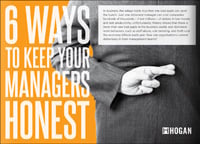
HonestIn business, the adage holds true that one bad apple can spoil the bunch – even one dishonest manager can cost companies hundreds of thousands, if not millions of dollars, in low morale and lost productivity. Unfortunately, history shows that there is more than one bad apple in the business world, and dishonest work behaviors, such as staff abuse, rule bending, and theft cost the economy billions each year.

How can organizations combat dishonesty in their management team? They can start by recognizing why dishonest individuals are such enticing hires. Unfortunately, the same attractive qualities we find in these candidates are the same qualities that will short change us in the long run.

1. CharismaPsychologists recorded 73 first-year college students individually introducing themselves to a group. The study found students with narcissistic tendencies excelled at making initial impressions. They used more charming facial expressions, a more confident speaking tone, were funnier, wore more fashionable clothes and had trendier haircuts.

2. Self-absorption – The second characteristic is an unusual degree of self-absorption, or, more to the point, a relentless drive for self-advancement. These individuals possess a ruthless dedication to self-advancement to the extent that other people lose their value as humans and become objects to be manipulated.

3. Self-Deception – Ben Dattner, author of The Blame Game, notes that narcissists “lead with the main purpose of receiving personal credit or glory. When things go wrong or they make mistakes, they deny or distort information and rewrite history in order to avoid getting blamed.”

4. Hollow Core Syndrome – The underlying dynamic that unifies these themes is a pattern of personality characteristics called the hollow core syndrome. The hollow core refers to people who are overtly self-confident, but who are privately self-doubting and unhappy.

Learn more about combating dishonesty in the workplace and managing the dishonest employee.

Drinks with Hogan | Talent Management

Posted by HNews on Thu, Jul 17, 2014


Is HR getting better? More importantly, what is holding it back? In this installment of Drinks with Hogan, HR consultant William Tincup and Dr. Tomas Chamorro-Premuzic discuss the perils of putting talent management and payroll in the same hands.


Dr. Hogan to Speak at The Psychometrics Forum

Posted by Hogan News on Thu, Jul 17, 2014

The Psychometrics Forum invites you to their September event, Illuminating the Dark Side.

Thursday, September 25, 2014
The Caledonian Club
9A Halkin Street, Belgravia
London SW1X 7DR 

In the morning session, Dr. Robert Hogan will share his perspective on his widely used personality instrument, the Hogan Development Survey, looking at how humans can use their Dark Side for personal gains. Making the link between personality and decision making, the session will conclude with an examination of how his new assessment, Hogan Decisions Style Model can highlight an individual’s post decision biases and capacity to achieve good judgment.

In the afternoon session, Andrew Munro will give an expert user’s perspective on the Dark Side, focussing on strategic leadership and business decision-making. He will also contend why we must get over our obsession with personality assessment and address the dynamics of context, individual and situational factors.

For more information or to register, email admin@psychometricsforum.org.

Dr. Hogan to Speak at The Psychometrics Forum

Posted by HNews on Wed, Jul 16, 2014

The Psychometrics Forum invites you to their September event, Illuminating the Dark Side.

Thursday, September 25, 2014
The Caledonian Club
9A Halkin Street, Belgravia
London SW1X 7DR 

In the morning session, Dr. Robert Hogan will share his perspective on his widely used personality instrument, the Hogan Development Survey, looking at how humans can use their Dark Side for personal gains. Making the link between personality and decision making, the session will conclude with an examination of how his new assessment, Hogan Decisions Style Model can highlight an individual’s post decision biases and capacity to achieve good judgment.

In the afternoon session, Andrew Munro will give an expert user’s perspective on the Dark Side, focussing on strategic leadership and business decision-making. He will also contend why we must get over our obsession with personality assessment and address the dynamics of context, individual and situational factors.

For more information or to register, email admin@psychometricsforum.org.

Drinks with Hogan | Work Life Balance

Posted by Hogan News on Tue, Jul 15, 2014

In the seventh installment of our video series, Corporate Solutions Consultant Jennifer Lowe discusses whether work life balance is dead, the potential consequences of blurring the lines between work life and home life, and what companies can do to keep employees productive when they’re working 24/7.

Topics: Drinks with Hogan

Drinks with Hogan | Work Life Balance

Posted by HNews on Mon, Jul 14, 2014


In the seventh installment of our video series, Corporate Solutions Consultant Jennifer Lowe discusses whether work life balance is dead, the potential consequences of blurring the lines between work life and home life, and what companies can do to keep employees productive when they’re working 24/7.


Topics: Drinks with Hogan

Drinks with Hogan | The Future of Personality and HR

Posted by Hogan News on Sun, Jul 13, 2014

After years lagging behind their marketing colleagues, HR finally embraced the power of data. The question is, what's next? In this episode of our monthly web series Drinks with Hogan, Dr. Tomas Chamorro-Premuzic and HR iconoclast William Tincup discuss the future of personality and HR.

Topics: Drinks with Hogan

Drinks with Hogan | The Future of Personality and HR

Posted by HNews on Sat, Jul 12, 2014


After years lagging behind their marketing colleagues, HR finally embraced the power of data. The question is, what’s next? In this episode of our monthly web series Drinks with Hogan, Dr. Tomas Chamorro-Premuzic and HR iconoclast William Tincup discuss the future of personality and HR.


Topics: Drinks with Hogan

Global Norms: A Global Solution for the Global Economy

Posted by Krista Pederson on Fri, Jul 11, 2014

flags resized 600At Hogan we say that reputation is everything. In the workplace the way others view your behavior is much more meaningful than how you view yourself. But this begs the question, who are these “others” that are viewing me, and does my reputation change if the group of “others” change? The answers lie in the norms. 

When you take our assessments your individual score is compared to a relative group that we call a norm. Norms determine the group by whose lens you are viewed. This means your assessment results indeed do change based on on who is viewing you. Just like you get a different picture when the camera lens changes, you will get a different picture of someone’s reputation in an assessment when the norm changes.   

We create our norm groups based on different languages because we feel this offers the best and simplest way to define a cultural group. If someone takes an assessment using the Thai norm, their results will be scored based on how people who speak Thai view that person’s reputation. If the same person takes the assessment using Swedish norms, that person’s results will change based on the Swedish speaking population.

We offer over 50 different single language-based norms including Simplified Chinese norms, Polish norms, US English norms, Australian English norms, etc. But with the growing presence of companies doing business across borders and cultures and with multinational companies spanning multiple countries, this creates a dilenma; with which cultural lens should we view the assessment results of a country director in China who reports to an Indian boss in France? Or, for that matter, of any person working in a multinational or multicultural context?

Our solution is an all encompassing multi-lingual global norm. Our research team used data from over 40 different languages and multiple geographic regions to create a global norm that allows us to view assessment results from a global perspective.

Our global norm is a great solution for organizations with any cross-cultural or international business. In fact because in today’s global economy most companies work in a global context, we actually recommend the global norm as our preferred default norm.

Reputation is everything, and our global norm provides you with the opportunity to measure an individual’s reputation using a truly global perspective.

Topics: norms, global

Global Norms: A Global Solution for the Global Economy

Posted by KPederson on Thu, Jul 10, 2014

flags resized 600At Hogan we say that reputation is everything. In the workplace the way others view your behavior is much more meaningful than how you view yourself. But this begs the question, who are these “others” that are viewing me, and does my reputation change if the group of “others” change? The answers lie in the norms. 

When you take our assessments your individual score is compared to a relative group that we call a norm. Norms determine the group by whose lens you are viewed. This means your assessment results indeed do change based on on who is viewing you. Just like you get a different picture when the camera lens changes, you will get a different picture of someone’s reputation in an assessment when the norm changes.   

We create our norm groups based on different languages because we feel this offers the best and simplest way to define a cultural group. If someone takes an assessment using the Thai norm, their results will be scored based on how people who speak Thai view that person’s reputation. If the same person takes the assessment using Swedish norms, that person’s results will change based on the Swedish speaking population.

We offer over 50 different single language-based norms including Simplified Chinese norms, Polish norms, US English norms, Australian English norms, etc. But with the growing presence of companies doing business across borders and cultures and with multinational companies spanning multiple countries, this creates a dilenma; with which cultural lens should we view the assessment results of a country director in China who reports to an Indian boss in France? Or, for that matter, of any person working in a multinational or multicultural context?

Our solution is an all encompassing multi-lingual global norm. Our research team used data from over 40 different languages and multiple geographic regions to create a global norm that allows us to view assessment results from a global perspective.

Our global norm is a great solution for organizations with any cross-cultural or international business. In fact because in today’s global economy most companies work in a global context, we actually recommend the global norm as our preferred default norm.

Reputation is everything, and our global norm provides you with the opportunity to measure an individual’s reputation using a truly global perspective.

Topics: global

Subscribe to our Blog

Most Popular Posts

Connect