The Power of Team Derailers

Posted by HNews on Tue, Nov 13, 2012

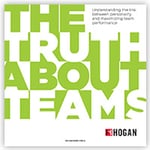
Truth About TeamsBalancing psychological roles is an important step toward creating a high-performing team. It is equally important to understand team members’ derailers.

Under stress, people’s greatest strength can become their biggest weakness – the ambitious salesperson earns a reputation as a cutthroat competitor, the meticulous accountant turns to nitpicking or micromanaging. These tendencies are called derailers.

If too many members of a team share the same derailing tendencies, they can become team derailers. Team derailers fall into three categories:

  • Distancing derailers help individuals manage anxiety or pressure by maintaining distance from and pushing others away.
  • Agitating derailers are an offensive rather than defensive response to pressure. They help individuals manage situations by manipulating or controlling others.
  • Acquiescing derailers help individuals manage their anxiety and stress by building alliances with others.

These derailers can lead to shared blind spots, amplified reactions, or competitive responses, in which team members enter a sort of arms race by responding to each others’ derailed behavior in a manner that triggers more derailed behavior. However, by recognizing their shared characteristics, teams can work to mitigate their tendencies and correct problem behaviors.

To find out more about team derailers and how personality affects team performance, check out our free eBook, The Truth About Teams.

Topics: derailment

Using Speed Coaching to Create Self-Awareness

Posted by Hogan News on Tue, Nov 13, 2012

Speed CoachingAs more organizations are forced to do more with less, speed coaching provides a fast, agile and cost-effective way to enhance the performance of key employees before they derail.

The viability of an organization depends upon the quality of its future leaders, yet limited resources often pose significant obstacles to providing them with necessary coaching and development. During her session at GSC SHRM, titled “Speed Coaching – Limited Resources but Unlimited Development,” Patricia Kellett, director of the Hogan Coaching Network, shared several strategies for using speed coaching to develop future leaders.

Trish discussed how speed coaching can be effective in changing behavior by sharing a case study of Bob, an employee who was recently promoted to supply chain manager for his company. Although Bob knows the business well and is effective at relationship building, his supervisor hears from team members that Bob’s meetings tend to go on for too long, and that he is indecisive, not open to new ideas, and gets overwhelmed by a more assertive employee.

As Bob is proficient in several key areas of his role, she explained, it would be a waste of time and resources to have him go through the typical linear development cycle. Instead, it is more effective to provide him with speed coaching in the few areas in which he needs improvement. By providing targeted speed coaching that builds on his existing strengths and develops his competency companions, or the existing skills that can be used to improve his performance in other areas, he can be a more effective leader.

To ensure an organization has a pipeline of future leaders it can count on to assume key positions, it is imperative to understand the assets and liabilities of these individuals. As each company has several team members who may not be perfect, but are still too good to lose, their supervisors need to provide targeted development that prepares them to meet future needs. Through speed coaching, they can provide their high potential employees with fast and effective development that drives their performance, but won’t drain financial resources.

Topics: leadership, coaching, executive coaching, Hogan Coaching Network

Using Speed Coaching to Create Self-Awareness

Posted by HNews on Mon, Nov 12, 2012

Speed CoachingAs more organizations are forced to do more with less, speed coaching provides a fast, agile and cost-effective way to enhance the performance of key employees before they derail.

The viability of an organization depends upon the quality of its future leaders, yet limited resources often pose significant obstacles to providing them with necessary coaching and development. During her session at GSC SHRM, titled “Speed Coaching – Limited Resources but Unlimited Development,” Patricia Kellett, director of the Hogan Coaching Network, shared several strategies for using speed coaching to develop future leaders.

Trish discussed how speed coaching can be effective in changing behavior by sharing a case study of Bob, an employee who was recently promoted to supply chain manager for his company. Although Bob knows the business well and is effective at relationship building, his supervisor hears from team members that Bob’s meetings tend to go on for too long, and that he is indecisive, not open to new ideas, and gets overwhelmed by a more assertive employee.

As Bob is proficient in several key areas of his role, she explained, it would be a waste of time and resources to have him go through the typical linear development cycle. Instead, it is more effective to provide him with speed coaching in the few areas in which he needs improvement. By providing targeted speed coaching that builds on his existing strengths and develops his competency companions, or the existing skills that can be used to improve his performance in other areas, he can be a more effective leader.

To ensure an organization has a pipeline of future leaders it can count on to assume key positions, it is imperative to understand the assets and liabilities of these individuals. As each company has several team members who may not be perfect, but are still too good to lose, their supervisors need to provide targeted development that prepares them to meet future needs. Through speed coaching, they can provide their high potential employees with fast and effective development that drives their performance, but won’t drain financial resources.

Topics: coaching, Hogan Coaching Network

Destructive Leadership II

Posted by HNews on Sun, Nov 11, 2012

Dest Lead ThumbOrganizational psychologists often seem content to define and categorize relevant behaviors and stop there. But curious minds wonder about why people do what they do; curious minds want to go deeper into the problem.

It’s no secret that the corporate world is overrun with bad managers, but why do these leaders behave in ways that destroy the teams for whom they are responsible?

Most people behave badly because they are preoccupied with their own agendas and unable or unwilling to consider how their actions might affect others. There are two causes of self-centered behavior:

Insecurity
Insecure leaders lack confidence and react emotionally to real and imaginary perceived threats. If a subordinate makes a mistake that may reflect badly on the leader, they may react angrily and disproportionately to the subordinate’s mistake. When confronted with data indicating that they have made bad decisions, they could explode and blame the mistake on external factors.

Arrogance
Arrogant leaders have too much confidence, and see others, especially subordinates, as objects to be used for their own purposes. They feel entitled to exploit and abuse their subordinates because the subordinates are existentially unworthy. When confronted with data indicating that they have made bad decisions, they typically ignore the feedback and say it is time to move on.

To learn more about destructive leadership, and how to prevent it, check out Dr. Robert Hogan’s recent Q&A on the subject here.

Lessons from Carl Jung

Posted by Hogan News on Fri, Nov 09, 2012

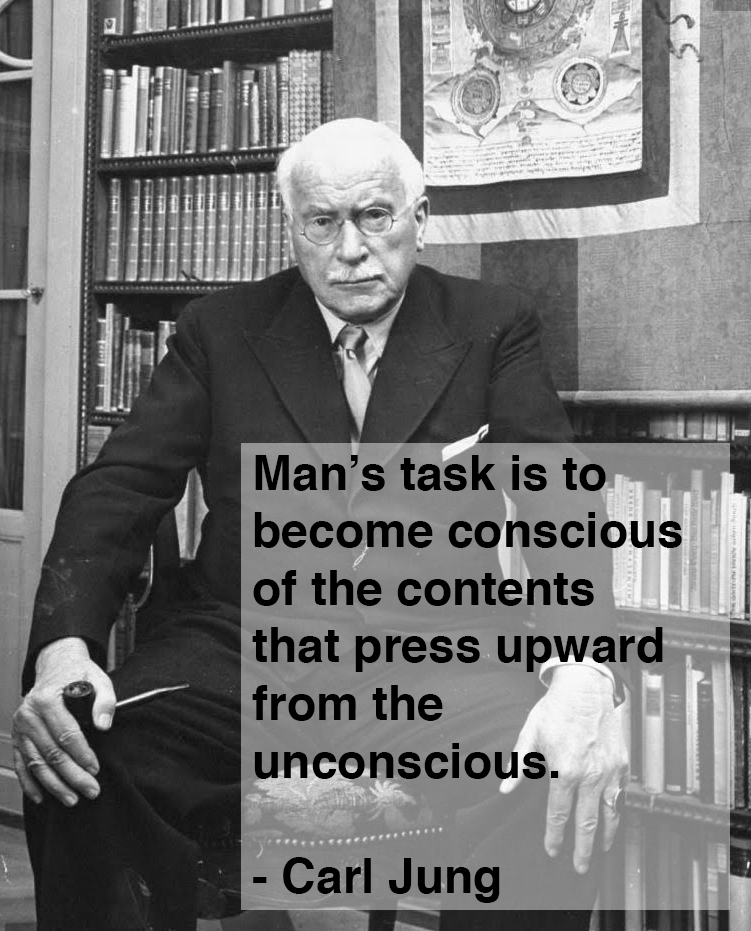
Man's task is to become conscious of the contents that press upward from the unconsious.

describe the image

Topics: Carl Jung

The Dirty Secret About Accountability

Posted by Hogan News on Fri, Nov 09, 2012

Accountability

Out of all the things we expect of leaders—taking charge, setting strategy, empowering people, driving execution, you name it—what one single behavior would you guess is most often neglected or avoided among executives? Seeing the big picture? Nope. Delegating? Nope. Mapping out detailed project plans? Nope. Although many upper-level managers don’t do these things enough, the single-most shirked responsibility of executives is holding people accountable. No matter how tough a game they may talk about performance, when it comes to holding peoples’ feet to the fire leaders step back from the heat.

In our database of over 5,400 upper-level managers from the US, Europe, Latin America, and Asia-Pacific gathered since 2009, 46% are rated “too little” on the item, “Holds people accountable—firm when they don’t deliver.” Remarkably, the result holds up no matter how you slice the data—by ratings from bosses, peers, or even subordinates. It holds up for C-level executives compared to Directors and Middle managers. It is about the same in different cultures too—although accountability is a bit more common in some countries than others, it is still the most neglected behavior within every region we have studied.

When we first observed this trend, it struck us as counterintuitive. An epidemic of letting people off the hook is incongruous with the view of senior managers as tough, hard chargers intent on getting results. But episodes of Mad Men notwithstanding, this stereotype of executive leaders is seriously out of date. Abraham Zaleznik wrote about this myth over 20 years ago in his classic HBR article, “Real Work.”  Zaleznik chronicled how he saw American managers, influenced by the rising popularity of the human relations school, turn increasingly from the substantive work of organizations—creating products and services, cultivating markets, pleasing customers, cutting costs, and getting stuff done—to what he termed “psychopolitics.” What he meant was that in the 1980s American managers became obsessed with managing their popularity and were more concerned with greasing the skids, avoiding tough conversations, and maintaining a favorable image. Interest in productivity gave way to process. Controversy and conflict about what needs to get done and how to do it was replaced with the ambiguity of politeness, political correctness, and efforts to not offend.

We think this trend has continued, and perhaps even been intensified as the workforce has become more diverse and especially as it has gotten younger. Over the last year blogs at US News, Daily Finance, Forbes, and articles like this one in the New York Times have questioned the work ethic and entitlement mentality of generation Y. The youngest members of the workforce, especially in the US, have grown up in a sheltered environment; they expect praise and recognition and can be indignant when it is not forthcoming. They are not particularly open to critical feedback. No surprise, then, that at a time when talent retention and engaging employees is de rigueur we get silly advice to management such as, “don’t give employees a hard time about their weaknesses, celebrate their strengths.”

But there is an even deeper explanation for the lack of managerial courage to hold employees to account for their performance. The evidence comes from experimental studies of cooperation and the problem of “free-riding” which reveal the individual- and group-level outcomes that accrue when some team members don’t carry their weight and drag on the performance of others. The first lesson from this research is that within a group, free-riders and cheaters often get ahead of hard working contributors: they enjoy the benefits of group membership without making the personal sacrifice.

However, groups of cooperative contributors outperform groups of cheating free-riders. Thus, it is no surprise that groups in which free-riders are punished for their loafing outperform groups in which they are not. But the interesting finding in all of this is that the person who does the punishing actually pays a personal price in terms of lost social support. In a nutshell, group performance requires that someone plays the role of sheriff, but it is a thankless job. It is another one of those sticky cases where what is good for the group can be bad for the individual. You know, the kind of stuff that in another era was considered commendable because it served a greater good than self-interest.

In this light, it is easy to see why so many people in positions of authority are soft on accountability. In an age of career management and “psychopolitics,” where personal interest reigns supreme, who wants to risk being the bad guy? The unfortunate consequence, however, is that no matter what short-term costs an upwardly ambitious manager avoids by not playing the sheriff, they are overshadowed in the long run by lackluster organizational performance and a culture of mediocrity. Add this up over time and across departments and business units and the aggregate costs of neglecting accountability can be staggering for everyone.


Submitted by Guest Bloggers:


Rob Kaiser rob@kaiserleadership.com 
Darren Overfield darren@kaplandevries.com

Rob Kaiser is president of Kaiser Leadership Solutions. Darren Overfield is a senior consultant at Kaplan DeVries Inc.

Topics: leadership, bad managers, good managers

Lessons from Carl Jung

Posted by HNews on Thu, Nov 08, 2012

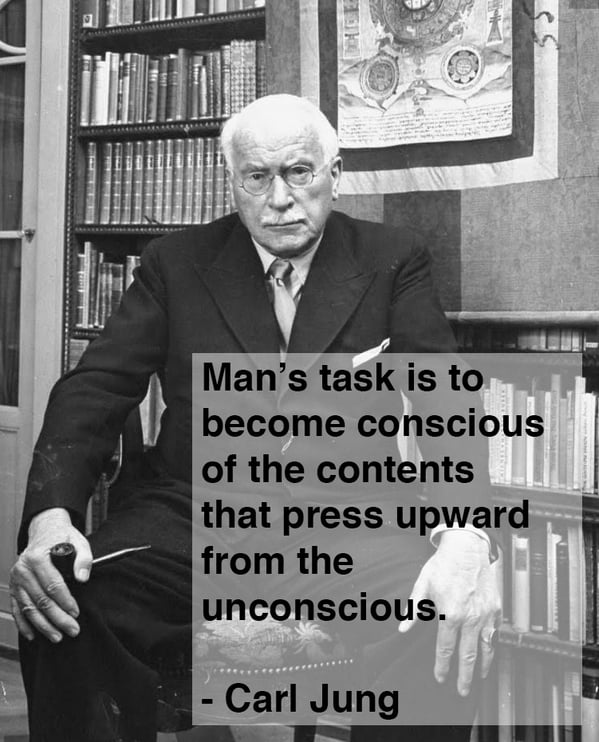
Man’s task is to become conscious of the contents that press upward from the unconsious.

describe the image

Topics: Carl Jung

The Dirty Secret About Accountability

Posted by HNews on Thu, Nov 08, 2012


Accountability

Out of all the things we expect of leaders—taking charge, setting strategy, empowering people, driving execution, you name it—what one single behavior would you guess is most often neglected or avoided among executives? Seeing the big picture? Nope. Delegating? Nope. Mapping out detailed project plans? Nope. Although many upper-level managers don’t do these things enough, the single-most shirked responsibility of executives is holding people accountable. No matter how tough a game they may talk about performance, when it comes to holding peoples’ feet to the fire leaders step back from the heat.

In our database of over 5,400 upper-level managers from the US, Europe, Latin America, and Asia-Pacific gathered since 2009, 46% are rated “too little” on the item, “Holds people accountable—firm when they don’t deliver.” Remarkably, the result holds up no matter how you slice the data—by ratings from bosses, peers, or even subordinates. It holds up for C-level executives compared to Directors and Middle managers. It is about the same in different cultures too—although accountability is a bit more common in some countries than others, it is still the most neglected behavior within every region we have studied.

When we first observed this trend, it struck us as counterintuitive. An epidemic of letting people off the hook is incongruous with the view of senior managers as tough, hard chargers intent on getting results. But episodes of Mad Men notwithstanding, this stereotype of executive leaders is seriously out of date. Abraham Zaleznik wrote about this myth over 20 years ago in his classic HBR article, “Real Work.”  Zaleznik chronicled how he saw American managers, influenced by the rising popularity of the human relations school, turn increasingly from the substantive work of organizations—creating products and services, cultivating markets, pleasing customers, cutting costs, and getting stuff done—to what he termed “psychopolitics.” What he meant was that in the 1980s American managers became obsessed with managing their popularity and were more concerned with greasing the skids, avoiding tough conversations, and maintaining a favorable image. Interest in productivity gave way to process. Controversy and conflict about what needs to get done and how to do it was replaced with the ambiguity of politeness, political correctness, and efforts to not offend.

We think this trend has continued, and perhaps even been intensified as the workforce has become more diverse and especially as it has gotten younger. Over the last year blogs at US News, Daily Finance, Forbes, and articles like this one in the New York Times have questioned the work ethic and entitlement mentality of generation Y. The youngest members of the workforce, especially in the US, have grown up in a sheltered environment; they expect praise and recognition and can be indignant when it is not forthcoming. They are not particularly open to critical feedback. No surprise, then, that at a time when talent retention and engaging employees is de rigueur we get silly advice to management such as, “don’t give employees a hard time about their weaknesses, celebrate their strengths.”

But there is an even deeper explanation for the lack of managerial courage to hold employees to account for their performance. The evidence comes from experimental studies of cooperation and the problem of “free-riding” which reveal the individual- and group-level outcomes that accrue when some team members don’t carry their weight and drag on the performance of others. The first lesson from this research is that within a group, free-riders and cheaters often get ahead of hard working contributors: they enjoy the benefits of group membership without making the personal sacrifice.

However, groups of cooperative contributors outperform groups of cheating free-riders. Thus, it is no surprise that groups in which free-riders are punished for their loafing outperform groups in which they are not. But the interesting finding in all of this is that the person who does the punishing actually pays a personal price in terms of lost social support. In a nutshell, group performance requires that someone plays the role of sheriff, but it is a thankless job. It is another one of those sticky cases where what is good for the group can be bad for the individual. You know, the kind of stuff that in another era was considered commendable because it served a greater good than self-interest.

In this light, it is easy to see why so many people in positions of authority are soft on accountability. In an age of career management and “psychopolitics,” where personal interest reigns supreme, who wants to risk being the bad guy? The unfortunate consequence, however, is that no matter what short-term costs an upwardly ambitious manager avoids by not playing the sheriff, they are overshadowed in the long run by lackluster organizational performance and a culture of mediocrity. Add this up over time and across departments and business units and the aggregate costs of neglecting accountability can be staggering for everyone.

Submitted by Guest Bloggers:

Rob Kaiser rob@kaiserleadership.com
Darren Overfield darren@kaplandevries.com

Rob Kaiser is president of Kaiser Leadership Solutions. Darren Overfield is a senior consultant at Kaplan DeVries Inc.


Topics: bad managers, good managers

Crafting Your Dream Team

Posted by Hogan News on Thu, Nov 08, 2012

Nearly everyone has been on a team that has simply fallen flat. When that happens, our natural instinct is to assume that the team’s failure was due to a poor choice of team members.


But have you ever considered that perhaps it wasn’t who was on the team that made the difference, but what role they played? People have two roles within a team: functional and psychological. Functional roles are defined by a person’s position or title – chief executive, engineer, accountant, etc. Psychological roles are roles to which people naturally gravitate based on their personalities.

There are five psychological roles to which people naturally gravitate:

  • Results (High HPI Ambition) – Results-oriented people seek leadership roles, direct the team, and drive others toward business goals. They may be overly competitive with their peers or subordinates and are not inclined to seek input.
  • Relationships (High HPI Interpersonal Sensitivity and Sociability) – Relationships team members are perceptive and cooperative, but can be overly focused on getting along with others rather than results.
  • Process (High HPI Prudence) – Process-oriented team members are procedurally driven, organized, and attentive to details and implementation. However, they may be seen as rigid and inflexible and may miss the big picture.
  • Innovation (High HPI Inquisitive) – Innovation team members are imaginative and focused on the big picture. They may have difficulty with practicality because they prefer ideas to implementation.
  • Pragmatism (Low HPI Interpersonal Sensitivity and Inquisitive) – Pragmatism team members are practical, not easily swayed by emotions, and comfortable confronting conflict; however, they may be seen as ignoring people’s feelings, and the big picture.

For a team to succeed, psychological roles have to be balanced in two ways. First, a team needs to have complimentary fit, which is to say enough diversity among its members to fill every psychological role. Teams also need to have enough individuals to provide a critical mass in each psychological role.

To find out more about individuals’ psychological roles, and how personality affects team performance, check out our complimentary eBook, The Truth About Teams.

Topics: teams, team-building

Crafting Your Dream Team

Posted by HNews on Wed, Nov 07, 2012

Nearly everyone has been on a team that has simply fallen flat. When that happens, our natural instinct is to assume that the team’s failure was due to a poor choice of team members.

But have you ever considered that perhaps it wasn’t who was on the team that made the difference, but what role they played? People have two roles within a team: functional and psychological. Functional roles are defined by a person’s position or title – chief executive, engineer, accountant, etc. Psychological roles are roles to which people naturally gravitate based on their personalities.

There are five psychological roles to which people naturally gravitate:

  • Results (High HPI Ambition) – Results-oriented people seek leadership roles, direct the team, and drive others toward business goals. They may be overly competitive with their peers or subordinates and are not inclined to seek input.
  • Relationships (High HPI Interpersonal Sensitivity and Sociability) – Relationships team members are perceptive and cooperative, but can be overly focused on getting along with others rather than results.
  • Process (High HPI Prudence) – Process-oriented team members are procedurally driven, organized, and attentive to details and implementation. However, they may be seen as rigid and inflexible and may miss the big picture.
  • Innovation (High HPI Inquisitive) – Innovation team members are imaginative and focused on the big picture. They may have difficulty with practicality because they prefer ideas to implementation.
  • Pragmatism (Low HPI Interpersonal Sensitivity and Inquisitive) – Pragmatism team members are practical, not easily swayed by emotions, and comfortable confronting conflict; however, they may be seen as ignoring people’s feelings, and the big picture.

For a team to succeed, psychological roles have to be balanced in two ways. First, a team needs to have complimentary fit, which is to say enough diversity among its members to fill every psychological role. Teams also need to have enough individuals to provide a critical mass in each psychological role.

To find out more about individuals’ psychological roles, and how personality affects team performance, check out our complimentary eBook, The Truth About Teams.

Subscribe to our Blog

Most Popular Posts

Connect