Meet the Perfectionist

Posted by Hogan News on Tue, Nov 06, 2012

She’s the list maker, the fact checker, the one who always seems to be checking your work over your shoulder. Sure, some call it nitpicking, but isn’t anything worth doing worth doing right?

On the climb up the corporate ladder, the line between strength and weakness isn’t always clear. The same impossibly high standards that helped the perfectionist early in her career can earn her a reputation as a micromanager in the corner office.

Watch this video to see the perfectionist at work, or visit www.howdoyouderail.com to view the entire HDS video series. Follow on Twitter @ImHiDiligent #howdoyouderail

Diligent

Topics: Hogan Development Survey, HDS, derailment, HDS scales, How Do You Derail

Meet the Perfectionist

Posted by HNews on Mon, Nov 05, 2012

She’s the list maker, the fact checker, the one who always seems to be checking your work over your shoulder. Sure, some call it nitpicking, but isn’t anything worth doing worth doing right?

On the climb up the corporate ladder, the line between strength and weakness isn’t always clear. The same impossibly high standards that helped the perfectionist early in her career can earn her a reputation as a micromanager in the corner office.

Watch this video to see the perfectionist at work, or visit www.howdoyouderail.com to view the entire HDS video series. Follow on Twitter @ImHiDiligent #howdoyouderail

Diligent

Topics: derailment

Destructive Leadership I

Posted by HNews on Sun, Nov 04, 2012

Destructive leadershipDestructive leadership is something we often talk about, but given how often destructive leaders show up in the news; it’s worth another look.

If we define leadership as the ability to build and/or maintain a high-performing team, then destructive leadership is behavior that undermines that team.

What do destructive leaders do? A destructive leader’s impact depends on his or her level in an organizational hierarchy.

First-line supervisors destroy teams by alienating subordinates through a series of destructive behaviors – bullying, harassing, exploiting, lying, betraying, and manipulating.

Mid-level leaders can destroy their teams by exhibiting the same behaviors listed for first-line leaders and by making bad tactical decisions – that is, through exercising bad judgment. Bad judgment negatively impact moral and erode subordinates’ trust.

Senior leaders can be the most destructive. In addition to the behaviors listed for first-line and mid-level leaders, senior leaders are responsible for making strategic decisions. Bad strategic decision-making can ruin teams, companies, and even countries.

For more information about destructive leadership, check out Dr. Robert Hogan’s recent Q&A.

Handlebars and High Performers

Posted by Jesse Whitsett on Fri, Nov 02, 2012

mustacheIt’s that time again. The leaves are turning, the clocks need changing, and the air carries that crispness that can be associated with only one thing: a mustache. Dustin Hunter, blogged last year publicly announcing Hogan’s involvement in Movember. Participation in Movember is simple - register and grow a badge of honor on your upper lip to raise awareness and funds for prostate cancer research.               

At Hogan, we know a lot about leadership. Our passion is to understand its many dynamic facets and to scientifically identify an individual’s propensity to be successful. To honor this passion and our commitment to the study of leadership, I thought it only fitting to take a quick glance at some of the great mustaches in leadership history.

Theodore Roosevelt A decorated war hero, acclaimed big game hunter, and renowned president, Teddy exhibited leadership strengths that earned a chiseled spot in the Black Hills of South Dakota. Would his Rough Riders have followed his charge or bears fallen to his knife had his upper lip been shorn? I think not.

Don Mattingly He did serve as captain of the New York Yankees for four seasons and was awarded countless accolades for his sporting achievements. Mattingly was well known for a successful leadership style based around humility, simplicity, and excellence. In addition to the now retired number 23 on his jersey, Mattingly also proudly displayed a thick Box Car style mustache.

Genghis Kahn Opinions of Mr. Kahn vary, but no one can deny his leadership skill and tactical expertise. His leadership put Mongolia on the map and established some of the greatest horse cultures in human history. Would his confederation of tribes have united to form a force worthy of China’s Great Wall had he lacked his fuzzy stamp of machismo? Highly unlikely.

Abraham Lincoln This man was so influential he not only led this country through some of its darkest times, he also revolutionized the mustache by sporting the skin stache (full beard sans lip hair). Known for his honesty, eloquence, and untimely death, Lincoln and his reverse mustache have been immortalized in marble, alongside his mustachioed brethren in South Dakota, and on our national currency.

Mahatma Ghandi The guy sported a stache when he coined the phrase “be the change you wish to see in the world.” Enough said.

Albert Einstein Without that upper lip fur the “C” might not have ever been squared. Although Einstein might not have been a true people leader, no one can doubt his leadership in visionary thought. Besides, leadership is all relative.

The list could go on to include the likes of Martin Luther King, Jr., Wyatt Earp, Reggie Jackson, Mike Ditka, and countless others. It isn’t proper, however, to laud the positive accomplishments of those above without considering the darker role mustaches have played in leadership history.

Perhaps the most infamous derailed mustache was that worn by Adolf Hitler. The actions taken by Hitler do not merit a recap, but if leadership is defined as an ability to unite people toward a common goal (good or evil) then he must be acknowledged. Runners up include Atilla the Hun, Joseph Stalin, and Saddam Hussein.

Personality is, of course, a much more accurate (and legally defensible) way to assess an individual’s leadership style and potential than is their choice of facial hair. I’ve poked around our research archive and haven’t yet discovered any solid correlations between handlebar mustaches and high performing leaders, so we’ll stick to what we know and do best.

Topics: leadership, Movember, mustache

The Culture Clash

Posted by Hogan News on Fri, Nov 02, 2012

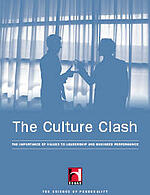
describe the imageThe Importance of Values to Leadership and Business Performance

The story of a smart, talented individual hired to repair an ailing company, only to fail and cost the company dearly in the process, isn’t unfamiliar. When values of a leader don’t match up with those of the company, leader-subordinate relationships may spiral out of control, taking the whole company down with them.

Download The Culture Clash and discover the impact values have on motivation, culture fit, leadership style, and biases within a work environment.


Topics: MVPI, leadership, corporate culture

The Culture Clash

Posted by HNews on Thu, Nov 01, 2012

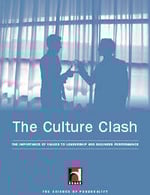
describe the imageThe Importance of Values to Leadership and Business Performance

The story of a smart, talented individual hired to repair an ailing company, only to fail and cost the company dearly in the process, isn’t unfamiliar. When values of a leader don’t match up with those of the company, leader-subordinate relationships may spiral out of control, taking the whole company down with them.

Download The Culture Clash and discover the impact values have on motivation, culture fit, leadership style, and biases within a work environment.

Topics: corporate culture

Handlebars and High Performers

Posted by JWhitsett on Thu, Nov 01, 2012

mustacheIt’s that time again. The leaves are turning, the clocks need changing, and the air carries that crispness that can be associated with only one thing: a mustache. Dustin Hunter, blogged last year publicly announcing Hogan’s involvement in Movember. Participation in Movember is simple – register and grow a badge of honor on your upper lip to raise awareness and funds for prostate cancer research.

At Hogan, we know a lot about leadership. Our passion is to understand its many dynamic facets and to scientifically identify an individual’s propensity to be successful. To honor this passion and our commitment to the study of leadership, I thought it only fitting to take a quick glance at some of the great mustaches in leadership history.

Theodore Roosevelt A decorated war hero, acclaimed big game hunter, and renowned president, Teddy exhibited leadership strengths that earned a chiseled spot in the Black Hills of South Dakota. Would his Rough Riders have followed his charge or bears fallen to his knife had his upper lip been shorn? I think not.

Don Mattingly He did serve as captain of the New York Yankees for four seasons and was awarded countless accolades for his sporting achievements. Mattingly was well known for a successful leadership style based around humility, simplicity, and excellence. In addition to the now retired number 23 on his jersey, Mattingly also proudly displayed a thick Box Car style mustache.

Genghis Kahn Opinions of Mr. Kahn vary, but no one can deny his leadership skill and tactical expertise. His leadership put Mongolia on the map and established some of the greatest horse cultures in human history. Would his confederation of tribes have united to form a force worthy of China’s Great Wall had he lacked his fuzzy stamp of machismo? Highly unlikely.

Abraham Lincoln This man was so influential he not only led this country through some of its darkest times, he also revolutionized the mustache by sporting the skin stache (full beard sans lip hair). Known for his honesty, eloquence, and untimely death, Lincoln and his reverse mustache have been immortalized in marble, alongside his mustachioed brethren in South Dakota, and on our national currency.

Mahatma Ghandi The guy sported a stache when he coined the phrase “be the change you wish to see in the world.” Enough said.

Albert Einstein Without that upper lip fur the “C” might not have ever been squared. Although Einstein might not have been a true people leader, no one can doubt his leadership in visionary thought. Besides, leadership is all relative.

The list could go on to include the likes of Martin Luther King, Jr., Wyatt Earp, Reggie Jackson, Mike Ditka, and countless others. It isn’t proper, however, to laud the positive accomplishments of those above without considering the darker role mustaches have played in leadership history.

Perhaps the most infamous derailed mustache was that worn by Adolf Hitler. The actions taken by Hitler do not merit a recap, but if leadership is defined as an ability to unite people toward a common goal (good or evil) then he must be acknowledged. Runners up include Atilla the Hun, Joseph Stalin, and Saddam Hussein.

Personality is, of course, a much more accurate (and legally defensible) way to assess an individual’s leadership style and potential than is their choice of facial hair. I’ve poked around our research archive and haven’t yet discovered any solid correlations between handlebar mustaches and high performing leaders, so we’ll stick to what we know and do best.

On Halloween, beware the cultural vampire

Posted by Ryan Daly on Wed, Oct 31, 2012

VampireMany business owners and managers have likely found themselves in a predicament similar to the one Eric Sinoway describes in a recent blog for the Harvard Business Review.
One of his firm’s top performers was having a detrimental impact on the company culture. Should he and his partner continue to support and reward the employee based on his results, or should they cut him loose? How do you weigh the results a person gets vs. how he or she gets them?

Culture is a crucial factor in business success. There are dozens of stories of how a company’s culture either positively or negatively impacted its business.

Sinoway goes so far as to quote a Harvard Business School professor who claimed, “maintaining an effective culture is so important that it, in fact, trumps even strategy.”

Sinoway proposes there are four types of employees in terms of culture:

  • Stars – Employees who perform well and align with organizational values
  • High Potentials – Employees whose performance could improve, but who align with organizational values
  • Zombies – Employees who neither perform well or align with organizational values, and
  • Vampires – Employees who perform well but fail to align with organizational values.

Vampires, Sinoway said, can prove the most destructive, since most companies are reluctant to fire top performers. In this particular employee’s case, Sinoway knew he had to let him go.

For more about how values impact organizational culture and how culture can affect performance, check out our three part series, The Power of Unconscious Biases, The Value of Values, and The Culture Clash.

Topics: corporate culture, culture, high potential employees

On Halloween, beware the cultural vampire

Posted by Hogan Assessments on Tue, Oct 30, 2012

VampireMany business owners and managers have likely found themselves in a predicament similar to the one Eric Sinoway describes in a recent blog for the Harvard Business Review.

One of his firm’s top performers was having a detrimental impact on the company culture. Should he and his partner continue to support and reward the employee based on his results, or should they cut him loose? How do you weigh the results a person gets vs. how he or she gets them?

Culture is a crucial factor in business success. There are dozens of stories of how a company’s culture either positively or negatively impacted its business.

Sinoway goes so far as to quote a Harvard Business School professor who claimed, “maintaining an effective culture is so important that it, in fact, trumps even strategy.”

Sinoway proposes there are four types of employees in terms of culture:

  • Stars – Employees who perform well and align with organizational values
  • High Potentials – Employees whose performance could improve, but who align with organizational values
  • Zombies – Employees who neither perform well or align with organizational values, and
  • Vampires – Employees who perform well but fail to align with organizational values.

Vampires, Sinoway said, can prove the most destructive, since most companies are reluctant to fire top performers. In this particular employee’s case, Sinoway knew he had to let him go.

For more about how values impact organizational culture and how culture can affect performance, check out our three part series, The Power of Unconscious Biases, The Value of Values, and The Culture Clash.

Topics: corporate culture, culture, high potential employees

HR Tales from the Dark Side

Posted by Hogan News on Tue, Oct 30, 2012

Classic Jack o Lantern1You make what seems like a promising hire – good resume, relevant experience, and solid references. And, at first, her performance matches that promise.

As time wears on, however, you start to hear grumbling around the water cooler. Nobody likes to work with your new hire. Her coworkers start to pull away, her work unit shows signs of waning engagement, and her performance starts to flag. Just like that, your promising new employee turns into a nightmare. Why? Odds are, your new hire is succumbing to the dark side of her personality.

Dark side personality characteristics emerge during times of increased stress, like the often-intense pressure to perform during the first several months of employment. If unchecked, these characteristics can disrupt relationships with a person’s coworkers and subordinates, which can impede their chances at success.

The Hogan Development Survey measures dark side personality along 11 characteristics, which can be grouped into three distinct reactions to conflict:

  • Moving Away From Others – People in this group manage insecurities by intimidating and avoiding others. They tend to be alert for signs of criticism, rejection, betrayal, or hostile intent. When they think they have detected threat, they react vigorously to remove it.
  • Moving Against Others – People in this group expect to be liked, admired, and respected. They tend to resist acknowledging their mistakes and/or failures (which they blame on others), and they are often unable to learn from experience.
  • Moving Toward Others – People in this group want to please figures of authority. As a result, they are easy to supervise, and are popular with their bosses. However, in conflict, they tend to side with authority figures rather than sticking up for their team members or subordinates.

Unfortunately, dark side personality characteristics are nearly impossible to detect in a normal hiring process, making this story all too familiar. However, you can use targeted personality assessment to identify candidates’ dark side characteristics and focus onboarding efforts to ensure that you don’t wind up with a hiring horror story.

To learn more about our approach to dealing with people’s dark side, check out our whitepaper How your Greatest Strength can Become your Greatest Weakness.

Topics: Hogan Development Survey, HDS, derailment, dark side, dark side personality

Subscribe to our Blog

Most Popular Posts

Connect