Welcome to the Hogan Team

Posted by Hogan Assessments on Thu, Jul 19, 2012

We’re excited to welcome new members to the Hogan family!

As our new senior accountant, Adrienne Horner is responsible for contract management, maintaining pricing set-up, tax support, and taking care of business.

Jenni Weldon is our new HR Generalist. She is responsible for the administration of HR programs and policies, recruiting and staffing logistics, employee relations, and everything that makes our company culture what it is.

Jocelyn Hays, our newest Corporate Solutions consultant, works with Hogan’s direct clients to design and implement solutions for employee selection, leadership development, and team development. 

As Brand Manager, Lindsey Morehead, the newest addition to our marketing team, is responsible for establishing, maintaining, and monitoring Hogan brand standards internally and through partner relationships.

Our new receptionist, Autumn Rigsbee, is keeping the lines of communication open and assisting with office management. We love it when she brings her English mastiff, Kuma (Japanese for “bear”), around for a visit!

Tony Dinelli has joined our IT team as Project Manager. You might talk to him if you’re working on integrating Hogan into your company and looking for technical support. He acts as the liaison between clients, Hogan consultants, and customer service.

Holly Lee joined our customer service team in June. She works to provide excellent service to our clients and their candidates.

To our Florida office, we welcome Megan Ludwick. Megan is the new Project Associate in the training division and she assists with project management, development, and launches.

Leigha Carter is our new Training Coordinator. Leigha is responsible for supporting administrative functions, certification workshops, web courses, and maintaining all training records.

Welcome to the Hogan Team!New Hogan hires

Topics: Hogan Team

Bridging the Gap from Potential to Performance

Posted by Hogan Assessments on Wed, Jul 18, 2012

PotentialStrong leadership is a crucial ingredient for a successful company. With highly qualified people at the top, the entire organization is more likely to outperform the competition and hold on to their most talented employees. Yet, many organizations lack a tried-and-true method for identifying and developing those employees who show leadership potential.

Current processes for identifying high-potential internal talent are often marred by bias and politics and rely on past performance as the main indicator of future performance. Such strategies reward bold, attention-grabbing behaviors that may be attractive in junior employees but become counterproductive at the upper levels.

As several recent high-profile stories suggest, companies don’t have much luck when hiring external C-level candidates either. Studies show that more than half of outside hires fail, many within the first 18 months on the job. As they are unfamiliar with the business, employees, culture, and unique challenges, it is no wonder why many external hires struggle to find success.

However, when hiring managers use the empirical data provided by personality assessment, rather than gut reactions influenced by politics or initial reactions in interviews, they can develop high-potential programs that ensure a stable of promising leaders. By using assessments, managers gain key insight into their high-potential employees in the following areas:

  • Bright-side personality – the everyday personality that determines leadership style, judgment, and ability to get along and get ahead
  • Dark-side personality – also called derailment personality, this consists of characteristics that under stress or boredom can become debilitating career derailers
  • Values – the drivers, beliefs and interests that determine what candidates are willing to work for and in what type of job, position, and organizational culture they are likely to feel most satisfied
  • Cognitive ability – a measure of candidates’ ability to think tactically and strategically

When personality assessments are at the center of a high-potential program, organizations have an empirical basis for identifying, selecting, and developing the next generation of leaders.

To learn more about how personality assessment can be used to identify, develop, and retain future leaders, download our complimentary white paper, From Potential to Performance.

Topics: leadership, hiring, high potential leaders

Bridging the Gap from Potential to Performance

Posted by Hogan Assessments on Tue, Jul 17, 2012

PotentialStrong leadership is a crucial ingredient for a successful company. With highly qualified people at the top, the entire organization is more likely to outperform the competition and hold on to their most talented employees. Yet, many organizations lack a tried-and-true method for identifying and developing those employees who show leadership potential.

Current processes for identifying high-potential internal talent are often marred by bias and politics and rely on past performance as the main indicator of future performance. Such strategies reward bold, attention-grabbing behaviors that may be attractive in junior employees but become counterproductive at the upper levels.

As several recent high-profile stories suggest, companies don’t have much luck when hiring external C-level candidates either. Studies show that more than half of outside hires fail, many within the first 18 months on the job. As they are unfamiliar with the business, employees, culture, and unique challenges, it is no wonder why many external hires struggle to find success.

However, when hiring managers use the empirical data provided by personality assessment, rather than gut reactions influenced by politics or initial reactions in interviews, they can develop high-potential programs that ensure a stable of promising leaders. By using assessments, managers gain key insight into their high-potential employees in the following areas:

  • Bright-side personality – the everyday personality that determines leadership style, judgment, and ability to get along and get ahead
  • Dark-side personality – also called derailment personality, this consists of characteristics that under stress or boredom can become debilitating career derailers
  • Values – the drivers, beliefs and interests that determine what candidates are willing to work for and in what type of job, position, and organizational culture they are likely to feel most satisfied
  • Cognitive ability – a measure of candidates’ ability to think tactically and strategically

When personality assessments are at the center of a high-potential program, organizations have an empirical basis for identifying, selecting, and developing the next generation of leaders.

To learn more about how personality assessment can be used to identify, develop, and retain future leaders, download our complimentary white paper, From Potential to Performance.

The Rocket Model: Team Goals

Posted by Robert Hogan on Mon, Jul 16, 2012

Rocket ModelPerhaps one of the most overlooked yet most important actions of team functioning is setting team goals. Far too many teams have  poorly defined goals or none at all. The goals of a group or team should determine:

  • Size, skill requirements, roles and responsibilities (Talent)
  • How often it meets, makes decisions and communicates (Norms)
  • The level of engagement needed (Buy-In)
  • Resource needs (Power)
  • Espirit de corps and conflict resolution (Morale)
  • How to win (Results)

Team and group goals define what is to be accomplished, when it needs to be accomplished, and how to know when it is accomplished. Therefore leaders must spend time developing well-defined goals and metrics for their groups and teams if they want to succeed.

Goals also determine whether members operate as a group or a team. If members do not work together, or share common identities or fates, then they need to operate as a group. Conversely, they may need to operate as a team if the members’ fates are tied to the accomplishment of the same goal and collaboration is necessary for success. Having well-defined goals, metrics, and benchmarks will improve both team and group performance because everyone will know what is required. 

There are several other aspects of team goals worth noting. First, team goals drive team behavior; individual goals drive individual behavior. Leaders should not expect direct reports to work collaboratively if all the goals and rewards are based on individual performance. Second, team goals should be measurable and include a mix of leading and lagging indicators. Finally, team goals also need to include both internal and external benchmarks. Teams that only measure themselves against past performance may look like they are winning all the battles but, in fact, may be losing the war with competitors.

By Gordon Curphy
Curphy Consulting Corporation
Guest blogger and co-author of The Rocket Model

Topics: leadership, teams, employee engagement, The Rocket Model, team performance, Groups, Curphy Consulting Corporation

The Rocket Model: Team Goals

Posted by RHogan on Sun, Jul 15, 2012

Rocket ModelPerhaps one of the most overlooked yet most important actions of team functioning is setting team goals. Far too many teams have  poorly defined goals or none at all. The goals of a group or team should determine:

  • Size, skill requirements, roles and responsibilities (Talent)
  • How often it meets, makes decisions and communicates (Norms)
  • The level of engagement needed (Buy-In)
  • Resource needs (Power)
  • Espirit de corps and conflict resolution (Morale)
  • How to win (Results)

Team and group goals define what is to be accomplished, when it needs to be accomplished, and how to know when it is accomplished. Therefore leaders must spend time developing well-defined goals and metrics for their groups and teams if they want to succeed.

Goals also determine whether members operate as a group or a team. If members do not work together, or share common identities or fates, then they need to operate as a group. Conversely, they may need to operate as a team if the members’ fates are tied to the accomplishment of the same goal and collaboration is necessary for success. Having well-defined goals, metrics, and benchmarks will improve both team and group performance because everyone will know what is required. 

There are several other aspects of team goals worth noting. First, team goals drive team behavior; individual goals drive individual behavior. Leaders should not expect direct reports to work collaboratively if all the goals and rewards are based on individual performance. Second, team goals should be measurable and include a mix of leading and lagging indicators. Finally, team goals also need to include both internal and external benchmarks. Teams that only measure themselves against past performance may look like they are winning all the battles but, in fact, may be losing the war with competitors.

By Gordon Curphy
Curphy Consulting Corporation
Guest blogger and co-author of The Rocket Model

Status Update: Your Social Networking Personality and Employability

Posted by Dan Paulk on Fri, Jul 13, 2012

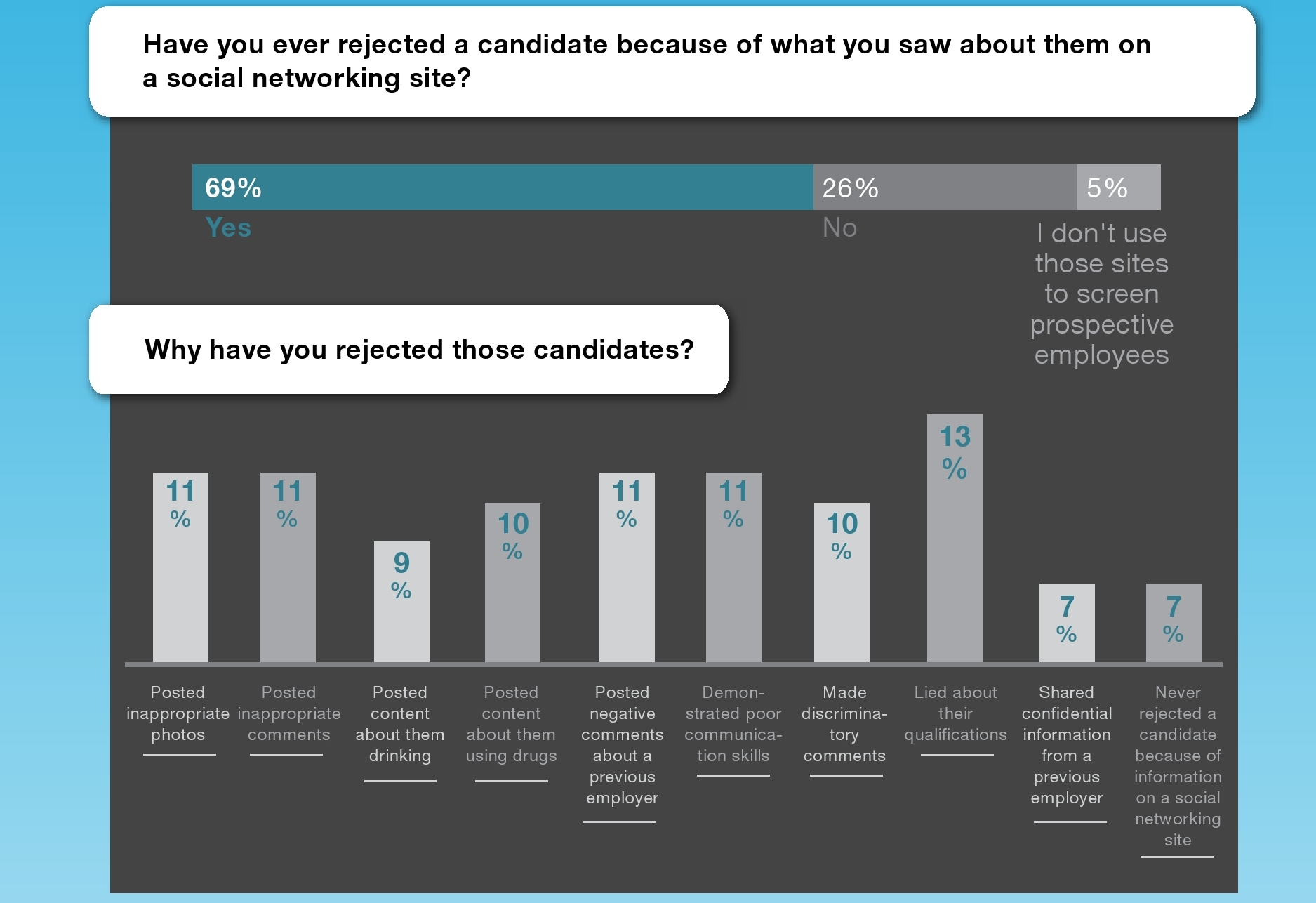
Social networksGone are the days when all job seekers had to worry about were their résumés and cover letters. Today, those documents still remain a staple of the job search process, but they are joined by a significant and growing pre-screening phenomenon: reviewing an applicant’s social-networking websites (SNW). Some job seekers are even being asked for their Facebook passwords during or right after an initial interview. Even Terror outfits are using Facebook as a recruitment tool to recruit loners from Western nations to their cause, claims a leading counter-terrorism expert.

Employers are increasingly turning to Facebook and other social-networking sites to pre-screen new hires because it may be a fairly accurate reflection of how good they’ll be at the target job, according to a study published in the Journal of Applied Social Psychology last month.

Researchers hired HR types to rate hundreds of college students’ Facebook pages using questions that reflected Big Five personality characteristics (Extraversion, Conscientiousness, Emotional Stability, Agreeableness, and Openness to Experience). The researchers asked HR professionals to rate the Facebook profiles to predict how well the students would fare as employees.

Six months later, the researchers followed up by contacting the current employers of the people whose profiles had been rated. They found a strong correlation between the predictions made by the Facebook raters and the actual performances as rated by the employers. 

Furthermore, the psychometric properties of the study were fairly decent:

  • First, SNW ratings demonstrated sufficient inter-rater reliability and internal consistency.

  • Second, ratings via SNWs demonstrated convergent validity with self-ratings of the Big Five characteristics.

  • Third, SNW ratings correlated with job performance, hirability, and academic performance criteria and the magnitude of these correlations was generally larger than for self-ratings.

  • Finally, SNW ratings accounted for significant variance in the criterion measures beyond self-ratings of personality and cognitive ability.

In this virtual day and age, it is critically important to remember that what you put online, even if it’s a mistake, may not be reversible and may not go away. The red flags for most employers seem to be drugs, drinking, badmouthing former employers, and lying about one’s credentials or qualifications. Yet, Facebook profiles usually contain a wealth of information that employers are prohibited, under federal, state and local laws, from using in discriminatory ways. Photos and posts can reveal race, gender, age, national origin, disability, even sexual orientation. 

Key takeaway? Your online presence may be used as an initial screening interview about your personality or your reputation—be circumspect about what you post and get onto that privacy policy page and limit who can see what about you. In Othello, Shakespeare’s Iago may have had it pegged: “Reputation is an idle and most false imposition; oft got without merit, and lost without deserving . . . ”

Topics: reputation, job applicant, social media, employability, social networking, Big Five

Status Update: Your Social Networking Personality and Employability

Posted by DPaulk on Thu, Jul 12, 2012


Social networksGone are the days when all job seekers had to worry about were their résumés and cover letters. Today, those documents still remain a staple of the job search process, but they are joined by a significant and growing pre-screening phenomenon: reviewing an applicant’s social-networking websites (SNW). Some job seekers are even being asked for their Facebook passwords during or right after an initial interview. Even Terror outfits are using Facebook as a recruitment tool to recruit loners from Western nations to their cause, claims a leading counter-terrorism expert.

Employers are increasingly turning to Facebook and other social-networking sites to pre-screen new hires because it may be a fairly accurate reflection of how good they’ll be at the target job, according to a study published in the Journal of Applied Social Psychology last month.

Researchers hired HR types to rate hundreds of college students’ Facebook pages using questions that reflected Big Five personality characteristics (Extraversion, Conscientiousness, Emotional Stability, Agreeableness, and Openness to Experience). The researchers asked HR professionals to rate the Facebook profiles to predict how well the students would fare as employees.

Six months later, the researchers followed up by contacting the current employers of the people whose profiles had been rated. They found a strong correlation between the predictions made by the Facebook raters and the actual performances as rated by the employers.

Furthermore, the psychometric properties of the study were fairly decent:

  • First, SNW ratings demonstrated sufficient inter-rater reliability and internal consistency.
  • Second, ratings via SNWs demonstrated convergent validity with self-ratings of the Big Five characteristics.
  • Third, SNW ratings correlated with job performance, hirability, and academic performance criteria and the magnitude of these correlations was generally larger than for self-ratings.
  • Finally, SNW ratings accounted for significant variance in the criterion measures beyond self-ratings of personality and cognitive ability.

In this virtual day and age, it is critically important to remember that what you put online, even if it’s a mistake, may not be reversible and may not go away. The red flags for most employers seem to be drugs, drinking, badmouthing former employers, and lying about one’s credentials or qualifications. Yet, Facebook profiles usually contain a wealth of information that employers are prohibited, under federal, state and local laws, from using in discriminatory ways. Photos and posts can reveal race, gender, age, national origin, disability, even sexual orientation.

Key takeaway? Your online presence may be used as an initial screening interview about your personality or your reputation—be circumspect about what you post and get onto that privacy policy page and limit who can see what about you. In Othello, Shakespeare’s Iago may have had it pegged: “Reputation is an idle and most false imposition; oft got without merit, and lost without deserving . . . ”


Topics: employability, Big Five

Thinking Outside the Boss

Posted by Jesse Whitsett on Wed, Jul 11, 2012

SuccessEvidence shows that at least 50% of individuals in leadership have, will, or are failing. The vast majority of suggested solutions revolve around high potential identification, leadership development programs and the like. The purpose of such initiatives is to identify the individuals who should be leaders, but given the statistic above, one has to wonder about their effectiveness.  

The methods above could use a little tweaking. Instead of focusing primarily on who should lead, organizations should place equal impetus on who should follow. An individual not being cut out for or even having the desire to lead is not in and of itself a bad thing. Lest we forget, leaders have to have individuals to lead, and it is those who are led that drive the success or failure of their leader. The term “followers” typically incites a negative response in our minds, however, workers, soldiers, and players are the backbone of any successful grouping of people: an army of only generals is no army at all. For a more recent analogy, imagine the NBA playoffs consisting only of head coaches Erik Spoelstra and Scott Brooks without their respective Heat and Thunder. It simply doesn’t work.

That said, a look through the annals of promotion would quickly reveal that most individuals end up in managerial or upper level leadership positions based on strong performance. This promoting strategy relies on a mindset we have all adopted, and for good reason as it makes logical sense: promote those who do well. Almost inevitably, one of those promotions will eventually place an individual in a position to manage people, and it is at that point logic often begins to breakdown.

Traditional logic fails because good leadership is comprised of much more than just strong performance. By taking a black and white approach and promoting leaders solely based on performance, organizations can potentially shoot themselves in the foot – actually in both feet as the repercussions can emerge on two fronts. Let’s continue with the NBA analogy above: there can be little argument that LeBron James is a phenomenal basketball player. In an organizational culture his performance ratings would be off the charts, and thus, by traditional thinking, LeBron should be promoted. So let’s hypothetically pull LeBron from the hardwood and move him into a more senior position, say head coach. Makes sense, right? Of course it doesn’t. What’s left is a team with big shoes to fill (pun intended) in a small forward, and an individual who has been pulled from an area of strength into an area in which he may or may not excel. Does LeBron have what it takes to be the coach? Does he even want to be the coach?

The example above commonly plays out in the arena of sales. Success in a sales role depends upon significantly different KSAOs (Knowledge, Skills, Abilities, and Other Characteristics) than a sales manager, sales director, etc. So before a high performing sales person is moved into a position of leadership, an organization should ask itself whether they want the individual to sell or to lead. The two are not mutually exclusive and it is entirely possible that the individual can successfully do both. It isn’t necessarily logical, however, to expect leadership success based solely on strong sales numbers.

As past behavior is a solid predictor of future behavior, performance metrics should be a critical component in identifying who should lead and who should follow. They should be combined, however, with a few additional variables: values and potential.

Values - Does the individual even desire to lead? Do they want the promotion, or are they content in their current status as a high-performing employee?  Will it fuel their passion or will it extinguish their pilot light?

Potential - Does the individual possess the intrinsic characteristics to successfully lead? Do they truly have what it takes?

To summarize, sometimes a soldier should remain a soldier; a small forward a small forward. Some individuals want to lead, some don’t. Some have what it takes, some don’t. Neither side of the coin is right or wrong, as organizations require both leaders and followers, but we cannot expect to figure out who is who by judging performance alone.

Topics: leadership, values, leadership development, job performance

Thinking Outside the Boss

Posted by JWhitsett on Tue, Jul 10, 2012

SuccessEvidence shows that at least 50% of individuals in leadership have, will, or are failing. The vast majority of suggested solutions revolve around high potential identification, leadership development programs and the like. The purpose of such initiatives is to identify the individuals who should be leaders, but given the statistic above, one has to wonder about their effectiveness.  

The methods above could use a little tweaking. Instead of focusing primarily on who should lead, organizations should place equal impetus on who should follow. An individual not being cut out for or even having the desire to lead is not in and of itself a bad thing. Lest we forget, leaders have to have individuals to lead, and it is those who are led that drive the success or failure of their leader. The term “followers” typically incites a negative response in our minds, however, workers, soldiers, and players are the backbone of any successful grouping of people: an army of only generals is no army at all. For a more recent analogy, imagine the NBA playoffs consisting only of head coaches Erik Spoelstra and Scott Brooks without their respective Heat and Thunder. It simply doesn’t work.

That said, a look through the annals of promotion would quickly reveal that most individuals end up in managerial or upper level leadership positions based on strong performance. This promoting strategy relies on a mindset we have all adopted, and for good reason as it makes logical sense: promote those who do well. Almost inevitably, one of those promotions will eventually place an individual in a position to manage people, and it is at that point logic often begins to breakdown.

Traditional logic fails because good leadership is comprised of much more than just strong performance. By taking a black and white approach and promoting leaders solely based on performance, organizations can potentially shoot themselves in the foot – actually in both feet as the repercussions can emerge on two fronts. Let’s continue with the NBA analogy above: there can be little argument that LeBron James is a phenomenal basketball player. In an organizational culture his performance ratings would be off the charts, and thus, by traditional thinking, LeBron should be promoted. So let’s hypothetically pull LeBron from the hardwood and move him into a more senior position, say head coach. Makes sense, right? Of course it doesn’t. What’s left is a team with big shoes to fill (pun intended) in a small forward, and an individual who has been pulled from an area of strength into an area in which he may or may not excel. Does LeBron have what it takes to be the coach? Does he even want to be the coach?

The example above commonly plays out in the arena of sales. Success in a sales role depends upon significantly different KSAOs (Knowledge, Skills, Abilities, and Other Characteristics) than a sales manager, sales director, etc. So before a high performing sales person is moved into a position of leadership, an organization should ask itself whether they want the individual to sell or to lead. The two are not mutually exclusive and it is entirely possible that the individual can successfully do both. It isn’t necessarily logical, however, to expect leadership success based solely on strong sales numbers.

As past behavior is a solid predictor of future behavior, performance metrics should be a critical component in identifying who should lead and who should follow. They should be combined, however, with a few additional variables: values and potential.

Values – Does the individual even desire to lead? Do they want the promotion, or are they content in their current status as a high-performing employee?  Will it fuel their passion or will it extinguish their pilot light?

Potential – Does the individual possess the intrinsic characteristics to successfully lead? Do they truly have what it takes?

To summarize, sometimes a soldier should remain a soldier; a small forward a small forward. Some individuals want to lead, some don’t. Some have what it takes, some don’t. Neither side of the coin is right or wrong, as organizations require both leaders and followers, but we cannot expect to figure out who is who by judging performance alone.

Meet the Sweet Talker

Posted by Hogan Assessments on Tue, Jul 10, 2012

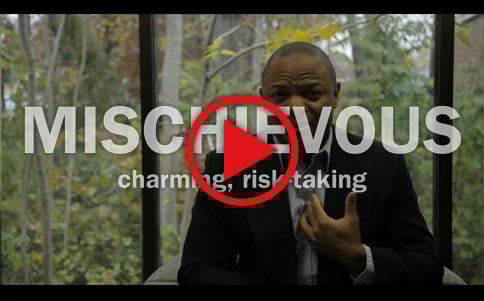
He’s the charmer, the mischief-maker, the thrill-seeker. For him, spontaneity is the spice of life. Sure, his impulsiveness may occasionally find him climbing aboard a sinking ship, but you don’t mind bailing him out again, right?

On the climb up the corporate ladder, the line between strength and weakness isn’t always clear. The same charm and daring antics that helped the sweet talker early in his career can turn into manipulation and unwillingness to learn from his mistakes.

Watch this video to see the sweet talker at work, or visit www.howdoyouderail.com to view the entire HDS video series. Follow on Twitter @ImHiMischievous #howdoyouderail


Mischievous Video

Topics: Hogan Development Survey, HDS, HDS scales, HDS videos

Subscribe to our Blog

Most Popular Posts

Connect