Sorry to Be a Buzzkill

Posted by HNews on Mon, Jan 07, 2013

Buzzkill

The HR world is already atwitter with a brand new batch of buzzwords. But wait! Here are five of last year’s biggest buzzwords that will still matter in 2013.

LEADERSHIP
“To me, there is only one talent management issue, and it never changes: leadership. What also never changes is the fact that businesses don’t understand this, which is why they put so many self-serving assholes in leadership positions.”  – Dr. Robert Hogan

After what seemed like a never-ending election cycle, the last thing anyone wants to keep talking about is leadership. But it’s something we can’t afford to ignore. Competent leadership is crucial for a company to succeed. Yet, research indicates that two-thirds of the leaders in corporate America will fail. Why? Check out this free ebook to find out. 

GAME CHANGERS
At any given organization, 20% of employees account for 80% of productivity. They are the game changers, and in 2013, companies are going to have to work hard to attract, develop, and retain employees capable of creating value and driving growth. How would Hogan do it? Download From Potential to Performance to find out. 

MULTI-GENERATION WORKFORCE
Although they aren’t necessarily the entitled slackers the media made them out to be, Millennials (Generation Y) and Digital Natives (Generation Z) work differently than older generations. Organizations need to work to separate fact from fiction when it comes to generational differences in order to leverage the experience of their older employees and build the talent bench of the future. Need a place to start? Check out this blog. 

TALENT ANALYTICS
The HR world was all abuzz with talk of Big Data last year, and rightly so; many organizations are sitting on a mountain of data about their people. This year, the challenge is for those companies to find a way to effectively analyze, understand, and leverage those data to make their organizations run better. What kind of data do we have? Check out the Hogan archive. 

ENGAGEMENT
Employee engagement matters. Engaged employees are more satisfied and more productive, and productivity ties directly to the bottom line. In 2013, we hope to see a reduction in Hawaiian-shirt Fridays and a genuine effort by organizations to identify and fix the root cause of low engagement. Here’s a hint: it’s their leaders. Want more? Check out our free white paper. 

Topics: engagement, generational workforce

Word of the New Year: Resiliency

Posted by Dan Paulk on Wed, Jan 02, 2013

ResiliencyIn the mid-1950’s, a Hungarian endocrinologist, Dr. Hans Selye, wrote a seminal book called The Stress of Life, in which he conceptualized the physiology of stress. One of the many findings that intrigued him involved individual differences in the reaction to, and coping adaptations to stressors. In one of his anecdotes, he relates the story of twin sons who grew up with a raging alcoholic father one son was also a chronic alcoholic, but the other twin was a complete tee-totaler. He asked both sons a question, “Why did you turn out the way you did?” They both gave a virtually identical answer, “With an old man like that, what do you expect!”

His exemplary case illustrates the importance of “explanatory style” with respect to dealing with both positive and negative events in our lives. In order for an event or situation to be stressful, it must be appraised as such. 

Viktor Frankl, Nazi concentration camp survivor and author of Man’s Search for Meaning, observed a critical relationship in survivor rates in the death camps. At one camp, the guard would inform entering prisoners that they would never leave the compound alive. According to Frankl, those who bought into this belief died soon after.

Among those who were not killed, those inmates who rejected their captor’s ominous prediction of death and defeat and who believed that this horror would one day pass, survived this unbelievable ordeal. However, the moment the prisoner lost hope, according to Frankl, was the day that they did not rise out of their bunk bed and this was the day of their death.

One of the most predictive variables of resiliency is one’s thinking style — how one explains adversity, especially as that relates to explanations of optimism vs. pessimism. As the cliché goes, the optimist sees the glass as half full, the pessimist sees it as half empty. 

Study after study have shown that an optimistic approach to most of life’s challenges results in the most positive adaptations. Optimistic salespeople outsell pessimistic salespeople; optimistic managers outperform pessimistic managers, optimistic students make higher grades than pessimistic students, optimistic sports teams have better records than pessimistic teams, and longitudinal studies have shown that optimistic people even outlive pessimistic people!

We’ve recently survived a tumultuous political election, re-grouped after Hurricane Sandy, mourned the loss of innocent school children in the middle of holiday celebrations, were spared the Mayan apocalypse, faced the fiscal cliff, and mercifully saw the series finale of Jersey Shore

In the mid-1990’s, I had the sad privilege of working with a crisis response team that responded to the Oklahoma City bombing tragedy. One of the best-known survivors was a young woman named Daina Bradley. That fateful April 19th, she and her mother, sister and her two young children were in the Federal building getting a social security card for her 4 month old son when the bomb went off. Floor after floor collapsed, pancaking down to the basement, eventually creating a body-crunching coffin in which Daina waited in the midst of moaning, crying, and pitch-black darkness.

When doctors finally reached her, they freed her arm but could not free her crushed leg that was pinned under a massive slab of concrete. With several scalpels, a surgeon took 10 minutes to amputate her leg. After her traumatic rescue, Daina learned that her mother and her two children were dead; her sister, Felysha, was recuperating at a nearby rehab hospital. 

As she left the hospital, she paused on the hospital steps as some of the press corps asked her questions. One reporter asked her what she had learned from this tragedy. She replied, “Never take your parents or anything for granted; treat everything you have like precious china, because someday it will be gone.” So here’s to a new year, a new beginning, and renewed optimism and perspective about what’s important in life.  

Topics: optimism, pessimism, resiliency

Word of the New Year: Resiliency

Posted by DPaulk on Tue, Jan 01, 2013

ResiliencyIn the mid-1950’s, a Hungarian endocrinologist, Dr. Hans Selye, wrote a seminal book called The Stress of Life, in which he conceptualized the physiology of stress. One of the many findings that intrigued him involved individual differences in the reaction to, and coping adaptations to stressors. In one of his anecdotes, he relates the story of twin sons who grew up with a raging alcoholic father one son was also a chronic alcoholic, but the other twin was a complete tee-totaler. He asked both sons a question, “Why did you turn out the way you did?” They both gave a virtually identical answer, “With an old man like that, what do you expect!”

His exemplary case illustrates the importance of “explanatory style” with respect to dealing with both positive and negative events in our lives. In order for an event or situation to be stressful, it must be appraised as such. 

Viktor Frankl, Nazi concentration camp survivor and author of Man’s Search for Meaning, observed a critical relationship in survivor rates in the death camps. At one camp, the guard would inform entering prisoners that they would never leave the compound alive. According to Frankl, those who bought into this belief died soon after.

Among those who were not killed, those inmates who rejected their captor’s ominous prediction of death and defeat and who believed that this horror would one day pass, survived this unbelievable ordeal. However, the moment the prisoner lost hope, according to Frankl, was the day that they did not rise out of their bunk bed and this was the day of their death.

One of the most predictive variables of resiliency is one’s thinking style — how one explains adversity, especially as that relates to explanations of optimism vs. pessimism. As the cliché goes, the optimist sees the glass as half full, the pessimist sees it as half empty. 

Study after study have shown that an optimistic approach to most of life’s challenges results in the most positive adaptations. Optimistic salespeople outsell pessimistic salespeople; optimistic managers outperform pessimistic managers, optimistic students make higher grades than pessimistic students, optimistic sports teams have better records than pessimistic teams, and longitudinal studies have shown that optimistic people even outlive pessimistic people!

We’ve recently survived a tumultuous political election, re-grouped after Hurricane Sandy, mourned the loss of innocent school children in the middle of holiday celebrations, were spared the Mayan apocalypse, faced the fiscal cliff, and mercifully saw the series finale of Jersey Shore

In the mid-1990’s, I had the sad privilege of working with a crisis response team that responded to the Oklahoma City bombing tragedy. One of the best-known survivors was a young woman named Daina Bradley. That fateful April 19th, she and her mother, sister and her two young children were in the Federal building getting a social security card for her 4 month old son when the bomb went off. Floor after floor collapsed, pancaking down to the basement, eventually creating a body-crunching coffin in which Daina waited in the midst of moaning, crying, and pitch-black darkness.

When doctors finally reached her, they freed her arm but could not free her crushed leg that was pinned under a massive slab of concrete. With several scalpels, a surgeon took 10 minutes to amputate her leg. After her traumatic rescue, Daina learned that her mother and her two children were dead; her sister, Felysha, was recuperating at a nearby rehab hospital. 

As she left the hospital, she paused on the hospital steps as some of the press corps asked her questions. One reporter asked her what she had learned from this tragedy. She replied, “Never take your parents or anything for granted; treat everything you have like precious china, because someday it will be gone.” So here’s to a new year, a new beginning, and renewed optimism and perspective about what’s important in life.  

Hot HR Issues of 2012

Posted by Jennifer Lowe on Thu, Dec 20, 2012

2012Over the past 12 months, Hogan has discussed a number of hot topics in the talent management arena. We’ve introduced you to an interesting, entertaining, and derailing cast of characters with howdoyouderail.com, and we’ve provided insight about engagement, team building, and organizational culture with our series on The Rocket Model. After reviewing the blog entries for this year, I compiled a list of Hogan’s Hottest, Hot Topics in 2012. 

1. The Dark Side: Derailment and the Hogan Development Survey
This topic makes the top of the list because it is a real phenomenon. It is estimated that at least half of the individuals who are currently in leadership roles are failing or nearly derailing. The Dark Side (i.e. behaviors that emerge when we are under stress, pressure, or simply not self-monitoring) can rear its ugly head in a number of ways. We’ve all met the Loose Cannon, worked with the Show Off, or tried to deliver feedback to the Skeptic. These derailing behaviors can be career killers…literally. So it’s important that we focus on our reputation and self-awareness.

2. Self-Awareness: The value of understanding one’s reputation
One of the largest debates in the area of personality is that of identity and reputation. Identity relates to our values, goals, hopes, and dreams while reputation represents the behaviors that other people see that can either help or impede goal attainment. Reputation is what matters. It is what helps you climb the corporate ladder or go down the chute of derailment. We cannot modify our reputations without understanding why we do the things we do. Self-Awareness is the key to reconciling the differences between identity and reputation. Self-Awareness is the key to leadership success. 

3. The Talent Management Gap: Building a high potential pipeline in a Millennial world
If you have doubts about the generational differences in the reliance on technology or the importance of social networking just ask any 10-year-old who wants an iPhone for Christmas, or consult the children’s toy aisle at your local big box store and you will find an assortment of Kindles, Nooks, and even iPad look-a-likes for babies. I can personally attest to this because my five-month-old received one from our friends for Christmas. There are differences in the way Millenials and eventually Generation Z will approach the work world. These groups have a significant reliance on technology, are highly affiliative, and require immediate and regular feedback. Jackie VanBroekhoven’s blog, The Generational Workforce of the Future, is a great illustration of the need to understand each of the generations representing the workforce in order to build the talent bench of the future.

4. Engagement: Focusing on the employee and the team
Employee engagement has been a hot topic for a number of years and it will likely become increasingly important as we see a shift in the make-up of the workforce. Engaged employees tend to be more satisfied and more productive, and productivity ties directly to the financial bottom line. The moral to the story is that morale and engagement matter and an employee’s engagement is largely driven by his/her boss. That being said, we need to focus on developing leaders who can empower and foster engagement in their staff.

What’s in store for 2013? We have a number of new and interesting topics to address next year, so stay tuned for more information from The Science of Personality. Until then, Happy Holidays from all of us at Hogan!

Topics: Millennials, employee engagement, derailment, self awareness

Hot HR Issues of 2012

Posted by JLowe on Wed, Dec 19, 2012

2012Over the past 12 months, Hogan has discussed a number of hot topics in the talent management arena. We’ve introduced you to an interesting, entertaining, and derailing cast of characters with howdoyouderail.com, and we’ve provided insight about engagement, team building, and organizational culture with our series on The Rocket Model. After reviewing the blog entries for this year, I compiled a list of Hogan’s Hottest, Hot Topics in 2012.
1. The Dark Side: Derailment and the Hogan Development Survey
This topic makes the top of the list because it is a real phenomenon. It is estimated that at least half of the individuals who are currently in leadership roles are failing or nearly derailing. The Dark Side (i.e. behaviors that emerge when we are under stress, pressure, or simply not self-monitoring) can rear its ugly head in a number of ways. We’ve all met the Loose Cannon, worked with the Show Off, or tried to deliver feedback to the Skeptic. These derailing behaviors can be career killers…literally. So it’s important that we focus on our reputation and self-awareness.

2. Self-Awareness: The value of understanding one’s reputation
One of the largest debates in the area of personality is that of identity and reputation. Identity relates to our values, goals, hopes, and dreams while reputation represents the behaviors that other people see that can either help or impede goal attainment. Reputation is what matters. It is what helps you climb the corporate ladder or go down the chute of derailment. We cannot modify our reputations without understanding why we do the things we do. Self-Awareness is the key to reconciling the differences between identity and reputation. Self-Awareness is the key to leadership success.

3. The Talent Management Gap: Building a high potential pipeline in a Millennial world
If you have doubts about the generational differences in the reliance on technology or the importance of social networking just ask any 10-year-old who wants an iPhone for Christmas, or consult the children’s toy aisle at your local big box store and you will find an assortment of Kindles, Nooks, and even iPad look-a-likes for babies. I can personally attest to this because my five-month-old received one from our friends for Christmas. There are differences in the way Millenials and eventually Generation Z will approach the work world. These groups have a significant reliance on technology, are highly affiliative, and require immediate and regular feedback. Jackie VanBroekhoven’s blog, The Generational Workforce of the Future, is a great illustration of the need to understand each of the generations representing the workforce in order to build the talent bench of the future.

4. Engagement: Focusing on the employee and the team
Employee engagement has been a hot topic for a number of years and it will likely become increasingly important as we see a shift in the make-up of the workforce. Engaged employees tend to be more satisfied and more productive, and productivity ties directly to the financial bottom line. The moral to the story is that morale and engagement matter and an employee’s engagement is largely driven by his/her boss. That being said, we need to focus on developing leaders who can empower and foster engagement in their staff.

What’s in store for 2013? We have a number of new and interesting topics to address next year, so stay tuned for more information from The Science of Personality. Until then, Happy Holidays from all of us at Hogan!

Topics: employee engagement, derailment

Sticks & Stones

Posted by Hogan News on Fri, Dec 14, 2012

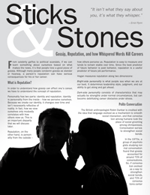
Sticks and StonesGossip, Reputation, and how Whispered Words Kill Careers

“It isn’t what they say about you, it’s what they whisper.” – Errol Flynn

From celebrity gaffes to political scandals, if we can learn something about ourselves based on what makes the news, it’s that people love a good piece of gossip. Although many people condemn gossip as slander or hearsay, a person’s reputation can have serious consequences for his or her career.

Download Sticks & Stones and find out how reputation can make or break someone in the workplace.


Topics: reputation

Sticks & Stones

Posted by HNews on Thu, Dec 13, 2012

Sticks and StonesGossip, Reputation, and how Whispered Words Kill Careers

“It isn’t what they say about you, it’s what they whisper.” – Errol Flynn

From celebrity gaffes to political scandals, if we can learn something about ourselves based on what makes the news, it’s that people love a good piece of gossip. Although many people condemn gossip as slander or hearsay, a person’s reputation can have serious consequences for his or her career.

Download Sticks & Stones and find out how reputation can make or break someone in the workplace.


Leadership Lessons from Grace Hopper

Posted by Hogan News on Fri, Dec 07, 2012

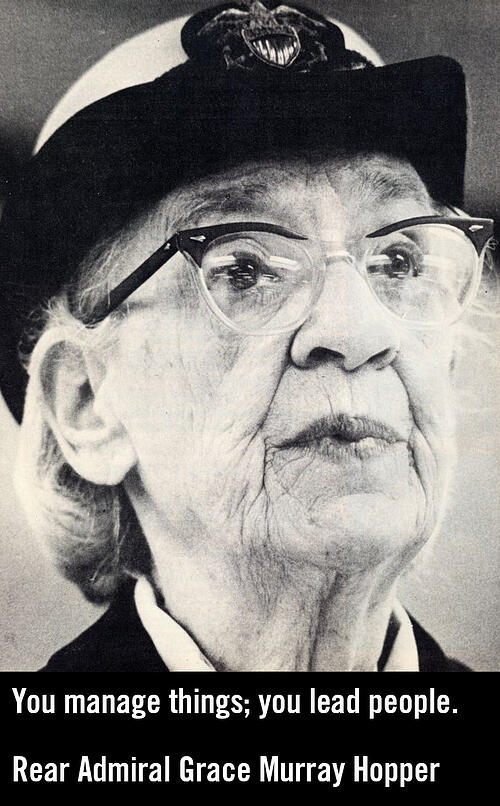
You manage things; you lead people.

Grace Hopper

Topics: leadership, quote

Leave the White Flag at Home

Posted by Darin Nei on Fri, Dec 07, 2012

white flagWhen thinking about personality, one thing that we know is there is no such thing as a good or bad personality. It really depends on the job and situation. This is a point that we regularly emphasize to individuals and organizations. Along these same lines, we know that high scores on personality assessments do not inherently mean good things, and low scores do not always mean bad things – there are positives and negatives to both ends of the continuum. Having stated that, our scores do represent our reputations. Over the course of time people come to expect certain behaviors from us based on our past performances.

One of the main goals of personality assessment is to provide individuals with strategic self-awareness. Through feedback, we can help the individual understand his or her tendencies and reputation in the work environment. As such, we can help the low Prudence individual understand that others view him or her as being impulsive and lacking attention to detail, or aid the high Prudence individual with recognizing that he or she may be somewhat inflexible and resistant to change. Having stated that, we are not out to change personality, rather we are looking to make people more aware of their tendencies so they can change their behavior moving forward.

Nevertheless, change is a difficult and ongoing process. To illustrate this point, take a minute to write a few sentences using your opposite hand (i.e., your right hand if you are left-handed and vice-versa). At first, it’s a challenging and awkward thing to do. However, with practice this behavior will become easier to execute. This analogy represents what we are trying to accomplish with feedback and coaching. We should not be trying to convert lefties to righties, and the same is true with personality. We are not trying to convert the low Prudence to high Prudence (or vice-versa), rather we are aiming to help individuals understand their strengths and shortcomings of what their scores represent, and provide developmental tips to leverage these strengths and mitigate these shortcomings.

So, the next time you are confronted with a challenging situation, don’t throw up a white flag and hide behind your personality scores. If you’re low Prudence and the project requires attention to detail, or are high Prudence and the project demands flexibility and openness to change, don’t allow your personality to be a barrier to your success. Instead, take some time to reflect on your natural response tendencies and decide if this is the most advantageous response option given the situation, or if a different course of action would be more beneficial. Through persistence and ongoing coaching, we can learn to overcome the dark side of our personality and let the bright side shine.

Topics: Hogan Development Survey, HDS, personality, dark side, strategic self awareness

Leave the White Flag at Home

Posted by DNei on Thu, Dec 06, 2012

white flagWhen thinking about personality, one thing that we know is there is no such thing as a good or bad personality. It really depends on the job and situation. This is a point that we regularly emphasize to individuals and organizations. Along these same lines, we know that high scores on personality assessments do not inherently mean good things, and low scores do not always mean bad things – there are positives and negatives to both ends of the continuum. Having stated that, our scores do represent our reputations. Over the course of time people come to expect certain behaviors from us based on our past performances.

One of the main goals of personality assessment is to provide individuals with strategic self-awareness. Through feedback, we can help the individual understand his or her tendencies and reputation in the work environment. As such, we can help the low Prudence individual understand that others view him or her as being impulsive and lacking attention to detail, or aid the high Prudence individual with recognizing that he or she may be somewhat inflexible and resistant to change. Having stated that, we are not out to change personality, rather we are looking to make people more aware of their tendencies so they can change their behavior moving forward.

Nevertheless, change is a difficult and ongoing process. To illustrate this point, take a minute to write a few sentences using your opposite hand (i.e., your right hand if you are left-handed and vice-versa). At first, it’s a challenging and awkward thing to do. However, with practice this behavior will become easier to execute. This analogy represents what we are trying to accomplish with feedback and coaching. We should not be trying to convert lefties to righties, and the same is true with personality. We are not trying to convert the low Prudence to high Prudence (or vice-versa), rather we are aiming to help individuals understand their strengths and shortcomings of what their scores represent, and provide developmental tips to leverage these strengths and mitigate these shortcomings.

So, the next time you are confronted with a challenging situation, don’t throw up a white flag and hide behind your personality scores. If you’re low Prudence and the project requires attention to detail, or are high Prudence and the project demands flexibility and openness to change, don’t allow your personality to be a barrier to your success. Instead, take some time to reflect on your natural response tendencies and decide if this is the most advantageous response option given the situation, or if a different course of action would be more beneficial. Through persistence and ongoing coaching, we can learn to overcome the dark side of our personality and let the bright side shine.

Topics: dark side

Subscribe to our Blog

Most Popular Posts

Connect