Leading with Vision and Competence

Posted by Hogan News on Tue, Oct 30, 2012

People look for four essential characteristics in leaders. In previous posts, we discussed the importance of integrity and judgment. The third and fourth essential characteristics of good leaders are competence and vision.

Good leaders are perceived as knowing what they are talking about, as being competent in the team’s business. The term “empty suit” refers to people who are in charge but don’t know what they are doing. In hunter-gatherer tribes, leaders are distinguished by their moral qualities, their judgment, and their superior hunting ability. These characteristics garner respect and loyalty from their subordinates.

Also, good leaders explain to their team the significance of their mission and how it fits into the larger scheme of things. This vision clarifies roles, goals, and the way forward, thereby facilitating team performance.

By adopting a vision, people can transcend their selfish interests and develop impersonal ends for their actions.

To learn more about the essential characteristics of good leaders, check out our free e-book, Leadership: You're Doing It Wrong.

Topics: leadership, Hogan Leadership Model

HR Tales from the Dark Side

Posted by HNews on Mon, Oct 29, 2012


Classic Jack o Lantern1You make what seems like a promising hire – good resume, relevant experience, and solid references. And, at first, her performance matches that promise.

As time wears on, however, you start to hear grumbling around the water cooler. Nobody likes to work with your new hire. Her coworkers start to pull away, her work unit shows signs of waning engagement, and her performance starts to flag. Just like that, your promising new employee turns into a nightmare. Why? Odds are, your new hire is succumbing to the dark side of her personality.

Dark side personality characteristics emerge during times of increased stress, like the often-intense pressure to perform during the first several months of employment. If unchecked, these characteristics can disrupt relationships with a person’s coworkers and subordinates, which can impede their chances at success.

The Hogan Development Survey measures dark side personality along 11 characteristics, which can be grouped into three distinct reactions to conflict:

  • Moving Away From Others – People in this group manage insecurities by intimidating and avoiding others. They tend to be alert for signs of criticism, rejection, betrayal, or hostile intent. When they think they have detected threat, they react vigorously to remove it.
  • Moving Against Others – People in this group expect to be liked, admired, and respected. They tend to resist acknowledging their mistakes and/or failures (which they blame on others), and they are often unable to learn from experience.
  • Moving Toward Others – People in this group want to please figures of authority. As a result, they are easy to supervise, and are popular with their bosses. However, in conflict, they tend to side with authority figures rather than sticking up for their team members or subordinates.

Unfortunately, dark side personality characteristics are nearly impossible to detect in a normal hiring process, making this story all too familiar. However, you can use targeted personality assessment to identify candidates’ dark side characteristics and focus onboarding efforts to ensure that you don’t wind up with a hiring horror story.


Topics: derailment, dark side, dark side personality

Leading with Vision and Competence

Posted by HNews on Mon, Oct 29, 2012

People look for four essential characteristics in leaders. In previous posts, we discussed the importance of integrity and judgment. The third and fourth essential characteristics of good leaders are competence and vision.

Good leaders are perceived as knowing what they are talking about, as being competent in the team’s business. The term “empty suit” refers to people who are in charge but don’t know what they are doing. In hunter-gatherer tribes, leaders are distinguished by their moral qualities, their judgment, and their superior hunting ability. These characteristics garner respect and loyalty from their subordinates.

Also, good leaders explain to their team the significance of their mission and how it fits into the larger scheme of things. This vision clarifies roles, goals, and the way forward, thereby facilitating team performance.

By adopting a vision, people can transcend their selfish interests and develop impersonal ends for their actions.

To learn more about the essential characteristics of good leaders, check out our free e-book, Leadership: You’re Doing It Wrong.

Speaking Authentic Leadership

Posted by Cheryl Oxley on Fri, Oct 26, 2012

Within the past year or so, the topic of authentic leadership keeps surfacing around the Hogan office, with our clients, and at a few conferences. The repeated references to and different explanations of this buzzword in the leadership development world caused me to pause for a minute. What exactly is authentic leadership, and how can you achieve it? Or, better yet, what can stand your way?

To answer these questions, I started with the authentic leadership guru, Bill George. Mr. George has penned two books on the topic: Authentic Leadership and its successor True North. In his blog post “Authentic Leadership Revisited” he defines authentic leadership as “being genuine, real, and true to who you are.” Another blog post  states that, “to become authentic, each of us has to develop our own leadership style, consistent with our personality and character.”

I think the concept of achieving authentic leadership boils down to strategic self-awareness. Knowing your strengths and challenges, being willing to point out the chinks in your armor, and demonstrating a certain element of humility can all lead to becoming a more authentic leader. Of course, this is more easily said than done. However, Hogan’s personality assessments, development-focused reports, and feedback process can certainly help start the strategic self-awareness conversation.

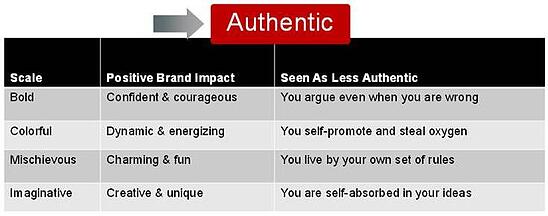
Additionally, the bigger question here remains. Are there certain personality characteristics that can stand in your way of being seen as authentic? The moving against cluster (Bold, Colorful, Mischievous, and Imaginative) on the Hogan Development Survey can affect your perceived ability to be authentic. It’s important to keep in mind that HDS behaviors often arise under stress, pressure, boredom, or complacency. These are not every day behaviors, but can still impact your perceived authenticity or leadership brand. For example, high scores on this cluster suggest that leaders with these derailing behaviors may not express humility (Colorful) and be unwilling to admit mistakes (Bold). The graph below highlights the impact these derailers can have on authentic leadership.
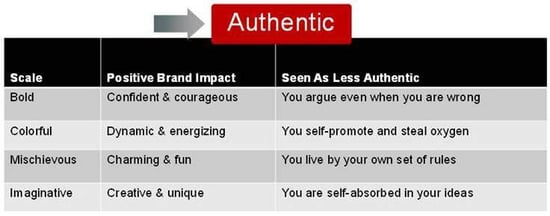
Authentic

So, how do you derail? Given these implications for authentic leadership, it’s worth looking into. 

Topics: leadership, How Do You Derail, strategic self awareness, authentic leadership

Speaking Authentic Leadership

Posted by Hogan Assessments on Thu, Oct 25, 2012

Within the past year or so, the topic of authentic leadership keeps surfacing around the Hogan office, with our clients, and at a few conferences. The repeated references to and different explanations of this buzzword in the leadership development world caused me to pause for a minute. What exactly is authentic leadership, and how can you achieve it? Or, better yet, what can stand your way?

To answer these questions, I started with the authentic leadership guru, Bill George. Mr. George has penned two books on the topic: Authentic Leadership and its successor True North. In his blog post “Authentic Leadership Revisited” he defines authentic leadership as “being genuine, real, and true to who you are.” Another blog post  states that, “to become authentic, each of us has to develop our own leadership style, consistent with our personality and character.”

I think the concept of achieving authentic leadership boils down to strategic self-awareness. Knowing your strengths and challenges, being willing to point out the chinks in your armor, and demonstrating a certain element of humility can all lead to becoming a more authentic leader. Of course, this is more easily said than done. However, Hogan’s personality assessments, development-focused reports, and feedback process can certainly help start the strategic self-awareness conversation.

Additionally, the bigger question here remains. Are there certain personality characteristics that can stand in your way of being seen as authentic? The moving against cluster (Bold, Colorful, Mischievous, and Imaginative) on the Hogan Development Survey can affect your perceived ability to be authentic. It’s important to keep in mind that HDS behaviors often arise under stress, pressure, boredom, or complacency. These are not every day behaviors, but can still impact your perceived authenticity or leadership brand. For example, high scores on this cluster suggest that leaders with these derailing behaviors may not express humility (Colorful) and be unwilling to admit mistakes (Bold). The graph below highlights the impact these derailers can have on authentic leadership.

Authentic

So, how do you derail? Given these implications for authentic leadership, it’s worth looking into. 

Topics: authentic leadership

The Importance of Good Judgment

Posted by Hogan News on Thu, Oct 25, 2012

People look for four essential characteristics in leaders.

In a previous post, we discussed the importance of integrity. The second essential characteristic people look for in leaders is judgment.

The welfare of subordinates depends on the judgment of their superiors, and some people have better judgment than others.

The success or failure of organizations depends on decision-making. Napoleon destroyed France and Hitler destroyed Germany by deciding to invade Russia in the winter, after which their armies (their subordinates) were slaughtered.    

Most business failures are the result of bad decisions that are compounded by an unwillingness to evaluate decisions and change direction.

To learn more about the four essential characteristics of good leaders, check out our free e-book, Leadership: You're Doing It Wrong.

Topics: leadership, Hogan Leadership Model

The Importance of Good Judgment

Posted by HNews on Wed, Oct 24, 2012

People look for four essential characteristics in leaders.

In a previous post, we discussed the importance of integrity. The second essential characteristic people look for in leaders is judgment.

The welfare of subordinates depends on the judgment of their superiors, and some people have better judgment than others.

The success or failure of organizations depends on decision-making. Napoleon destroyed France and Hitler destroyed Germany by deciding to invade Russia in the winter, after which their armies (their subordinates) were slaughtered.

Most business failures are the result of bad decisions that are compounded by an unwillingness to evaluate decisions and change direction.

To learn more about the four essential characteristics of good leaders, check out our free e-book, Leadership: You’re Doing It Wrong.

How Values Affect Corporate Culture

Posted by Ryan Daly on Tue, Oct 23, 2012

Zappos
By now, most people have heard about Greg Smith, the former Goldman Sachs vice president who resigned in a searing article on the New York Time’s op-ed page. The former investment banker has been making news again this week following the release of a book detailing his experiences at the storied firm.

In his op-ed article, Smith leveled intense charges against the firm’s corporate culture, calling it toxic and destructive, and said that the firm promoted morally bankrupt people.

Although there is a fair amount of question regarding his allegations, Smith’s article and subsequent interviews bring up an interesting topic – the effect of leaders’ values on corporate culture. From Apple to Zappos, there are hundreds of examples of the positive effect a CEO can have on his or her company’s culture. Unfortunately, there are just as many about what happens when that effect takes a dark turn.

For more about how leaders’ values can affect company culture, check out Eric Sinoway’s recent blog on the Harvard Business Review, or take a look at our whitepapers The Power of Unconscious Biases and The Culture Clash.

Topics: values, corporate culture

How Values Affect Corporate Culture

Posted by Hogan Assessments on Mon, Oct 22, 2012

Zappos
By now, most people have heard about Greg Smith, the former Goldman Sachs vice president who resigned in a searing article on the New York Time’s op-ed page. The former investment banker has been making news again this week following the release of a book detailing his experiences at the storied firm.

In his op-ed article, Smith leveled intense charges against the firm’s corporate culture, calling it toxic and destructive, and said that the firm promoted morally bankrupt people.

Although there is a fair amount of question regarding his allegations, Smith’s article and subsequent interviews bring up an interesting topic – the effect of leaders’ values on corporate culture. From Apple to Zappos, there are hundreds of examples of the positive effect a CEO can have on his or her company’s culture. Unfortunately, there are just as many about what happens when that effect takes a dark turn.

For more about how leaders’ values can affect company culture, check out Eric Sinoway’s recent blog on the Harvard Business Review, or take a look at our whitepapers The Power of Unconscious Biases and The Culture Clash.

Topics: corporate culture

The Power of Unconscious Biases

Posted by Hogan News on Mon, Oct 22, 2012

Unconscious BiasesThe Impact of Values on Team Dynamics and Corporate Culture

Ever feel like someone is pushing you to be someone you’re not? You might be a victim of unconscious biases. Because values are an inherent part of our personality, many leaders are unaware of the kinds of values they hold, and how their values affect their subordinates. Through values assessment, leaders become more aware of the facets in their personality that might negatively affect workplace relationships.

Download The Power of Unconscious Biases and learn how the projection of an individual’s values onto others is having an impact on your workplace relationships.


Topics: MVPI, values, employee values

Subscribe to our Blog

Most Popular Posts

Connect