The Power of Unconscious Biases

Posted by HNews on Sun, Oct 21, 2012

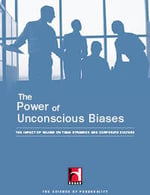
Unconscious BiasesThe Impact of Values on Team Dynamics and Corporate Culture

Ever feel like someone is pushing you to be someone you’re not? You might be a victim of unconscious biases. Because values are an inherent part of our personality, many leaders are unaware of the kinds of values they hold, and how their values affect their subordinates. Through values assessment, leaders become more aware of the facets in their personality that might negatively affect workplace relationships.

Download The Power of Unconscious Biases and learn how the projection of an individual’s values onto others is having an impact on your workplace relationships.

Topics: employee values

Leadership Lessons from Vonnegut

Posted by Hogan News on Fri, Oct 19, 2012

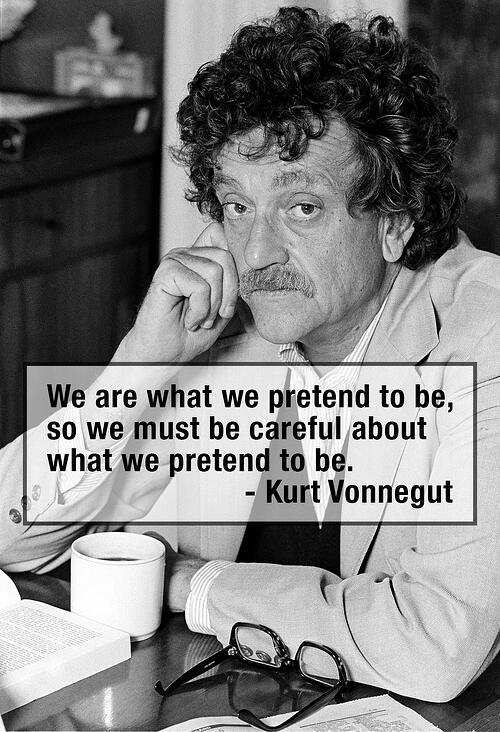
We are what we pretend to be, so we must be careful about what we pretend to be.

vonnegut

Topics: leadership, quote

Leadership Lessons from Vonnegut

Posted by HNews on Thu, Oct 18, 2012


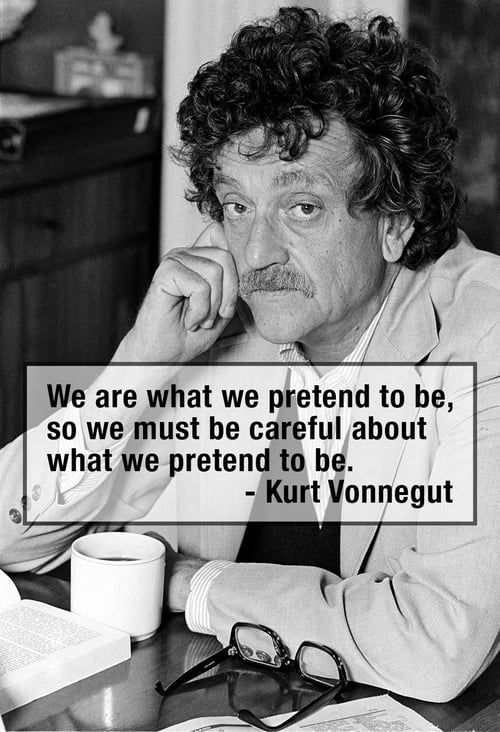
We are what we pretend to be, so we must be careful about what we pretend to be.

vonnegut


Leading with Integrity

Posted by Hogan News on Wed, Oct 17, 2012

Leadership is the ability to build and maintain a team that can outperform the competition. Therefore a good leader must be someone others are willing to follow.

People look for four essential characteristics in leaders, the first of which is integrity.

People need to know that the person in charge won’t take advantage of his or her position—won’t lie, steal, play favorites, or betray subordinates. Unfortunately, many do.

Integrity is the most important characteristic of good leaders. In our survey of more than 1,000 individuals, 81% said trustworthiness was the most important personality characteristic of their best boss. Conversely, 50% described their worst boss as deceitful.

Trust in one’s superior is essential, and predicts the entire range of desirable organizational outcomes: productivity, job satisfaction, and organizational commitment. Once subordinates lose trust in their leaders, the relationship can never be repaired, and they are likely to remain outside the circle of trust.

To read more about the essential characteristics of good leaders, check out our free e-book, The Hogan Leadership Model.

Topics: leadership, Hogan Leadership Model

Leading with Integrity

Posted by HNews on Tue, Oct 16, 2012


Leadership is the ability to build and maintain a team that can outperform the competition. Therefore a good leader must be someone others are willing to follow.

People look for four essential characteristics in leaders, the first of which is integrity.

People need to know that the person in charge won’t take advantage of his or her position—won’t lie, steal, play favorites, or betray subordinates. Unfortunately, many do.

Integrity is the most important characteristic of good leaders. In our survey of more than 1,000 individuals, 81% said trustworthiness was the most important personality characteristic of their best boss. Conversely, 50% described their worst boss as deceitful.

Trust in one’s superior is essential, and predicts the entire range of desirable organizational outcomes: productivity, job satisfaction, and organizational commitment. Once subordinates lose trust in their leaders, the relationship can never be repaired, and they are likely to remain outside the circle of trust.

To read more about the essential characteristics of good leaders, check out our free e-book, The Hogan Leadership Model.


The Dark Side of Steve Jobs

Posted by Hogan News on Mon, Oct 15, 2012

Steve Jobs is arguably one of the most successful businessmen in modern times. He started Apple and NeXT, took a majority ownership stake in Pixar for $10M and after ten blockbuster films sold the company to Disney for over $7B, and around the time of his death Apple had a market cap greater than the gross domestic product of Poland. Apple is one of the world’s most recognized brands and the company’s products have won numerous awards for their technical capabilities, functionality, ease of use, and aesthetics. Because of these results many view Steve Jobs as the personification of the successful business leader, yet Walter Isaacson’s biography paints a picture of a complex and highly flawed individual. 

As experts in executive assessment, reading Isaacson’s book prompted us to ask three questions about Steven Jobs and current hiring practices. First, would Jobs have been hired to be the CEO of a start up or a Fortune 500 company if he had to go through a formal assessment process?  Second, what would an assessment have revealed about Jobs’ watch outs or development needs? Third, what can we learn from Steve Jobs and his leadership style? This last question is important, as Job’s tremendous success as a businessman has overshadowed some of the critical lessons about leadership.

Read the full article by guest bloggers, Gordon Curphy and Rocky Kimball.

Topics: leadership, assessment, executive assessment

The Dark Side of Steve Jobs

Posted by HNews on Sun, Oct 14, 2012

Steve Jobs is arguably one of the most successful businessmen in modern times. He started Apple and NeXT, took a majority ownership stake in Pixar for $10M and after ten blockbuster films sold the company to Disney for over $7B, and around the time of his death Apple had a market cap greater than the gross domestic product of Poland. Apple is one of the world’s most recognized brands and the company’s products have won numerous awards for their technical capabilities, functionality, ease of use, and aesthetics. Because of these results many view Steve Jobs as the personification of the successful business leader, yet Walter Isaacson’s biography paints a picture of a complex and highly flawed individual. 

As experts in executive assessment, reading Isaacson’s book prompted us to ask three questions about Steven Jobs and current hiring practices. First, would Jobs have been hired to be the CEO of a start up or a Fortune 500 company if he had to go through a formal assessment process?  Second, what would an assessment have revealed about Jobs’ watch outs or development needs? Third, what can we learn from Steve Jobs and his leadership style? This last question is important, as Job’s tremendous success as a businessman has overshadowed some of the critical lessons about leadership.

Read the full article by guest bloggers, Gordon Curphy and Rocky Kimball.

Topics: assessment

This American Life: Personality Matters for Life Success

Posted by Ashley Palmer on Fri, Oct 12, 2012

SuccessI recently listened to a “This American Life” podcast in which the host, Ira Glass, posed fundamental questions about what kids should learn in school and what really matters when it comes to success later in life.

During the show, James Heckman (a Nobel Prize winning economist) argued that qualities other than IQ (i.e., personality characteristics) are equally important in predicting who will be successful in life and who won’t. Heckman became a huge proponent of this viewpoint, bringing together neuroscientists, economists, educators, and psychologists each year to discuss these ideas, after conducting a study that convinced him IQ wasn’t all that mattered.

In this study, Heckman looked at three groups of students:
1. Those who graduated high school
2. Those who dropped out but obtained a GED
3. Those who dropped out and did not obtain a GED.
He followed these people into adulthood for many years to see how successful they were in life. Did they land and hold jobs? How much money did they make? Did they stay out of prison? Did they divorce?

He reasoned that since the GED was equivalent to a high school diploma, those with GEDs should be as smart as high school graduates. If IQ was all that mattered, he predicted the two groups would be equally successful in life. He wasn’t sure how the drop-outs would end up since their intelligence was unknown.

Heckman found that those who had earned their GED performed slightly better than drop-outs, which isn’t too surprising. However, what did surprise Heckman was that those with GEDs didn’t achieve anywhere close to the same success as the high school graduates (in terms of earnings, job performance, college success, etc.).

The study’s findings led Heckman to conclude that cognitive skills, (i.e., IQ) are only one piece of the puzzle. Scores on standardized tests like the GED and ACT that measure IQ can only explain a small fraction of whether or not someone is successful. Other “non-cognitive skills,” like personality characteristics, play a large part in predicting success both personally and professionally.

His conclusion makes sense when you think about it. How resilient or tenacious you are, how you relate to and communicate with others, or how goal-oriented and organized you are should influence how well you do in life. As Dr. Hogan once quoted in the blog, “Character is fate.”

Topics: personality, personality characteristics

This American Life: Personality Matters for Life Success

Posted by Hogan Assessments on Thu, Oct 11, 2012


SuccessI recently listened to a “This American Life” podcast in which the host, Ira Glass, posed fundamental questions about what kids should learn in school and what really matters when it comes to success later in life.

During the show, James Heckman (a Nobel Prize winning economist) argued that qualities other than IQ (i.e., personality characteristics) are equally important in predicting who will be successful in life and who won’t. Heckman became a huge proponent of this viewpoint, bringing together neuroscientists, economists, educators, and psychologists each year to discuss these ideas, after conducting a study that convinced him IQ wasn’t all that mattered.

In this study, Heckman looked at three groups of students:
1. Those who graduated high school
2. Those who dropped out but obtained a GED
3. Those who dropped out and did not obtain a GED.
He followed these people into adulthood for many years to see how successful they were in life. Did they land and hold jobs? How much money did they make? Did they stay out of prison? Did they divorce?

He reasoned that since the GED was equivalent to a high school diploma, those with GEDs should be as smart as high school graduates. If IQ was all that mattered, he predicted the two groups would be equally successful in life. He wasn’t sure how the drop-outs would end up since their intelligence was unknown.

Heckman found that those who had earned their GED performed slightly better than drop-outs, which isn’t too surprising. However, what did surprise Heckman was that those with GEDs didn’t achieve anywhere close to the same success as the high school graduates (in terms of earnings, job performance, college success, etc.).

The study’s findings led Heckman to conclude that cognitive skills, (i.e., IQ) are only one piece of the puzzle. Scores on standardized tests like the GED and ACT that measure IQ can only explain a small fraction of whether or not someone is successful. Other “non-cognitive skills,” like personality characteristics, play a large part in predicting success both personally and professionally.

His conclusion makes sense when you think about it. How resilient or tenacious you are, how you relate to and communicate with others, or how goal-oriented and organized you are should influence how well you do in life. As Dr. Hogan once quoted in the blog, “Character is fate.”


Leadership Lessons from the Founder of IBM

Posted by Hogan News on Thu, Oct 11, 2012

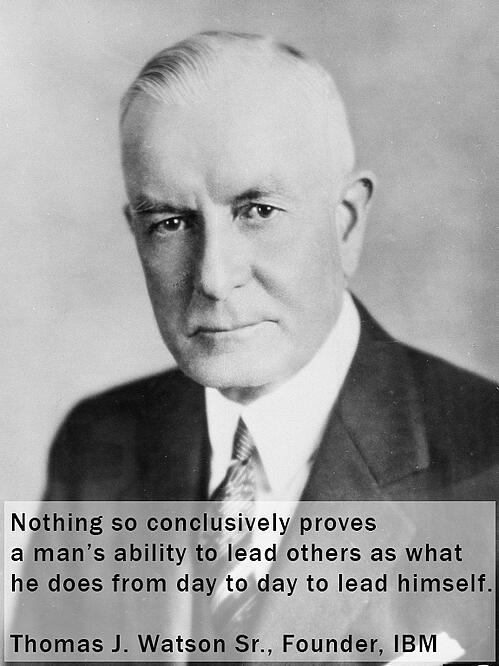
Leadership lessons from Thomas J. Watston, Sr.

thomas j watson sr

Topics: leadership, quote

Subscribe to our Blog

Most Popular Posts

Connect