Leadership lessons from Thomas J. Watston, Sr.

+1.918.749.0632




Leadership lessons from Thomas J. Watston, Sr.
What is a good leader? Michael Scott, the former main character in NBC’s hit sitcom The Office, has an intertesting take.
Unfortunately, Michael’s definition rings true. Leadership is usually defined in terms of a person’s status in an organization. If a person has a title, he or she must have the leadership skills. Right? Wrong.
The truth is, people typically advance in organizations by pleasing their bosses with displays of loyalty and technical knowledge. Performance appraisals reflect how much supervisors like their subordinates. Consequently, designated high performers are often skilled at office politics rather than leadership.
Human evolution suggests an alternative definition of leadership. During 2 million years of pre-history, humans lived in egalitarian hunter-gatherer societies, and there was constant warfare between them. Leadership probably evolved as a mechanism that allowed normally selfish individuals to pull together for a common purpose—to compete with neighboring groups to defend territory and resources.
Therefore, leadership should be defined as the ability to build and maintain a team that can outperform the competition. Leadership is a resource for the group, not a source of privilege for incumbents; leadership should be defined and evaluated in terms of the performance of the team, which depends on how the subordinates perceive the leader.
To learn more about what makes a good leader, check out our complimentary e-book, The Hogan Leadership Model.
Topics: leadership, Hogan Leadership Model
What is a good leader? Michael Scott, the former main character in NBC’s hit sitcom The Office, has an intertesting take.
Unfortunately, Michael’s definition rings true. Leadership is usually defined in terms of a person’s status in an organization. If a person has a title, he or she must have the leadership skills. Right? Wrong.
The truth is, people typically advance in organizations by pleasing their bosses with displays of loyalty and technical knowledge. Performance appraisals reflect how much supervisors like their subordinates. Consequently, designated high performers are often skilled at office politics rather than leadership.
Human evolution suggests an alternative definition of leadership. During 2 million years of pre-history, humans lived in egalitarian hunter-gatherer societies, and there was constant warfare between them. Leadership probably evolved as a mechanism that allowed normally selfish individuals to pull together for a common purpose—to compete with neighboring groups to defend territory and resources.
Therefore, leadership should be defined as the ability to build and maintain a team that can outperform the competition. Leadership is a resource for the group, not a source of privilege for incumbents; leadership should be defined and evaluated in terms of the performance of the team, which depends on how the subordinates perceive the leader.
To learn more about what makes a good leader, check out our complimentary e-book, The Hogan Leadership Model.
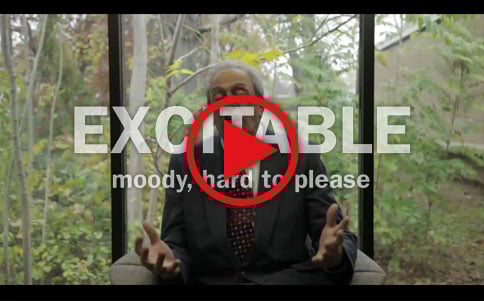
He’s the hothead, the live wire, the one with the short fuse and explosive temper. His energy is infectious, but his mood can turn on a dime, and when he starts lobbing shells, boy you’d better take cover.
On the climb up the corporate ladder, the line between strength and weakness isn’t always clear. Although the loose cannon’s intensity makes him a favorite with his boss, his volatile emotions have the people around him walking on eggshells.
Watch this video to see the loose cannon at work, or visit www.howdoyouderail.com to view the entire HDS video series. Follow on Twitter @ImHiExcitable #howdoyouderail
Topics: Hogan Development Survey, HDS, derailment, HDS scales, How Do You Derail
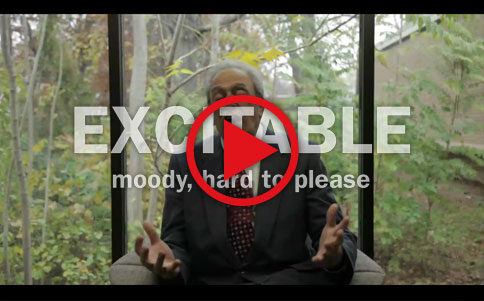
He’s the hothead, the live wire, the one with the short fuse and explosive temper. His energy is infectious, but his mood can turn on a dime, and when he starts lobbing shells, boy you’d better take cover.
On the climb up the corporate ladder, the line between strength and weakness isn’t always clear. Although the loose cannon’s intensity makes him a favorite with his boss, his volatile emotions have the people around him walking on eggshells.
Watch this video to see the loose cannon at work, or visit www.howdoyouderail.com to view the entire HDS video series. Follow on Twitter @ImHiExcitable #howdoyouderail
Topics: derailment
A recent article on ABC News’ website chronicles the story of a job seeker who is suing a potential employer for allegedly using personality assessments to support discriminatory hiring practices.
Here’s the gist, according to ABC News: A woman named Vicky Sandy applied for a job as a cashier, bagger and stocker at a Kroger supermarket in West Virginia. As part of the application process, she took a personality assessment designed to predict whether she would be friendly and communicate well with customers. Sandy, who is hearing- and speech-impaired, scored a 40 percent. Her post-test results showed that she was less likely than other applicants to "listen carefully, understand and remember" and suggested the job interviewer listen for "correct language" and "clear enunciation." She was not hired, and subsequently filed a discrimination complaint with the Equal Employment Opportunity Commission.
Without knowing all of the details, we can’t comment on this specific case. But it brings up an important point. As more companies turn to personality assessments to help them with the hiring process, it is critical that those assessments are well validated, and that they are used properly.
At Hogan, we take enormous pride that our assessments have never been successfully challenged, and we provide our clients detailed information about the development and validation of each of our four assessments.
Dr. Kevin Meyer, a senior consultant in our global alliances division, explains it simply in his last blog post “The (Il)legality of Personality Assessment in Employee Selection.”
For the more complicated version, check out our white paper “Adverse Impact and the HPI.”
Topics: validity
A recent article on ABC News’ website chronicles the story of a job seeker who is suing a potential employer for allegedly using personality assessments to support discriminatory hiring practices.
Here’s the gist, according to ABC News: A woman named Vicky Sandy applied for a job as a cashier, bagger and stocker at a Kroger supermarket in West Virginia. As part of the application process, she took a personality assessment designed to predict whether she would be friendly and communicate well with customers. Sandy, who is hearing- and speech-impaired, scored a 40 percent. Her post-test results showed that she was less likely than other applicants to “listen carefully, understand and remember” and suggested the job interviewer listen for “correct language” and “clear enunciation.” She was not hired, and subsequently filed a discrimination complaint with the Equal Employment Opportunity Commission.
Without knowing all of the details, we can’t comment on this specific case. But it brings up an important point. As more companies turn to personality assessments to help them with the hiring process, it is critical that those assessments are well validated, and that they are used properly.
At Hogan, we take enormous pride that our assessments have never been successfully challenged, and we provide our clients detailed information about the development and validation of each of our four assessments.
Dr. Kevin Meyer, a senior consultant in our global alliances division, explains it simply in his last blog post “The (Il)legality of Personality Assessment in Employee Selection.”
For the more complicated version, check out our white paper “Adverse Impact and the HPI.”
My colleague Kevin Meyer and I recently returned from a visit to India and our distributor there, Sierra Alta Consulting. Sierra Alta launched in 2010, and started working with us as a Hogan distributor in 2011. I can’t begin to say enough great things about their firm and the people working there.
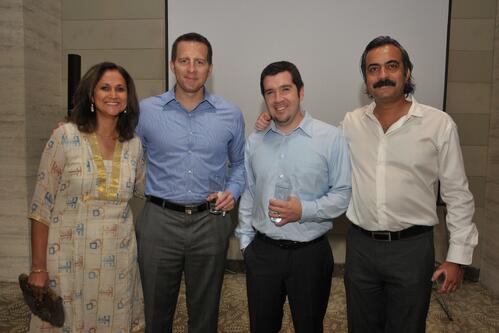
Before my trip, I tried to read as much as possible about Indian business practices, especially when it comes to using personality assessment. From what I read, and what I experienced, India is a nation on the move, and is a key opportunity for HR providers. Here are some key demographics:
In short, India has a large, young, and extremely talented and educated professional class that could prove a challenge for HR practitioners.
I was fortunate to experience a number of things on this trip I haven’t before (including pick-pocketing monkeys). Oddly, though, one of the most unexpected learning moments for me was observing how respected and culturally relevant Hogan’s tools were in the local market. The consensus among Sierra Alta users was that Hogan’s assessments capture something specific to India’s culture, despite being considered a Western tool.
Topics: consulting, Global Alliances, distributor