Hogan Global Alliances & India

Posted by Hogan Assessments on Wed, Oct 03, 2012


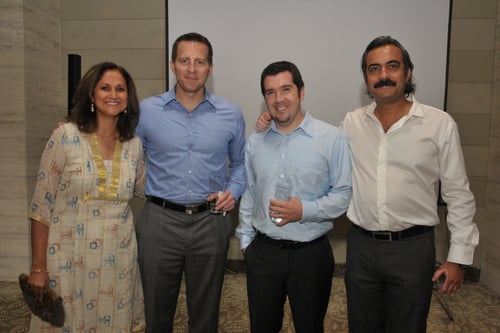
My colleague Kevin Meyer and I recently returned from a visit to India and our distributor there, Sierra Alta Consulting. Sierra Alta launched in 2010, and started working with us as a Hogan distributor in 2011. I can’t begin to say enough great things about their firm and the people working there.

India

Before my trip, I tried to read as much as possible about Indian business practices, especially when it comes to using personality assessment. From what I read, and what I experienced, India is a nation on the move, and is a key opportunity for HR providers. Here are some key demographics:

  • 1.21 billion people
  • 75% younger than 35
  • 50% younger than 25
  • 100 million internet users
  • 1 billion mobile users by 2015
  • 14,000+ colleges, 389 universities, 1500 research institutes
  • Second largest pool of scientists, doctors, and engineers in the world

In short, India has a large, young, and extremely talented and educated professional class that could prove a challenge for HR practitioners.

I was fortunate to experience a number of things on this trip I haven’t before (including pick-pocketing monkeys). Oddly, though, one of the most unexpected learning moments for me was observing how respected and culturally relevant Hogan’s tools were in the local market. The consensus among Sierra Alta users was that Hogan’s assessments capture something specific to India’s culture, despite being considered a Western tool.


Topics: consulting, distributor

The Value of Values

Posted by Hogan News on Fri, Sep 28, 2012

Value of ValuesUsing Values Assessment to Create a More Engaged, More Productive Workforce

Even the best, most qualified candidate in the world could be detrimental to a company if his or her values aren’t a good fit for the job or company culture. For example, hiring someone that prefers a highly social environment and then isolating them in a single office at the end of the hall will most likely lead to another job search.

Download The Value of Values and discover the importance of values over experience when searching for the perfect hire.

Topics: MVPI, values, employee values

The Value of Values

Posted by HNews on Thu, Sep 27, 2012

Value of ValuesUsing Values Assessment to Create a More Engaged, More Productive Workforce

Even the best, most qualified candidate in the world could be detrimental to a company if his or her values aren’t a good fit for the job or company culture. For example, hiring someone that prefers a highly social environment and then isolating them in a single office at the end of the hall will most likely lead to another job search.

Download The Value of Values and discover the importance of values over experience when searching for the perfect hire.

Topics: employee values

The (Il)legality of Personality Assessment in Employee Selection

Posted by Kevin Meyer on Thu, Sep 27, 2012

HiringNot too long ago I was on a plane heading to another Hogan Road Show. I happened to be sitting next to an HR executive from a Fortune 50 company that is a Hogan client. She was embarking on a long journey to several company locations around the world to audit the use of psychometric assessments in their organization. As I explained in this article, many large organizations are faced with the same challenge of having disjointed and inconsistent assessment use in their ranks. Fostering consistency can yield great benefits for HR practices and talent analytics, therefore, I was happy to hear that her organization was taking these strides. However, what happened next I found troubling.

I told her that her organization is actually a fairly significant Hogan user. She had no idea (concern #1). I then told her that her organization uses Hogan for graduate recruitment and selection. She replied that that was impossible because personality assessment is illegal for use in selection (big concern #2!). In this moment I immediately felt my 78 on the Excitable scale starting to bubble up. I did my best to remain composed and inform her that she had some misinformation. She did not believe me. Here she is, a fairly senior HR executive for a large organization, about to go around the world standardizing assessment use with at least one big misconception guiding some of the decisions she will be making (concern #3).

The occurrence on the plane is not entirely unique. I encounter this misconception from time to time while on road shows and presenting at conferences. The blanket assertion that using personality assessment in selection is illegal is patently false. As with any practice used during employee selection, it comes down to a question of validity in determining legality (see the Uniform Guidelines on Employee Selection Practices for more information). The simplest way of explaining the validity of assessments is a) does the assessment measure what it is supposed to measure and b) does the assessment predict job performance? This is something that Hogan has in spades.

For any client validation research project, we thoroughly document our tools’ ability to measure what they’re supposed to and predict important work outcomes. That is why Hogan has never been successfully challenged in the court system. The same cannot be said of all personality assessments; there is tremendous variability in the validity, reliability, and technical documentation of other assessments. However, for those who, like Hogan, take the science of personality seriously, they have experienced similar success in the court system.

So when it comes to personality assessment in employee selection, validity reigns in establishing legality. (Yes, I know that it also matters that the use of personality assessment cannot result in adverse impact too, but I’m trying to keep it simple for this blog. Also, personality assessment tends to yield almost no adverse impact relative to cognitive ability assessments.) To keep yourself out of hot water, demand technical documentation from your vendor/consultant that demonstrates the tools’ ability to measure what it is supposed to and predict something meaningful on the job. Be careful what you ask for, though. If you are not using a sound psychometric tool, you may not like what you find out. I’m sorry, but if you are using the very scientific personality test of “Which Sex and the City character are you most like?” I’m not sure the judge will let you off so easily.

To wrap up my story-in-the-sky, I didn’t fully convince her that it is okay to use personality assessment in selection. Maybe it was her unknown Skeptical or Bold score - I’m not sure. We had to agree to disagree so that we could spend the next eight or so hours sitting next to each other without the elephant stealing our legroom.

The (Il)legality of Personality Assessment in Employee Selection

Posted by Hogan Assessments on Wed, Sep 26, 2012


HiringNot too long ago I was on a plane heading to another Hogan Road Show. I happened to be sitting next to an HR executive from a Fortune 50 company that is a Hogan client. She was embarking on a long journey to several company locations around the world to audit the use of psychometric assessments in their organization. As I explained in this article, many large organizations are faced with the same challenge of having disjointed and inconsistent assessment use in their ranks. Fostering consistency can yield great benefits for HR practices and talent analytics, therefore, I was happy to hear that her organization was taking these strides. However, what happened next I found troubling.

I told her that her organization is actually a fairly significant Hogan user. She had no idea (concern #1). I then told her that her organization uses Hogan for graduate recruitment and selection. She replied that that was impossible because personality assessment is illegal for use in selection (big concern #2!). In this moment I immediately felt my 78 on the Excitable scale starting to bubble up. I did my best to remain composed and inform her that she had some misinformation. She did not believe me. Here she is, a fairly senior HR executive for a large organization, about to go around the world standardizing assessment use with at least one big misconception guiding some of the decisions she will be making (concern #3).

The occurrence on the plane is not entirely unique. I encounter this misconception from time to time while on road shows and presenting at conferences. The blanket assertion that using personality assessment in selection is illegal is patently false. As with any practice used during employee selection, it comes down to a question of validity in determining legality (see the Uniform Guidelines on Employee Selection Practices for more information). The simplest way of explaining the validity of assessments is a) does the assessment measure what it is supposed to measure and b) does the assessment predict job performance? This is something that Hogan has in spades.

For any client validation research project, we thoroughly document our tools’ ability to measure what they’re supposed to and predict important work outcomes. That is why Hogan has never been successfully challenged in the court system. The same cannot be said of all personality assessments; there is tremendous variability in the validity, reliability, and technical documentation of other assessments. However, for those who, like Hogan, take the science of personality seriously, they have experienced similar success in the court system.

So when it comes to personality assessment in employee selection, validity reigns in establishing legality. (Yes, I know that it also matters that the use of personality assessment cannot result in adverse impact too, but I’m trying to keep it simple for this blog. Also, personality assessment tends to yield almost no adverse impact relative to cognitive ability assessments.) To keep yourself out of hot water, demand technical documentation from your vendor/consultant that demonstrates the tools’ ability to measure what it is supposed to and predict something meaningful on the job. Be careful what you ask for, though. If you are not using a sound psychometric tool, you may not like what you find out. I’m sorry, but if you are using the very scientific personality test of “Which Sex and the City character are you most like?” I’m not sure the judge will let you off so easily.

To wrap up my story-in-the-sky, I didn’t fully convince her that it is okay to use personality assessment in selection. Maybe it was her unknown Skeptical or Bold score – I’m not sure. We had to agree to disagree so that we could spend the next eight or so hours sitting next to each other without the elephant stealing our legroom.


The Origins of Derailment

Posted by Hogan News on Wed, Sep 26, 2012

Executive derailmentJon Bentz pioneered the study of managerial derailment when he launched a 30-year study of failed managers in the late 1970s at Sears. Bentz presented his research at the Center for Creative Leadership in the early 1980s. Bentz noted that they were uniformly bright and socially skilled; they failed because they:

  • Lacked business skills
  • Were unable to deal with complexity
  • Were reactive and tactical
  • Were unable to delegate
  • Were unable to build a team
  • Were unable to maintain relationships with a network of contacts
  • Let emotions cloud their judgment
  • Were seen as having an overriding personality defect

Inspired by Bentz’ findings, Morgan McCall and Michael Lombardo replicated and extended the study by interviewing senior executives and asking two questions, one about a successful executive and one about a derailed executive. In their findings, they defined derailed executives as “…people who were very successful in their careers (spanning 20-30 years and reaching very high levels) but who, in the eyes of the organization, did not live up to their full potential…” McCall and Lombardo published The Lessons of Experience in 1988. Although it was not the point of the book, it contained relevant, useful data on derailment. McCall and Lombardo focused on behaviors, circumstantial factors, and dynamics, rather than an overriding personality defect.

Hogan’s first published work on the dark side appeared in 1990 (Hogan, Raskin, & Fazini, 1990), and focused on one dimension of a taxonomy. In 1997, the first complete work on the derailment taxonomy was published in the Hogan Development Survey technical manual.

In 2003, David Dotlich and Peter Cairo suggest that everyone has derailment tendencies, but that CEOs are more vulnerable to them because of the pressure at the top of the pyramid, and that self-awareness can mitigate the influence of these tendencies on organizational effectiveness.

Rasch, Shen, Davies, and Bono (2008) offer a taxonomy of ineffective leadership behavior with three empirical findings warranting special attention: (a) they found no sex differences in the frequency of these behaviors, (b) the category of bad behavior that had the most toxic impact on staff morale was, “Failure to consider human needs,” (c) the frequency of this particular behavior increased with organizational status; the more senior the manager, the more abusive.

Most recently in 2011, a conclusive chapter on management derailment, personality assessment, and mitigation by Hogan, J., Hogan, R., & Kaiser, R. B was published in the APA Handbook of Industrial and Organizational Psychology (Vol. 3, 555-575). In this publication, Hogan et al. discuss the causes of incompetence, taxonomies of derailing characteristics, and factors for mitigating and preventing derailment.

In conclusion, the derailment research is based on a variety of methods and yields consistent findings across time, organizations, organizational levels, national culture, and even gender. The reasons managers fail all concern poor business performance, poor leadership, poor self-control, and especially, relationship problems. Moreover, the failure often occurs following major change and periods of increased stress. The reason these defects matter lies in the definition of leadership—which is the ability to build and maintain a team that can outperform the competition.

Topics: Hogan Development Survey, HDS, derailment, executive derailment

Leadership Lessons from JFK

Posted by Hogan News on Wed, Sep 26, 2012

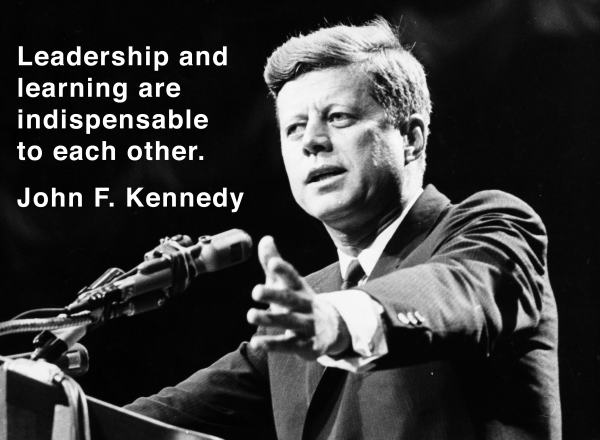
John F. Kennedy on leadership:

JFK

Topics: leadership

The Origins of Derailment

Posted by HNews on Tue, Sep 25, 2012

Executive derailmentJon Bentz pioneered the study of managerial derailment when he launched a 30-year study of failed managers in the late 1970s at Sears. Bentz presented his research at the Center for Creative Leadership in the early 1980s. Bentz noted that they were uniformly bright and socially skilled; they failed because they:

  • Lacked business skills
  • Were unable to deal with complexity
  • Were reactive and tactical
  • Were unable to delegate
  • Were unable to build a team
  • Were unable to maintain relationships with a network of contacts
  • Let emotions cloud their judgment
  • Were seen as having an overriding personality defect

Inspired by Bentz’ findings, Morgan McCall and Michael Lombardo replicated and extended the study by interviewing senior executives and asking two questions, one about a successful executive and one about a derailed executive. In their findings, they defined derailed executives as “…people who were very successful in their careers (spanning 20-30 years and reaching very high levels) but who, in the eyes of the organization, did not live up to their full potential…” McCall and Lombardo published The Lessons of Experience in 1988. Although it was not the point of the book, it contained relevant, useful data on derailment. McCall and Lombardo focused on behaviors, circumstantial factors, and dynamics, rather than an overriding personality defect.

Hogan’s first published work on the dark side appeared in 1990 (Hogan, Raskin, & Fazini, 1990), and focused on one dimension of a taxonomy. In 1997, the first complete work on the derailment taxonomy was published in the Hogan Development Survey technical manual.

In 2003, David Dotlich and Peter Cairo suggest that everyone has derailment tendencies, but that CEOs are more vulnerable to them because of the pressure at the top of the pyramid, and that self-awareness can mitigate the influence of these tendencies on organizational effectiveness.

Rasch, Shen, Davies, and Bono (2008) offer a taxonomy of ineffective leadership behavior with three empirical findings warranting special attention: (a) they found no sex differences in the frequency of these behaviors, (b) the category of bad behavior that had the most toxic impact on staff morale was, “Failure to consider human needs,” (c) the frequency of this particular behavior increased with organizational status; the more senior the manager, the more abusive.

Most recently in 2011, a conclusive chapter on management derailment, personality assessment, and mitigation by Hogan, J., Hogan, R., & Kaiser, R. B was published in the APA Handbook of Industrial and Organizational Psychology (Vol. 3, 555-575). In this publication, Hogan et al. discuss the causes of incompetence, taxonomies of derailing characteristics, and factors for mitigating and preventing derailment.

In conclusion, the derailment research is based on a variety of methods and yields consistent findings across time, organizations, organizational levels, national culture, and even gender. The reasons managers fail all concern poor business performance, poor leadership, poor self-control, and especially, relationship problems. Moreover, the failure often occurs following major change and periods of increased stress. The reason these defects matter lies in the definition of leadership—which is the ability to build and maintain a team that can outperform the competition.

Topics: derailment

Leadership Lessons from JFK

Posted by HNews on Tue, Sep 25, 2012


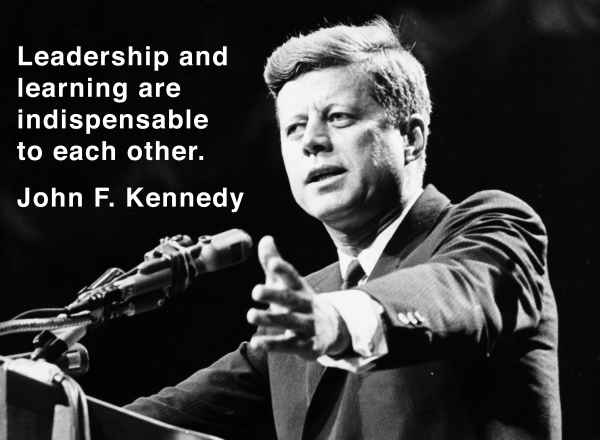
John F. Kennedy on leadership:

JFK


Leadership Lessons from Eisenhower

Posted by Hogan News on Fri, Sep 21, 2012

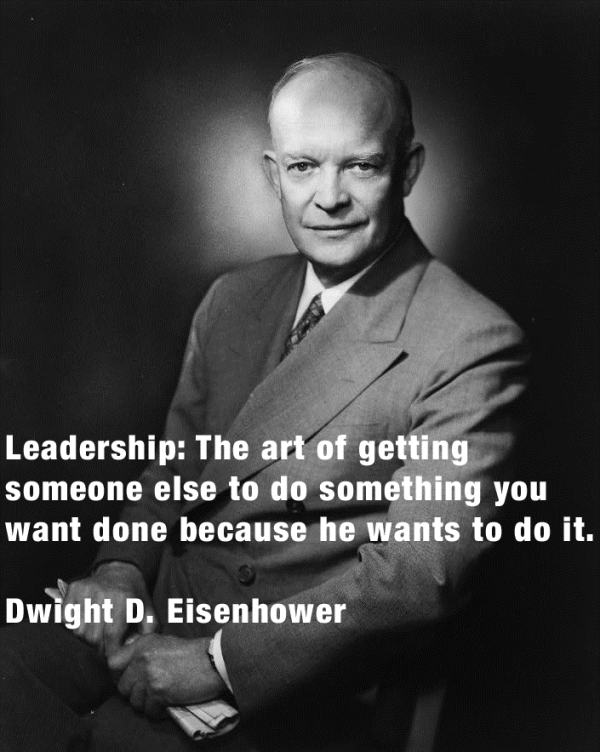
President Eisenhower on leadership:

Leadership Lessons from Eisenhower

Topics: leadership

Subscribe to our Blog

Most Popular Posts

Connect